
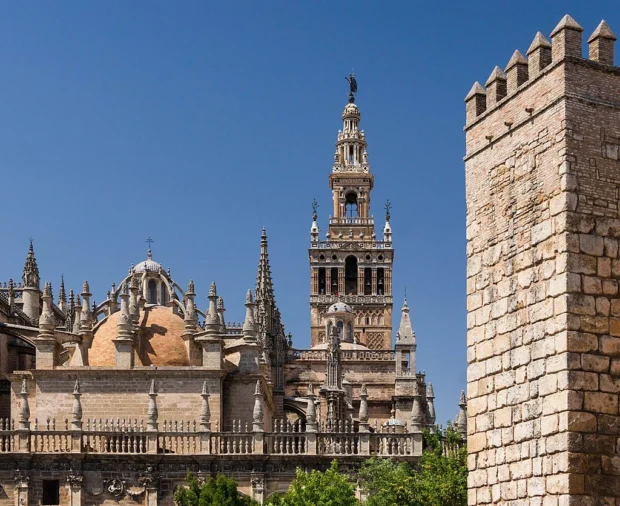
Seville, Spain, sits in the heart of Andalucía and instantly fills your senses with color, history, and the aromas of orange blossoms and slow-cooked stews. Wandering its streets is like moving through a living museum, but with constant sounds of laughter, clinking glasses, and the gentle strum of Flamenco guitar. Whether you come to see Seville Cathedral or simply to enjoy the warmth of the southern sun, the city invites you to linger. Let me guide you through the places, tastes, and small discoveries I found after weeks beneath Seville’s bright sky each detail chosen for travelers who want to truly feel Seville, not just photograph it.
Table of Contents
Seville Cathedral: Sacred Grandeur Under Spanish Skies
The Seville Cathedral is more than a landmark. It’s a world of shadows and light, of incense and soaring stone. Built on the site of a former mosque, the cathedral rises with unbelievable ambition a monument to faith and power. I would recommend entering early to avoid the crowds and to hear your own footsteps echo under the highest Gothic nave in the world. The silence can surprise you, broken only by soft murmurs and the distant toll of bells.
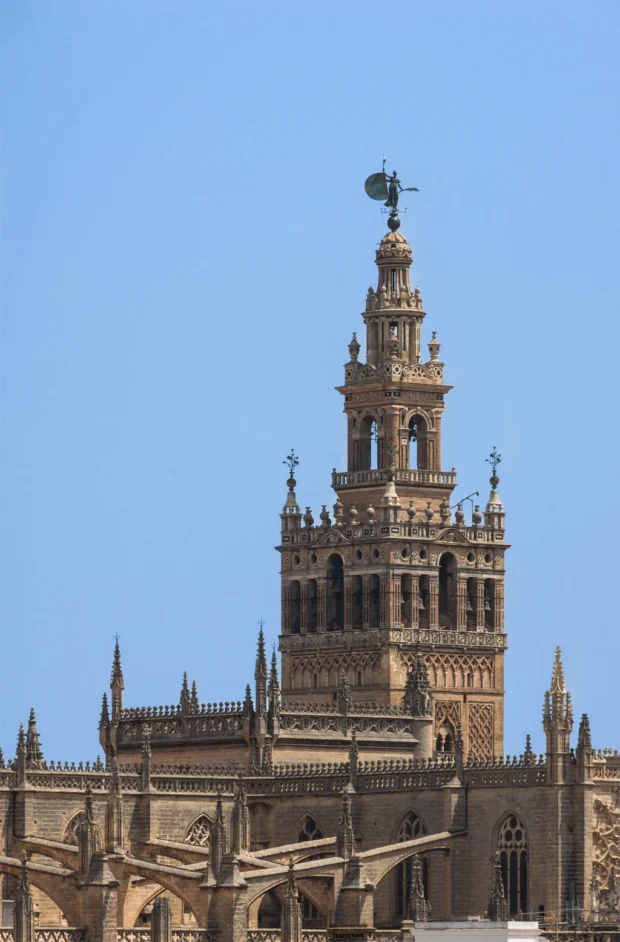
Climbing the Giralda tower is a local ritual. Its gentle spirals were once made for horses, so the journey is smooth and gradual. At the top, the entire city stretches before you: whitewashed roofs, orange patios, and the lazy curve of the Guadalquivir River. Legend says that after its completion, the builders declared, “Let’s build a church so beautiful and so great that those who see it built will think we were mad.” Walking under its stained glass, I found myself agreeing.
Alcázar of Seville: Royal Labyrinths and Moorish Whispers
A short stroll from the cathedral, I stepped into the Alcázar of Seville a royal palace whose walls seem alive with color. Every tile (azulejo), arch, and reflecting pool tells a centuries-old story. The symmetry and detail of the halls are the handiwork of both Moorish and Christian craftsmen, making this palace a treasure chest of Spanish history. Whether you know the legends of al-Andalus or come in search of shade, the Alcázar’s gardens offer peace from the city’s midday heat.
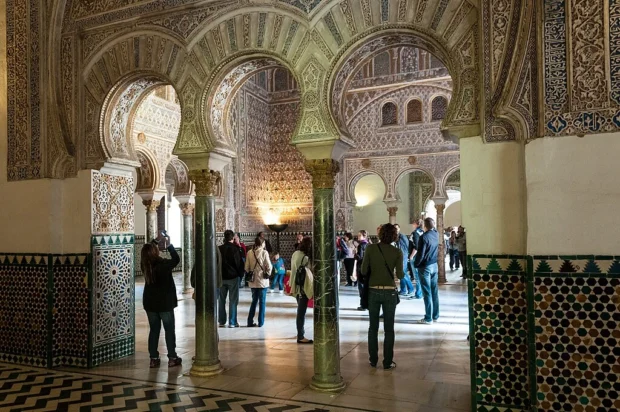
In spring, orange trees fill the air with an intoxicating perfume. In my favorite courtyard, peacocks strut across sunlit paths as if posing for paintings. It’s easy to imagine sultans or queens strolling here before banquets or secret meetings. The palace also offers a glimpse into Seville’s multicultural heart, with Christian, Islamic, and even Renaissance designs layered like chapters in a well-read book.
Planning your Seville visit wouldn’t be complete without seeing the Alcázar’s royal gardens and Moorish architecture, more on its charm here: Alcázar of Seville.
Wandering Barrio Santa Cruz’s Labyrinthine Alleys
I lost myself (gladly) in Barrio Santa Cruz, the old Jewish quarter. Its narrow alleys twist unexpectedly. Sometimes a turn delivers you to a silent square, shaded by towering palm trees, where the laughter of a hidden tapas bar drifts from behind open windows. Bright geraniums spill from balconies overhead. Late at night, the white walls reflect soft lamplight, and shopkeepers lean in doorways, happy to chat about favorite Flamenco singers or football matches.
Look up: you may spot a tiny sign with a painted tile showing a saint or legend linked to the street’s name. Or listen carefully for the fluttering of doves gathering in tiny plazas. This is not a district for maps or schedules. Here, I learned to walk slower, appreciating how every courtyard and doorway bears silent witness to centuries of daily life.
Plaza de España: A Semi-Circular Ode to Andalusia
The Plaza de España is one of Seville’s gifts to the senses. Built for the 1929 Ibero-American Exposition, its curves shimmer in terra-cotta and blue tiles. Walking beneath its shaded galleries, I watched couples boating along the shallow canal and children racing over mosaics. Each province of Spain is honored with its own tiled alcove my favorite was Cádiz, for its maritime blues and ship motifs.
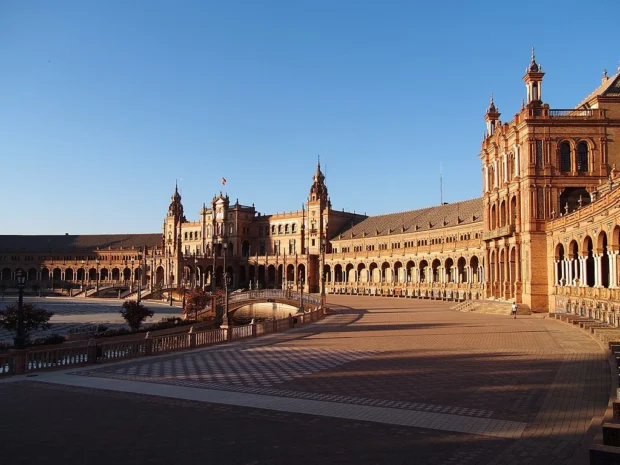
Some say the plaza appears oddly familiar; perhaps you’ve seen it in movies. In real life, it’s even more impressive. Musicians gather here—on one afternoon I watched a group playing traditional Sevillana music, while a lone dancer spun in a circle, skirt swirling like a captured flame. The nearby park offers cool green shade, with fountains covered in mosaic and the hum of cicadas in the air.

Metropol Parasol and Stories Above the City
In a city so rich with the past, Metropol Parasol known locally as Las Setas (“The Mushrooms”) looks almost futuristic. This soaring wooden canopy shelters a lively square below, where markets set up on weekends and families gather for ice cream or coffee. I loved walking its upper walkways at sunset; the views stretch out to every church tower and rooftop café. There’s an archaeological museum below, hiding Roman ruins right beneath the city’s buzz.
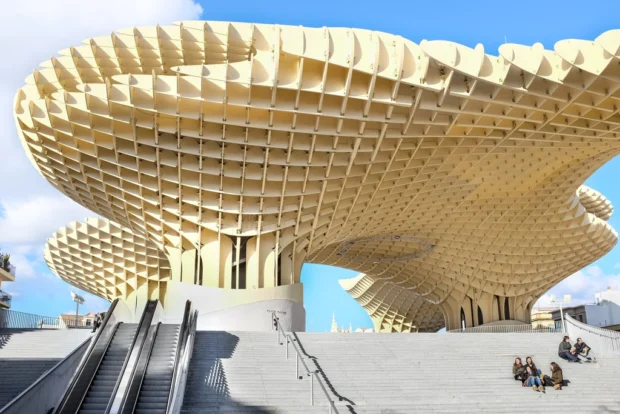
Oddly, not everyone in Seville agrees on the Parasol’s beauty. Some say it’s an architectural oddity; others now claim it as a symbol of modern Seville. In one afternoon, I heard both sides while sipping a tinto de verano nearby whatever your view, its shadow and shade are a welcome comfort in July.
Towers, Legends, and a Golden Reflection
By the riverside, the Torre del Oro (the Golden Tower) glints in the sun. Built in the 13th century, it once guarded the port and stored precious metals arriving from the Americas. Now, it holds a small naval museum and opens its rooftop for sweeping river views. Some local children swear you can see ships’ ghosts moving on the water at twilight, but I only found calm and the gentle scent of jasmine carried on the breeze.
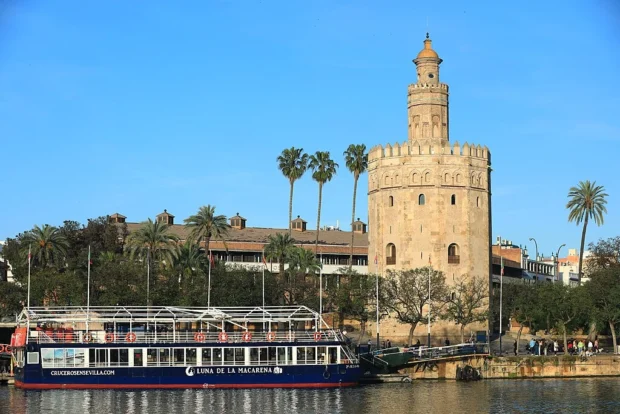
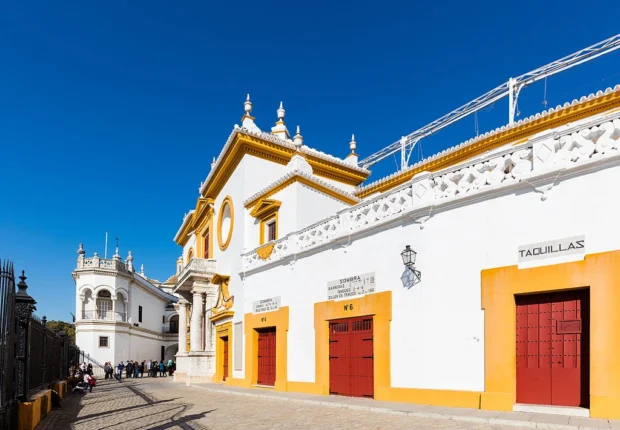
Not far from the tower is La Maestranza Bullring, its white-and-yellow walls standing strong against the sky. I learned that even if you never see a corrida, a tour reveals the artistry of costumed riders and the traditions that still spark debates in Spanish culture. The city’s oldest bridge, Puente de Triana, leads across the river into Triana, a neighborhood famous for pottery studios and lively Flamenco bars. Crossing at dusk, the lights of both banks reflect in the water, as if painting the scene twice.
Art, Manuscripts, and Quiet Sanctuaries
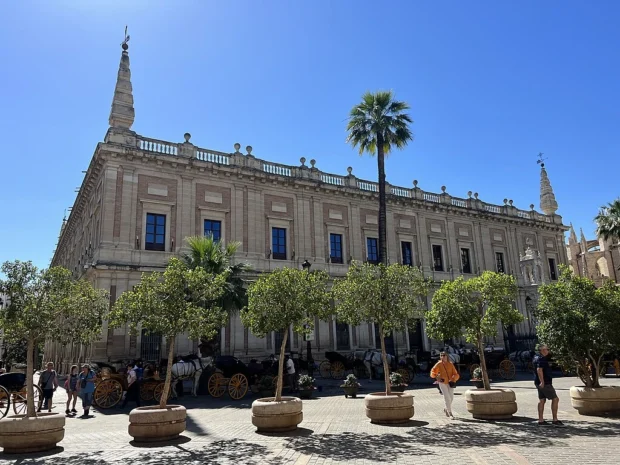
Behind the cathedral, the Archivo General de Indias holds treasures not of gold but of paper endless archives of Spain’s colonial past, with letters signed by Columbus and maps that changed empires. I was surprised by how peaceful the reading rooms are; sunlight filters through high windows onto marble floors. You do not need to be a scholar to feel the weight of history here.
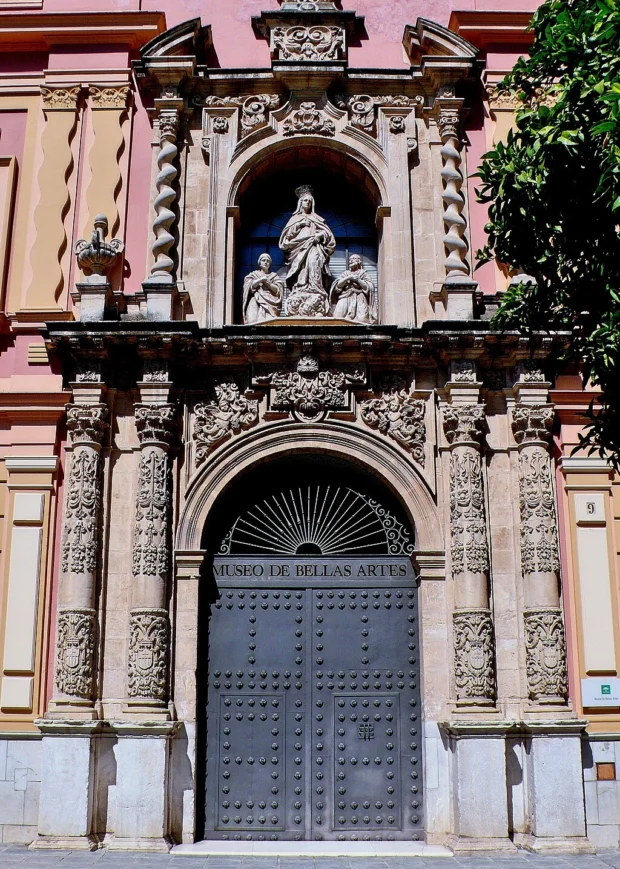
Elsewhere, the Museum of Fine Arts of Seville is a treat for anyone with a love of painting. Its halls are home to masterpieces from Spanish Baroque painters. Few crowds reach the upper galleries, so I sat alone with canvases filled with dramatic light and shadow, learning more about Spanish soul than any guidebook could explain.
Where To Stay, What To Taste, Getting Around
Seville offers stays for every mood. In Barrio Santa Cruz, guesthouses fill historic homes wrapped around leafy patios peaceful, central, and often scented with orange blossoms. For those who like a view, renting an apartment near the river or in Triana means waking to church bells and market buzz. If you seek old-world quiet, consider family-owned pensiones tucked along cobbled lanes. Some newer hotels in the city’s north edge blend local tilework with modern simplicity.

As for food, Andalucía is a land of slow pleasures. Breakfast often means hot chocolate and churros in El Arenal, or a simple tostada with local olive oil in Triana. By midday, tapas bars open: tortilla de camarones (shrimp fritters), espinacas con garbanzos (spinach and chickpeas), and melt-in-your-mouth jamón ibérico. Most surprising, perhaps, is salmorejo a thick, cold tomato soup topped with egg and ham, perfect when the air shimmers with heat.
Seville’s districts compete for food lovers’ hearts. Santa Cruz is best for slow evening meals on open-air terraces. Triana’s tapas are bold, with more spice and less ceremony. In Alameda, I found vegan options and international twists on Andalusian classics. Prices are rarely high, and house wine arrives fast (sometimes with olives “on the house” if the waiter likes you).
Arriving in Seville is simple. From the airport, frequent buses connect to the city center in under 40 minutes, passing by landmarks and giving a first taste of the city’s rhythm. If you come by train, Santa Justa station sits not far from the old town jump on a local bus or enjoy a walk beneath the orange trees. Within the city, I found it easy to walk everywhere, but trams run along major streets if feet grow tired.
Everyday Life: Customs, Markets, and Festive Surprises
Sevillanos prize conversation and friendliness, so don’t be surprised when strangers greet you with a warm “¡Buenas!” a smile is often more useful than perfect Spanish. During siesta (usually 2pm to 5pm), many shops close and streets grow quiet; this is time for family meals or rest, not errands. At the table, wait for everyone before starting to eat, and if you’re invited to join a toast, clink glasses and meet everyone’s eyes bad luck otherwise, they say.
Every neighborhood seems to host its own street market. I wandered the Feria market on a Thursday, finding old typewriters, painted fans, and fresh produce so bright I wanted to photograph every tomato. Early mornings, cafes fill with chatter as locals debate politics and football over milky coffee and churros. On Sundays, flea markets take over riverbank promenades, where you can find antique postcards and hand-painted tiles.
Craftsmanship thrives here. In Triana, I watched artisans shape pottery, their hands stained blue from the glaze. Elsewhere, small workshops sell embroidered shawls or leather sandals made with skills passed through generations. If you’re lucky to visit during Feria de Abril or Semana Santa, the city transforms streets bloom with colorful lanterns, processions drift past to mournful music, and horses parade in fine dress.
Curiosities and Favorite Quiet Corners
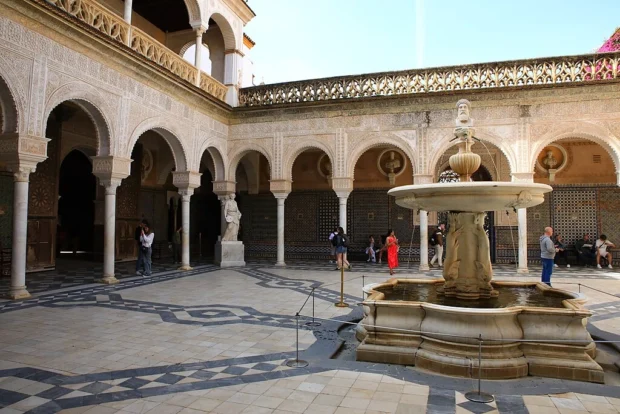
Seville loves secrets. I once found a painted tile hidden at eye level in Plaza del Salvador, showing a scene from a forgotten saint’s life. In Casa de Pilatos, a noble mansion mixing Italian Renaissance with Mudéjar style, the gardens bloom with roses and ancient fountains whisper. Palacio de las Dueñas, still owned by the Alba family, holds courts filled with silent statues and citrus trees heavy with fruit visiting feels like stepping into an Andalusian dream.
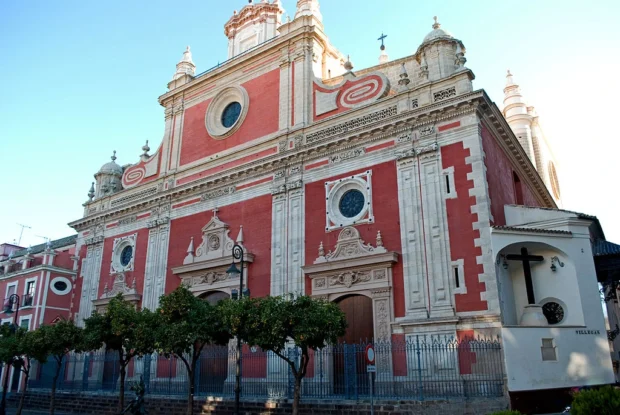
Some evenings, I wandered into Iglesia de El Salvador, where flocks of swallows dart through the square at sunset. Inside, the golden altarpiece glows in candlelight. Elderly parishioners linger to talk after Mass, sharing stories of saints and local celebrations. Seville breathes through these places grand or humble, always alive.
Final Impressions: Seville’s Rhythm and Lasting Spirit
As my weeks in Seville stretched longer, I realized this city rewards those who slow down. There is always another courtyard to discover, another plate to share, another story to hear from a neighbor leaning out a window. The sunlight sharpens colors everywhere: the blue tiles, yellow arches, green palm fronds. The air is rich with orange, jasmine, and laughter.
Walking home at midnight, the old stones still hold the heat of day. Drummers practice Flamenco steps near Plaza de España, and the scent of roasting chestnuts drifts down Avenida de la Constitución. I left Seville carrying its energy in my steps its beauty is not just in what you see, but in what you feel.
Visitors drawn to Seville’s rich history may find Chiang Mai’s historic heart offers a calming contrast with ancient temples and gentle rhythms.

Explorer of historic places and culinary traditions, combining landscape appreciation with food culture.
- Giralda cathédrale tour Seville Espagne by Jebulon on Wikimedia Commons – cc0
- Giralda roof cathedral Seville Spain by Jebulon on Wikimedia Commons – cc0
- Alcázar of Seville (7077897551) by Michal Osmenda from Brussels, Belgium on Wikimedia Commons – cc by 2.0
- Plaza de España, Seville – 2013.07 – panoramio by rheins on Wikimedia Commons – cc by 3.0
- Parque de María Luisa – Seville – Plaza de España – Torre Sur (14727755685) by Elliott Brown from Birmingham, United Kingdom on Wikimedia Commons – cc by-sa 2.0
- Metropol Parasol, Seville, Spain (16502038801) by Kristoffer Trolle from Copenhagen, Denmark on Wikimedia Commons – cc by 2.0
- Sevilla – Torre del Oro and river Guadalquivir – 2 by Benjamin Smith on Wikimedia Commons – cc by-sa 4.0
- Plaza de toros de la Maestranza, Sevilla, España, 2015-12-06, DD 69 by Diego Delso on Wikimedia Commons – cc by-sa 4.0
- Bâtiment Archives Générales Indes – Séville (ES-SE) – 2023-04-24 – 1 by Chabe01 on Wikimedia Commons – cc by-sa 4.0
- Portada principal del Museo de Bellas Artes de Sevilla by José Luis Filpo Cabana on Wikimedia Commons – cc by-sa 4.0
- Sevilla Barrio Santa Cruz by Heinz Joerg Kretschmer on Wikimedia Commons – cc by 3.0
- Sevilla – Casa de Pilatos – 1 by Benjamin Smith on Wikimedia Commons – cc by-sa 4.0
- Iglesia del Salvador 006 by Anual on Wikimedia Commons – cc by 3.0


.jpg)

.jpg)
.jpg)


_-_2023-04-24_-_1.jpg)

.jpeg)

