
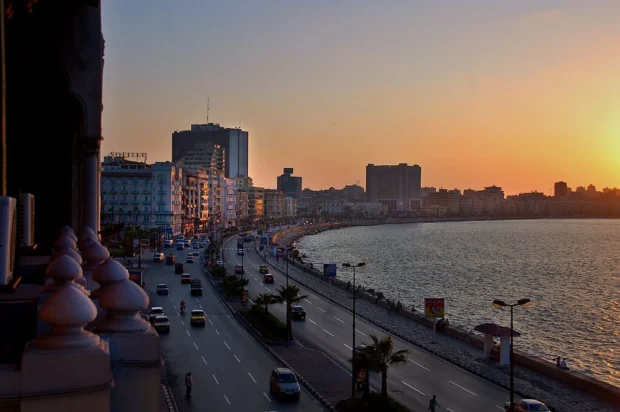
Alexandria, Egypt, is a city full of contrasts and stories. Known to many as the “Bride of the Mediterranean,” Alexandria stands at the intersection of ancient history and everyday life. Greek, Roman, Egyptian, and modern influences blend across its busy streets and coastline. Alexandria is not just a famous name from history books it is a living city with world-class landmarks, unique food, a friendly atmosphere, and local quirks. Walking down the Corniche, the long road beside the sea, you’ll see old fishermen, students, street vendors, and families enjoying sea breezes. Whether you’re drawn by the legendary past or curious about today’s life, Alexandria welcomes you with open arms.
Table of Contents
Visitors drawn to Alexandria’s rich history might appreciate the nearby Pyramids of Giza, a majestic symbol of Egypt’s ancient civilization and vast heritage.
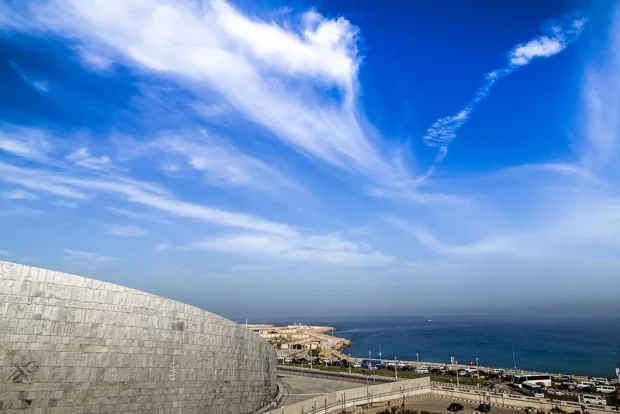
Bibliotheca Alexandrina and Knowledge Reborn
One of Alexandria’s proudest sights is the Bibliotheca Alexandrina. This modern library is inspired by the old Library of Alexandria, once the most famous library of the ancient world. I visited on a sunny day, with palm trees waving beside the building’s huge, white disc shape. Inside, the main reading room feels like a cultural spaceship giant sloping windows flood the huge hall with light, and you hear the quiet rustle of readers in dozens of languages.
Locals told me the library hosts exhibitions, concerts, and even planetarium shows. It is much more than books; on my visit, I explored an exhibition of Egyptian printing and listened to schoolchildren recite poetry. There’s something special about listening to a guide explain the dreams behind this place how Alexandria seeks to bring people together, just like in ancient times. If you are interested in knowledge, art, or just want a peaceful spot to relax, this library is worth your time. “Ahlan wa sahlan,” (You are welcome) said a librarian to me when I arrived, and I truly felt it.
Citadel of Qaitbay and Timeless Defenses
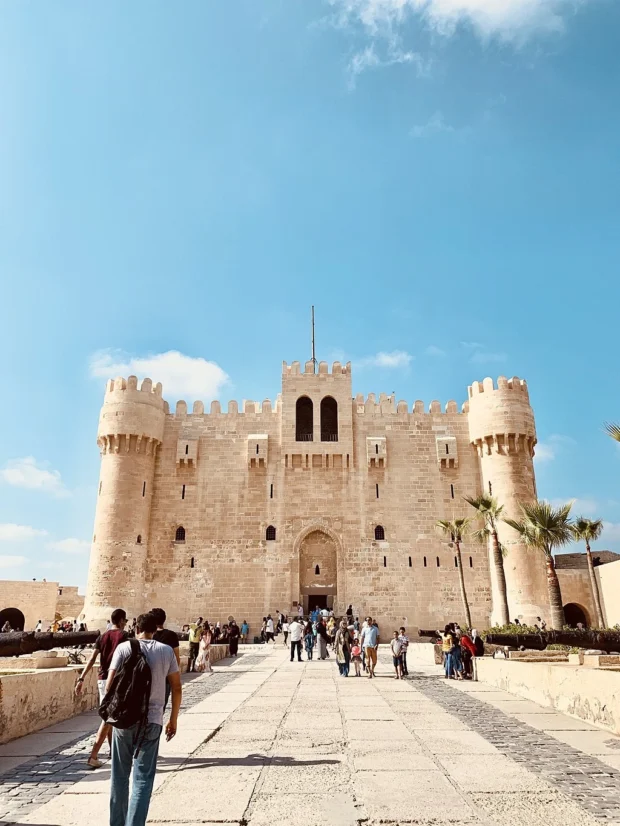
At the western tip of Alexandria’s harbor sits the Citadel of Qaitbay, a thick-walled fortress built in the 15th century. The citadel stands where the ancient Lighthouse of Alexandria once shone one of the original Seven Wonders of the World. Although the lighthouse itself is gone, its ghost lingers among the wind and salt spray.
Walking up to the citadel, I was greeted by the laughter of families and the sound of the sea crashing below. Inside, the stone passageways echo with history. Climbing to the walls, I admired the view: fishing boats bobbing below, the city’s skyline stretching to the east, and the endless blue of the Mediterranean. It’s easy to imagine old naval battles o traders entering the port. If you look closely, you can spot carvings on the ancient stones—some claim they are from old times, proof of the many nations that passed through Alexandria.
Roman Amphitheatre and Ancient Performances
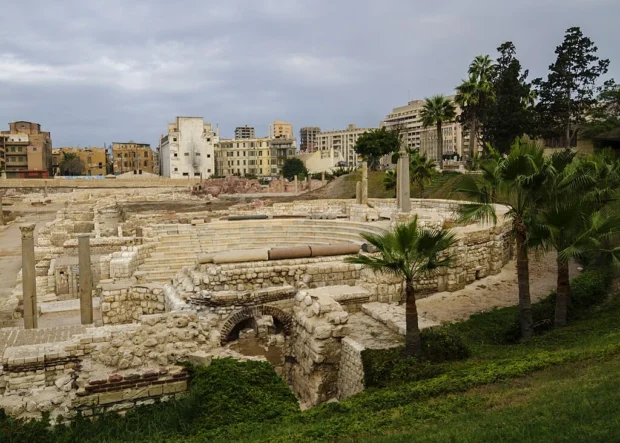
Tucked away amid busy streets and modern apartments, the Roman Amphitheatre is a surprising relic. Archaeologists only found it in the 1960s when they were searching for Napoleon’s lost city records. Now it’s a peaceful open-air arena of marble benches and broken columns. I liked sitting quietly here at sunset, watching kids play hide and seek among the ruins. Every stone tells a story; my guide explained this theatre once hosted everything from poetry readings to political debates.
The amphitheatre is smaller than those in Rome but feels intimate. It’s easy to picture toga-clad Alexandrians chatting about philosophy or the next big market day. Near the site, there are mosaics and statues kept safe in glass cases. If you say “Shokran” (Thank you) to the guards, you might see their smiles widen. Alexandria’s past is very close, waiting to be noticed even in the middle of city life.
Pompey’s Pillar, Catacombs and Anfushi Tombs
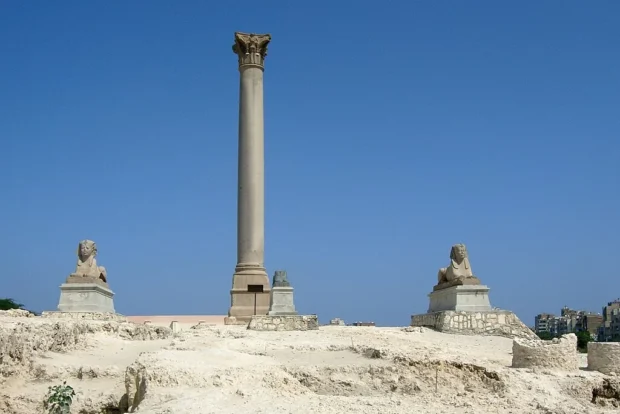
Not far from the city center stands Pompey’s Pillar, a single tall granite column more than 25 meters high. The pillar is not actually Roman General Pompey’s grave, as many think, but was built for Emperor Diocletian. Nevertheless, its dramatic silhouette against the sky is perfect for photos, especially with the ancient sphinxes at its base. Local legend says that if you walk around the pillar seven times, your wish comes true children still do this, laughing and challenging each other.
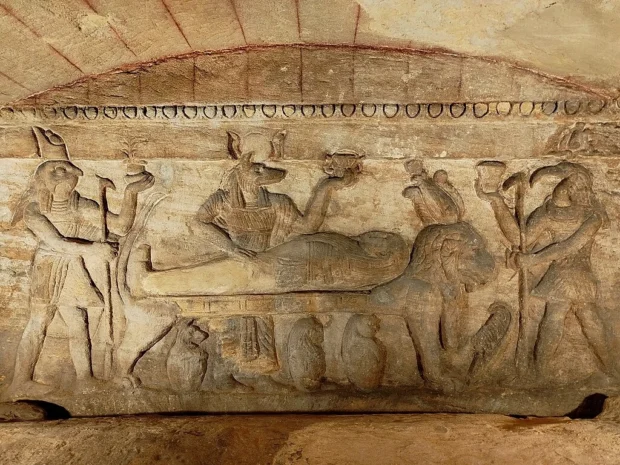
A short taxi ride away, the Kom El Shoqafa Catacombs offer a strange, magical world underground. You descend a spiral staircase into cool darkness, torch-beams crossing ancient frescoes of Greek and Egyptian gods side by side. Horses, snakes, and mysterious faces appear from the walls. It was both spooky and fascinating; it’s easy to believe the stories of ancient rituals and hidden burials. Nearby, the Anfushi Tombs show a different side of Alexandria’s multicultural past, with Greek columns and colorful Egyptian art together in one place.
Montaza Palace, Stanley Bridge, and the Corniche
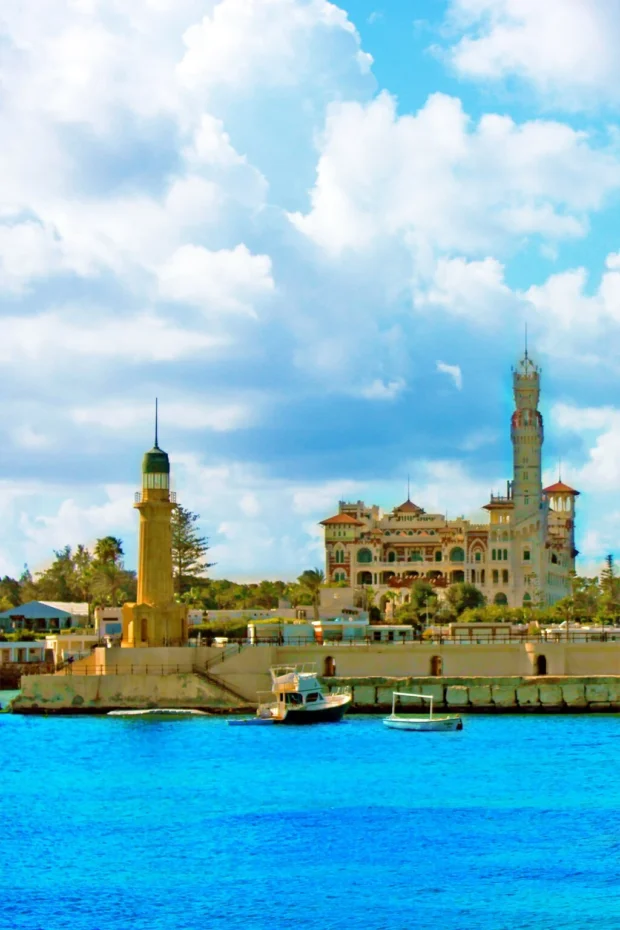
The Montaza Palace and its gardens are a green retreat on the city’s eastern edge. Locals love to picnic under the palm trees or walk the paths lined with flowering plants. The palace, built in the early 20th century, looks like something from an Italian fairytale balconies, turrets, and bright tilework. The gardens spill gently down to the sea, where fishermen wait for their daily catch. If you visit in the early morning, you might see a wedding party taking photos here, or elderly men playing chess in the shade. During busy weekends, you’ll hear laughter, music, and the smell of grilled corn. “Mashy,” (Okay) a gardener told me when I asked if it was alright to take photos, nodding with a friendly smile.
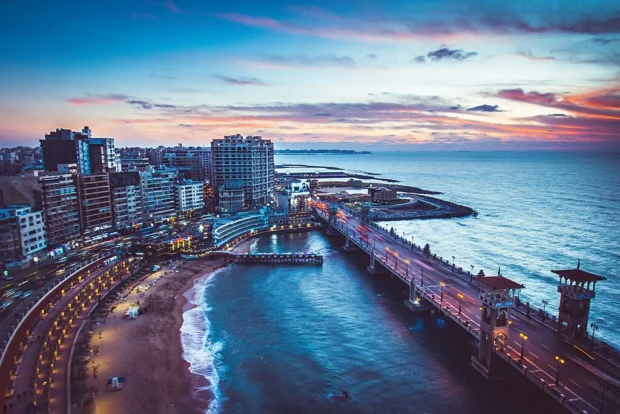
On the way back to central Alexandria, don’t miss Stanley Bridge. This elegant bridge stretches across a small bay and is best enjoyed at sunset, with golden light on the waves and vendors selling popcorn on the promenade. The bridge’s lamplights turn on as day slips into night, giving the place a soft, romantic air. I recommend a slow walk here; some say it’s the most beautiful spot on the Corniche.
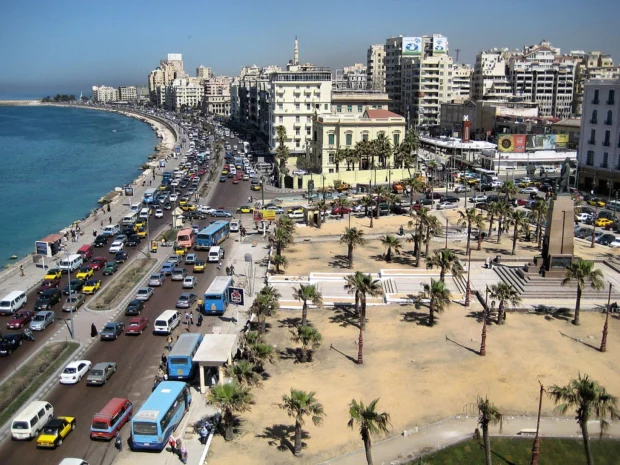
The Corniche itself is Alexandria’s legendary seaside avenue 17 kilometers of open air, people-watching, and gentle sea sounds. Each evening, the sidewalks fill with ice cream sellers, families, and people smoking shisha. Here, you feel the city’s pulse: old and young, rich and humble, blending into a peaceful crowd. If you want a simple, true taste of Egypt, order “shay” (tea) at one of the waterfront cafés and watch the city drift by.
Alexandria National Museum and Urban Heritage
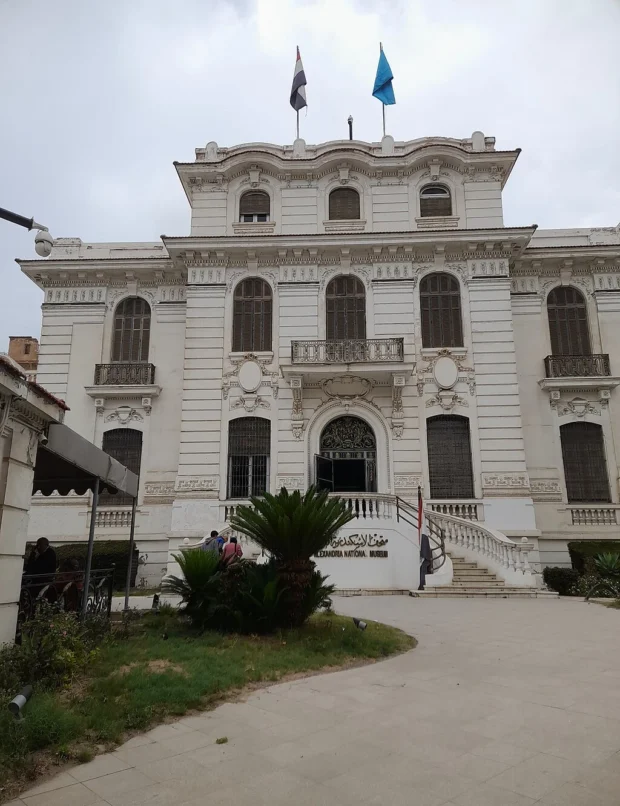
Set in a beautiful old villa, the Alexandria National Museum is a great starting point if you want to understand the city’s layers. Exhibits move from Pharaonic times to Greek, Roman, and Islamic eras gold coins, jewelry, mummy cases, and even Napoleon’s old shoes! I admired a model of the original Pharos lighthouse and learned about Alexandria’s Jewish community, who have left behind delicate silverwork and handwritten books.
Each room is small, with windows framing the city outside. For me, the museum summed up Alexandria’s spirit: one city, many identities. School groups fill the air with voices, guides share stories, and if you say “Sabah el kheir” (Good morning) to the museum staff, you’ll often receive a warm reply.
Regional Foods and Dining in Alexandria
Alexandrian food is famous all over Egypt and has its own style, thanks to the city’s history as a port. Along the Corniche and the Bahari district, I tried “feteer meshaltet” (a layered, buttery pastry) and the city’s special seafood. The most local dish is “sayadeya” rice cooked with fish, onions, and spices, usually served in clay pots. The flavors are rich but not too heavy, with hints of dill, cumin, and lemon. Many places serve fried calamari and shrimp, fresh from the Mediterranean.
Breakfast is a simple pleasure: “ful medames” (stewed fava beans) with sliced tomato and a little olive oil or “baladi” bread taken hot from the oven. In the old Attareen district, I tried “roz meammar,” a creamy baked rice sometimes flavored with chicken or lamb. Sweets like “basbousa” (honey cake) and “konafa” are sold in small shops. One local invited me to join his table and insisted, “Ekram el daif wajib,” meaning “Honoring the guest is a duty.” This phrase seems to guide Alexandrian hospitality everywhere I went.
Getting Around in Alexandria by Sea, Rail and Streetcar
When coming from Borg El Arab airport, you can take a shuttle or a minibus into the city. The trains from Cairo arrive at Misr Station, which is centrally located an easy walk to many main sights. If you wish to feel like an Alexandrian, try the blue-and-cream colored streetcars (trams) or microbuses that run along the Corniche. It is usually easy to ask for directions, and locals are quick to help if you say “Men fadlak/ik” (Please).
Traffic can be lively; crossing the street requires patience and a sense of rhythm. There are pedestrian crossings, but sometimes you need to join a group and cross together. For short distances, walking is pleasant, especially near the sea. Alexandria is mostly flat, so it is easy to get around even if it is your first visit.
City Traditions, Etiquette, and Social Harmony
Alexandrians are proud of their mixed heritage and tend to be open-minded. Dress is generally relaxed, especially on the Corniche, though when visiting mosques or churches it is respectful to wear long trousers or skirts and cover shoulders. Handshakes are common when meeting, and you’ll often hear “Salam Alaikum” (Peace be upon you) as a greeting. Men and women chat openly in public; it is a friendly but respectful city.
I noticed that when sharing coffee or tea, locals often pour the cup for others first, a small ritual of hospitality. Bargaining is normal in markets, but with humor rather than pressure. During my visit, I joined a group listening to traditional music at a seaside café the oud, a local instrument, sounded gentle and melancholy under the festival lights. Alexandria, with its mix of languages and customs, is a city where old rules and new ways live together comfortably.
Everyday Life, Hidden Streets, and Small Surprises
There’s more to Alexandria than its main sights. Wandering down small side streets, I found secret gardens behind old Italianate balconies and walls painted with murals of famous poets. Occasionally, black-and-white cats dart in and out of flower pots a local told me they are considered lucky. In the morning, groups of elders meet to play dominoes while children buy sugarcane juice from traveling carts.
Neighborhoods like El Raml and Sporting offer a slower pace and a look at daily routines. Bakeries fill with people at dawn, waiting for fresh “baladi” bread. Occasionally, you’ll see festivals or small religious parades, especially near Coptic and Greek Orthodox churches. The city’s Jewish, Italian, Armenian, and Greek families have all shaped its character, and their stories are woven into the names of gardens, streets, and food recipes.
Perhaps what stays with visitors is Alexandria’s warmth a city where everyone greets strangers, where “Ahlan wa sahlan” is more than just a phrase, and where every meal, street corner, and old stone seems to invite you to listen a little closer.
After exploring Alexandria’s rich history, you might appreciate Monaco’s charming streets and stunning seaside views to see another unique Mediterranean city.

Traveler exploring cultural intersections, sharing reflections on similarities and differences between traditions, lifestyles, and food.
- Alexandria – Egypt by David Evers from Amsterdam, Netherlands on Wikimedia Commons – cc by 2.0
- Bibliotheca Alexandrina (1) by A maraqa on Wikimedia Commons – cc by-sa 4.0
- Citadel of Qaitbay, Alexandria by Amal Nagi on Wikimedia Commons – cc by-sa 4.0
- Roman Theater-2 by Ahmed Yousry Mahfouz on Wikimedia Commons – cc by-sa 4.0
- AlexSarapeionPompeysPillar by Roland Unger on Wikimedia Commons – cc by-sa 3.0
- .Catacombs of Kom al Shugafa by Bilal Detailz on Wikimedia Commons – cc by-sa 4.0
- Montaza Palace1 by Nooraly on Wikimedia Commons – cc by-sa 3.0
- Stanley Bridge, Alexandria, March 2018 by Mona Hassan Abo-Abda on Wikimedia Commons – cc by-sa 4.0
- Alexandria Corniche (2346973947) by Francisco Anzola on Wikimedia Commons – cc by 2.0

.jpg)


.jpg)