

Marseille is the oldest city in France, blending windswept Mediterranean coastline with steep hills and a raw, unforgettable energy. As a writer who once wandered its narrow lanes and sunlit squares both as a resident and a perennially curious outsider I’ve watched morning light hit ancient stone, joined neighbors chatting over coffee, and listened as voices from the sea and hills filled the city’s layered rhythm. In this guide, I share the marvelous, imperfect, and delicious world of Marseille a place defined by its architectural wonders, market culture, maritime history, and unexpected poetry carved into every market shout and café table.
Table of Contents
Arriving in the Heart of Marseille
Marseille opens up to visitors with the ease of a well-worn market apron. From Aéroport Marseille Provence, the easiest introduction to the city is a 25-minute shuttle bus to Gare Saint-Charles. Suddenly, limestone stairways rise above you the city comes to greet the newcomer. It’s easy, reliable, and quickly brings you to Marseille’s bustling core. From here, trams and the blue line Metro whisk you between neighborhoods. Walking, though, rewards you with scents of anise, the clatter of dominoes in public squares, and the echo of sea birds overhead. Here, every hill or turn delivers a fresh view of sky and sea a city made for wandering.
Markets, Cafés and Street Life: Morning to Night
Marseille’s days begin at the markets. The Marché Noailles, close to the old port, is a mad, joyous splash of color and fragrance. I wandered here first by accident, finding myself dazzled by mounds of lemons and herbs, the scent of mint and spice from Algeria, oranges that taste of sun, and sellers whose French bounces with regional accent and laughter. Here, past and present blend like Marseille’s food always layered, often surprising. In the nearby Capucins district, conversations drift between North African Arabic, Provençal, and French. The air is heavy with roasting lamb, dried lavender, and salt from the nearby sea.
Riga’s vibrant markets and historic Old Town have a unique charm; its spirit complements Marseille’s lively market culture beautifully. Learn about Riga’s markets and colorful streets here.
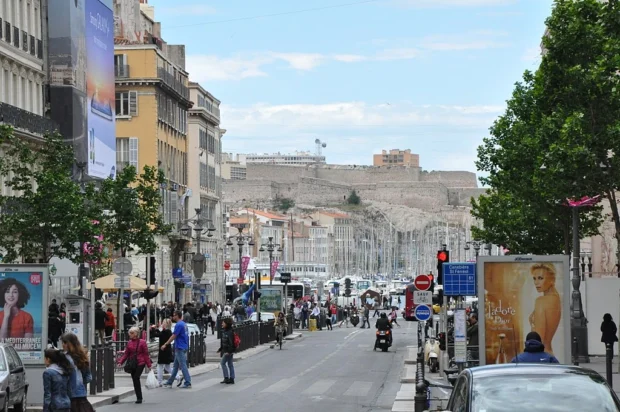
Nothing beats the pleasure of settling into a street-side café with a cup of thick “café” or maybe a small pastis a gentle anise spirit typical of Marseille’s midday breezes. At Cafés le long de la Canebière, that iconic boulevard stretching from the port, you feel the city’s pulse. Literary cafés mix old men reading Le Monde, students tapping laptops, and artists sketching faces glimpsed moments earlier in the market. Marseille taught me to let time wander, not race.
Basilica of Notre-Dame de la Garde and the City’s Soul
No place in Marseille seems to contain as much hope, memory, and quiet storytelling as the Basilica of Notre-Dame de la Garde. Rising above the city on its limestone outcrop the “bonne mère,” or “good mother,” as locals call her keeps both sailors and city-dwellers anchored in grace, whether in storm or sunshine. The climb is steep; passing olive trees and lively staircases, you hear church bells battle with seagull cries. From the top, Marseille stretches below: terracotta roofs, royal blue water, distant white sails.
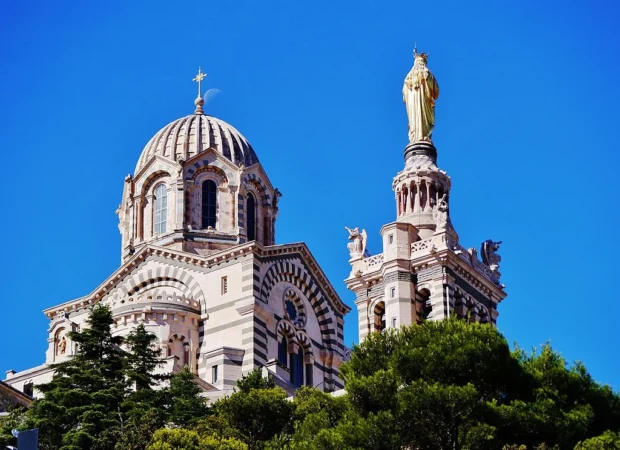
Inside the basilica, tiny painted boats and sailors’ gifts hang from the ceiling tokens of gratitude, prayers sent up from fishermen and families. On stormy days, the church is filled with the smell of beeswax candles and the silent prayers of the city’s oldest families. Once, arriving straight after a market morning, sticky with orange juice and still smelling of coriander, I watched an old woman light a candle and murmur her thanks for “le mistral,” the famous wind that can clear the skies or shake them wild.
The Vieux-Port: Marseille’s Beating Heart
The Old Port Vieux-Port is the bustling, salt-filled heart of Marseille’s maritime history. Here trawlers bob by the quayside and fishmongers shout the day’s catch. I would sometimes, late in the morning, slip half a baguette into my bag and watch men in blue aprons fillet tiny sardines or thick, pink mullet. If you ask a local child what Marseille tastes like, they might say “the sea.” Nowhere is this truer than the port, especially on Saturdays, filled with voices, ferry horns, and sometimes the wild, cheerful swirl of street music as another ship arrives with travelers from Africa, Italy, or Greece.
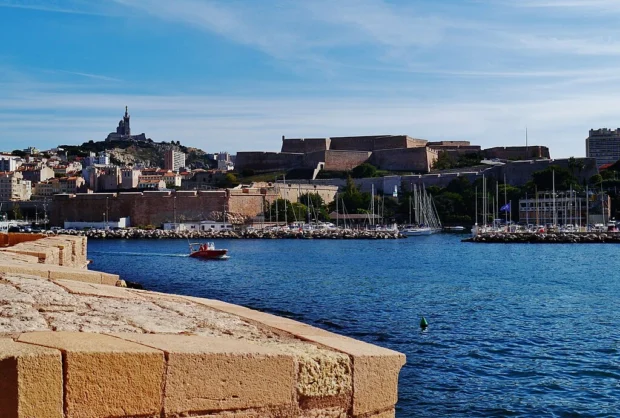
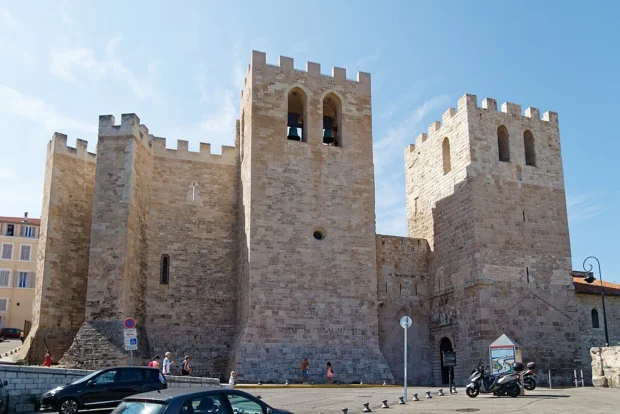
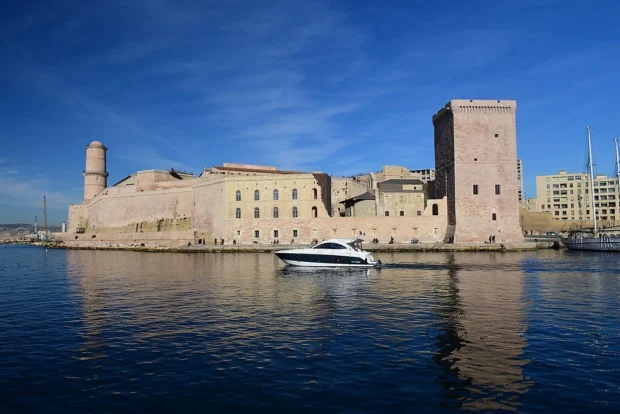
Not far from the port’s edge, Fort Saint-Jean rises with its honey-colored stone and views that sweep across the old city. The nearby Saint-Victor Abbey, centuries older than many nations, stands in quiet witness to the city’s faith and storms. I lost a day in their shadow, reading street poetry carved into stones near the abbey and found myself grinning at a group of pensioners playing pétanque, their laughter almost as loud as the gulls.
Château d’If and Myths on the Sea
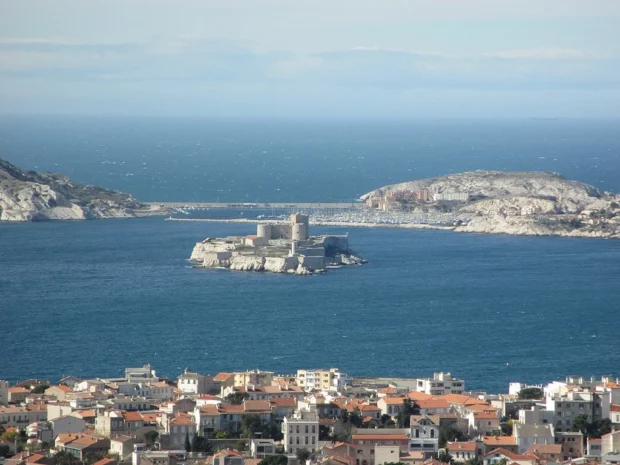
Take a small ferry out from the Vieux-Port, and in just 20 minutes you’ll find yourself in the midst of literary legend. Château d’If, a fortress surrounded by the cold blue Mediterranean, once held prisoners whose names have echoed in novels for centuries. Alexandre Dumas made it famous in “The Count of Monte Cristo.” When standing inside those thick walls, I heard the wind singing through tiny window slits and imagined the scrape of chains or the excitement of a secret message passed from cell to cell. Today, the fortress is silent except for the clang of tour groups and the nudging of boats against its dock a postcard of both freedom and longing, not just stone but symbol.
For those fascinated by maritime history and coastal forts, the Belém Tower in Lisbon offers a rich continuation of these themes beyond Marseille’s shores.
Le Panier Neighborhood and Artful Corners
Back on the mainland, I often wandered into Le Panier Marseille’s oldest district and a living museum of colors, murals, and tangled alleys. The stairs here are dizzying. Laundry swings overhead. On almost every corner, there is a café with hand-painted signs and, sometimes, a dog sunning itself on a doorstep. Artisans keep small workshops open, their doors painted a hopeful blue; you might find ceramics, soap-makers, even a quiet bookshop filled with poetry from Marseille and North Africa alike.
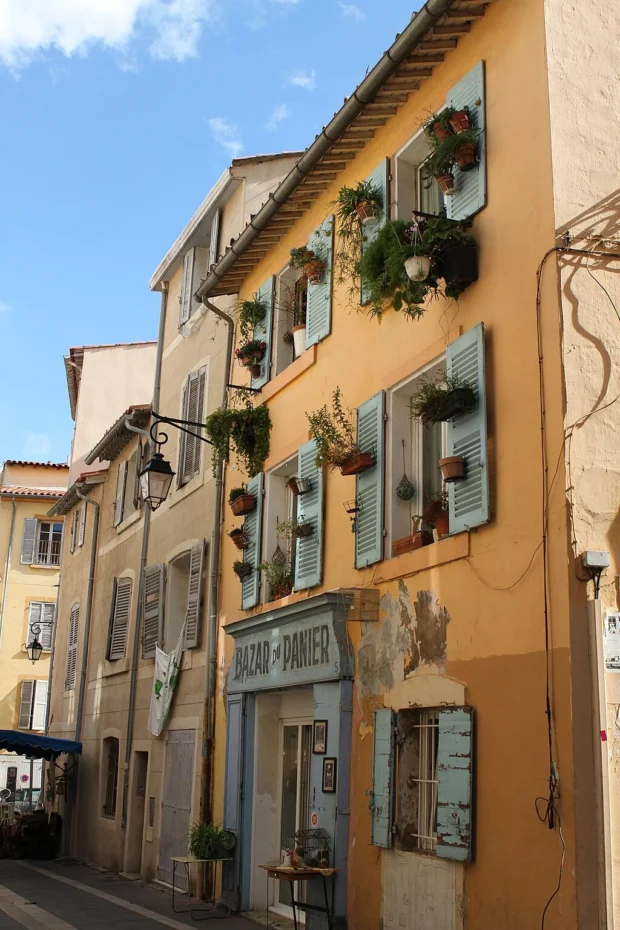
Le Panier is not polished, not always tidy. Its walls remember wartime struggles and immigrant stories. And yet in spring, when the jasmine blooms above flaking shutters, it feels like something alive a reminder that Marseille’s soul is restless but generous. Occasionally, festivals in the square fill evenings with music: thick drums, bright laughter, and couples dancing beneath the lamps.
Where Modern Meets Ancient: MuCEM and Palais Longchamp
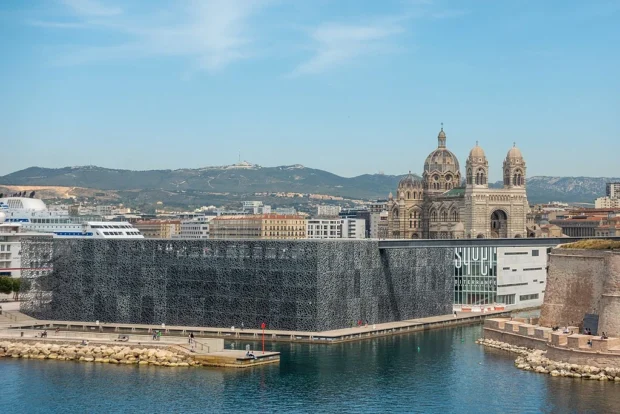
On the waterfront, the Museum of European and Mediterranean Civilisations MuCEM blends ultramodern black wire lattice with the old stones of Fort Saint-Jean, a bridge literally linking new and old. The exhibitions inside swirl through art, music, religion, migration, and food. I sat once in a rooftop café here, above the sea, as a storm gathered. Even the wind felt cosmopolitan: part sea, part city, part museum air. If you like architecture, the building itself is a marvel; if you like stories, every gallery glimmers with them.
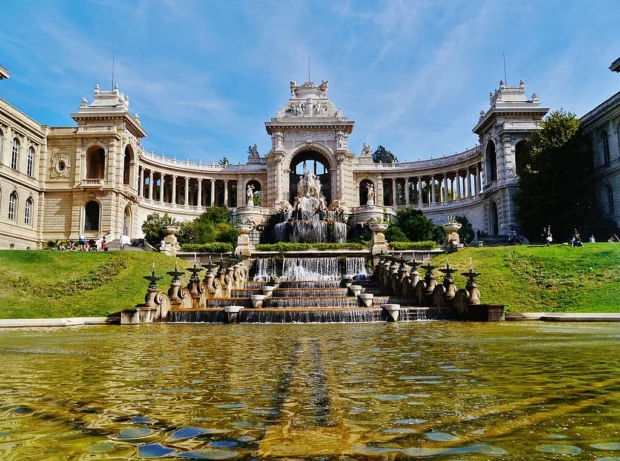
Further uptown, the Palais Longchamp gardens and fountains surprised me. Built to celebrate a water canal in the 19th century, its monumental arches remind the city how vital water and beauty are. Often quiet except for children playing in the grass or older men studying chessboards by the fountain, this is another side of Marseille: green, calm, almost stately.
Calanques National Park: Wild Nature on the Edge
Just beyond the bustle, beyond the last tram stop, stretches the wild landscape of Calanques National Park. Sheer white cliffs drop to turquoise creeks where the water is so clear, I once watched a shoal of sardines flicker as if the sea itself was made of glass. The park is a patchwork of pine forest, rocky inlets, and tiny beaches some reachable only after a demanding hike, others by local boat from the southern edges of the city.
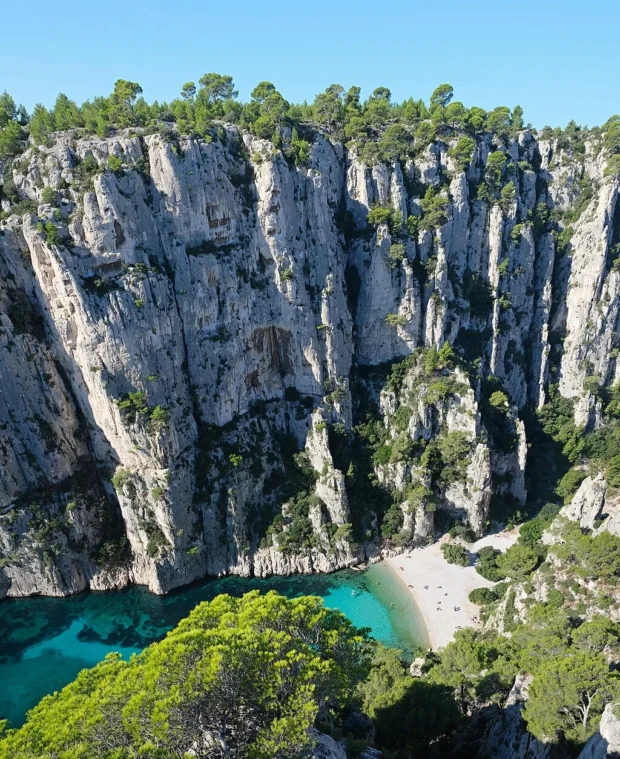
On weekends, families share picnics overlooking dramatic cliffs. Spring brings festivals of outdoor music, autumn brings mushroom hunters, and winter even the wind has stories. The Calanques reveal Marseille’s wild side: bracing, ancient, poetic. Sometimes, the sunlight here seems to touch each stone separately, and you understand why poets called it the “light of the gods.”
After enjoying Marseille’s lively markets, you might appreciate Alexandria’s unique blend of ancient sites and Mediterranean charm in its seaside neighborhoods.
Food Specialties and Market Finds
No Marseille day finishes without food. In the Noailles and Capucins markets, I spent afternoons tasting things new even to me a professional eater, I suppose. There is bouillabaisse in Vieux-Port restaurants: classic fish soup, thickened with saffron, served with garlicky rouille and hunks of bread grilled to a near-burnt crisp. In the markets, try panisses chickpea flour fritters popular in Le Panier. Locals love navettes, too: biscuity orange-blossom treats best dipped in late-afternoon coffee.
For lunch, there are socca stands (thin, peppery pancake), North African couscous steaming beside market stalls in Noailles, and pizzas whose roots speak to Italian immigrants from century past. Every food here tells a story. Even the ice cream on the Corniche borrows flavors from every country touching the Mediterranean shores.
Wine is local, white and mineral-rich; olive oil comes from groves nearby. Cheese is strong and tangy once, I accidentally took a wedge of pitch-black goat cheese on a train and became the enemy of an entire compartment.
Staying Amid Marseille’s Layers
Where to stay in Marseille? Choose a place by the Vieux-Port for old-world glamour, but Le Panier offers a wilder, artistic beat if you like mornings filled with sunlight and café sounds. The Cours Julien area tilts toward bohemian with graffiti-art walls, music venues, and artisan bakeries and excellent tram access to the city’s big sights. If you want village life by the sea, the Endoume or Roucas-Blanc districts, close to beaches and old workers’ houses, feel almost like a tiny town slipped inside a big city.
Avoid places right at the main railway station at night, as they are boisterous and never quite as romantic as postcards might hope. Instead, look for apartments or cozy hotels on sloping side streets a few blocks from the port. The temptation to chase every neighborhood is strong, but Marseille rewards those who settle in and make their own morning route to the bakery or noon visit to the park bench watching pigeons in the shade.
Customs and Everyday Culture
Marseille’s customs are old and new, shaped by centuries of migration, trade, and community life. Strangers greet each other more warmly than in Paris a quick “bonjour” goes a long way, especially with market vendors or tram drivers. People love debate: both in cafes and at market stalls, everyone has an opinion about football, politics, or the best way to cook fish. Don’t come in a rush; this is a city where time stretches. And never interrupt a game of pétanque (the city’s favorite pastime) unless you want to become the audience for elaborate, affectionate mockery.
While Marseille is open-hearted, you’ll notice that personal space is casual in markets or on trams elbows, baskets, and laughter bump you into the city’s warmth with surprising ease. Dress is casual but colorful; every neighborhood feels a little like its own small country, bringing food, music, and faces from across the Mediterranean.
Unexpected Facts and Everyday Oddities
A few Marseille oddities, collected as a resident and market wanderer: Sunlight here has a fierce, blue-white clarity many painters complain their colors fade too quickly. The city’s famous soap, “savon de Marseille,” is still made by traditional methods; I used to pass by old factories where stacks of creamy cubes waited to be wrapped for shop windows. The Corniche, a soaring seaside road, was partly built by forced labor from distant colonies something locals remember with both pride and sorrow.
Little secrets are everywhere. If you stop by the minor Saint-Loup district, you may find public poetry readings in old launderettes. During summer, a local “festival of wind” fills the port with strange kites and musicians from across southern Europe. And in the Parc Borély, sometimes, you’ll stumble onto weddings blending French, Armenian, Italian, and North African songs a reminder that Marseille belongs to the world as much as to itself.
Why Marseille Stays With You
After months among its hills and harbors, what stays with me about Marseille is the city’s honesty. It is open, loud, sometimes rough, always surprising. Here, daily life fish hauled to market, debates over coffee, doors painted by generations of families means as much as the monuments or blue horizon. People defend their city fiercely but are quick to welcome you into the fold. I left Marseille with hands still smelling of citrus and sea spray, mind ringing with laughter from afternoon markets. What more could a traveler ask for than a city that fills your pockets with stories?

Lover of cities, local cafés, and historic streets, exploring urban life with attention to architecture and culinary delights.
- Mucem et Cathédrale Sainte-Marie-Majeure de Marseille by Olena Ilnytska on Wikimedia Commons – cc by-sa 4.0
- Marseille (France), Canebière and Fort Saint-Nicolas by Philippe Alès on Wikimedia Commons – cc by-sa 3.0
- Marseille Basilique Notre-Dame-de-la-Garde Extérieure Dôme 4 by Zairon on Wikimedia Commons – cc by-sa 4.0
- Marseille Vieux-Port 11 by Zairon on Wikimedia Commons – cc by-sa 4.0
- Marseille-Saint-Victor-bjs180810-01 by Bjs on Wikimedia Commons – cc by-sa 4.0
- Fort Saint-Jean (Marseille), France, January 2017 280 (31338518344) by Tiberio Frascari from Bologna, Italia on Wikimedia Commons – cc0
- Château d'If à Marseille by Fredy LECLERCQ on Wikimedia Commons – cc by-sa 4.0
- Marseille 20131005 15 by Georges Seguin (Okki) on Wikimedia Commons – cc by-sa 3.0
- Museum of European and Mediterranean Civilisations (52114585778) by Kent Wang from Barcelona, Spain on Wikimedia Commons – cc by-sa 2.0
- Marseille Palais Longchamp Face Ouest 05 by Zairon on Wikimedia Commons – cc by-sa 4.0
- En-Vau calanque 2 by kallerna on Wikimedia Commons – cc by-sa 4.0

,_Canebi%C3%A8re_and_Fort_Saint-Nicolas.JPG)


,_France,_January_2017_280_(31338518344).jpg)


.jpg)

