

If you have ever dreamed of stepping into a Renaissance painting, Florence is the city for you. Florence, nestled in the heart of Italy’s Tuscany region, is an open-air museum filled with grand piazzas, narrow stone streets, and secrets hiding behind carved doors. This city gave birth to geniuses like Michelangelo and Leonardo da Vinci. You will see their legacy in every marble column and painted chapel. Some people might only know Florence for its famous dome, but this city is alive with stories, craft, and those perfectly imperfect details that linger in memory long after you leave.
Table of Contents
Historical Heartbeat: Piazza del Duomo and Florence Cathedral
Every visit begins at the Florence Cathedral, also called Santa Maria del Fiore, located in the Piazza del Duomo. When I first stood before its marble façade, striped in white, pink, and green, I felt both tiny and privileged. Filippo Brunelleschi’s dome, rising high above the city, was an architectural revolution of the 15th century a puzzle of bricks, set without scaffolding, that still amazes engineers today. To ascend those narrow steps inside the dome is sweaty work, but the view from the top red rooftops and distant Tuscan hills is worth every drop. Alongside, Giotto’s Bell Tower rings out across the city each hour, a reminder that art and engineering walk hand in hand here.

If you visit in the morning, the piazza wakes with soft light on the mosaics. Stop to notice the tiny irregularities in the marble in the early days, local craftsmen filled in gaps as best as they could, so each square has its own tale. Local legend even claims Brunelleschi left a small brick misaligned on purpose, to show that only God can achieve perfection.
Florence’s River Artery: Ponte Vecchio
A stroll along the Arno River leads you to the Ponte Vecchio, Florence’s oldest bridge. The name means “Old Bridge,” and true to its promise, the Ponte Vecchio has stood since 1345. Instead of cars, its surface is studded with goldsmith shops tiny boutiques that glow in the evening. Overhead, a hidden passage once allowed the Medici family to cross above everyone safely. Look up, and you might spot its arched windows.

During World War II, locals tell how every other bridge was destroyed but this one was spared supposedly because Hitler found it too beautiful to bomb. As you cross, try to peer into the water. Florentines used to throw their house keys into the Arno after locking up their shop on Ponte Vecchio forever, a quirky ritual that sealed the chapter of shopkeepers’ lives.
Sculpture Stories: Uffizi Gallery’s Surprising Corners
Just steps from the Arno, the Uffizi Gallery stretches along a quiet courtyard, its cooled arches offering shade from the sun. The Uffizi is a treasure chest: rooms spill over with Renaissance painting and ancient sculpture. You’ll recognize Botticelli’s “Birth of Venus” her shell, her flowing hair but lesser-known works also deserve your attention. My favorite surprise was a series of unfinished paintings; their rough edges reveal the thumbprints and choices of long-gone artists, reminding us that not all masterpieces are polished.
To complement your visit to Florence’s landmarks, the Uffizi Gallery offers a captivating walk through Renaissance art and architecture.

Visiting in the late afternoon means thinner crowds, giving you an almost private audience with the Medici collection. The Medici family used the Uffizi as their personal office (the name actually means “offices”). Marvel at their taste in marbles and mosaics, and note how even the corridor frames are carved with emblems each one celebrates Florence’s power and wit.
Palazzo Pitti, Boboli Gardens and Across the Arno
Cross the river to the Oltrarno district, a neighborhood where laundry still flutters from windows. Here stands the Palazzo Pitti, immense and fortress-like from the outside, but hiding colorful spectacle inside. This building housed dukes, kings, and Napoleon himself. In the Palatine Gallery, gold-leafed ceilings reflect light onto portraits of nobles and if you get lucky a quick mirror glimpse of yourself as a “visitor from the future.”
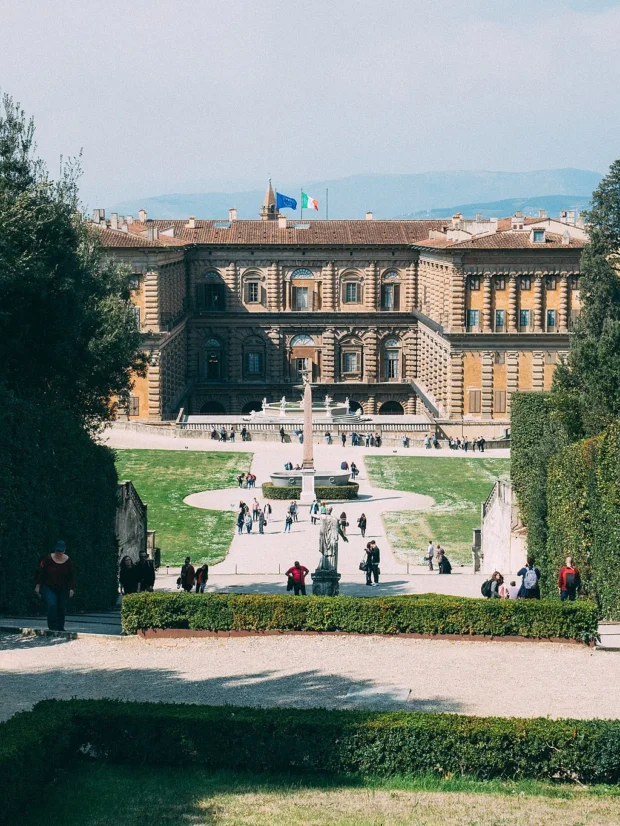
Behind the palace, the Boboli Gardens unwind in sculpted terraces. Statues of myth rise from green lawns, and small grottos are carved into the hillside. It’s no standard park: fountains burble beside centuries-old oak trees, lemon trees scent the air, and best of all you may stumble on small architectural follies meant to amuse Medici guests. Take your time along the gravel paths; the local trick for escaping summer heat is to find shade under an ancient laurel or lean on a stone balustrade and listen to church bells float up from the city below.

From Santa Croce to Colorful Markets
Florence’s churches are more than just places of worship; they double as timelines. At the Basilica of Santa Croce, the airy, cool nave holds the tombs of Michelangelo, Galileo, and Machiavelli. Frescoes appear behind almost every stone pillar. People leave scraps of notes, tiny thank-yous or questions to the famous dead proof that Florence is never finished whispering its secrets.

Wander a bit farther, and the scent of leather begins to rise; this means you are near San Lorenzo Market. Under the glass and iron market hall, butchers, bakers, and local farmers sell their crafts. It is the perfect place to try a lampredotto, a sandwich made from cow’s stomach. It’s not for everyone, but it’s a symbol of Florentine pride. I watched an old woman argue with a vendor about the “best tripe in town” with passion you’d reserve for a football match.
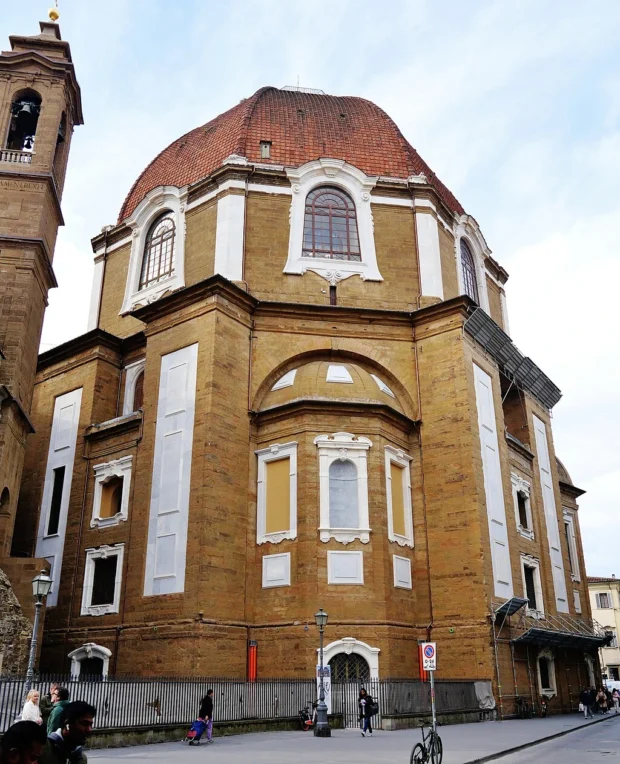
Behind the church, explore the Medici Chapels: here, granite and colored marble shape personal monuments to this powerful family. The Sagrestia Nuova, designed by Michelangelo, looks more like a sculpture gallery than a funeral chapel.
Squares, Fortresses and City Views
No city in Italy takes its public space quite as seriously as Florence. Piazza della Signoria acts as outdoor museum, watched over by the proud stone bulk of Palazzo Vecchio. This town hall stands as both city office and fortification. Its crenellated tower gives Florence its stomping, square-shouldered silhouette. Inside, I found richly painted ceiling panels and hidden passages peppered throughout legend says, even the Medici needed to make a secret escape now and then!
To deepen your insight into Florence’s heritage, take time to wander through the compelling history of Palazzo Vecchio at Piazza della Signoria.

Art lovers and fans of the strange should not skip the Bargello Museum. Once a barracks and prison, it’s now a home for sculpture masterpieces. Think of it as Florence’s answer to a sculpture zoo: lions, saints, and antique bronze monsters share space across tall echoing rooms. The textures of weathered marble amaze—at close range, chisel marks tell stories about the artists’ hands.

Near the train station floats the airy Santa Maria Novella, its black and white marble facade recalling Arabic geometric patterns proof of Florence’s centuries-long trade across the Mediterranean. Step inside to see its stained glass glow at sunset, even in winter.

A bus ride up winding roads takes you to Piazzale Michelangelo. Evening is the best time to visit. The square gives you a panoramic view of Florence its domes, spires, and clustered houses stretch toward the horizon. Many evenings, couples dance as musicians play classical guitar. The bronze David here is only a copy, but the romance in the air is utterly real.

Unusual Florence: Museo Galileo and Fiesole
Curious minds should pay a visit to the Museo Galileo. Here, ancient telescopes, globes, and scientific instruments fill cabinets in neat rows. Galileo’s preserved finger sits under a glass bell a quirky oddity that I found both strange and moving. Florence’s spirit is always in the search for knowledge and invention.
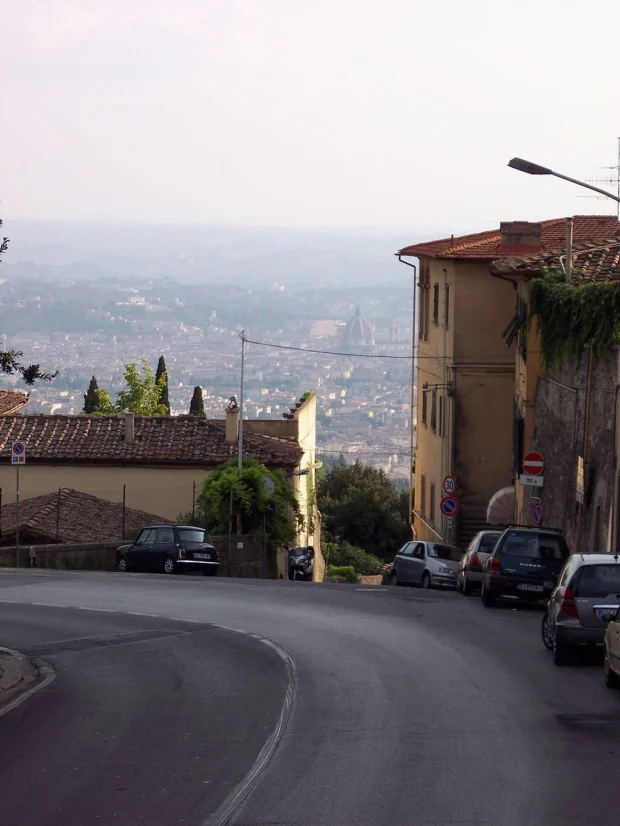
Just outside Florence, the hillside town of Fiesole rewards wanderers with views and Roman ruins. Even locals come here to watch the sun set and enjoy a gelato. A little amphitheater hosts summer plays an echo of Florence’s constant mix of past and present.
Getting Around Florence With Ease
Reaching Florence is simple for anyone arriving from abroad or from other Italian cities. If you fly to Florence’s Amerigo Vespucci Airport, the T2 tram links you to central Santa Maria Novella station in less than 20 minutes. The railway station itself is a modern landmark step outside and you already sense Renaissance geometry mixing with busy city life.
Florence’s city center is best discovered by walking. Streets here are narrow and one-way. Sometimes it feels like a maze, but losing yourself is a pleasure hidden courtyards and quiet chapels wait at almost every turn. Most museums and churches are within a 20-minute stroll of each other, and traffic is restricted in the historic core. Buses run frequently to the Oltrarno district and Fiesole.
Florence Food: Where To Eat and What To Try
Florence’s neighborhoods each tempt with food specialties. In San Lorenzo, traditional trattorias serve simple ribollita soup beans, vegetables, and stale bread brought to life with olive oil. Oltrarno’s bakeries fill the air with schiacciata, a chewy, olive-oiled flatbread. For a sense of the city’s craft, peek into a pasticceria and watch elderly bakers roll out cantucci, the crunchy almond biscuits Florentines dip into sweet Vin Santo wine.
Eating here is not just about filling up; it’s about taking part in a centuries-old tradition. You might see locals eating outside at family-run places, talking for hours. Don’t rush your meal Florence moves at a slower pace. Many restaurants close between lunch and dinner hours, so plan accordingly.
Where To Stay in Florence
Accommodations in Florence range from intimate guesthouses tucked in Renaissance-era palaces, to apartments above bustling markets with views over slate roofs. Staying near Santa Croce or San Lorenzo places you closest to the grand churches, while Oltrarno offers quiet streets and a taste of daily Florentine life. For those who want quiet nights and early morning city views, look for places along the hills leading to Fiesole.
A stay in the historic center is ideal for short visits, as most major sights are just footsteps away. If you want to wake to the sound of church bells rather than scooters, seek out quieter side streets running off major piazzas.
Local Customs, Stories, and Do’s and Don’ts
Florentines are proud of their city’s heritage, and conversation often weaves between modern woes and old stories. When entering a shop or restaurant, always greet with a “buongiorno.” Respect lines: jumping ahead is frowned upon. In churches, cover shoulders, and speak in low voices; many spaces are still in active use by locals. Learn to linger: whether admiring a painting or sipping espresso, nobody hurries you.
There is a tradition here that caught my ear at certain festivals, candlelight parades wind through the city, illuminating marble and mosaics in flickering glow. Ask locals for stories about the “Scoppio del Carro” (the Explosion of the Cart) in front of the cathedral each Easter, when fireworks burst from an ancient wagon.
Artisans still practice centuries-old crafts in Oltrarno’s tiny workshops. It is common to see leatherworkers at their benches, or goldsmiths engraving delicate filigree. Admire their work, but always ask before taking photographs. Florentines practice “sprezzatura” effortless elegance reflected not only in fashion, but in every aspect of life.
Postcard Moments and Little Oddities
If you wander back alleys behind the Uffizi, you might spot a tiny window, the “buchetta del vino.” In the past, these openings served as wine drive-throughs knock, pay, and receive your glass. Some are still used today for local festivals.
In Piazza della Signoria, notice the stone markings at your feet. These patches mark the “calcio storico” field, a wild ancestor of modern football, played each June in lively Renaissance costumes. Locals say it is part sport, part theater.
At night, as the city quiets, the Arno reflects golden light from the houses. Walk the riverbank and listen to stories from old residents, who claim that each statue in the piazzas moves ever so slightly once a year, to seek a new perspective on the city it serves.
Florence is a city of perfect imperfections: mosaic floors repaired with mismatched tiles, doors scuffed by centuries of hands, cafes with faded wall frescoes. The trick is learning to notice the beauty in these details the ones that keep Florence forever alive, forever evolving, and forever waiting for the next pair of admiring eyes.
- Firenze – Vista dal Piazzale Michelangelo by PROPOLI87 on Wikimedia Commons – cc by-sa 4.0
- Florence, Italy, Brunelleschi's Dome of Florence Cathedral at sunset by Vyacheslav Argenberg on Wikimedia Commons – cc by 4.0
- Ponte Vecchio, Florence, Italy, 2023 by Julian Lupyan on Wikimedia Commons – cc0
- Galería Uffizi, Florencia, Italia, 2022-09-18, DD 59-61 HDR by Diego Delso on Wikimedia Commons – cc by-sa 4.0
- Palazzo Pitti Florence by Kai Pilger on Wikimedia Commons – cc by-sa 4.0
- Fountain of Neptune in the Boboli Garden 04 – Firenze (Florence) Italy – panoramio by Carlo V. Mori on Wikimedia Commons – cc by 3.0
- Basílica de la Santa Cruz, Florencia, Italia, 2022-09-18, DD 95 by Diego Delso on Wikimedia Commons – cc by-sa 4.0
- Firenze Palazzo della Signoria, better known as the Palazzo Vecchio by JoJan on Wikimedia Commons – cc by-sa 3.0
- Basílica de Santa María Novella, Florencia, Italia, 2022-09-19, DD 47 by Diego Delso on Wikimedia Commons – cc by-sa 4.0
- Firenze Piazzale Michelangelo Vista su Firenze 10 by Zairon on Wikimedia Commons – cc by 4.0
- Firenze Basilica di San Lorenzo Esterno Cappella dei Principi by Zairon on Wikimedia Commons – cc by 4.0


_Italy_-_panoramio.jpg)


