

Vienna, the heart of Austria, holds many treasures, but the Belvedere Palace stands out as a beacon of Baroque elegance and artistic mastery. Nestled amidst formal gardens and framed by the city’s skyline, this historic palace complex draws admirers of architecture, art, and history alike. Whether arriving from Vienna’s bustling city center, the nearby airport, or the main train stations, the Belvedere offers an enriching journey into Austria’s cultural past and architectural ingenuity. Nearby accommodations abound, perfect for resting after a day of exploration, while local eateries invite visitors to savor Viennese culinary delights. This guide will navigate you through the palace’s storied past, its significance, visitor practicalities, and how to capture its grandeur through your camera lens.
Table of Contents
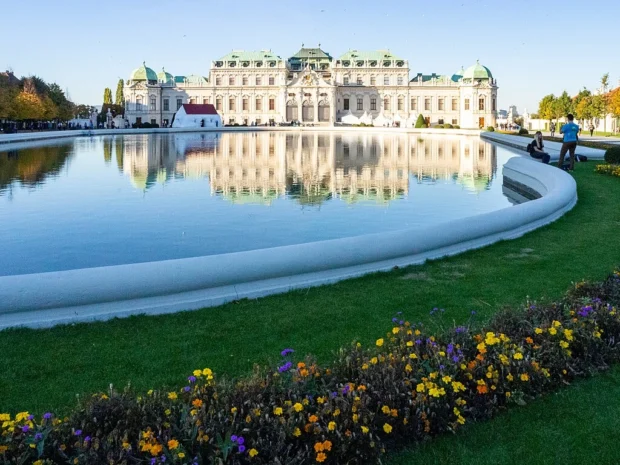
Palatial Grandeur: The Architectural Story of Belvedere
Constructed in the early 18th century, Belvedere Palace was commissioned by Prince Eugene of Savoy, a military leader and art aficionado. The palace is an exemplary representation of Baroque architecture, characterized by balanced symmetry, dynamic forms, and ornate details. What makes Belvedere truly captivating is its dual structure the Upper and Lower Belvedere connected by terraced gardens that cascade down a gentle hill, inviting visitors to experience a rhythmic flow from one section to the next.
The architect Johann Lucas von Hildebrandt crafted the palace with an eye for proportion and harmony. Notice the interplay of light and shadow on the facades, the sculpted balustrades, and the grand staircases that not only serve a functional role but also enrich the overall visual narrative. Each corner and column tells a story of 18th-century aristocratic taste, merging military prestige with cultural refinement.

The Gardens: An Architectural Transition
The formal gardens function as an outdoor gallery showcasing Baroque landscaping principles geometric precision, axial alignments, and ornamental sculptures. They serve as a deliberate transition space that softens the robust architectural lines of the palaces, encouraging visitors to pause and reflect. This blending of architecture and nature exemplifies how space was crafted to impress and inspire simultaneously.

From Battlefield to Art Gallery: The Palace’s Historical Importance
Once a symbol of military triumph and aristocratic power, Belvedere Palace evolved over centuries into a cultural sanctuary. Prince Eugene used it as a summer residence, but it soon became a repository for art collections. Today, it houses Austria’s most extensive collection of Gustav Klimt paintings, including the iconic “The Kiss,” alongside works by Egon Schiele and Oskar Kokoschka. This transformation from private fortress to public museum underscores Vienna’s shift towards embracing its artistic heritage.

Moreover, the palace was the site of the historic 1955 Austrian State Treaty signing, marking Austria’s sovereignty after World War II. This moment adds a layer of political significance to an already richly textured historical narrative.
For a historical and architectural contrast within Vienna, visiting St. Stephen’s Cathedral reveals Gothic grandeur complementing Belvedere’s Baroque elegance.
Getting There and Around: Directions from City Center and Beyond
Belvedere Palace is conveniently situated just a short journey southeast of Vienna’s city center. Travelers can easily reach the site via the tram lines D or 18, which stop right at the palace entrance. From the Hauptbahnhof (Main Train Station), a brief walk or a quick tram ride connects visitors to the palace grounds.
Those arriving from Vienna International Airport can use the City Airport Train or S-Bahn to reach the city center, then transfer to tram lines heading toward Belvedere. This multi-modal journey offers a smooth transition from air travel to historic exploration.
For photographers interested in capturing the palace’s detailed facades and expansive gardens, the morning light provides gentle illumination, while late afternoon casts dramatic shadows emphasizing architectural depth. Comfortable walking shoes are advisable as the grounds extend over a large area, combining paved and gravel paths.
When to Visit: Unlocking the Best Time and Atmosphere
Timing your visit can profoundly affect your experience. The weekdays, especially Tuesday through Thursday, tend to be quieter, allowing for a more contemplative encounter with the artworks and architecture. Early mornings right at opening hour grant a chance to absorb the spaces almost undisturbed.
Seasonally, spring and early autumn decorate the gardens with colors and mild temperatures, perfect for relaxed strolls. Winters bring a serene ambiance, with frosty outlines on sculptures and less crowding, yet the palace interiors maintain a warm and inviting atmosphere.
Planning Your Visit: Tickets, Tours, and Reservations
Belvedere Palace offers various ticket options, including combined tickets for Upper and Lower Belvedere, as well as special exhibitions. Booking tickets online is recommended to avoid queues, particularly during high season. Guided tours provide insightful commentary on both architectural details and artistic collections, heightening appreciation of the space’s layered meanings.
Reservations for guided tours should be made in advance, especially for group visits or during weekends when demand surges. Audio guides are available and provide a flexible way to explore at your own pace while still gaining rich contextual knowledge.
Local Flavors and Nearby Comforts
After immersing yourself in centuries of creativity, sampling traditional Viennese cuisine nearby adds a fitting conclusion. Cafés and bistros not far from Belvedere Palace serve specialties such as Wiener Schnitzel, Apfelstrudel, and robust Melange coffee. These places capture the city’s culinary essence, blending historic ambiance with contemporary comfort.
For a vivid contrast to regal Vienna, discover the everyday charm and historic bridges of lively Podgorica in Montenegro on our Podgorica city walk.
Accommodation options in the district range from charming guesthouses to modern apartments, ensuring that the proximity to the palace and other attractions like the Stadtpark or the Hundertwasserhaus makes every day of your stay rich with discovery.
The Visual Feast: Architectural Photography at Belvedere
For those with a camera in hand, Belvedere Palace presents an abundance of visual narratives. The contrasting textures of stone and stucco, the rhythmic repetition of windows and columns, and the carefully curated garden sculptures all translate into compelling photographic subjects.
For those fascinated by architectural marvels, the Burj Khalifa offers a striking contrast in design and engineering that complements Vienna’s historic grandeur.

A tip for capturing the palace’s grandeur is to explore angles that juxtapose the natural elements with architectural lines—the reflecting pools trimmed hedges, and statues provide foreground interest enhancing depth and context. Visit during the golden hour, when soft sunlight accentuates details without harsh shadows.
For more information and to plan your visit, the official Belvedere website is a reliable source: Belvedere Palace Official Site.
- Belweder w Wiedniu, 20210727 1926 0436 by Jakub Hałun on Wikimedia Commons – cc by-sa 4.0
- Belvedere Palace 2 by Dimitry Anikin on Wikimedia Commons – cc0
- Palace of Fontainebleau 030 by Alain G on Wikimedia Commons – cc by-sa 2.0
- Schloß Belvedere-Garten 20 by Anna Saini on Wikimedia Commons – cc by-sa 4.0
- Upper Belvedere, chapel 01 by Belvedere, Vienna on Wikimedia Commons – cc by 3.0
- 2020-07-31 Schlosspark Belvedere by OlafKosinsky MG 2767 by Olaf Kosinsky on Wikimedia Commons – cc by-sa 3.0


