

Arriving in Beijing is a dance of ancient patterns and modern forms. The city stretches outward in circular rings each one revealing a new layer of history and spectacle. My first hours in the Chinese capital, I watched the city pulse from a train window, light playing off glass towers, then fading into the orderly stonework of historical courtyards. For photographers, architecture lovers, and curious travelers, Beijing reveals itself through geometry and light inviting you to look up, then closer, then skyward again. The air tingles with anticipation, and every turn promises a new visual rhythm.
Table of Contents
The Forbidden City: Symmetry of Power and Silence
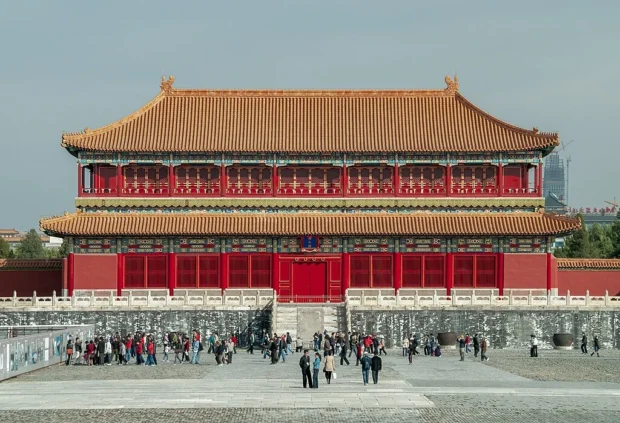
There’s a hush that settles over the Forbidden City, even with crowds in motion. Passing through Tiananmen Square, where the past and present echo in every footstep, I felt the geometric pull of wide spaces framed by revolutionary monuments. The Forbidden City itself rises beyond a red wall its portals perfectly aligned along a central axis. It was once forbidden to commoners, but now invites millions to walk where emperors once strolled. The golden rooftops collect sunlight, shimmering as if the city itself wears a crown.
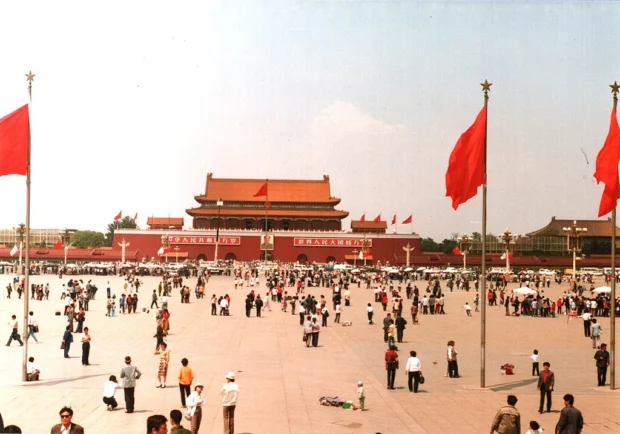
I studied the order of its courtyards: repeating gates, sculpted bridges, and dragon motifs curling along the eaves. As a photographer, I was drawn to the balance an architectural choreography that never loses its rhythm, no matter how many visitors move below. It’s best to arrive early, when the morning light slants cleanly across polished stones and the yellow tiles glow. Older Beijingers still murmur “ni hao” to each passerby just a simple hello, but it made me feel anchored in the moment.
Great Wall of China: Ancient Lines Across Hilltops
Few sights stir the senses like the Great Wall when seen from above. From the tops of Mutianyu or Jinshanling, the Wall bends and snakes like a dragon’s spine, defying mountains and time. I took the city’s metro to the edge, then caught a shuttle bus out to the hills an easy journey from the bustling city center. The climb is real, but the view is worth every step: layers of wall, tower after tower, stretching to the horizon.
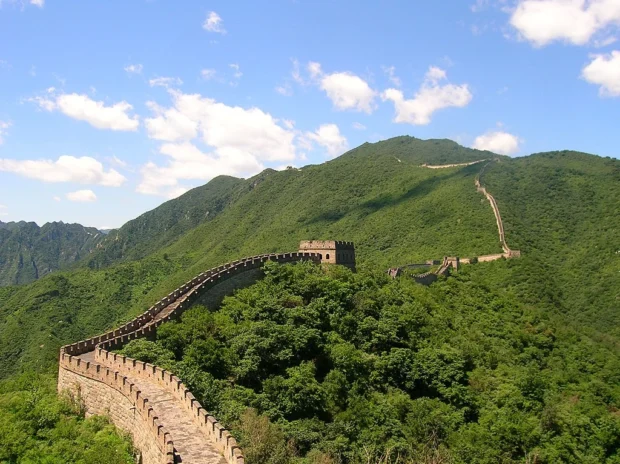
To complement your journey through Beijing, visit the page on Beijing’s Great Wall for tips on how to access its stunning sections and plan your walk.
The stones beneath my feet still show tiny imprints evidence of the millions who built, guarded, and now admire this unlikely feat of symmetry. Local guides shared the phrase “zěn me zǒu” when I looked a bit lost: it means “which way.” The Wall feels less like a monument and more like a living line painted onto green hills, inviting wandering and reflection. Every season repaints the Wall: golden leaves in autumn, mist in spring, and cool blue shadows at dusk, perfect for landscape observation and sunset panoramas.
Temple of Heaven: Circular Peace in the Park
My favorite surprise in Beijing was the Temple of Heaven, the circular prayer hall rising from perfectly trimmed gardens. The main building, the Hall of Prayer for Good Harvests, is a study in harmony blue tiles arching into the sky, balanced by round platforms and geometric walkways.

In the early morning, local elders gather for tai chi, their movements echoing the building’s curves. I found myself watching their slow, steady rhythm, the kind of human geometry that brings the park alive. Don’t miss the echo wall whisper on one side, and your friend hears it on the opposite arc. Locals say “xièxie” to thank each other after shared moments a small gesture, but it fits perfectly in this peaceful place. The Temple’s surrounding parkland is a good place for capturing morning light and playful patterns between shadow and architecture.
Beijing’s Living Heart: Parks, Palaces, and Urban Geometry
Beijing never stops moving, but its green spaces offer balance and calm. Each park is unique, providing postcards of daily life and architectural details. Jingshan Park stands directly north of the Forbidden City; I made the short hike to the top, catching a perfect panorama of tiled rooftops and symmetrical city planning. I watched as the sun faded, throwing long shadows across the imperial city, the colors shifting from gold to dusky blue.


Beihai Park feels almost like a secret garden, where the White Dagoba rises above willow-lined lakes. I walked past old men flying kites, couples paddling on boats, and children skipping stones a real city rhythm, gentle and patient. The Summer Palace, further out, is a vast composition of water, bridges, and ornate pavilions, its courtyards reflected in Kunming Lake. Here, the angles of gallery roofs and lattice windows catch the afternoon light just so, inviting both quiet photography and everyday leisure. These parks are realms for both reflection and visual storytelling, where lines and colors never quite repeat.

Modern Design Meets Old Beijing: Urban Renewal and Creative Spaces
I found the city’s new patterns as thrilling as its old. In the 798 Art District, forgotten factories have been reborn into a playground of murals, galleries, and sculpted courtyards. It’s a grid of painted brick and soaring glass, where contemporary artists play with light and shadow. Capturing a photo here meant hunting for contrasts rough concrete against soft neon, new forms meeting faded industry. I heard “zàijiàn” from a cheerful barista as I left a simple “goodbye,” but with warmth that lingered.

Elsewhere, Beijing’s Olympic Park reveals the city’s ambition in steel and water. The Bird’s Nest stadium curves with a grace that defies its scale, while the Water Cube glows like blue ice at dusk. Both are marvels from above perfect for drone photography. I spent a golden hour photographing athletes and families; the architecture seems to encourage gathering, mingling, and celebration of modern Beijing.

Historic Depths: Hutongs, Tombs, and Timeless Streets
Stepping into the Hutongs Beijing’s old alleyways is a journey into another tempo. These narrow lanes shelter courtyard homes, communal wells, and quiet corners of daily routine. I wandered Nanluoguxiang, a busy hutong lined with crafts shops and snack stalls. The geometry here is less formal but no less intentional: bicycles lean against stone walls, and red doors open into shaded archways. Locals squat on low stools, sipping strong tea and debating the news. At dusk, lanterns flicker and the air hums with casual laughter, inviting spontaneous snapshots of evening life.


Further north, the Ming Tombs story drew me in the resting places of dynastic emperors, hidden among pine forests. There’s a meditative silence among the carved stone animals lining the Spirit Way, a visual repetition that hints at eternity. The tombs themselves are feats of underground geometry, their sacred chambers guarded by centuries of myth. Here, the play of light and shadow felt especially meaningful, as if the landscape itself holds secrets yet to be revealed.

Where to Stay: Finding Your Home in Beijing
Beijing’s layout offers many moods for travelers. Near the Forbidden City, you’ll find quiet courtyard guesthouses wooden beams, latticework windows, and the scent of jasmine drifting from shaded gardens. In districts close to Wangfujing or Sanlitun, sleek high-rises offer city views and easy access to nightlife and shopping.
For peace, stay near the Summer Palace or in the western districts, where mornings begin with birdsong and tree-shaded walks. Adventurous explorers might choose a hutong home compact, colorful, and full of character, perfect for those who wish to wake up to the sounds of market chatter and distant bicycle bells. Accommodations in Beijing are varied, but each neighborhood brings its own visual rhythm choose one that matches your desired angle on the city.
Eating Beijing: Flavors, Districts, and Street Scenes
Street food in Beijing is as much a part of the landscape as the city’s old walls. In Wangfujing, I tasted candied hawthorn skewers, their glossy red shells reflecting neon signs. The Dongcheng district serves up crisp Peking duck skin glistening under soft lantern light, each slice carefully layered with spring onion and bean paste, folded inside delicate pancakes. The chef, careful with his knife, told me tales of imperial banquets and secret recipes passed down for generations.
For breakfast, seek out steaming bowls of douzhi’er (fermented mung bean milk) and crunchy churros in bustling alleys near Qianmen. Xi’an-style noodles and steaming buns fill the air with spice, especially in markets near Lama Temple and Beijing Zoo. Each dish forms part of the city’s visual and culinary tapestry textures, colors, and aromas that linger long after a meal ends.
Getting Around Beijing: On Track, Above Ground, and on Foot
Beijing’s metro system loops the city in clean, efficient lines. From Beijing Capital Airport, the Airport Express whisked me into the heart of the city in under an hour cheap, easy, and full of fellow travelers staring in wonder as the city skyline unfolded. From main train stations, subway connections are well-marked with signs in both Mandarin and English. Buses cover every corner, with digital maps keeping you on course even when the names seem unfamiliar.
Walking remains the best way to feel Beijing’s textures. The wide avenues are lined with chestnut sellers and calligraphy artists, while bike shares offer a quick escape down quiet hutongs or leafy lanes. The city is vast, but each district feels intimate when you slow down and notice the interplay of light on ancient stone or new glass. The rhythm of feet on tile, wheel on pavement, or train on track creates a soundtrack as distinct as any spoken phrase.
Cultural Customs and Everyday Etiquette in Beijing
Beijing’s spirit is a blend of respect, curiosity, and humor. Locals prize harmony so speaking softly in temples or parks, and never raising your voice in a crowd, is much appreciated. Greeting elders with a nod or a quiet “ni hao” shows respect, and offering or receiving small items with both hands is a simple but meaningful custom. Public spaces are often shared, and you’ll notice how smoothly people move around each other an unspoken choreography that keeps the city’s tempo lively yet polite.
Photography is welcomed in most areas, but always pause and ask before capturing close-ups of people at prayer or in quiet moments. The city’s tempo may be fast, but patience and politeness open more doors than any guidebook promise.
Unexpected Sights and Odd Discoveries: Quirks of Beijing
Beijing rewards those who look for its oddities. I stumbled on a narrow alley where cats sunbathed on roof tiles, each one positioned like a sentinel on a pagoda’s edge. At National Museum of China, I found an exhibit on ancient weights and measures tools carved with exquisite characters, perfectly balanced, some dating back two millennia. The stories told by a museum guide were as full of intrigue as any action film: emperors who disguised themselves as commoners, opera performers who hid secret codes in their costumes, or geomancers who aligned whole neighborhoods with the stars.

One afternoon I paused at Lama Temple, marvelling at the largest wooden Buddha in China carved from a single sandalwood tree, rising over visitors with a silent, golden gaze. There’s a geometry in every gesture here: the spin of a prayer wheel, the ordered piles of incense, the slow procession of worshipers beneath swirling clouds of smoke. At the Beijing Zoo, the panda enclosure captured more attention than any skyscraper black and white forms curling in the grass, the soft shapes contrasting with the angular city just beyond the fence.


Capturing Beijing: Light, Patterns, and Perspective
As the days spun by, I saw Beijing in ever-changing frames dawn mist along Kunming Lake, dusk shadows lengthening across Tiananmen Square, the sharp blue lines of skyscrapers meeting the red gold curve of a Ming-era gate. Whether from the top of a park hill, a bicycle weaving through hutongs, or a metro car slicing underground, the city’s lines and rhythms never repeat the same way twice.
For those who seek both grand monuments and quiet corners, Beijing offers visual stories on every scale. From the perfect symmetry of the Forbidden City to the wild bends of the Great Wall, from the modern verve of 798 Art District to the timeless streets of ancient hutongs, the city remains a living gallery always changing, always inviting new ways of seeing.
In the end, I understood why Beijingers often say “man zou” walk slowly when saying goodbye. It’s advice and philosophy, both: take your time, notice the light, and remember to pause at each corner. Beijing’s heartbeat is there in the spaces between where past and present intersect, and every angle holds a story worth capturing.
- Beijing China Hall-of-Prayer-for-Good-Harvests-01 by CEphoto, Uwe Aranas on Wikimedia Commons – cc by-sa 3.0
- Tiananmen Square, Beijing, China 1988 (1) by Derzsi Elekes Andor on Wikimedia Commons – cc by-sa 3.0
- Beijing forbidden city Belvedere of Embodying Benevolence-20071018-RM-142403 by Ermell on Wikimedia Commons – cc by-sa 4.0
- Great Wall of China July 2006 by Velatrix on Wikimedia Commons – cc0
- Pékin Le temple du Ciel by Pierre André Leclercq on Wikimedia Commons – cc by-sa 4.0
- Guanmiao Pavilion (Jingshan Park) by EditQ on Wikimedia Commons – cc by-sa 4.0
- Beihai Park 65482 by xiquinhosilva on Wikimedia Commons – cc by 2.0
- Summer Palace – Marble Boat by xiquinhosilva on Wikimedia Commons – cc by 2.0
- ·˙·ChinaUli2010·.· Beijing – 798 Art-District – panoramio (3) by ·˙·ChinaUli2010·.· on Wikimedia Commons – cc by 3.0
- Beijing Olympic Green by Picrazy2 on Wikimedia Commons – cc by-sa 4.0
- 2016-09-04 Beijing Nanluoguxiang anagoria 11 by Anagoria on Wikimedia Commons – cc by 3.0
- Beijing Hutong – panoramio (5) by The Erica Chang on Wikimedia Commons – cc by 3.0
- ONE OF THE THIRTEEN MING TOMBS BEIJING CHINA OCT 2013 (8812725032) by calflier001 on Wikimedia Commons – cc by-sa 2.0
- Beijing (November 2016) – 064 by Another Believer on Wikimedia Commons – cc by-sa 4.0
- Beijing YONGHEGONG Lama Temple – panoramio (11) by The Erica Chang on Wikimedia Commons – cc by 3.0

.jpg)


.jpg)


.jpg)


.jpg)
.jpg)
_-_064.jpg)
.jpg)