

Accra sits by the Atlantic, holding together centuries of history and an ever-changing present. The Ghanaian capital draws you in with its bold rhythms, from trotro buses bouncing along city streets to the waves rolling up Labadi Beach. If you’re curious about city life in West Africa, Accra gives you a real tapestry: crowded markets, colonial-era forts, golden sunshine, and evenings filled with music and wide smiles. This post brings you simple, clear insights into Accra’s famous highlights and, if you linger long enough, its quieter corners. You’ll find travel-friendly advice, stories, and some of my favorite scenes from the city. Once Accra gets under your skin, you’ll notice how closely daily life and history walk together here.
Table of Contents
Arriving in Accra: Airport and Getting Around
Coming to Kotoka International Airport, Accra already feels alive and bright. It’s only about ten kilometers to the city center a journey that can take 20 minutes on a quiet day, longer if the roads are busy. Most locals recommend a ride on a shared minibus (called tros), which is affordable and an experience in itself. Tros pack in all sorts of travelers and plenty of banter. Otherwise, you can catch a city bus, which is slightly slower but popular with commuters. There’s no metro, but many city routes start or pass near 37 Military Hospital, a landmark most drivers recognize.
Accra’s main roads Oxford Street in Osu, Independence Avenue, and the busy loop toward Makola Market help you get your bearings. If you’re ever unsure, just ask. Most people in town are happy to share directions.
Kwame Nkrumah Mausoleum: A Quiet Walk Through Ghana’s Story
The Kwame Nkrumah Mausoleum stands in the center of Accra, surrounded by greenery and fountains. It marks the resting place of Ghana’s first President, a figure as important in African history as Mandela or Lumumba. For most Ghanaians, Nkrumah is the reason for Ghana’s independence from British rule. The mausoleum itself looks like an upturned sword, a symbol of peace, and inside you’ll find his marble grave. School groups and history buffs linger here, reading plaques and looking at black-and-white photographs. The air feels different still, respectful. I once met an elderly man here, who told me, “Without Nkrumah, we would speak only as guests in our own land.” He offered a story about the country’s journey that no guidebook could match.
The grounds also hold the small museum, where you can see Nkrumah’s books, photos, and a famous coat he wore on state visits. Ghana’s influence on pan-African thinking is clear here. If you’re interested, you can find more about the mausoleum online.

Markets and Urban Life: Heartbeat of Accra
Makola Market isn’t just a place to shop it’s the beating heart of Accra. The market stretches over several blocks, bursting with color and sound. Sellers line the streets, balancing baskets of tomatoes on their heads, calling out prices for kente cloth, beads, shea butter, dried fish, cheap electronics almost anything. If you pause, they’ll wave you over to chat. Sometimes, a grandmother or a group of students will show you how to tell the difference between real and imitation kente. The smell of smoked fish, sweet pineapples, and spices mixes in the air. Bargain gently, smile often.

I still remember the morning I tasted my first kelewele (spicy fried plantain) from a stall near the market gates. The heat and ginger almost made me sneeze, but the seller laughed and handed me water. “We like it strong here,” she said, “so you remember us when you go.” A little north from Makola, you’ll spot the tall, boxy National Museum of Ghana. Its collection isn’t huge, but the brass weights, Asante goldwork, and wooden masks give a sense of Ghana’s wide, layered history. I noticed young artists sketching artifacts, maybe hoping to capture the spirit of their ancestors.

Coastal Corners and the Jamestown Lighthouse
Head west from the busy center, and you find Jamestown one of Accra’s oldest districts. The air smells of salt, and colonial-era buildings line the streets. The Jamestown Lighthouse sits by the water, red and white, stubborn against the sea winds. It isn’t just a beacon for ships; it’s a symbol of survival. The climb to the top is steep, the staircase narrow. From up there, you see Accra spread out shacks and mansions, soccer pitches and fishing boats, a city both old and new at once.

Locals say Jamestown is best seen in late afternoon, when the sunlight slants over murals and children play football below. Each May, people gather here for the Ga Mashie Homowo Festival, painted faces and loud drums. If you want to understand Accra’s roots, you need to spend time wandering these lanes. I once watched a fisherman weaving his net, humming a tune that sounded older than the city itself.
Freedom and Memory at Independence Square
Independence Square, sometimes called Black Star Square, is a wide-open space framed by grand arches and the famous Black Star Gate. It’s where the nation celebrates public holidays and welcomes world leaders. The wide parade ground fills with people each 6th of March Ghana’s Independence Day. The air buzzes with hope, pride, and marching bands. There’s something about standing next to the Black Star, looking north to the city, that makes you feel Ghana’s journey toward self-determination. I met a university student here who told me the Black Star is “for anyone who dreams of a better Africa.”

Labadi Beach: Rhythm by the Atlantic
If you think the sea can wash away city stress, Labadi Beach locally called La Beach does it best. It’s the most famous beach in Accra, a long stretch where waves crash hard and the sand is alive with dancers, drummers, and weekend picnics. Sunday afternoons here feel like a party. Young men gallop horses by the surf; musicians make the djembe drums speak; food vendors grill tilapia and maize on open fires. When you get hungry, try waakye (rice and beans) or a roasted corn cob, both local favorites.

It’s easy to lose track of time watching families splash in the surf or couples walking at sunset. Just a note: Labadi is public, but some entry points belong to nearby hotels, and there may be a small fee for upkeep. The energy here is as real as the tide. Once, a group of women invited me into their dance circle. My steps were clumsy, but their laughter was warm proof that Accra’s best hospitality is found outside any hotel lobby.
Osu District: Old Forts, Modern Buzz
Osu is a lively part of Accra, well known for Oxford Street its restaurants, shops, and endless crowds. You’ll find places serving jollof rice (tomato-spiced and a national favorite), spicy goat kebabs, and sweet fried yam. There’s a bit of everything: Ghanaian, Lebanese, Chinese, and even small pizza places. Osu stays up late, and music drifts from open windows sometimes reggae, sometimes azonto pop. Walk east toward the sea and you reach Osu Castle. Also called Fort Christiansborg, it once served as a Danish and later British seat of power. The castle looks out over the shore, quiet but haunted by the memory of trade and colonial power. Some say you can hear the echo of chains in the dungeons below, a reminder of Ghana’s place in the Atlantic world.

My favorite part of Osu, though, is finding quiet courtyards tucked behind bright shops. Sometimes, you hear a kora or balafon, a reminder that centuries of tradition hum beneath the city’s new face.
W.E.B. Du Bois Center: Pan-African Thinking in the City
You can’t talk about Accra’s brainpower without mentioning the W.E.B. Du Bois Center. This is the final home of the African-American writer, historian, and thinker who made Ghana his last stop. The center’s white-walled library, archives, and quiet mausoleum show Du Bois’s dream of black unity. It’s a spot for both tourists and local scholars visitors can see personal papers, rare books, and photos that span the fight for civil rights, not just in Ghana but worldwide. There’s a stillness here that invites reflection. Last time I visited, a group of university students sat under shady trees, sharing ideas and tracing the paths of freedom movements across continents. Du Bois’s legacy makes Accra feel connected to struggles and triumphs far beyond its shores.
Modern Museums and Creative Spaces
Accra isn’t stuck in the past. Its creative side lives in places like the Artists Alliance Gallery, a big white building near the beach. Inside, you’ll find works by Ghana’s most famous sculptors, painters, and textile designers, alongside contemporary art and beadwork. The gallery is run by Ablade Glover, a key figure in Ghanaian art. There are wooden masks, colorful kente, delicate beads, and even giant metal sculptures made from recycled cans. If art is your guide to culture, this gallery feels both joyful and alive, constantly bringing out the country’s creative spirit.
Not far away, the National Museum of Ghana is worth a few hours. Its best pieces—royal stools, old drums, silver jewelry, and dusty photographs—show how Ghana’s cultures blend and survive through time. I once saw a school class sitting cross-legged on the floor, listening as a museum guide turned an old gold weight in his palm, telling a story about Ashanti kings and couriers running between villages. It made me wish every museum visit was like that: alive with stories.
Sports, Storytelling, and Social Traditions
Ghana is football country (that’s soccer for some). Accra Sports Stadium, close to the beach, fills with energy, drums, and waving flags whenever the local teams play. If you’re in town during a match, join the crowds. The singing is as loud and passionate as anywhere in Europe or South America. Yet you might also stumble upon an open-air storytelling session in a neighborhood square elders passing down ancient folktales, sometimes in Ga or Twi, sometimes in English, the children leaning close to catch every twist. Accra values its oral traditions, and you’ll hear stories flow at funerals, festivals, even during evening walks.
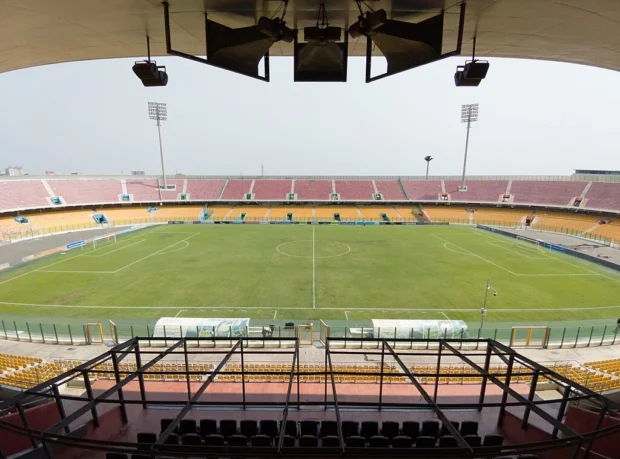
Community matters here. People greet each other with “Akwaaba!” (Welcome!) and shaking hands is important. If someone offers you water or food, it’s polite to accept, even just a little. Dress tends toward modest shorts are fine at the beach, but trousers and skirts are more common in town. Churches and mosques are busy on Fridays and Sundays, so expect shops to close early or crowds to gather in prayer. The city is proud of its mix: Christians, Muslims, and traditional belief systems all finding ways to live side by side.
Where to Stay and Sleep
Accra is dotted with guesthouses and hotels, from basic hostels to fancy business towers, but many regular travelers find the most comfortable options in neighborhoods like Osu, East Legon, and Labone. These districts give you easy access to main sights and offer a safe, friendly feel. If you want a beachside view, there are places along Labadi Beach; if you like quiet nights, try further north, away from city roads. Most hotels serve breakfast a mix of bread, fruit, and sometimes spicy eggs. Guesthouses often have leafy gardens and the chance to meet other travelers or families. Prices swing widely, but a little research goes a long way. Ask if your accommodation provides fans or air conditioning. Accra’s warmth can be constant, and the sea breeze only helps at night.
Food Culture and Eating Accra’s Way
Food is part of every conversation in Accra. In the morning, try cocoa porridge or bread dipped in tea. Lunch means fufu with light soup, banku with grilled tilapia, or kenkey (fermented corn dough) with hot pepper and fried fish. Osu and nearby Labone hum with “chop bars” simple eateries where yam, rice, and flavorful stews appear steaming from backyard kitchens. I was once taught how to eat banku with my (right) hand “Never the left!” insisted my lunchtime neighbor, grinning at my awkward fists. Ghanaian food can be spicy, but there’s always cool pineapple juice or sobolo (hibiscus drink) to calm the palate.
Vegetarians will find fresh avocados, jollof rice, and red-red (beans in palm oil) on most menus. For dessert, vendors walk the streets with FanIce (a frozen milk snack) and sticky coconut toffee. Don’t leave Accra without tasting kelewele fried plantain dusted with ginger, chili, and cloves, sold after dusk in almost every neighborhood. Food here is more than fuel it’s conversation, comfort, and a way to welcome strangers.
Living with Color and Rhythm: Everyday Scenes
Accra moves to its own beat. Morning comes softly, with roosters and distant church songs. Daytime is all business—markets, construction, kids in uniforms waving on their way to school. Evenings bring something different. Sometimes it’s a highlife band at a small open-air bar, coaxing couples t dance. Other times, it’s batik-makers showing off bold new cloth or spoken word poets reciting under palm trees at a book café.
If you walk the smaller streets especially in Nima, Jamestown, and Korle Gonno you’ll sense a city where yesterday’s history and tomorrow’s promise overlap. I once found an alleyway wall painted with a huge map of Africa. Young artists posed below, explaining that every color block meant a different ethnic group in Ghana. “We want to remember where we come from,” one told me. “But Accra mixes us all together.”
Final Thoughts: The Changing Face of Ghana’s Capital
Accra is not always easy, not always gentle. Sometimes the electricity blinks off, sometimes the market crowds get overwhelming. But the city rewards slow travel, open eyes, and most of all conversation. For every famous site, there is an unexpected meeting: a weaver at Makola, a storyteller in Jamestown, a grandmother in Labone who tells you her secret to perfect okra stew. Accra’s story isn’t just in monuments, but in the welcome that strangers offer and the stubborn hope that marks every new day. If you listen, you’ll notice the heartbeat of a city that belongs to its people, and soon, maybe, to you as well.
Traveler exploring cultural intersections, sharing reflections on similarities and differences between traditions, lifestyles, and food.
- Independence Arch Accra Ghana by Flowizm on Wikimedia Commons – cc by 2.0
- Kwame-Nkrumah-Memorial-Park-Accra-Ghana by Danny99178 on Wikimedia Commons – cc by-sa 4.0
- Balcony view of the Makola Market by Sunkanmi12 on Wikimedia Commons – cc by-sa 4.0
- National Museum of Ghana by Livinba on Wikimedia Commons – cc by-sa 3.0
- 1620 James Town Leuchtturm by Albgoess on Wikimedia Commons – cc by-sa 4.0
- Ghana's Independence Square 03 by Sir Amugi on Wikimedia Commons – cc by-sa 4.0
- Labadi Beach – Accra – panoramio by Ghassan Mroue on Wikimedia Commons – cc by-sa 3.0
- Christianborg castle 08 by Shahadusadik on Wikimedia Commons – cc by-sa 4.0
- Accra Sports Stadium, Korle-Klottey (IMG 20230201 114217) by Matti Blume on Wikimedia Commons – cc by-sa


.jpg)
.jpg)