
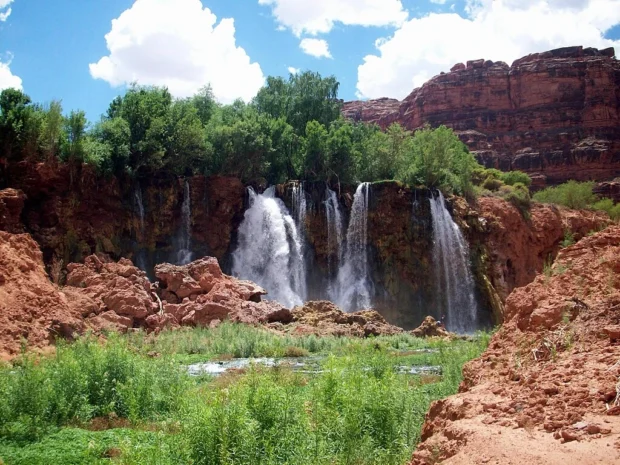
If you are planning a trip to the Grand Canyon area in the United States, Havasu Falls is a must-see destination that blends nature’s artistry with cultural legacy. Nestled within the Havasupai Indian Reservation, this spectacular waterfall flows into turquoise pools surrounded by striking red rock cliffs. Visitors who seek both natural beauty and an insight into Navajo heritage will find Havasu Falls an unforgettable highlight. This guide covers practical directions, timing advice, historical context, and booking details, ensuring your visit is smooth and richly rewarding.
Table of Contents

For a detailed look at the vast Grand Canyon region, including trails and visitor hubs, read the Grand Canyon in Detail.
Getting to Havasu Falls: Step-by-Step Directions
Reaching Havasu Falls requires planning as it is located in a remote part of the Grand Canyon. Your journey typically begins from the town of Peach Springs, Arizona, or the nearby city of Flagstaff.
Drive and Trail Access
From Peach Springs, drive to the Hualapai Hilltop, the trailhead for Havasu Falls. The road is paved and well-marked, approximately 50 miles south of Peach Springs. Upon arrival at Hualapai Hilltop, prepare for a significant hike: about 10 miles descending into the canyon where the falls are situated.
Trail Details and Alternative Transport
The trail is steep and rugged, so sturdy hiking boots and sufficient water are essential. For those with mobility challenges or heavy equipment, helicopter tours offer a faster, though more costly, alternative, landing close to Havasu Village near the falls. However, helicopter rides require advance booking and are subject to weather conditions.
Ideal Times and Days for Visiting Havasu Falls
When planning your trip to Havasu Falls, timing is crucial to enjoy the site fully and avoid the busiest periods.
- Season: Late spring (April to early June) and early fall (September to October) provide pleasant weather and manageable trail conditions.
- Day of Week: Weekdays are less crowded. Weekends, especially summer weekends, see a sharp increase in visitors.
- Time of Day: Early morning starts are recommended to avoid the heat and allow ample daylight for hiking.
Weather can shift quickly in the canyon, especially during monsoon season in July and August. Flash floods pose a serious hazard, so monitor weather forecasts closely. Additionally, the reservation closes annually from mid-December to mid-February, so plan accordingly.
Cultural and Historical Importance of Havasu Falls
Havasu Falls is not just a stunning natural feature but a culturally significant site for the Havasupai tribe. The name “Havasu” means “blue-green water” in the Havasupai language, referencing the surreal color of the falls’ pools, caused by high mineral content.
The tribe has lived in the Grand Canyon region for over 800 years. Their traditions, language, and connection to the land have shaped the area’s preservation. Visitors walk trails once used by the tribe for hunting and gathering, entering a landscape deeply woven with history.
Historical Usage and Changes Over Time
Historically, the Havasupai were semi-nomadic, using the canyon’s resources sustainably. Modern tourism began in the late 20th century when the area was opened to visitors under strict guidelines to protect natural and cultural resources. The tribe manages access to maintain balance between visitor interest and preservation of sacred sites.
Reservations and Tour Booking Essentials
Because Havasu Falls is within an Indian reservation, access is regulated. Reservations to visit and camp near the falls are mandatory and often sell out months in advance.
- Permits are issued by the Havasupai Tribe and include campground or lodge stays in Havasu Village.
- Online reservation is the primary booking method, usually opening in February each year for that season.
- Permits cover the entire hike, overnight camping, and access to water sources and restroom facilities.
Walk-in visitors without permits are not allowed beyond the trailhead. Booking early is vital if you want to secure a spot, especially during peak seasons. For detailed booking information, visit the official Havasupai Reservations site.
Comfort and Convenience: Nearby Facilities and Local Eats
Accommodation options outside the reservation include lodges and cabins in towns like Peach Springs and Seligman, which provide a practical base before heading to Hualapai Hilltop. These small communities offer basic amenities and dining establishments serving classic Southwestern cuisine.
Once on the trail and at the falls, services are limited. It’s recommended to carry your own food supplies, focusing on lightweight, energy-rich snacks. Locally inspired foods often feature corn, beans, and wild game, reflecting the cultural heritage of the region.
Transportation Tips From Nearby Cities and Airports
The nearest major airports are Phoenix Sky Harbor International Airport (PHX) and Las Vegas McCarran International Airport (LAS). From either airport:
- Rent a car for the drive to Peach Springs or Flagstaff. The roads are well maintained but involve long drives through desert landscapes.
- Public transport is scarce; organized shuttle services may be available seasonally but require advance reservation.
- Plan additional travel time for road stops and possible roadworks along highways 40 and 66.
Flagstaff also serves as a rail hub via Amtrak. From there, rental cars or private shuttles are the best options to reach the trailhead.
Additional Insights Every Visitor Should Know
Once at Havasu Falls, take time to explore the surrounding waterfalls Mooney Falls and Beaver Falls which are part of the same water system. Navigation along the trails between these falls requires good physical condition and a careful eye for trail markers.

Many hikers overlook the ecological uniqueness of this desert oasis: the flora includes rare desert plants adapted to the canyon’s microclimate. Wildlife sightings include colorful birds and desert mammals, visible mostly at dawn or dusk.
Lastly, cellular reception is minimal within the canyon. Preparing offline maps and carrying a GPS device or compass can improve navigation confidence.
- Upper rock falls by Gonzo fan2007 on Wikimedia Commons – cc by-sa 3.0
- Mooney Falls by Riffy Thomas on Wikimedia Commons – cc by-sa 4.0

