

Cartagena, Colombia sings with every sunrise and every street vendor’s call. This city is a painter’s dream: Caribbean blue ocean, bold yellow walls, magenta bougainvillea trailing across balconies. But it’s not just postcard-perfect it’s energy you can feel in your bones. I once lived here, letting its markets and music color my days. Walking Cartagena is like catching the city’s rhythm: salsa on the wind, children chasing kites in the squares, steam rising from street arepas, the shade of old Spanish walls.
Table of Contents
People around the world have heard of Cartagena, but many only picture its famous Walled City. There’s so much more. Cartagena’s neighborhoods pulse with history, culture, and real Caribbean heat. From fortress walls to lively plazas, sunset beaches to shadowy alleyways covered in murals, I invite you to wander with me not just to see the city, but to feel its heartbeat.
Experience Cartagena’s vibrant neighborhoods beyond the walls by visiting Step into Cartagena’s Walled City, where history and local life blend beautifully.
Walled City: Living Heritage in Every Stone
Let’s start at the Walled City Cartagena’s historic center and UNESCO World Heritage Site. Step through its thick gates and you’re stepping into a colorful maze built by Spanish colonists for defense, but now alive with today’s voices. I never got tired of the cobblestone streets, where horse carriages jostle with honking bikes and flower sellers. Every corner hides a secret: a tiny café, a colonial church, a courtyard filled with laughter.

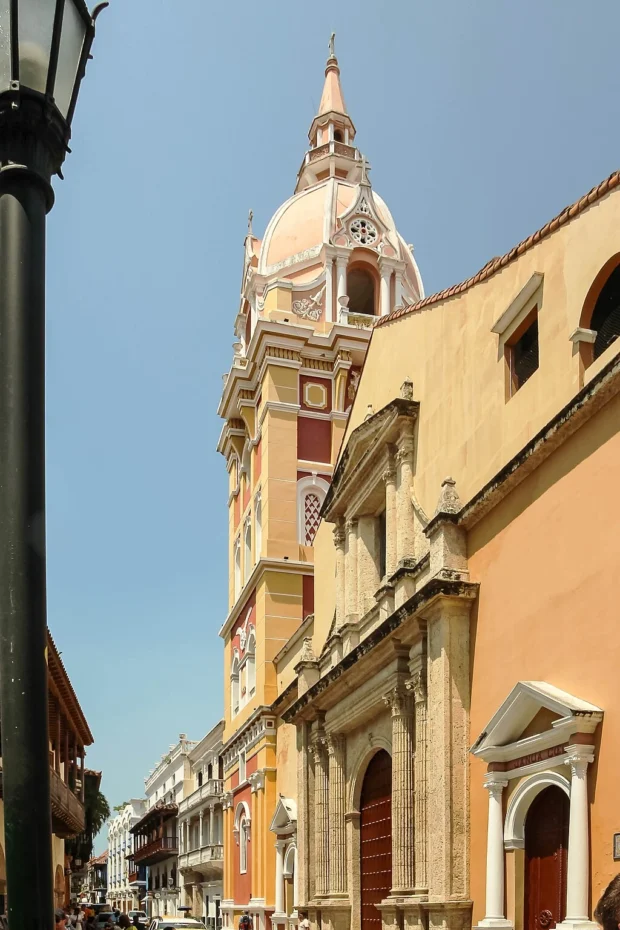
In Plaza Santo Domingo, I watched people sit late into the humid evenings, ordering sweet limonada de coco and snapping photos with the chubby bronze sculpture by Fernando Botero. The Cartagena Cathedral stands tall nearby, its ochre bell tower marking the skyline. I remember its heavy wooden doors and the hush inside, a cool break from the noisy plaza.

Keep wandering and you’ll find Las Bóvedas, once dungeons, now a row of cheerful shops tucked under yellow archways. Here, I watched artisans weave Panama hats and string bead necklaces. Some stalls sell nothing but bright hammocks tempting for an afternoon nap after a few too many empanadas.

Castillo San Felipe: History Built of Stone and Sweat
The Castillo San Felipe de Barajas crouches on a hill overlooking the city, looking both ancient and unbreakable. It’s not just a fort it’s a reminder of battles, pirates, and the sweat of enslaved Africans and indigenous builders. I walked the tunnels one steamy morning, feeling the air cool as I ducked my head. You can get lost in the shadows (and bump your head, if you’re tall). The view from the top sweeps over the port, busy with ships much friendlier than the ones that once attacked.

Curious fact: Local legend claims the fort’s defenders once rolled barrels of gunpowder at the invaders, lighting them just at the right moment. Whether true or not, you feel the drama in those thick walls. Standing on the ramparts, I listened to a guide joke that Cartagena “never sleeps maybe because of all the ghosts protecting us.”
Getsemaní: Where Art and Stories Come Alive
Cross out of the Walled City and into Getsemaní, a neighborhood with soul in its paint and music. Once overlooked, now it’s the place where murals bloom across every wall tropical birds, dancing women, faces of heroes. I’d lose hours talking with street artists and sipping coffee on Santa Ana, a plaza where old men play dominoes and teenagers freestyle rap.

At night, Getsemaní shakes awake. In Plaza Trinidad, crowds gather. Kids with soccer balls dodge tourists, abuelas sell homemade arepas, and music blasts from every corner. I tried my best salsa moves, learning quickly that if you mess up, just laugh here, everyone’s part of the rhythm. It’s impossible not to feel connected to strangers in Getsemaní, especially during festivals when drums echo off the walls and fireworks crack open the sky.
Bocagrande and La Popa: Contrasts Above and Beside the Sea
But Cartagena isn’t only its old center. Bocagrande is the city’s modern face a strip of hotels and high-rise apartments curving along sandy beaches. In the afternoons, the sand gets crowded: families gather with coolers, teenagers skimboard, and vendors offer mango slices with salt and lime. I found it a wild contrast to the hush of old plazas.
If you want a view that takes in both the city’s new and old, climb up to Convento de la Popa. This 17th-century convent sits on Cartagena’s highest hill, and the road winds up through neighborhoods where goats graze patches of grass between houses. From the top, the whole city glitters gold domes, glass towers, the Caribbean stretching forever. Inside the convent, flowers bloom in a peaceful courtyard, and there’s an altar covered in gold leaf. I liked the slow pace up here, away from the traffic and horns below.

Eating Cartagena: Where Street Food Rules
Forget fancy restaurants Cartagena’s flavors live in its streets and markets. My favorite mornings started at Mercado de Bazurto, a sprawling market far from the tourist maps. It smells like fried fish, mango, sweat, and hope. Vendors shout for your attention; everything’s negotiable. I tried patacones fried plantain chips and sipped thick jugo de guanábana. The seafood section is not for the faint-hearted (watch your step), but if you’re brave, the fried mojarra with coconut rice is pure Cartagena happiness on a plate.
On the corners of Getsemaní, try arepas de huevo (corn cakes stuffed with egg and ground beef) straight from the fryer. The sound of oil popping mixes with salsa tunes from a neighbor’s window. In Plaza Santo Domingo, I watched a woman balancing a tray of pastelitos tiny meat pies on her head, selling snacks with a quick grin.
Want something sweet? Stop for a palenquera’s bowl of tropical fruits mango, papaya, pineapple sold with a story about her hometown of San Basilio de Palenque, the first free African town in the Americas. Every bite tastes of sun and freedom.
Museums, Murals, and the City’s Living Art
Cartagena isn’t only for sunbathing. Its museums bridge past and present. The Museo del Oro Zenú, tucked in a whitewashed mansion, displays gold jewelry and pottery made by the Zenú people, whose river-engineering skills let this city grow. I chatted with a guide who claimed some Zenú gold figures, tiny as a bean, could ward off bad luck. True or not, their craftsmanship is dazzling.

Around each corner, art spills into the streets. In Getsemaní, local artists paint murals that tell Cartagena’s history better than any textbook. One wall celebrates cumbia dancers, their skirts swirling. Another shows the face of an independence hero, staring out at the busy road. In La Serrezuela a former bullring turned shopping spot and culture hub the old stone walls echo with music and clapping from impromptu dance shows. I grabbed a seat one afternoon and watched a mapalé performance, the dancers’ feet blurring in the heat.
Music, Dance, and Cartagena’s Night Pulse
If you only see Cartagena by day, you’re missing its heartbeat. Night falls fast here, and suddenly plazas glow with lanterns, and the air carries the promise of music. I joined locals and visitors alike in open-air bars where champeta and salsa spill into the street. In Plaza Trinidad, I made friends over cold Aguila beers, letting the drumbeat guide my shaky dance steps. Kids drummed on buckets, couples spun across the tiles, and nobody seemed to mind a little sweat or missed rhythm.
Dancing isn’t just for performers it’s a way Cartagena tells its story. Cumbia, mapalé, and champeta all have roots in the city’s complicated social history. Ask a local about the meaning behind the moves, and you’ll hear about revolution, resilience, and joy that refuses to be quieted. Music here is memory, resistance, and celebration together.
Getting Around Cartagena: Tips for Urban Exploration
Arriving in Cartagena is easy Rafael Núñez International Airport sits just outside the old city. Jump on a shuttle or hop on a city bus called a “Transcaribe,” and soon you’re in the thick of city life. Buses are loud, sometimes crowded, but cheap and efficient. For short trips, try the chiva a bright, open-sided party bus that sometimes doubles as a rolling salsa party. Ask before you board if it’s normal service or a party unless you want to dance before lunch.
Inside the Walled City and Getsemaní, walk everywhere. The streets are narrow, shaded by centuries-old buildings. Watch for uneven stones and sudden bursts of music. Outside, to reach Bocagrande or the Convento de la Popa, city buses and mototaxis will get you there quickly (but hang on tight).
Travel tip: Cartagena’s midday sun is fierce. Mornings and late afternoons are best for exploring. In the heat, locals disappear indoors for a late lunch or siesta. Follow their lead, and you’ll enjoy the city more.
Where to Stay: Neighborhoods with Personality
Choosing a place to sleep in Cartagena is about finding your rhythm. The Walled City has romantic balconies and boutique hotels (sometimes converted from old mansions), perfect if you want to wake up in the heart of history. It can get busy, but nothing beats an early coffee as the city wakes up around you.
Getsemaní is where I felt most at home. The guesthouses here are smaller, more personal, sometimes set in colorful colonial houses with inner patios and hammocks. You’ll hear music in the evenings and smell frying plantains at breakfast. It’s a neighborhood for making friends and staying up late.
For quieter nights and easy access to beaches, Bocagrande offers modern apartments and hotels, usually with sea views. It’s a little less atmospheric, but you’re just a quick walk or ride away from all the city’s energy.

Customs, People, and Cartagena’s Heart
Cartagena’s people cartageneros are as warm as the city’s sun. Greet with a smile and a relaxed “buenas” at shops or markets. Locals value politeness and take pride in their city’s diversity, from Afro-Colombian traditions to Spanish influences. One thing I learned: don’t rush. Conversations move at their own pace, and everyone has time for a story or joke.
If invited to dance, accept (even if your feet rebel). It’s a sign of friendship. Dress is casual, but cover shoulders inside churches. Avoid discussing politics unless you know your company well people can be passionate, but prefer talking about family, food, or fútbol (soccer).
I found that, in Cartagena, nobody is a stranger for long. Whether you’re buying a coconut from a palenquera or asking directions from a bus driver, expect a little small talk. Cartagena’s magic isn’t just in its old walls, but in the easy way strangers share a laugh or a story.
Street Markets, Urban Legends, and City Surprises
The real Cartagena lives in its markets and backstreets. At Mercado de Bazurto, I watched artisans carve wood and women wrap tamales in banana leaves. A fishmonger once told me a story about a giant catfish caught in the bay a tale as big as his hands. In Las Bóvedas, I bargained (badly) for a mochila bag woven by Wayuu women. Even if you don’t buy, you’ll come away with a story or two.
Urban legends float through Cartagena’s air. There’s the tale of the crying nun who haunts Convento de la Popa, punished for forbidden love. Or the story of the pirate Henry Morgan, who supposedly buried treasure beneath the city’s walls no luck finding it yet, but you might stumble across a lost coin or odd inscription pressed into the stone.
Cartagena is a photographer’s paradise. Early mornings, I wandered with my camera, chasing the light as it spilled through arches or set fire to Getsemaní’s murals. Street performers make every plaza a stage. Some days I’d watch a magician pull coins from behind a child’s ear; other days, a storyteller would spin old legends as the sun slipped down.
Why Cartagena Leaves Its Mark
Cartagena, Colombia isn’t just a place you visit. It’s a city you feel under your skin, in your feet, in your laugh after a night of dancing badly. It’s the music echoing off ancient stones, the scent of fried fish and salt air, the stories shared in shady plazas. It’s a swirl of color, sound, and warmth that follows you home.
For a soulful seaside stroll, visit Havana’s Malecón, where ocean waves meet lively local stories and music.
I came for the history, stayed for the rhythm and left with friends, memories, and a pair of dancing shoes just a little more worn. Let Cartagena surprise you. Let it move you. And if you catch yourself humming a salsa tune as you walk its market streets, you’re not alone. That’s just the city’s heartbeat, keeping time long after you’re gone.

Urban traveler into music, street culture, and city neighborhoods with personal storytelling.
- Colombia, Cartagena, Sector Antiguo by Dr. Thomas Liptak on Wikimedia Commons – cc by-sa 4.0
- Las Murallas, the walls of Cartagena, Colombia (23955876854) by Joe Ross from Lansing, Michigan on Wikimedia Commons – cc by-sa 2.0
- Colombia, Cartagena, Catedral de Santa Catalina de Alejandría, Cartagena by Dr. Thomas Liptak on Wikimedia Commons – cc by-sa 4.0
- La Gorda de Botero, Plaza de Santo Domingo by Picore12 on Wikimedia Commons – cc by-sa 3.0
- Galeria de las Bovedas, Cartagena, Colombia (23791426794) by Joe Ross from Lansing, Michigan on Wikimedia Commons – cc by-sa 2.0
- Castillo San Felipe de Barajas, Cartagena 14 by Bernard Gagnon on Wikimedia Commons – cc by-sa 4.0
- Getsemani Street Scene, Cartagena, Colombia (24585545165) by Joe Ross from Lansing, Michigan on Wikimedia Commons – cc by-sa 2.0
- Convento agustino recoleto de La Popa, Cartagena, Colombia. by Asolrac1 on Wikimedia Commons – cc by-sa 3.0
- Museo del Oro Zenú i by Xemenendura on Wikimedia Commons – cc by-sa 4.0
- Bocagrande, Cartagena 02 by Bernard Gagnon on Wikimedia Commons – cc by-sa 4.0

.jpg)


.jpg)

.jpg)


