
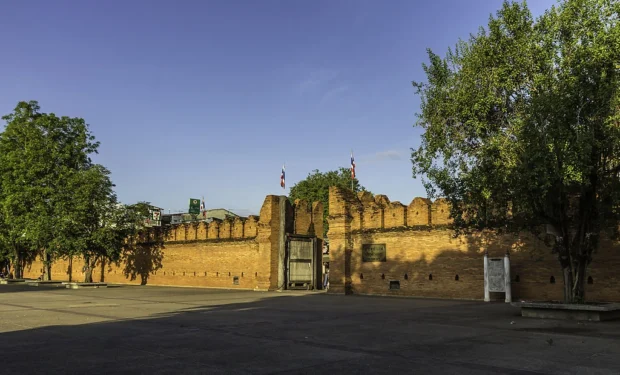
As dawn colored the sky above Chiang Mai, I found myself listening to the city’s gentle rhythms a dog’s distant bark, a soft bell from a temple, the warm greeting of a market vendor, “Sa-wat-dee ka.” This is a city of contrasts: ancient stone set against green mountain, tradition woven quietly through each day’s life. For travelers seeking meaningful moments, Chiang Mai, Thailand, holds much more than scenic beauty; its history, kindness, and natural abundance make every step a quiet revelation.
Table of Contents

Arrival and the Warmth of First Impressions
My journey began at Chiang Mai International Airport, a small but friendly gateway. The airport sits only a short distance from the walled Old City. Like many visitors, I took the red songthaew shared pickup trucks, easy to spot and affordable. A local slipped inside and greeted me with “Sabai dee mai?” a simple, sincere way to ask, “Are you well?” The greeting lingers with you here. The songthaew dropped me near Tha Phae Gate, the Old City’s eastern portal, and so began my slow introduction to Chiang Mai’s gentle pace.

Wandering Old City Temples at Sunrise
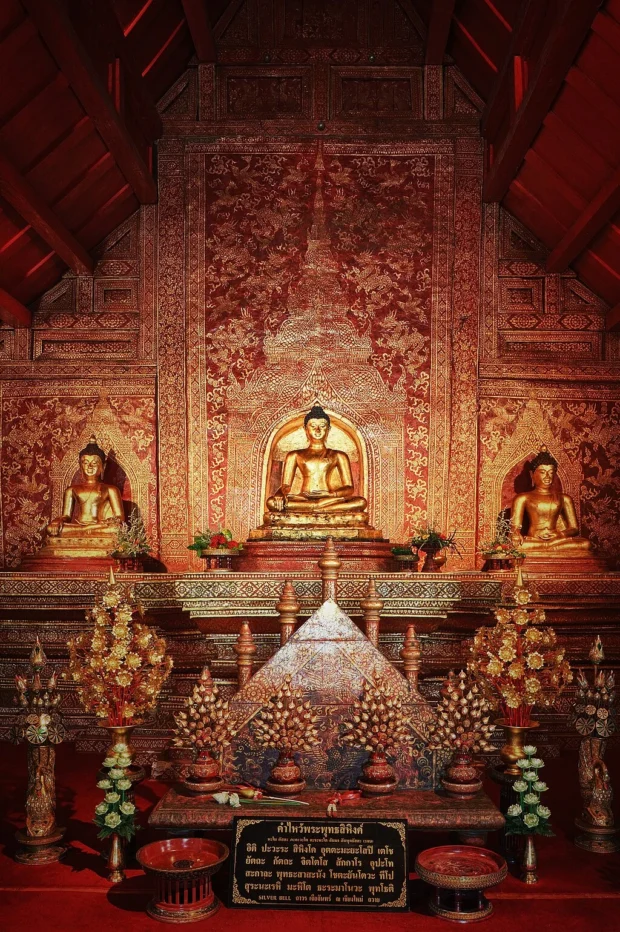
The Old City is where Chiang Mai’s past continues in daily practice. Wandering these lanes at sunrise, I watched orange-robed monks accept alms sticky rice and fruit handed quietly by locals. Surrounded by a square moat and remnants of brick walls, the Old City houses dozens of Buddhist temples, or “wat.” Two of the most beautiful and important are Wat Chedi Luang, with its partly-ruined ancient chedi from the 14th century, and Wat Phra Singh. The latter gleams with golden roofs and fine woodwork, holding relics and murals that tell stories many centuries old. Even with frequent visitors, mornings remain peaceful. I was reminded not to point my feet toward the Buddha statues a simple sign of respect, one of several quiet customs here.
Doi Suthep: A Sacred Mountain in the Clouds
Any Chiang Mai visit feels incomplete without the climb (or comfortable drive) to Doi Suthep. The mountain looks over the entire city, wrapped often in a veil of mist. At the summit is Wat Phra That Doi Suthep, a temple built in 1383 that remains both pilgrimage site and symbol of northern Thailand. I ascended the 306-step naga staircase its green dragon tails winding upward or a funicular for those less daring. The cool air was laced with incense and the faint ring of temple bells as monks chanted in the golden stupa’s shadow. The panorama across jungle and rooftops brought a sense of stillness. According to legend, an ancient relic chose the site itself: an elephant climbed the mountain, trumpeted three times, and lay down, never to rise. Local belief holds that here, wishes made from the heart may come true.
For those captivated by Thailand’s temples, the captivating spiritual atmosphere of Wat Arun in Bangkok offers a serene complement to Chiang Mai’s sacred sites.

If you wish to better plan your visit or check temple festivals, feel free to check its website.
Meeting Elephants with Respect
A desire to meet elephants led me to the Elephant Nature Park, an hour’s drive north. Here, rescued elephants many saved from logging or circus work roam as naturally as possible, grazing, bathing, or simply resting in the shade. Unlike conventional shows or rides, the park focuses on animal welfare and environmental stewardship. I met Lek Chailert, the founder, who explained their work to protect not just elephants but whole river valleys. Volunteers help with feeding, even cleaning an unforgettable experience, and a lesson in true empathy.

Other sanctuaries exist, but Elephant Nature Park’s commitment to ethical care made me reflect on how every choice a traveler makes can support better futures for animals and communities alike.
Hill Breezes and Waterfalls: Nature Beyond the City
One morning, I joined a shared minibus for a day in Doi Inthanon National Park. Known as the “Roof of Thailand” because it contains the country’s highest mountain, this park is a patchwork of cloud forest, royal gardens, and seasonal flower blooms. I walked forest trails thick with birdsong Thailand’s highest bird diversity is here and watched as Karen villagers tended rice paddies. The air was many degrees cooler than the city below. Even in a single day, I saw two waterfalls Sirithan and Wachirathan each veiled in spray and rainbows.

Closer to the city is Bua Thong Sticky Waterfalls. The poetic name hints at the oddity: thanks to unique limestone, these falls let you walk straight up the rock face without slipping. Children laughed as they scrambled upward, while adults bathed feet in the clear river pools. It remains a favorite spot for families, a place where everyone seems to slow down, letting the clean water wash away the sticky heat of Chiang Mai’s afternoons.

Chiang Mai Zoo and Biodiversity Insights
In the foothills just beside Doi Suthep, I wandered into Chiang Mai Zoo. It stretches across forested slopes and has a surprising variety of animals, with shaded paths leading past enclosures and ponds. I met students on a field trip, eager to see pandas and learn about native creatures. Educational signs and quiet corners make this zoo more than a spectacle it’s also a place to reflect on regional biodiversity and conservation work, connecting families and schoolchildren regularly to the region’s threatened habitats.

A Night at the Bazaar, a Sunday on Foot
Every night, Chang Klan Road transforms. Stalls open, lanterns flicker, and the Night Bazaar fills with color and chatter. Here, travelers bargain gently for hilltribe handicrafts, hand-woven scarves, and silver jewelry. The smell of sizzling sai ua sausage and smoky kab moo (crispy pork skin) drifts between stalls. I sat at a curbside table, savoring a bowl of khao soi rich curry noodle soup, yellow and comforting a northern specialty that speaks of trade routes and ancient kingdoms.
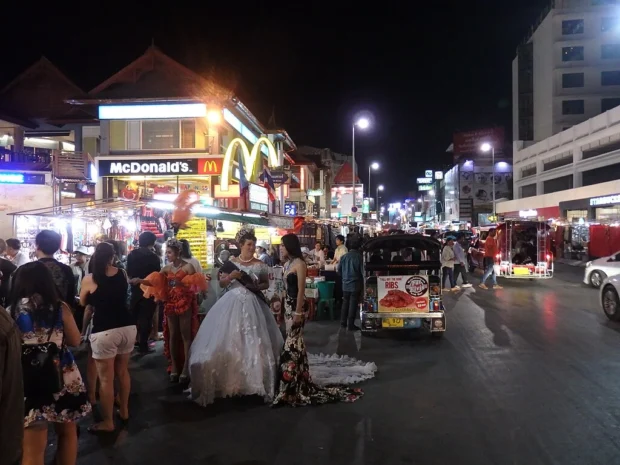
But it was the Sunday Walking Street, stretching along Ratchadamnoen Road, that enchanted me. As dusk fell, local musicians played soft Thai tunes, and I lost myself among paintings, coconut ice cream, and finger foods grilled over charcoal. Craftspeople explained their weaving techniques or described family-run projects evidence of Chiang Mai’s ongoing commitment to handmade quality and local economy. One woman offered me a piece of sticky rice wrapped in banana leaf, smiling gently, “Kin len” literally, “Eat for fun.” Her kindness echoed the city’s broader spirit of welcome.

Accommodations and Simple Comforts
Chiang Mai offers places to stay for every taste, from quiet guesthouses hidden along the moat to community-run homestays in nearby hills. I stayed in a restored wooden house just west of the Old City, where each night brought the scent of frangipani and the distant sound of drums as a temple festival began. Hosts here are often eager to share stories, recommend a lesser-known noodle shop, or point out a shortcut to the nearest morning market. Thai-style hospitality centers on comfort and calm; it is not unusual for locals to ask, “Pbehn ngai?” “How are things?” before offering directions or advice.
Sustainable Holidays and Rural Perspectives
What most guides do not mention is how Chiang Mai’s slower rhythms allow for reflection on sustainable travel. Community-based tourism thrives: in hills east of the city, Lanna farmers run small-scale coffee plantations, and I learned to roast beans by hand essential work that supports rural economies. Indigenous Karen and Hmong crafts are present in village markets, with many families organizing weaving or silverwork demonstrations. Joining one of these initiatives, I appreciated the respect with which local guides introduce their cultural practices. True resilience, I realized, is woven into everyday exchanges, not pinned as exhibits for outsiders.
Pace, Politeness, and Presence: Daily Etiquette
In Chiang Mai, I was reminded of courtesy at every turn. Shoes are left at the door in both temples and private homes. Respect is marked in posture: you wai placing hands together and bowing slightly upon meeting elders or monks. I never raised my voice, nor wore too-revealing clothes near temples. Such gestures are not rules imposed, but quiet ways visitors show participation in a deeper civility. The city’s hospitality flows from these customs, making it easy to feel at ease even as an outsider.
Postcard Moments and Unexpected Calm
Some of my best memories were simply found by walking east to the old city’s market lanes, north to the university’s leafy campus, or through alleys where murals blossom on ancient walls. The smell of roasting coconut, notes from a bamboo flute, schoolchildren practicing their evening dance these are Chiang Mai’s postcards. I once stumbled into a lantern festival, where a thousand candles floated in the moat and paper balloons drifted overhead, carrying wishes skyward.
For travelers intrigued by ancient cities framed by mountains, Chongqing’s vibrant river culture and historic charm offers a unique contrast to Chiang Mai’s serene temples.
Chiang Mai rewards unhurried travel and open senses. Whether standing in the shadow of Doi Suthep or lingering over a bowl of mango sticky rice, every moment here felt somehow lighter, as if I, too, belonged gently to this landscape of mountains, smiles, and stories. “Khob khun ka” thank you for every kindness, every open gate, and every new morning in the cool mountain air of Chiang Mai.
After exploring Chiang Mai’s serene temples, a visit to bustling Bangkok offers vivid markets and riverside calm.
Minimalist traveler documenting slow journeys focused on mindfulness and sustainability.
- Chiang Mai – East gate of the city wall – 0001 by Stefan Fussan on Wikimedia Commons – cc by-sa 3.0
- Chiang Mai – Wat Phra Singh – 0004 by Stefan Fussan on Wikimedia Commons – cc by-sa 3.0
- 20171105 Wat Chedi Luang Chiang Mai 9897 DxO by Jakub Hałun on Wikimedia Commons – cc by-sa 4.0
- Interior Viharn Lai Kam Phra Singh Temple 1 2012 by Panupong Roopyai on Wikimedia Commons – cc by-sa 3.0
- Phra That Doi Suthep 01 by ผู้สร้างสรรค์ผลงาน/ส่งข้อมูลเก็บในคลังข้อมูลเสรีวิกิมีเดียคอมมอนส์ – เทวประภาส มากคล้าย on Wikimedia Commons – cc by 3.0
- Elephant – Chiang-Mai, Thailand (49418887446) by Nina R from Africa on Wikimedia Commons – cc by 2.0
- 1006 Doi Inthanon 1 by BerryJ on Wikimedia Commons – cc by-sa 4.0
- น้ำตกหนึ่งเหนียว ๑ – One sticky waterfall 1 by Random username 083794703875938 on Wikimedia Commons – cc0
- ยีราฟ สวนสัตว์เชียงใหม่ Giraffe in Chiang Mai Zoo (18) by กสิณธร ราชโอรส on Wikimedia Commons – cc by-sa 4.0
- Chang Khlan, Mueang Chiang Mai District, Chiang Mai, Thailand – panoramio (18) by mohigan on Wikimedia Commons – cc by-sa 3.0
- ThaPaeWalkingStreet3 by LannaPhoto on Wikimedia Commons – cc by-sa 4.0


.jpg)


.jpg)
.jpg)
