

Landing in Catania, Sicily’s second city, I felt a sense of anticipation buzz through the air. It is a place shaped by the fire of Mount Etna, the Mediterranean breeze, and centuries of resilience. Catania sits beneath this famous volcano’s imposing silhouette. Its cityscape pulses with history and color, where ancient ruins settle side by side with bustling markets. With each street, Catania reveals chapters from its Greek, Roman, Norman, and Baroque past, yet it always feels vividly alive and decidedly Sicilian. I soon discovered that stepping through the city’s wide piazzas and narrow alleys, there is always another story behind every stone and aroma.
Table of Contents
Mount Etna: Sicily’s Fierce Soul
From almost every corner in Catania, Mount Etna looms like a silent guardian. On clear mornings, its snow-capped peak glows above the rooftops yet locals speak of it as “a muntagna”, a living presence that shapes their lives. I learned this word as I chatted with elderly stallholders at the Pescheria Market, who offered me stories and a strong “buongiorno!” They spoke of how black lava stone, quarried from Etna’s slopes, has built the city’s grand core. Etna is both danger and fortune: its eruptions have destroyed much, but the volcanic soil nourishes almonds, lemons, and pistachios essential Sicilian treasures.
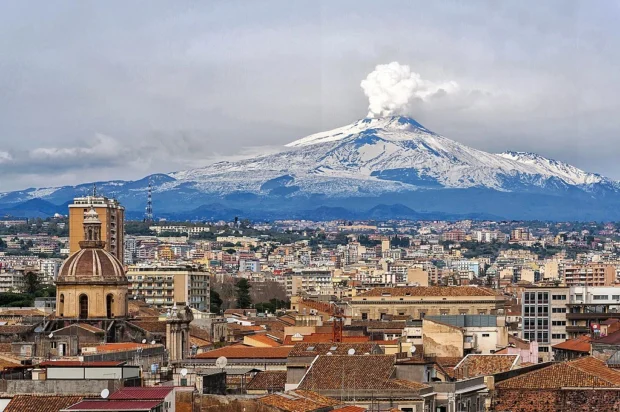
For travelers, a guided visit to Mount Etna is unforgettable. Tours leave daily from Catania’s center, taking small groups by coach or minibus to the mountain’s craters. You may walk among lunar rocks and feel the warm breath of sulfur rising from fissures. I tasted the famous Etna wines, grown on ancient terraced vineyards that climb the lower slopes here, the Nerello Mascalese grape finds its perfect home. Guides shared legends of ancient gods, and I could sense how the people of Catania both respect and fear the mountain’s unpredictable spirit.
To complement your journey through Catania’s vibrant streets, this detailed guide to Mount Etna and its nearby charms offers practical travel tips and highlights of local flavors close to the volcano.
Piazza Duomo: The Historic Heartbeat
No visit to Catania is complete without standing in the vibrant Piazza Duomo. The square is a living theater, lively at all hours with pedestrians spilling in from nearby streets. I found myself watching as couples, schoolchildren, and elderly men some sharply dressed, others in work clothes mingled around the city’s most famous landmark: the Elephant Fountain. This black lava elephant, known locally as “u Liotru,” is the symbol of Catania. I learned from a friendly barista nearby that the elephant is wrapped in legend, representing wisdom and the city’s ancient ability to survive disaster.
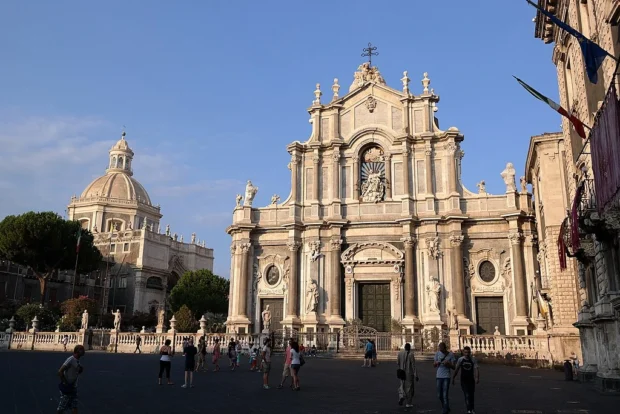
The square is lined by grand palaces and the stately Catania Cathedral. Inside, sunlight filters through high windows onto the tomb of the composer Vincenzo Bellini, who is a local hero. The bells ring out as pigeons scatter, and I found a peaceful corner to listen for a moment, reflecting on the centuries of triumph and tragedy this square has witnessed. For city events or festivals, Piazza Duomo becomes the stage filled with music, processions, and laughter echoing against the Baroque facades.

Roman Theatre: Echoes of Antiquity
Catania hides many secrets just beneath its surface, and few are as dramatic as the Roman Theatre. Walking just a few steps from the bustling Via Vittorio Emanuele, I peered through a small gate and gasped: suddenly, ancient black stone arches emerged from the city’s modern skin. Built in the 2nd century AD, this theater once welcomed thousands for comedies and tragedies. Today, birds nest in its crumbling tiers, but at sunset, the old stones catch golden light and history feels near.
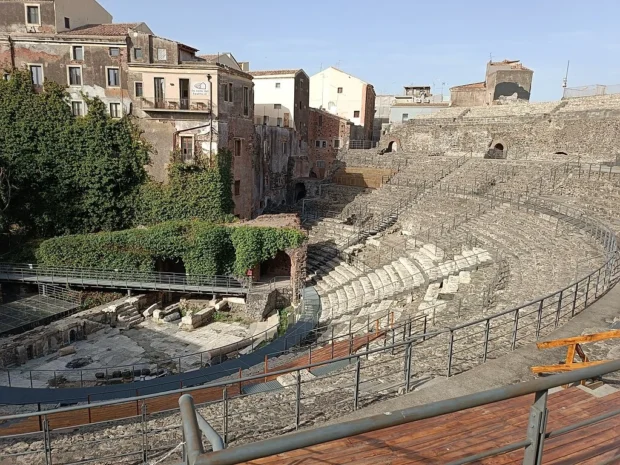
I spoke to a guide who explained how flooding and earthquakes had long hidden this theater, and only recently was it carefully excavated. Down in the orchestra pit, you can imagine Roman citizens clapping or booing actors over a thousand years ago. Sometimes, the site hosts small concerts. If you stand quietly, as I did, the city noise fades, and you almost hear distant applause. Just next door is the smaller Odeon, which once hosted musical performances. Both are reminders that Catania’s past is layered just a little curiosity brings these stories to life.
Markets, Flavors, and Morning Scenes
Early one morning, I strolled over to the Pescheria, Catania’s most famous fish market. It is hidden just behind Piazza Duomo and is a feast for the senses. The calls of fishmongers “prego!” echo as silver sardines, ruby-red prawns, and swordfish glisten on ice. Here, “Quanto costa?” how much? is a phrase you will use often, and it’s easy to strike up friendly chatter with the vendors.
Beyond seafood, stalls overflow with fresh citrus, wild fennel, and olives. This is where I tried an arancino, the golden, fried rice ball stuffed with meat or cheese, which is a Catania specialty and perfect for a quick meal. Street food here is legendary: crispy panelle made from chickpeas, and the irresistible cannolo, a sweet pastry tube filled with ricotta cheese. In the old quarters, bakeries scent the air with almond and pistachio ingredients born from the volcanic soils of Etna.
For dinner, Catania’s trattorias come alive in the Via Santa Filomena and the historic fish market district. From rich pasta alla Norma (eggplant, tomatoes, salted ricotta), to grilled swordfish, every meal seems to sing of the land and sea. Asking for “Un bicchiere di vino dell’Etna, per favore” a glass of Etna wine, please brings local pride to any table.
Layers of History: Castles and Monasteries
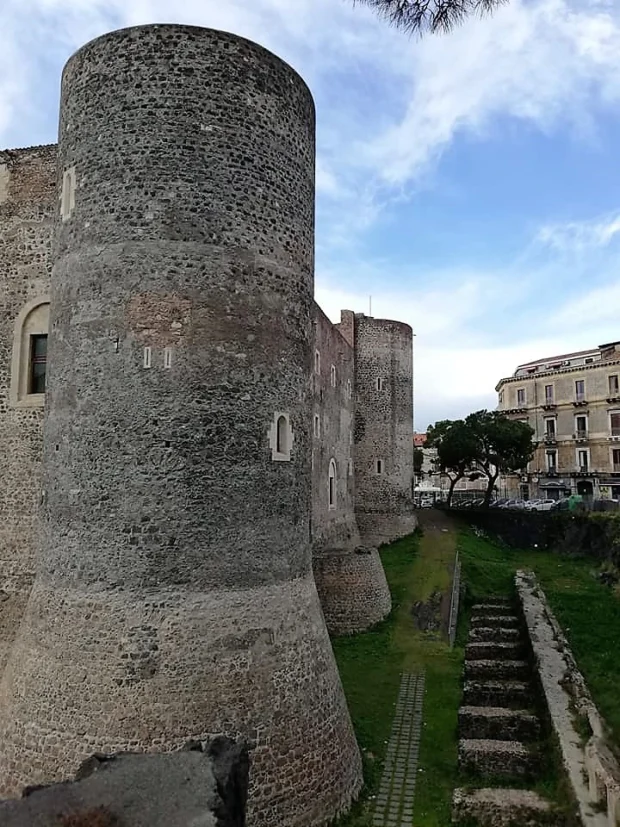
Catania’s skyline is punctuated by the solid outline of Castello Ursino, a fortress built in the 13th century by Frederick II. It once guarded the ancient coastline, though today, due to centuries of volcanic eruptions, the sea is further away. The castle’s dark walls, made from lava stone, feel cool even in summer. Stepping inside, I admired medieval coats of arms and exhibitions about Sicilian culture and pottery. It is one of the city’s best places to feel the medieval era’s might.
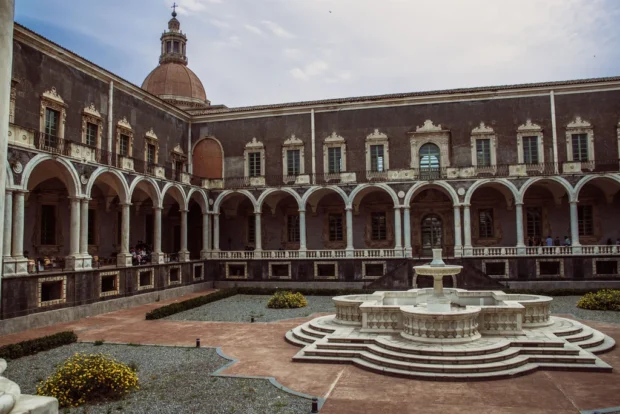
Not far away is the Monastero dei Benedettini. This former Benedictine monastery, now part of the university, is one of southern Europe’s grandest monastic complexes. Its cloisters are peaceful, with sunlight drifting across white stones. I joined a guided walk (tours are highly recommended) and learned of earthquakes, lava flows, and monks who cultivated gardens and taught philosophy within these walls. For those interested in religious architecture, this is a Catania highlight. More details can be found on the official Monastero dei Benedettini website.
Catania’s Theaters: Bellini and the Ancient Amphitheatre
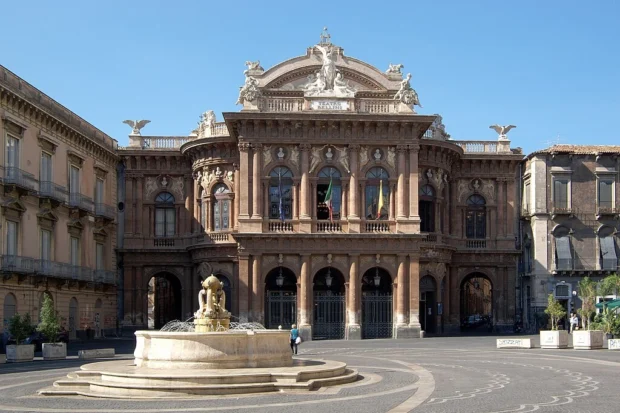
As night falls, the city’s energy shifts toward music and drama. The Teatro Massimo Bellini is Catania’s elegant opera house, its façade aglow with golden lights. Named after its native composer Vincenzo Bellini, the theater’s acoustics are renowned. Locals cherish an evening at the opera a tradition that blends the city’s love for spectacle with its rich musical legacy. Formal dress is respected, but I noticed that Sicilian warmth welcomes everyone inside.
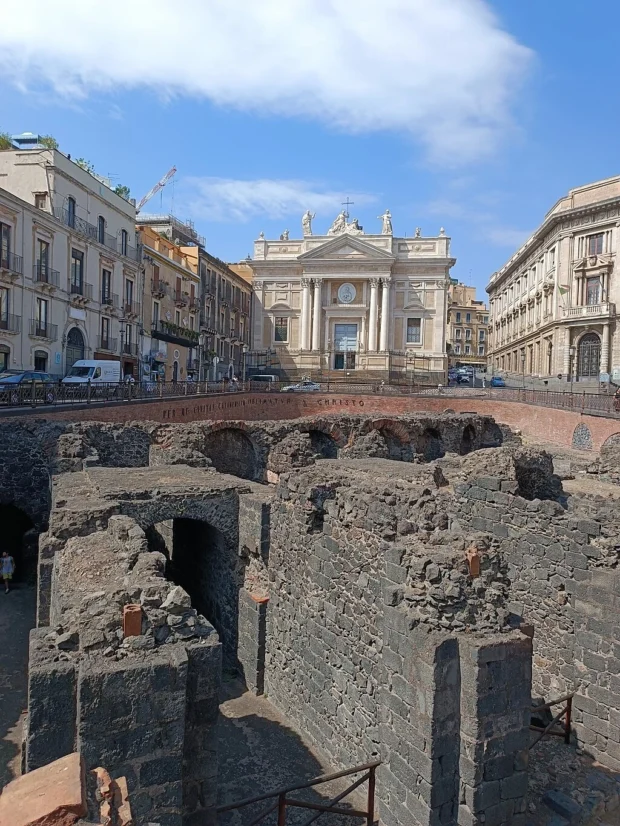
Just a stroll away, I found the ruins of the Amphitheatre of Catania. Once among the largest in the Roman Empire, its circular shape peeks out from beneath the modern streets. It’s startling to see ancient arches invade modern piazzas, yet this layering is typical of Catania. I stopped to photograph the rugged stones, listening to a local legend describing gladiators and wild animals. The city is proud of its dramatic heritage shaped equally by art and the unpredictable moods of Etna.
Gardens, Alleys, and Everyday Life
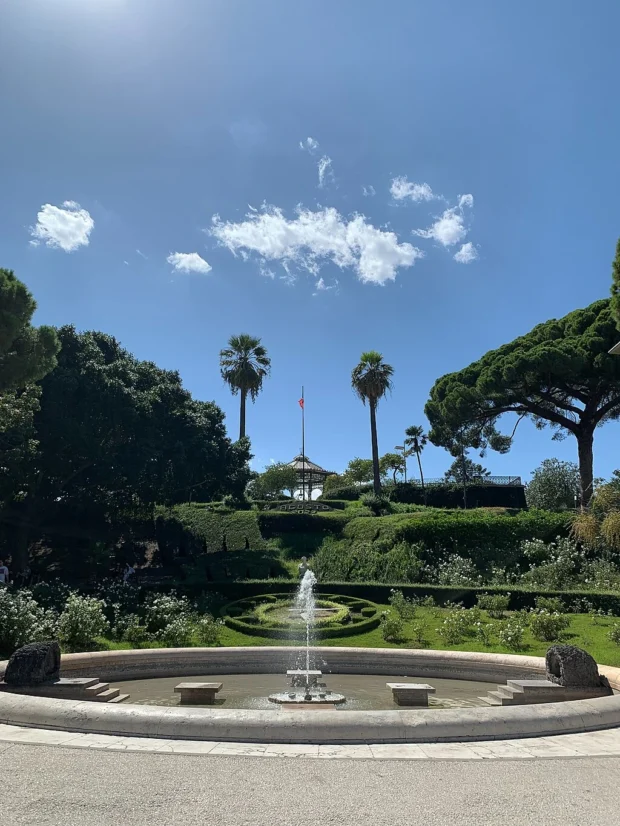
Craving some quiet, I wandered into Villa Bellini, Catania’s public garden. An oasis with flower beds, palm trees, and shady paths, it offers a pause from the city’s liveliness. Here, friends gather on benches as couples stroll beneath flowering jacarandas. Children play, their laughter echoing through the fountains. In springtime, the garden becomes a canvas of color, and views stretch toward Mount Etna’s white peak.
Much of Catania’s charm is found away from tourist sights: in the tangled streets of the old quarter, sunlight turns the black lava facades a warm silver-grey. Laundry flutters from balconies, and street art announces the city’s creative youth. I stumbled upon a small mosaic honoring local fishermen evidence that tradition and modern spirit coexist here. In artisan workshops, you might watch a craftsman shape coral jewelry or handpaint Sicilian carts, each with its own story to tell.
Getting Around Catania: Practical Tips
Arriving in Catania is easy, with the city’s Fontanarossa Airport a short bus ride from the main train station. The Alibus is a fast, convenient shuttle that links the airport and central city every twenty minutes. Catania’s Stazione Centrale the central train station makes it simple to reach other Sicilian towns or coastal resorts. For local travel, I found public buses reliable and affordable, weaving through historic streets and connecting to major sites.
Catania’s center is best explored on foot. Streets can be narrow and the pavement sometimes uneven, but walking is the most rewarding way to feel the city’s contrasts. Comfortable shoes are a must, and be prepared for lively street crossings traffic is energetic, but I always found Sicilian drivers to be patient when you step boldly at the zebra lines. Bicycle rentals have become popular, giving visitors another way to follow the city’s rhythms.
Customs, Etiquette, and Engaging with Locals
A few simple courtesies are appreciated in Catania. Greet shopkeepers with “Salve!” or “Buongiorno!” a kind hello opens many doors. Locals are proud of their city and enjoy sharing stories if you ask politely. If invited for coffee, remember that ordering a cappuccino after lunch is unusual; a small “caffè” (espresso) is traditional. Respect the afternoon “riposo” (rest time), as some shops close for a few hours after lunch.
Dress is stylish but relaxed, especially when visiting churches or theaters a modest shirt or dress is always respectful. Learning a few Italian phrases brightened my interactions: “Per favore” (please), “Grazie” (thank you), and “Dove si trova…?” (Where is…?) opened smiles and sometimes a spirited lesson in Sicilian dialect. Don’t be surprised if hands are used to emphasize every emotion; in Catania, conversation is an art form.
Final Reflections on Catania’s Timeless Spirit
As my days in Catania ended, I realized that its greatest treasure is not one monument or single flavor, but the unpredictable mix of its ancient stones and daily life. Here, layers of history sit beneath the constant gaze of Mount Etna, while lively markets, grand piazzas, and quiet gardens invite you to linger and listen. Whether you come for the flavors, the myths, or the incredible hospitality, Catania offers a story around every corner if you are curious enough to look.
To complement your Catania visit, wandering through Palermo’s architectural gems reveals Sicily’s layered history in new light.
If you have time to visit only one official site for planning, the Catania tourism portal gathers information on major events, guided tours, and how to enjoy the region’s flavors and landscapes throughout the year.
Explorer of historic places and culinary traditions, combining landscape appreciation with food culture.
- Catania Aug 2023 23 11 52 766000 by Robot8A on Wikimedia Commons – cc by-sa 4.0
- Catania vista dall'alto e il vulcano Etna a sovrastarla by Dariolp83 on Wikimedia Commons – cc by-sa 4.0
- Catania – Piazza del Duomo al tramonto by Luca Aless on Wikimedia Commons – cc by-sa 4.0
- Catania BW 2025-04-25 15-17-05 by Berthold Werner on Wikimedia Commons – cc by-sa 4.0
- Catania – Teatro romano di Catania – 2024-09-11 12-13-16 009 by Viaggiamocela on Wikimedia Commons – cc by-sa 4.0
- Castello Ursino 05 02 2020 12 by Effems on Wikimedia Commons – cc by-sa 4.0
- Catania – Chiesa di San Nicolò l'Arena – chiostro by Cristina Morettini 95 on Wikimedia Commons – cc by-sa 4.0
- Catania BW 2012-10-06 11-11-06 by Berthold Werner on Wikimedia Commons – cc by-sa 3.0
- Catania – Anfiteatro romano di Catania – 2024-09-10 20-06-24 004 by Viaggiamocela on Wikimedia Commons – cc by-sa 4.0
- Catania Aug 2023 23 11 03 254000 by Robot8A on Wikimedia Commons – cc by-sa 4.0


