

If Kuala Lumpur means only skyscrapers and busy traffic to you, let me stir your senses. This city brims with spice, color, and surprise at every turn sometimes in a temple, sometimes in a bowl of steaming laksa, or in a stranger’s easy smile at a food stall. In this sprawling capital of Malaysia, ancient caves sit beside silvery towers, and the aroma of grilled satay mixes with the whir of ceiling fans in open-air restaurants. Each district invites you with something new, whether it is a dazzling view, a deep-fried snack, or a piece of heritage that feels alive and breathing. Wondering where to start? Follow my notebook full of napkin notes and blurry noodle photos through the heart of Kuala Lumpur.
Table of Contents
After seeing Kuala Lumpur’s vibrant street-level flavors, appreciate the city’s iconic silhouette in the article about Petronas Towers and their unique architecture.
Standing Tall in the KL Skyline
You can feel the city’s pulse best at the foot of the Petronas Towers, twin spires that seem to pierce the clouds. I spent an afternoon gazing upwards until my neck ached these towers, once the tallest in the world, shine silver by day and glow with thousands of lights after dark. The Skybridge, halfway up, felt like crossing a glassy river whose current is wind. For anyone wondering, the towers are held together by an ingenious double-decker bridge, an architectural handshake. Below, crowds gather in KLCC Park, kids chase bubbles, and couples picnic under trees with takeaway nasi lemak. It’s a spot as dramatic in the rain as when the sun sets the towers ablaze.
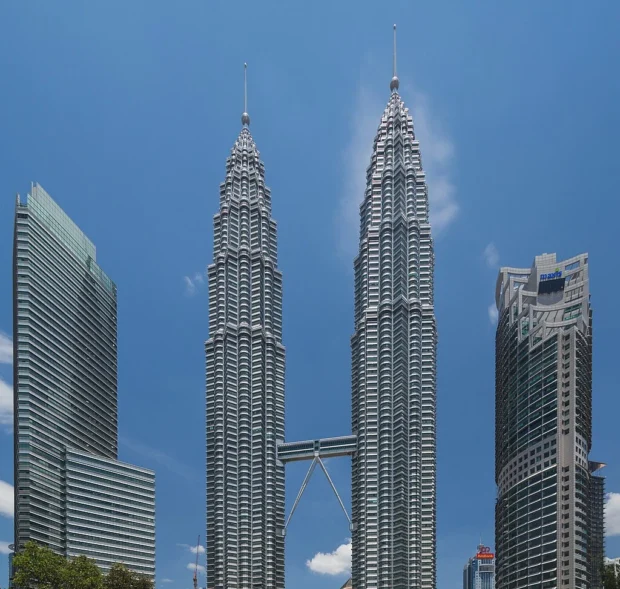
If you skip the tour up, don’t miss the spectacle from the park itself especially near sunset, when locals come out for a stroll and ice cream carts jingle their melodies. The photo opportunity here is unbeatable, with palm trees and fountains framing the iconic duo.
From Glistening Spires to Cave Shrines
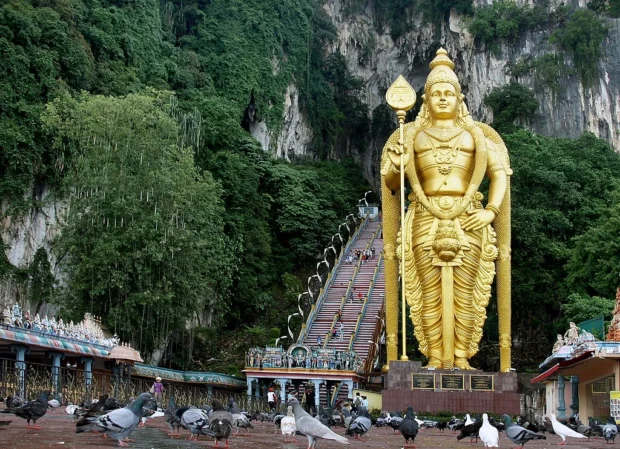
A city bus or a quick hop on the KTM Komuter train northbound brings you to the Batu Caves. Warning: this is not a quiet temple monkeys rule the stairway, and they’ll try for your peanuts or a careless bottle of mango juice. The 272 colorful steps rise to a limestone cave so vast, its ceiling seems to sweat with the prayers of a thousand pilgrims. Inside, golden deities are tucked into corners, and the air smells of incense and old earth. During the Hindu festival Thaipusam, these caves become a river of color and courage, as devotees carry heavy kavadis and pierce their skin with silver needles. As a visitor, you are welcome to climb, to listen, and to marvel but remember: no short pants, cover your shoulders, and do not bring snacks unless you want to share with a cheeky macaque.
What I loved most about Batu Caves was not just the spectacle, but the sound. Chickens crow inside the caves, pigeons flutter, and the clang of prayer bells mixes with children’s laughter echoing from the stairwell. Stop at the bottom for a coconut water fresh, cold, and sweet, ideal after that sweaty climb.
Everyday Legends on Merdeka Square
On foot, I wandered into Merdeka Square, a green field ringed by gingerbread-trimmed colonial buildings. This is the city’s front yard, a historic space where Malaysia declared independence in 1957. The Sultan Abdul Samad Building, with its copper domes and arched verandas, faces the largest flagpole I’ve ever seen. Locals come here for selfies at dusk, joggers do lazy laps, and cricket games run on one corner as school groups trail after their teachers.
The contrast is striking: behind you, a cathedral; ahead, the old club house now echoes with the sounds of weekend concerts. If you like quirky facts, note this: the elegant, white Royal Selangor Club once had its own dress code for “proper” colonial games. I stopped for an iced Milo at a nearby kopitiam and thought about how history here lives not just in museums, but in an open field where the city breathes.
Eating Your Way Through Jalan Alor and Bukit Bintang
Walk east at night from the city center into the realm of neon signs and street eats Bukit Bintang, the city’s nightlife and shopping arena, and Jalan Alor, the most famous food street in Malaysia. I went hungry and foolish, thinking I could sample everything. Here’s a tip: arrive early (6 pm onwards), and follow your nose, not just the crowds. Grilled chicken wings, sticky with honey and char, sizzle on open grills. Bowls of char kuey teow appear, each smoky and tangled with prawns. Bubble tea shops jostle for space with dim sum counters where aunties fold translucent dumplings filled with chives and shrimp.
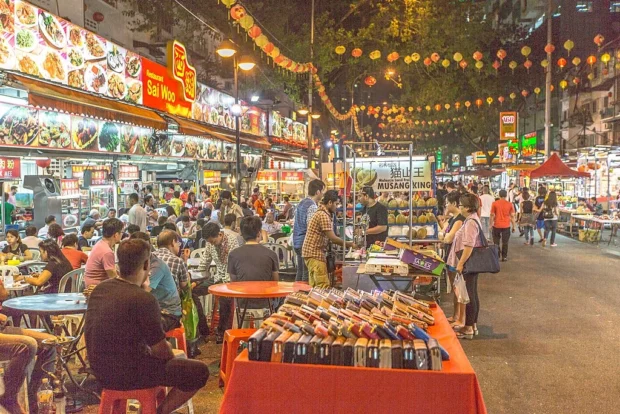

Do not skip satay smoky skewers with just the right amount of burn, eaten with squares of rice cake. Dessert? Try ais kacang, a mountain of shaved ice, sweet beans, and neon syrup that looks like a child’s watercolor disaster but tastes like a sweet, cold rush after spicy noodles.
Diverse Faith and Color: Temples and Mosques
One steamy afternoon, I ducked inside the National Mosque (Masjid Negara), a cool sea of turquoise tiles and white marble. Built in the 1960s, its umbrella roof looks like a blooming flower. Non-Muslims are welcome outside prayer times robes are offered, and a kind volunteer explained the calligraphic designs on the doors. I learned that Islam here lives alongside Buddhist, Hindu, Taoist, and Christian traditions, each faith leaving its colorful mark on city streets.

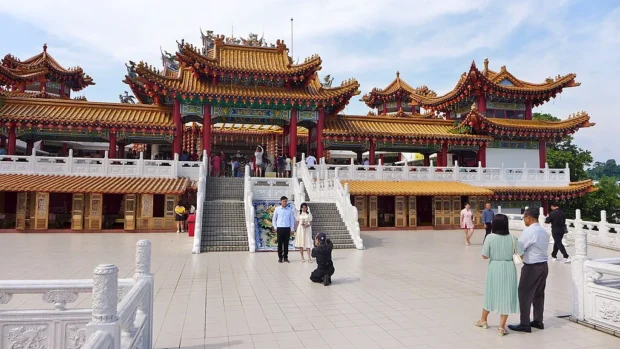
Out in Brickfields, bright garlands and incense drift from Hindu shrines near the massive, red-roofed Thean Hou Temple. If you catch it near Chinese New Year, the temple glows with lanterns. The temple is dedicated to the Goddess of the Sea, and families come to give thanks and snap photos among gold-plated dragons. I watched newlyweds pose for wedding photos, the couple’s laughter mixing with the clang of prayer bells.
Just across town in Chinatown, lanterns swing across Petaling Street, and the perfume of roasting chestnuts floats out beside the blur of bargain hunters. Here, food and faith sit side by side Buddhist temples, Taoist incense sticks, and hawker stalls where you can try Hokkien mee or herbal teas that old men claim can cure anything from sunburn to heartbreak.


KL Tower and an Unexpected Forest
I almost missed the KL Tower (Menara Kuala Lumpur), thinking it would be just another viewpoint. But there’s a surprise: it rises from a patch of actual rainforest, where monkeys leap in the canopy and city sounds fade into birdsong. The view from the top is a sweeping 360 degrees you can see tin-roof kampung houses hemmed in by glass towers, and (on a good day) all the way to the limestone hills beyond Batu Caves.

At the base, the Bukit Nanas Forest Reserve offers raised walkways for a jungle stroll right below the city’s steel heart. It felt surreal to watch a butterfly land on my shirt with shopping bags digging into my arms.
And the food court here? Get a fresh coconut shake before heading down. It’s thick and cool, blending coconut water and soft coconut flesh.
Cultural Tastes: Museums and Markets
Set aside some hours for the Islamic Arts Museum, a graceful white building with blue domes on Jalan Lembah Perdana. Inside, galleries hold ancient Korans, rich carpets, gilded manuscripts, and even a scale model of the Grand Mosque in Mecca. The curators I met were passionate and happy to share details one showed me a tiny Quran, barely the size of my thumb, kept in a locket for traveling merchants. Admission is reasonable, and the museum’s cafe serves an excellent lamb briyani with fluffy rice and cool yogurt.

For another burst of tradition, explore wet markets in Chow Kit or the morning stalls in Kampung Baru. Fruits here are wild durian, creamy and pungent, is king, but also try mangosteen, its thick rind hiding snow-white sections, sweet as a secret. You’ll see farmers display jackfruit, and vendors craft rojak, a tangy fruit-and-sauce salad that is a riot on your tongue.
Kuala Lumpur’s culinary heritage is a tapestry: Malay, Chinese, Indian, Peranakan, and Eurasian. Old recipes travel hand to hand, from mother to daughter, or are scribbled on the backs of faded bills. Every week, I learned something new how roti canai gets its flaky layers from being tossed again and again; that teh tarik, sweet milk tea “pulled” to a froth, is best at a busy mamak stall.
Local Life: Where to Stay and How to Move
Kuala Lumpur is a city of extremes glitzy skyscraper districts and old neighborhoods of wooden houses and trailing bougainvillea. For travelers, central areas like Bukit Bintang, KL Sentral, or Chinatown put you within easy reach of train lines and major attractions. Guesthouses and boutique hostels are scattered through these districts, each offering their own patchwork of city sounds by night.
Getting around, I took the LRT (Light Rail Transit) and Monorail cheap, cool, and perfect for hopping between neighborhoods. Trains leave regularly from KLIA airport to KL Sentral, the main hub. I sometimes switched to the free Go KL City Bus, painted bright purple and running loops past popular spots. Bring a Touch ‘n Go card for all these rides it saves money and time (and no fumbling with coins).
My favorite moments happened while in transit: overhearing aunties sharing recipes on the monorail, or spotting a wedding party piling into the train, laughter echoing as the doors slid shut. The city’s many layers open up not just at the sights, but in these everyday scenes.
Etiquette, Customs, and Warm Smiles
Malaysia is a mix of cultures, so traditions blend. A few essentials: greet with “hello” or a smile; remove shoes in homes and temples; respect dress codes at mosques. Locals are famously friendly if you look a little lost, chances are someone will stop to help, often with their own food recommendations. Eating with your right hand is common at Malay restaurants; in Chinese or Indian spots, chopsticks or forks are the norm.
I never felt out of place, even when my language skills failed. Don’t be afraid to ask, or to try something new, whether it’s a word or a dish. The city rewards curiosity and patience, often with a story and often with a slice of pandan cake, soft as a cloud and tinted green from the local herb.
Last Bites and Unforgettable Flavors
Before leaving, I watched an old uncle behind a food cart in Pudu roll popiah spring rolls filled with jicama, sweet sauce, and crunchy peanuts. Nearby, a crowd lined up for chee cheong fun, silky rice rolls doused in soy and sesame. That’s the thing about Kuala Lumpur: you taste something new with each step, and there’s always another alley, another flavor, another smile to follow.
Leaving KL, I realized my memories are a jumble: steel towers and coconut shells; prayer bells and shopping mall music; spicy curry, gentle tempura, and laughter under neon lights. Every sight and bite here tells a story of a city always changing, always welcoming you back for just one more taste.
- Kuala Lumpur Malaysia Skyline-03 by CEphoto, Uwe Aranas on Wikimedia Commons – cc by-sa 3.0
- 2016 Kuala Lumpur, Petronas Towers (26) by Marcin Konsek on Wikimedia Commons – cc by-sa 4.0
- Batu Caves. Kuala Lumpur, Malaysia. (17721587095) by Bernard Spragg. NZ from Christchurch, New Zealand on Wikimedia Commons – cc0
- Jalan Alor – Kuala Lumpur by IQRemix on Wikimedia Commons – cc by-sa 2.0
- Bukit Bintang, Kuala Lumpur, Federal Territory of Kuala Lumpur, Malaysia – panoramio (55) by Daibo Taku on Wikimedia Commons – cc by 3.0
- KL – Masjid Negara 0001 by Stefan Fussan on Wikimedia Commons – cc by-sa 3.0
- Thean Hou Temple, 2023 (06) by Bahnfrend on Wikimedia Commons – cc by-sa 4.0
- 2016 Kuala Lumpur, Ulica Hang Lekir (01) by Marcin Konsek on Wikimedia Commons – cc by-sa 4.0
- Dataran Merdeka 1 by Haakon S. Krohn on Wikimedia Commons – cc by-sa 3.0
- KL Tower, Kuala Lumpur, Malaysia by Salmiah La Suma on Wikimedia Commons – cc by-sa 4.0
- Islamic Arts Museum Malaysia by Chongkian on Wikimedia Commons – cc by-sa 4.0

.jpg)
.jpg)

.jpg)

.jpg)
.jpg)


