

Marrakesh feels like no other city. People often talk about its color red walls, terracotta roofs, pink dust swirling at dusk but for me, the spirit of the city is more about sounds, touch, and tradition. Marrakesh is a place where laughter mixes with prayer calls, where you can walk past ancient mosques but end up sipping mint tea with grandmothers on quiet courtyards. For anyone searching Marrakesh travel guides, looking for experiences beyond photographs, this is your place to begin. The air brims with heritage, spices hang in the breeze, and even the tiniest alleyways have stories worth pausing for. Let me show you what I found, from famous highlights to odd corners you can only meet by wandering slowly.
Table of Contents
Marrakesh Sights: A Blend of Past and Present
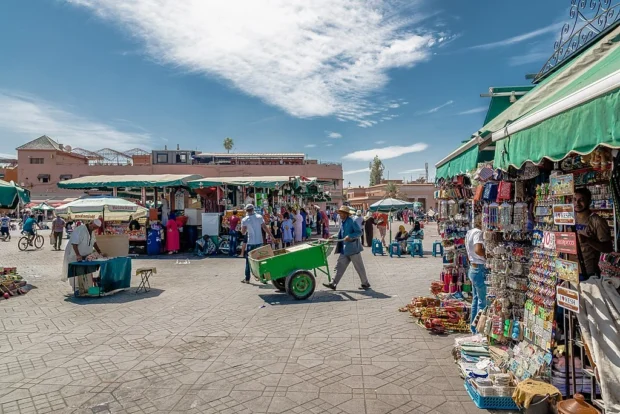
Start at the Jemaa el-Fnaa, the big square at the city’s heart. In daytime, Jemaa el-Fnaa is almost a puzzle orange juice sellers lined up in neat rows, rows of snake charmers performing to the hum of curious crowds, piles of dates and figs, rows of hand-rolled cigarettes being sold to busy locals. At sunset, the square transforms: drums echo, smoke rises from food stalls, and groups appear from nowhere to tell old stories or sing Berber songs. I spent hours here drifting between musicians, storytellers, henna artists, and peddlers each offering something honest, sometimes strange, but always unforgettable.
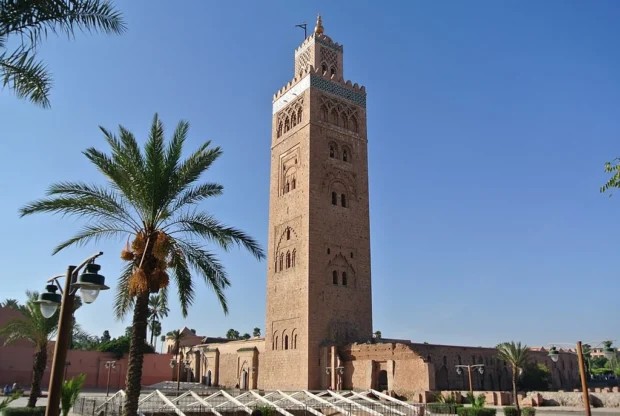
If you walk to the edge of Jemaa el-Fnaa, tall minaret rises above the crowds the Koutoubia Mosque, the city’s most recognized mosque. Its tower is a compass for your eyes, visible from almost everywhere. While non-Muslims cannot enter, the gardens are open and offer a place to pause in the shade, escape the noise, and look up at the stonework that’s seen centuries of prayer. I heard a legend from a young guide here: they say the original orbs on top of the minaret were once pure gold, melted from the jewelry of a sultan’s wife who broke her fast early in Ramadan and donated her gold as penance. Whether it’s true or not, the story lingers on the breeze here.
For those enchanted by historic mosques, exploring Istanbul’s Blue Mosque reveals a stunning blend of Ottoman art and spiritual life.
Stroll through winding alleys, and soon you find the Bahia Palace. This palace is less about grandeur and more about details: carved cedar doors, colorful tiles, and peaceful courtyards lined with orange trees. I wandered through rooms built for powerful viziers and felt surprisingly calm, even with all the visitors. The Bahia was designed for beauty and a sense of secret gardens. Take time to notice the painted wood in the ceilings no two are alike and the way sunlight filters through colored glass, turning even white marble blue and gold.

Stories in Stone: Palaces and Tombs
Marrakesh is filled with places where stories are etched into the walls. The Saadian Tombs stand hidden behind simple walls near the Kasbah Mosque. These tombs date back 400 years, lost for centuries behind a forgotten wall and only rediscovered in 1917 when a French pilot saw their roofs from the sky. The sultans and their families rest beneath marble and mosaic a kind of stillness that makes you whisper, even if you are the only soul around. I listened to a caretaker talk about gold leaf, Italian marble, slaves and princes. If you watch the light fall across the gravestones, you might understand why people talk of old kings and poets as if they still live next to us.

Not far away, the El Badi Palace stands mostly in ruins, but what ruins! Crumbling sandstone walls enclose sunken gardens and quiet pools. Storks nest on the gate towers, unconcerned by history. Locals call it “the incomparable,” but as one elderly man told me, “El Badi was to show wealth, but now it reminds us that everything passes.” Sometimes an event or festival is held in the open courtyard modern life against the old stones. If you want shade, a fig tree near the north wall is the place to read or simply rest and listen to pigeons coo.

Medersas, Museums, and Gardens: Echoes of Learning
The Medersa Ben Youssef is an old Islamic college, and its inner courtyard is like a piece of quiet woven into the city. Marble floors, carefully carved walls, and student cells make it a museum of memory. Centuries ago, students memorized Quranic verses here; today, you might see children copying calligraphy as part of a school outing. Stand at the edge of the pool and feel the coolness of tile, the echo of footsteps, the sense of learning that once filled every room.

Nearby, the Museum of Marrakech offers more than art. From outside, it looks almost like another palace, but inside, the collection mixes Berber jewelry, ancient weapons, calligraphy, and old keys from vanished doors. I was drawn to old musical instruments and leatherwork. There’s a sense here that Marrakesh was always a city of crossroads, where different traditions met and mixed. Sometimes you catch a temporary exhibition, sometimes you hear music drifting from a school next door.

Gardens for the Traveler’s Soul
Everyone tells you to visit the Majorelle Garden, and after a few slow hours there, I understood why. Designed by the French painter Jacques Majorelle and restored by Yves Saint Laurent, the garden is a cool blue oasis north of the busy center. Bamboo groves, pools full of water lilies, shade trees, and bold blue walls create a quiet world. The Berber museum inside is small but filled with objects silver, weaving, textiles that tell their own story of Morocco. You can check timings or history from their official website. My personal advice: go early, before tour groups, so you can listen to birds and the sound of fountains in peace.

On the opposite side of the city, the Menara Gardens are less famous with visitors, more popular with local families. The gardens stretch toward snowy mountains, with a big reflecting pool and an old pavilion. You see children chasing pigeons, couples picnicking, old men playing cards in the shade. Life here is slower. I once shared oranges and jokes with a family here who insisted the Menara Pavilion looks best at sunset, with the Atlas Mountains turning pink behind it.

Old City, New Memories: The Medina Life
If you wander inside the red walls of the old medina, it’s easy to get lost and that’s half the fun. You find souks (markets) that offer everything from carpets to lanterns, olives to slippers. The best smells (for me, at least) are in the spice market, or when you pass piles of orange blossom. The rhythm of bargaining is a kind of social dance sometimes serious, often playful, always ending with mint tea. In the quietest alleys I sometimes found cafes run by retired couples, selling only nut pastries and cardamom-flavored coffee.
Not every wonder is famous. Ask for the Palmeraie and you reach palm groves at the city’s edge hundreds of thousands of date palms, once planted to feed camel caravans. The air carries stories of caravans, of old irrigation canals called khettaras that are still used by locals, though few visitors notice them. The shade under a palm is thick and cool, and if you listen, storks and hoopoes chat from the trees.

In quiet hours, try the tanneries slightly outside the most touristic areas, but full of ancient craft. I met a group of workers, their hands dyed by indigo and saffron, eager to show how leather is still softened with pigeon droppings (an old method, strange but effective!). In Marrakesh, old skills are respected, if sometimes passed along with a joke.
Food, Flavors, and Unexpected Kitchen Stories
Food in Marrakesh is more than what’s on your plate; it’s about the company, too. I ate tangia (a slow-cooked beef stew and Marrakesh specialty) in the Mellah district, served right from a clay pot fresh out of a communal oven. In Gueliz, the modern part of the city, I found salad made of oranges, olives, and cinnamon a sweet, salty surprise. Every street corner seems to offer mint tea, but in different neighborhoods the flavor changes. Sometimes it’s heavy with mint, sometimes with verbena.
Morning is all about msemen (a layered, buttery pancake) and harira, a tomato and lentil soup best with fresh bread. Look for small shops where workers dip bread straight into the pot these are always friendliest. In the evening, I followed locals to food stalls in the square for lamb brochettes, snail soup, and rounds of baklava with sticky honey. If you find yourself in the Jewish quarter, try the pickled lemons and beef, a flavor that lingers long after the meal ends.
Beyond restaurants, Marrakesh is full of sweets. I learned to ask for chebakia (flower-shaped, honeyed pastries) just before Ramadan, as families stock up before the evening fast. Ask for local olive oil or argan oil, too; their richness is a point of pride, and every seller insists theirs is the best. They’re usually right, for each one is slightly different.
Getting to Marrakesh and Moving Around
Getting to the city is straightforward. Marrakesh Menara Airport sits just outside the city walls, and buses connect the terminal with Jemaa el-Fnaa square in under half an hour. Trains arrive from Casablanca and Rabat at the modern rail station in Gueliz, which means you step into the city through a very different neighborhood the new part, with boulevards, roundabouts, and bakeries that sell Parisian pastries next to Moroccan sweets. Buses and small van-like vehicles cover the rest of the city, weaving from district to district with patience and plenty of stops. Walk if you can; the side streets offer the best surprises.
Staying Inside Marrakesh’s Walls: Sleep Like a Local
Old houses in the Medina, called riads, are now mostly guesthouses. Some are elegant, others simple, but almost all offer quiet nights disguised behind ordinary doors. I stayed in one with a small orange tree in the courtyard at night the scent mixed with cinnamon and candle smoke from the kitchen. If you prefer modern comforts and lively boulevards, Gueliz and Hivernage neighborhoods have plenty of options bigger rooms, more cafes, easy access to museums. For anyone who loves quiet, though, try to wake up inside the old city, where the only sounds are birds and maybe a distant mosque call.
Ask your hosts about house traditions. In my courtyard, breakfast changed every day: one morning oranges and strawberries, the next day almond pastries, always with honey and mint tea. Some riads invite musicians in the evening; others help organize a cooking lesson or hammam (steam bath) visit. In Marrakesh, hospitality is an old tradition honest but never forced.
Tradition, Ritual, and Life Lessons from Marrakesh
Marrakesh thrives on a rhythm shaped by faith, family, and markets. Greetings are important always say “salaam” when passing elders. Modest dress is polite, especially near mosques; I noticed that long sleeves and calm voices earned me lots of smiles and even invitations for tea. During prayer times, life slows old men gather on carpets laid right in the street. Street cats know where to hide when the city gets busy, but appear at night to curl up near bakeries or on mosque steps.
I learned from locals that Friday is special, not only a day of prayer but also of couscous, shared between neighbors and visitors. In the souks, bargaining is part of the game, but humor and patience win more than hard words. Once, an old woman winked and said, “In Marrakesh, the price depends on your smile.”
One custom I found charming: Marrakesh children often greet strangers with a gentle “bonjour” or “salaam” before running away laughing. Generosity is a real thing here; when I lost my way, shopkeepers sometimes escorted me personally to my destination (then politely refused any thanks but a shared mint tea).
Quirky Sights and Scenes You Might Miss
On a walk toward the city wall near Bab Agnaou, I came upon a tiny bakery hidden behind stacks of wood the smell of fresh khobz (bread) filled the street. Inside, old men were singing while fires roared. Near the Bahia Palace, a narrow alleyway led to a courtyard filled with weaving looms. Here, brothers and sisters work together to produce the intricate sabra silk shawls you see in shops. In the Darb Dabachi quarter, I met a man who makes musical instruments from goat skin and olive wood, each drum marked with a tiny red thread for good luck.
Sometimes, an ordinary door hides an entire world. Ask gently about a neighborhood hammam, and you might be invited to try the ritual of steam and scrubbing that Marrakesh families share weekly. Listen for the call to prayer at sunset from the Koutoubia Mosque’s gardens (just outside, of course), when the city seems to pause for a breath.
Marrakesh is a city that rewards curiosity. Sit quietly in a square and children will gather, elders will offer advice, and the rhythms of life old and new will play out before your eyes. The walls may be faded, but the stories are bright, told in every gesture and smile.
A Small Farewell from Morocco’s Old Heart
After weeks in Marrakesh, the memory I cherish most isn’t a monument or meal, but a sense: the sun setting behind minarets, the calls to prayer blending with laughter, the taste of oranges sticky on my hands. This is a city built for the senses, kept alive by old crafts, young people, and stories exchanged over tea. Whether your time here is a single day or a slow, curious month, Marrakesh will share its secrets if you ask kindly, listen closely, and walk with a little patience. Everyone leaves with a new story. I hope you find yours in the red city’s winding lanes.
After immersing yourself in Marrakesh’s vibrant streets, consider the Qutub Minar in Delhi, a masterpiece of ancient architecture revealing distinct history and style.
Traveler exploring cultural intersections, sharing reflections on similarities and differences between traditions, lifestyles, and food.
- Kutubiyya Mosque, Marrakesh, Morocco, 20250124 1838 7030 by Jakub Hałun on Wikimedia Commons – cc by 4.0
- Jemaa El Fnaa 6 by Jonjobaker on Wikimedia Commons – cc by-sa 4.0
- Arset El Bilk, Marrakesh, Morocco – panoramio (2) by Ben Bender on Wikimedia Commons – cc by-sa 3.0
- Bahia Palace large court by Val Traveler on Wikimedia Commons – cc by-sa 4.0
- Marrakesh Tombs by Fshaidar on Wikimedia Commons – cc by-sa 4.0
- El Badi Palace, Marrakesh, Morocco, 20250125 0944 7094 by Jakub Hałun on Wikimedia Commons – cc by 4.0
- Marrakesh, Ben Youssef Medersa (5364691987) by Michal Osmenda from Brussels, Belgium on Wikimedia Commons – cc by-sa 2.0
- Marrakech museum (2847605772) by mwanasimba from La Réunion on Wikimedia Commons – cc by-sa 2.0
- Jardin Majorelle in Marrakesch 03 by Alexander Leisser on Wikimedia Commons – cc by-sa 4.0
- Menara Garden (Marrakech, Moroc) 01 by Werner100359 on Wikimedia Commons – cc by-sa 4.0
- La Palmeraie de Marrakech 707 by Viault on Wikimedia Commons – cc by-sa 3.0


.jpg)


.jpg)
.jpg)

_01.jpg)
