
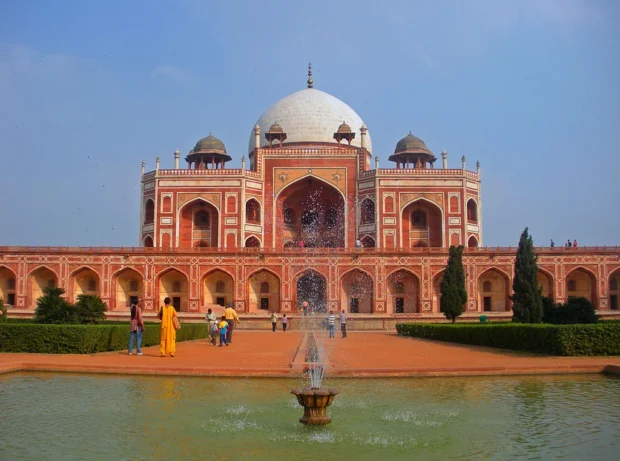
Stepping into the heart of Delhi, India, one finds a profound blend of history, culture, and architecture at Humayun’s Tomb. This monument, a marvel of Mughal design, stands not merely as a tomb but as a canvas narrating the grandeur of 16th-century India. Visitors are drawn here to witness the origins of Mughal garden tombs that inspired the Taj Mahal. From its lush gardens to red sandstone walls, Humayun’s Tomb offers a serene window into India’s imperial past, inviting exploration through the whispers of history wrapped in stone.
Table of Contents
To enrich your time at Humayun’s Tomb, check out our Delhi Travel Guide to get tips on navigating the city’s top attractions.

Journey through Time: The Tale of Humayun’s Tomb
Humayun’s Tomb was commissioned in 1565 by Empress Bega Begum, the widow of the Mughal Emperor Humayun. It serves as the resting place for Humayun, and the mausoleum is notable for being the first garden-tomb on the Indian subcontinent. Its architectural style, blending Persian influences with Indian craftsmanship, marked a turning point in Mughal architecture, influencing many other monuments including the Taj Mahal.

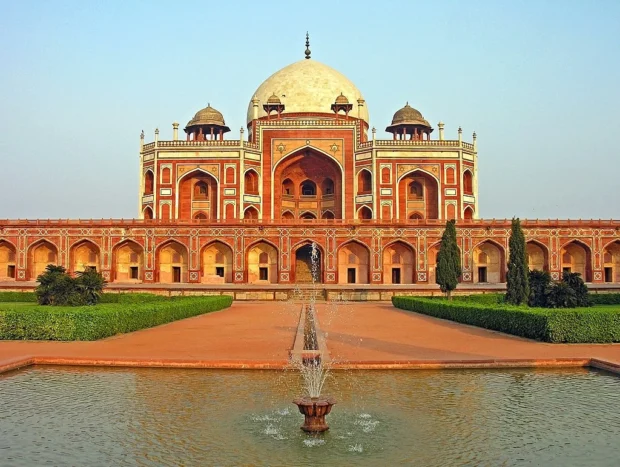
The layout is a fine example of the Charbagh garden, symbolizing the Islamic paradise garden concept that splits into four parts with water channels intersecting the grounds. This spatial design was revolutionary at the time and remains a tranquil retreat amid Delhi’s urban sprawl. The tomb holds importance beyond its architectural beauty, representing a symbolic assertion of empire through majestic funerary art.
Finding the Path: Directions to Humayun’s Tomb
Situated in the Nizamuddin East area of Delhi, Humayun’s Tomb is easily accessible by various means of transport. From the city center, one can take a taxi or auto-rickshaw, which usually takes around 30 minutes depending on traffic. For those arriving by metro, the nearest station is the JLN Stadium Metro Station on the Violet Line, approximately 1.5 kilometers from the tomb. A short rickshaw or taxi ride from the station is recommended for comfort.
If traveling from Indira Gandhi International Airport, a taxi or app-based cab service offers a direct route taking about 45 minutes to an hour. The tomb’s vicinity also connects well with major railway stations like New Delhi Railway Station and Hazrat Nizamuddin Railway Station, both within 7-9 kilometers, making it convenient for travelers arriving by train.
Best Moments to Visit and Insider Tips
Visiting Humayun’s Tomb early in the morning or late afternoon reveals the most captivating views, when the sunlight bathes the red sandstone in a warm glow. Weekdays tend to be less crowded, offering a more intimate experience with the gardens and architecture. The cooler months, from October to March, are ideal for exploring, as Delhi’s summer heat can be intense and overwhelming.

- Arrive early to beat crowds and capture peaceful photos.
- Bring water and wear comfortable walking shoes to navigate the large garden grounds.
- Respect the site’s sacred nature; photography inside the tomb chamber is restricted.
- Guided tours are recommended for a richer historical context.
Planning Your Visit: Tours and Entry Details
Entry to Humayun’s Tomb requires a ticket, which can be purchased on-site or through official channels online. Foreign tourists pay a higher entry fee than Indian nationals. The site is managed by the Archaeological Survey of India (ASI), and it is open daily except Fridays, from sunrise to sunset.
While general admission grants access to the tomb and gardens, specialized tours are available and often recommended. These guided walks delve into the historical significance, architectural innovations, and restoration efforts that preserve this heritage site. Booking a guided tour in advance is advisable during peak tourist seasons.
For up-to-date information on tickets and tours, visit the official website.
Nearby Stays and Flavors of Old Delhi
Accommodation near Humayun’s Tomb ranges from modest guesthouses to upscale hotels, offering options for all budgets. Staying close to the monument allows for leisurely exploration and early morning visits to avoid crowds. The neighborhoods around Nizamuddin and Lodi Colony are particularly convenient.
Delhi’s culinary landscape is vast and vibrant. Near Humayun’s Tomb, one can savor authentic Mughlai cuisine—rich kebabs, aromatic biryanis, and sweet faloodas—at local eateries. For a deeper cultural engagement, markets nerby offer traditional crafts, textiles, and spices, making for memorable souvenirs.
Whispers of Legacy and Conservation Efforts
Humayun’s Tomb is not only a site of historical importance but also a case study in archaeological conservation. Its recent restoration underscored the delicate balance between preserving original materials and integrating modern techniques to combat pollution and weathering. The ongoing maintenance ensures future generations can admire its grandeur.

The monument also stands as a cultural symbol, bridging the medieval Mughal era with contemporary India. Amidst the busy streets of Delhi, the tomb’s gardens provide a contemplative space where one senses the layers of history and the continuity of tradition in the city’s fabric.
For those interested in historic sites that blend art and memory, visiting Recoleta Cemetery in Buenos Aires offers a unique look at monumental sculptures and stories etched in stone.

Explorer of historical towns, ancient ruins, and traditional markets, combining modern travel with interest in heritage.
- Humayun's Tomb, Delhi, India 3 by ABHIJITJAWANJAL on Wikimedia Commons – cc by-sa 3.0
- Humayun's Tomb (Humayun Ka Maqbara – Delhi) by Fazal Ahmad on Wikimedia Commons – cc by 2.0
- Humayun Tomb 17 by Kartik Sharma on Wikimedia Commons – cc by-sa 3.0
- Humayun Tomb, Delhi, running fountain by Dennis G. Jarvis on Wikimedia Commons – cc by-sa 2.0
- Geometric Window and Chamber at Humayun’s Tomb by Mbigul on Wikimedia Commons – cc by-sa 4.0
- Celebrating the diagonal symmetry of Humayun's tomb by Itida p on Wikimedia Commons – cc by-sa 3.0

.jpg)


