

Berlin feels like a city made for storytellers and history lovers, but it quickly welcomes anyone curious and open-minded. In every season, the German capital pulses with creative energy and surprising contrasts. I arrived full of questions, never imagining the honest warmth of its people, quiet corners on busy Alexanderplatz, or the endless details lurking behind famous facades. Whether you’re flying in for the first time or returning, Berlin invites you to look closer. This city never hides its scars or secrets, and in that honesty among the grand monuments, cozy cafes, and peaceful parks I found charming imperfection that left me changed.
Table of Contents

Arriving in Berlin: Essential First Steps
My journey began at Berlin Brandenburg Airport, which connects visitors directly to the heart of the city thanks to convenient local trains (S-Bahn and Airport Express). I followed the signs for the S9 toward Ostkreuz, already noticing the tidy efficiency that Germany is famous for. Tickets are easy to buy from bright red machines just select Berlin ABC zone, and the trip takes about 30-40 minutes to Alexanderplatz, the central square bustling with urban life. English is widely spoken, but I found that starting with a cheerful “Guten Tag” (good day) made my efforts appreciated. Berlin’s regional trains, trams, and U-Bahn reach every neighborhood, so I rarely felt lost or far away from my chosen hostel near the Prenzlauer Berg district.
Luggage dropped and curiosity awake, I noticed that Berlin looks both historic and experimental. Locals on bikes zipped past students with takeaway currywurst, and old men argued in soft voices over wooden chess boards outside tiny bakeries. Even Berlin’s concrete and glass feels human, never overpowering. Walking in Berlin is safe and full of surprises, but when distances seemed long, I trusted the speedy U-Bahn to take me anywhere for just a few euros per trip.
Brandenburg Gate: Berlin’s Living Symbol
No first-timer can resist the pull of the Brandenburg Gate. I approached under a wide September sky, the square filled with travelers, artists, and street musicians. Built in the late 18th century, this neoclassical gate divides Berlin’s city center from lush Tiergarten Park. In daylight, its columns glow pale gold; at night, soft illumination turns it nearly ethereal.

Brandenburg Gate once separated East and West Berlin. I stood on the cobbled strip where the Berlin Wall once cut Berlin in two. Locals gather here for national celebrations and peaceful protests. Curious children ask why horses stand atop the monument those are the Quadriga, a chariot driven by victory, stolen and returned over centuries. The gate means many things, but, for me, it’s a reminder that Berlin always changes, yet always endures.
Tracing the Berlin Wall: Stories Etched in Concrete
I set out early for the Berlin Wall Memorial, where silent fragments of the Wall still stand cold concrete slabs streaked with graffiti and sorrow. Unlike the lively murals of the East Side Gallery, this memorial reflects the sadness and hope of Berliners who once lived divided. A local explained how families would gather on opposite sides, waving across the death strip. Listening to stories at the visitor center, I imagined hands pressed to the cold concrete, yearning for unity.

Not far away, the East Side Gallery stretches along the River Spree. Every meter bursts with painted dreams, angry protests, or hopeful visions by artists from more than 20 countries. One older woman whispered to me, “Wir sind das Volk” (We are the people), a phrase from peaceful protests in East Germany. Each brushstroke feels alive, making the gallery perhaps the world’s longest outdoor art exhibition and a colorful rebuke of tyranny.

Museum Island: Treasures of Human Creativity
Crossing the Spree River, I marveled at Museum Island a UNESCO World Heritage Site filled with five museums. Here, ancient civilizations and German ingenuity sit side by side. Of these, the Pergamon Museum (Pergamonmuseum) captured me most. Its towering Ishtar Gate of Babylon glows blue and gold, while the Market Gate of Miletus, rescued from Turkey, stands as a reminder of vanished empires.
For those fascinated by Berlin’s rich heritage, Museum Island offers a unique glimpse into ancient histories and stunning architecture, perfect to complement your city exploration.

Stepping inside the Altes Museum, I ran my hand along cold stone and admired Greek sculptures. In the Neues Museum, I met Nefertiti’s elegant, timeless gaze. Museum Island is perfect on rainy days, but I found much to explore outside as well. Couples picnicked in the sun, and students strummed guitars by Berlin Cathedral (Berliner Dom), whose Maximus dome dominates the skyline in regal green and gold.

Daily Life in Berlin: Markets, Music, and Mismatched Beauty
What charmed me more than landmarks was Berlin’s atmosphere: informal, honest, slightly eccentric. On Sundays, Mauerpark in Prenzlauer Berg becomes a giant flea market, where old records, army jackets, and hand-painted mugs compete for attention. Locals are quick to greet with “Hallo” or “Moin” (a warm hello common in northern Germany), and bargaining over prices is friendly rather than fierce.
Street food stalls perfume the air with grilled sausages and sweet pastries. Currywurst sliced sausage smothered in tangy ketchup and curry powder originated here. I tasted the best version at an open-air stand near Kreuzberg, surrounded by construction workers and university students. Berliner doughnuts, called “Berliner Pfannkuchen,” are soft and oozing with jam, best enjoyed with a strong coffee at a casual café.
Some evenings, I slipped into smoky bars or small music clubs in Friedrichshain. Folk musicians sometimes play Balkan tunes, a nod to the city’s mix of cultures. Other times, I wandered into historic courtyards (Höfe), with cobblestones underfoot and string lights overhead, where locals relaxed far from tourist crowds.
Berlin’s Historic Heart: Politics, Power, and Tragedy
A short walk from Brandenburg Gate stands the Reichstag Building, home to Germany’s parliament (Bundestag). The mix of old stone and a modern glass dome shows Germany’s respect for history, yet its hope for the future. I joined a guided tour and watched children press their noses to the dome’s glass panels as city lights twinkled below.

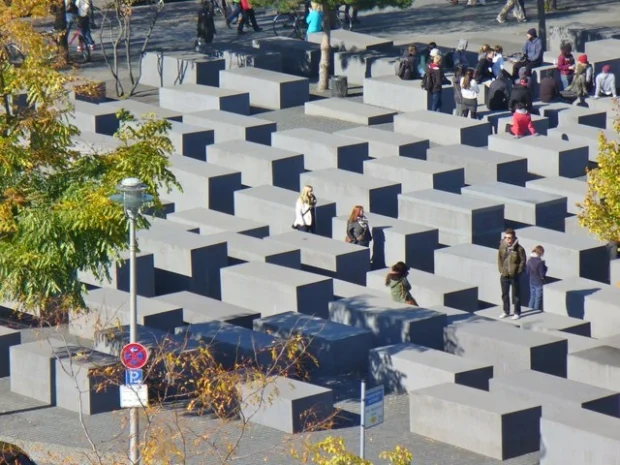
Nearby, the Holocaust Memorial rows of gray concrete blocks gave me pause. Its maze-like corridors feel somber and disorienting. I noticed visitors walking slowly, whispering or leaving stones in silent tribute. Berlin never hides its darkest moments, instead inviting us to remember and reflect.
Just down the street, the Topography of Terror museum sits on the old Gestapo headquarters’ ruins. Outdoor displays share details of Nazi crimes, presented without sensationalism. I met a retired teacher who visits each year, telling me, “Unsere Geschichte darf nicht vergessen werden” (Our history must not be forgotten). Berlin’s honesty in telling even painful stories left a deep impression on me.

City Squares, Green Spaces, and Unexpected Tranquility
When urban energy overwhelmed me, I escaped o Tiergarten, Berlin’s enormous central park. Joggers, musicians, and families filled the shaded paths. Swans glided on small lakes. I found a quiet bench and listened to distant church bells mingling with laughter.

At Gendarmenmarkt square, the twin cathedrals and grand concert hall form a nearly perfect 18th-century stage. Students took graduation photos beside the Konzerthaus’s white columns, while artists sold sketches under ginkgo trees. Farther west stands Charlottenburg Palace, a Baroque wonder where I strolled past marble statues and intricate gardens that hinted at Berlin’s royal past.

Modern Berlin is not all tradition. Potsdamer Platz, destroyed during World War II, now glimmers with glass skyscrapers and bustling shopping centers. Locals call it both ugly and brilliant, a symbol of Berlin’s drive to reinvent itself. I looked up at the soaring roof of the Sony Center and thought how strange it must be to be born in a city that constantly rebuilds.

Where to Stay: Berlin’s Neighborhoods and Peaceful Nights
Choosing where to stay in Berlin depends on your mood (and budget). I preferred Prenzlauer Berg for its leafy streets and family-run bakeries. The vibe is laid-back, with markets and bicycle paths everywhere. Kreuzberg, known for street art and Turkish bakeries, feels younger and more multicultural. Charlottenburg offers a quieter, elegant air near historic palaces and theaters.

For nightlife, Friedrichshain is electric. For peaceful walks at sunrise, Schöneberg’s broad boulevards and art deco buildings are hard to beat. No matter where you stay, nearly every area connects easily by train or tram to Berlin’s center. Most hotels and hostels are tidy and safe; locally run guesthouses in old tenement buildings offered me the most honest Berlin welcome.
Food, Etiquette, and Observing Local Rhythms
Berlin’s food scene tells its migrant story. Yes, you’ll find bratwurst, but also Turkish döner kebabs (the real street food king) and Vietnamese summer rolls. In Kreuzberg on Tuesdays, I wandered into the Turkish Market at Maybachufer a riot of fresh herbs, olives, and baklava. Locals enjoy eating outdoors, so don’t be shy about joining a bench at communal tables.
In proper restaurants, it’s polite to wait for the host to assign your seat. Say “Danke” (thank you) to staff, and notice that Berliners rarely tip big 5–10% is kind and expected. Most places accept cash more often than cards, so keep small bills handy. If sharing a toast, look your companions in the eyes and say “Prost!” (cheers).
Berliners value honesty and privacy. I noticed people avoid loud conversation on trains, and strangers rarely hug at first meeting. But I found them deeply warm, especially if you try to speak their language, even if it’s just “Entschuldigung” (excuse me!) before asking a question. Always cross streets only at green lights locals take this rule seriously.
Oddities, Hidden Stories, and Berlin’s Incomplete Beauty
Berlin’s stories don’t end with its museums or palaces. In Marzahn’s Gärten der Welt, I wandered through Chinese and Balinese pavilions, watching a Lithuanian folk group dance at a neighborly festival. In Spandau’s medieval Altstadt, I touched the stone shields of the city’s old walls, imagining traders and townsfolk from old Hanseatic days. River towns along the Spree and Havel still trade on their nautical past, with little ferries and wooden boats for rent.
What delighted me most were Berlin’s imperfections half-rebuilt buildings, wildflower meadows in the middle of the city, and a thousand memories layered into crumbling bricks. Once, at Alexanderplatz, I watched a man tune a battered accordion, playing Balkan folk tunes as crowds hurried past without noticing. An understated magic, all Berlin’s own.
Berlin is unlike any other capital. History is written in its stones, but life thrives around every corner, in every courtyard. Even as the city grows more modern, I sensed a respect for craft, honest labor, and local traditions, whether in new markets or the grand shadow of the Berlin Cathedral. For anyone curious about Europe’s living past and inventive present, Berlin waits with an honest smile and endless tales.
For a glimpse of a different European city rich in history and unique architecture, visit Lisbon’s Belém Tower, a striking example of maritime heritage and Manueline style.
Eastern Europe travel specialist uncovering hidden gems from the Baltics to the Balkans.
- Berlin Mitte June 2023 01 by ArildV on Wikimedia Commons – cc by-sa 4.0
- Alexanderplatz, 2024 (01) by Bahnfrend on Wikimedia Commons – cc by-sa 4.0
- Berlin – 0266 – 16052015 – Brandenburger Tor by Pierre-Selim Huard on Wikimedia Commons – cc by 4.0
- East Side Gallery, Berlin (2015) – 01 by Another Believer on Wikimedia Commons – cc by-sa 4.0
- Berlin Museumsinsel Fernsehturm by Thomas Wolf, www.foto-tw.de on Wikimedia Commons – cc by-sa 3.0
- 20220806 Berlin Cathedral 02 by Flocci Nivis on Wikimedia Commons – cc by 4.0
- Berlin Reichstag BW 2 by Berthold Werner on Wikimedia Commons – cc by-sa 3.0
- Berlin – Holocaust-Mahnmal (Holocaust Memorial) – geo.hlipp.de – 42621 by Colin Smith on geo.hlipp.de on Wikimedia Commons – cc by-sa 2.0
- Germany-04418 – Topography of Terror (29704844563) by Dennis G. Jarvis on Wikimedia Commons – cc by-sa 2.0
- Sowjetisches Ehrenmal, Tiergarten, Berlin, 170514, ako by Ansgar Koreng on Wikimedia Commons – cc by-sa 4.0
- Construction site on the Gendarmenmarkt Berlin 2023-02-10 04 by Leonhard Lenz on Wikimedia Commons – cc0
- Christmas market Potsdamer Platz by KlemensM on Wikimedia Commons – cc0
- Berlin Schloss Charlottenburg (S41 2558) by Michael.F.H.Barth on Wikimedia Commons – cc by-sa 4.0

.jpg)

_-_01.JPG)


_-_geo.hlipp.de_-_42621.jpg)
.jpg)


.jpg)