

Johannesburg, also called Joburg or Jozi, is the beating heart of South Africa. People here say “Egoli” too it means “Place of Gold” in Zulu, a name still shining through the city’s busy streets. Are you curious about South African history, creative art scenes, or street food bursting with spices? Johannesburg has it all, including world-famous museums, lively neighborhoods, and markets overflowing with crafts. On my walk across this fascinating city, I found dramatic stories, daily routines that surprised me, and many small smiles shared between strangers. Let me take you into Johannesburg’s streets, where the past shakes hands with the present, and every corner holds something unexpected.
Table of Contents
Arrival in Johannesburg and Getting Around
Most visitors land at O.R. Tambo International Airport, about 25 kilometers to the east of downtown Johannesburg. The city feels both large and full of tiny secrets. From the airport, you can take the Gautrain a modern, quick train straight to Sandton, one of Johannesburg’s main business and hotel districts. If you want to reach downtown or Park Station, Gautrain or Rea Vaya buses are reliable and safe options. Always check the latest schedules, as Joburg’s traffic is famously unpredictable, but the comfort of the Gautrain lets you skip many street worries.
The city spreads out wide, so walking between sights is not always practical. Usually, I planned my routes to connect areas like Maboneng or Braamfontein using local buses or even cycling with a hired bike. Each suburb has a personality, so a trip across the city gives you a cross-section of cultures, languages, and architecture, from art deco towers to shaded Jacaranda-lined streets. Even street corners can surprise you the zebra crossings painted in rainbow patterns, or massive murals that seem to tell their own stories.
Stories at the Apartheid Museum
One cool Johannesburg morning, I arrived at the Apartheid Museum—the most important place for understanding South Africa’s recent past. The building itself is a symbol, made partly of cold concrete, barbed wire, and rusty steel. When walking through its heavy gates, you receive a randomly assigned entry ticket marked either “white” or “non-white”—a powerful introduction to the country’s cruel system of racial segregation, called apartheid, that ruled for almost half a century.
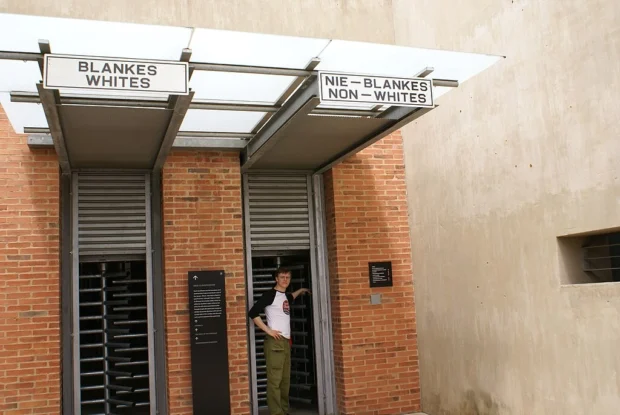
Inside, the exhibitions use photographs, video, art, and personal stories. There’s the sound of protest songs, the faces of smiling children facing armored police, and the faded passbooks each South African once needed just to move around. Many locals bring their children here, wanting them to know both the pain and the hope that followed. For me, the strangest feeling was seeing everyday objects bicycles, radios, even lunchboxes used as evidence of resistance, not just as ordinary things. The museum is sobering, but it teaches that hope can grow even in difficult times.
Constitution Hill: From Prison to Freedom
From there, I traveled up to Constitution Hill, another place holding deep meaning. At first, the site was a prison, known as Number Four, where many anti-apartheid activists (including Nelson Mandela and Mahatma Gandhi) were jailed. Barbed wire still wraps its old walls, and in one dark cell I saw messages scratched onto the bricks by prisoners missing their families.
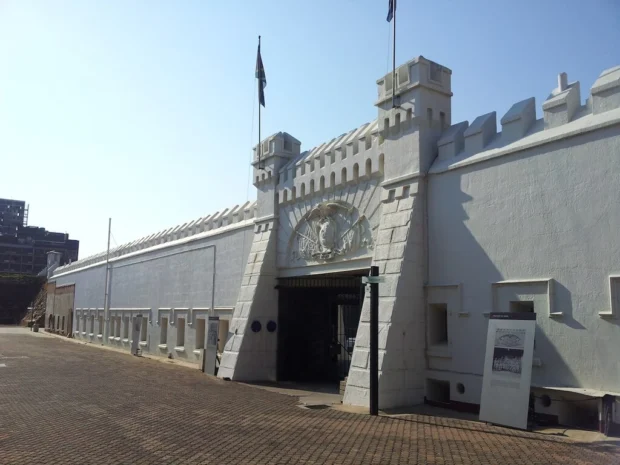
But now, the hilltop also houses South Africa’s highest court, the Constitutional Court a modern glass-and-brick building filled with public art, local wood, and murals designed by famous South African artists. The court welcomes everyone to watch real cases, and the building’s windows are shaped like prison bars reminders of the past but also symbols of justice. I spent an hour chatting to other travelers and security staff, who spoke proudly about the new future their country is building.
Walking outside, you’ll see a panoramic view of the city center. Here, the past and present truly meet: the shadows of prison towers fall next to glass skyscrapers and the chattering of school kids. Street vendors nearby sell spicy biltong (dried meat), sweet vetkoek (fried bread), and even beadwork made by former inmates, whose stories are now part of the city’s tapestry.
Gold Reef City and the Mining Legacy
Joburg owes its very existence to gold the city was founded during a gold rush in the late 1800s, and its earliest buildings were mining shacks. At Gold Reef City, a theme park and museum built on one of the richest gold-bearing reefs ever discovered, you step into this wild history. While it’s a popular place for families and children because of its rollercoasters and rides, my favorite part was joining a tour underground. We put on hard hats and lamps, and walked into the cooled, damp mine tunnels, just as miners did over 100 years ago.
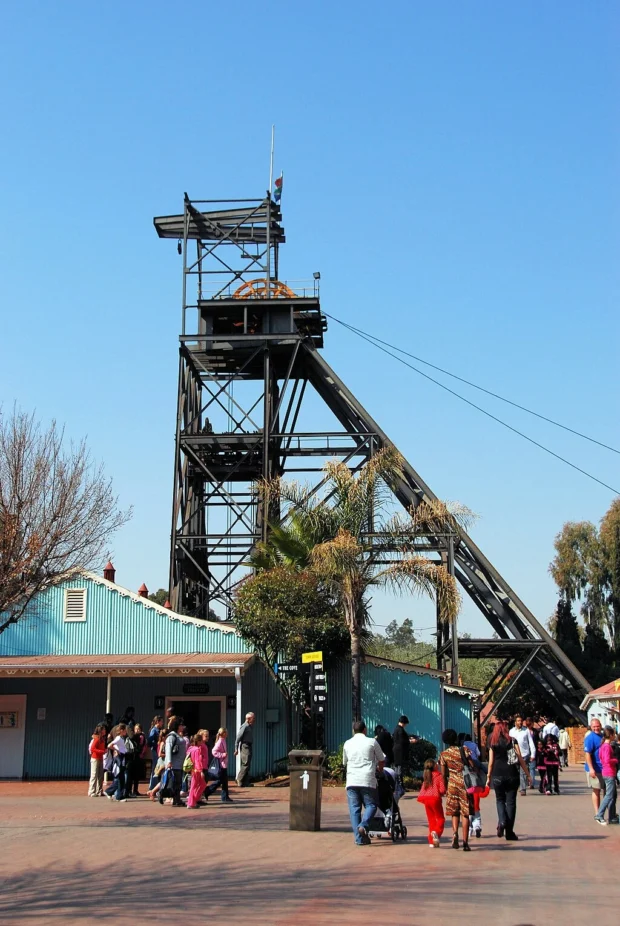
Above ground, actors in Victorian outfits tell stories of fortune seekers and gamblers. The old mining houses are full of antique furniture and discarded tools. I met a guide who said his grandfather once worked these mines he showed us a piece of raw gold, flecked with quartz, and claimed that Joburg still has gold hidden beneath its streets. After the tour, I tried “slap chips” South African fries, vinegar-soaked and dusted with chicken spice, sticky enough to stain your fingers for hours.
Soweto: Heartbeat of Johannesburg
No place shows Jozi’s soul quite like Soweto. The township so big it feels like its own city is where many freedom fighters lived and where music, football, and protest all came together. I joined a walking tour that began at Vilakazi Street, possibly the only road in the world where two Nobel Peace Prize winners Nelson Mandela and Desmond Tutu once lived just a few doors apart.
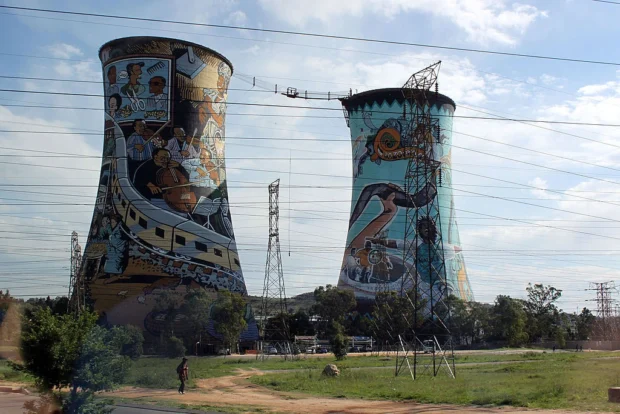
Children kicked up dust playing street soccer while vendors grilled shisa nyama (barbequed meat) and served pap (a maize porridge) on enamel plates. Local guides retell stories about uprisings, particularly the 1976 student protests that began at Orlando West, changing the course of South African history. The Hector Pieterson Memorial brought me to tears, as young people laid flowers for the schoolchildren lost in those struggles. Yet, in every corner you sense lively hope Soweto’s jazz clubs, gospel choirs, and painted shebeen (bar) walls are alive with a spirit that is impossible to describe.
Downtown Johannesburg: Carlton Centre and Museum Africa
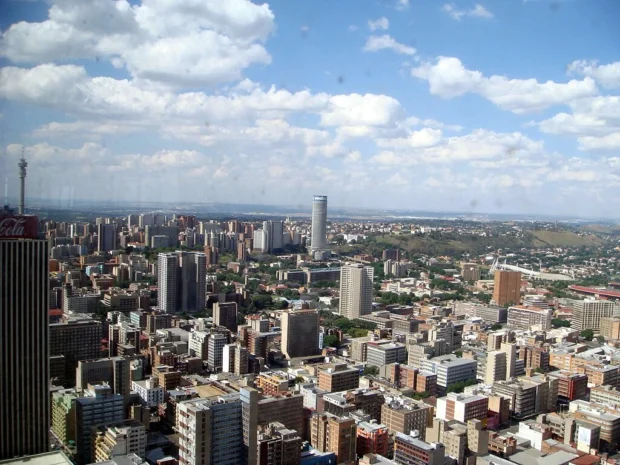
Back in the city center, I sought the top of Carlton Centre, Africa’s tallest office tower. The 50th-floor observation deck is named the “Top of Africa,” and when there’s no mist, the views stretch for kilometers in every direction. It’s a dizzying panorama highways, red-brick buildings, leafy suburbs, and the gold mine dumps on the city’s edge looking like strange yellow dunes. Inside, the building is full of shops and snack stalls, and some visitors say ghosts of old hotel guests still roam its closed-off rooms. Johannesburg is a city of stories, and many are whispered in its elevators.
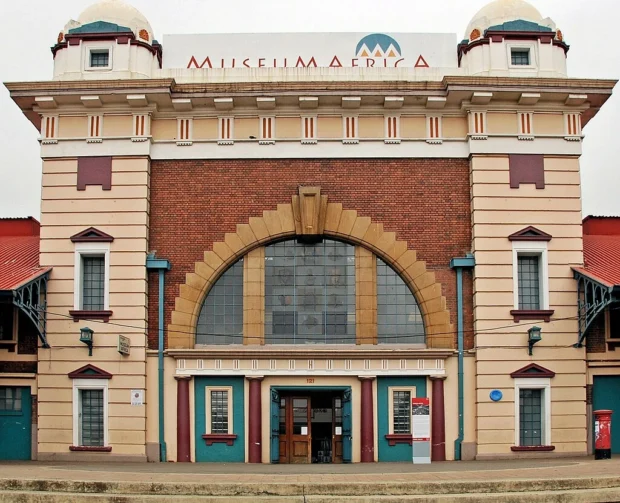
Nearby, Museum Africa sits in an old market hall, with displays on Joburg’s early gold rush, its musicians, and its people from miners to musicians to anti-apartheid activists. I got lost among rooms filled with jazz records, carved walking sticks, and the oddest map: a giant table showing the city’s neighborhoods made from colored glass beads. One friendly curator explained how Johannesburg’s name was chosen it’s still a mystery, as two city officials named Johann shared credit, but maybe it was just a common Dutch name at the time.
Maboneng Precinct and Modern Johannesburg
If you want to feel today’s creative spirit, head to Maboneng Precinct, an area reborn from old factories and empty warehouses. Now, it’s the city’s unofficial art district. The narrow streets are lined with pop-up galleries, colorful murals, and coffee shops where artists sketch out ideas on napkins. On Sundays, there’s a lively market with food from across Africa spicy Mozambican prawns, Ethiopian injera pancakes, Congolese grilled fish. I laughed as a street performer juggled oranges while poetry fans debated politics over beers brewed right next door.
Maboneng means “Place of Light” in Sotho. At sunset, the city’s walls seem to glow, and the contrast between old brickwork and glass towers feels almost magical. I met a sculptor who shapes statues from found metals, some rusty and twisted, but brought together to make beautiful, hopeful creations. Maboneng is a reminder that Joburg never stands still it remakes itself each year while proudly holding onto its roots.
Markets, Parks and Meeting Johannesburg’s Communities
If you wander up towards the leafy northern suburbs, you’ll find the African Craft Market of Rosebank. Here, more than a hundred stalls sell wood carvings, beaded jewelry, woven baskets, musical instruments, and fabrics printed with bold colors and mythic animals. I chatted with a Xhosa artisan who explained how every pattern in her beadwork tells a family story or describes a young woman’s life. Sometimes, the air fills with the sound of marimbas or the sweet-sour smell of roasted peanuts. Bargaining is common, but a smile and a gentle word go a long way here.
Just nearby, the Johannesburg Zoo is a favorite for families. It’s much more than a place for animals it also works as a green oasis in the middle of the city’s endless hum. Locals picnic in the shade, students take sketchbooks to draw the lions or giraffes, and the zoo’s beautiful, century-old stone gates are a reminder of Joburg’s old architectural charm. On weekends, choirs sometimes gather here, and I once watched a zulu dance group practicing under a tree, their drums echoing across the enclosures.
Johannesburg’s parks and outdoor markets are full of life. At the Neighbourgoods Market in Braamfontein, I tasted everything from spicy bunny chow (a hollowed-out loaf filled with curry) to Portuguese chicken and Dutch stroopwafels. Everyone talks to everyone, and recipes are shared as easily as stories. One grandmother told me she’s lived in Joburg since the days of steam trains and her family’s secret chutney recipe comes from three continents.
Cultural Rituals, Food and Friendly Customs
Johannesburg is a city where conversation is a way of life. People talk, sometimes loudly, sometimes softly, but always with energy. Greeting is important: a simple “Howzit?” or “Sawubona!” (I see you) is always returned. Strangers often share benches, snacks, or even umbrellas during sudden summer rain. If you’re lost, just ask help is always close.
Food, here, is a cultural adventure. In Fordsburg, I ate spicy samoosas and Cape Malay curries at night markets an influence from Indian and Cape Muslim communities. In Yeoville, I shared Ethiopian coffee with young musicians. Melville’s cafes serve “boerewors rolls” (grilled sausage sandwiches) and homemade ginger beer. Halal and kosher eateries serve the city’s diverse Jewish and Muslim communities, and the city’s Portuguese bakeries are famous for pasteis de nata (sweet custard tarts). Every meal tells a story of migration, trade, and family roots.
Do try local specialities biltong (dried beef or game), chakalaka (spicy vegetable relish), and mielie meal (corn porridge). Eat with your hands when invited it’s a sign of trust and warmth. Never photograph strangers without asking, and always thank your hosts. South Africans value honesty and laughter, and the city’s humor, sometimes sharp, often hides deep wisdom.
Staying in Johannesburg and Practical Notes
Johannesburg offers every type of lodging, from friendly hostels in Braamfontein to stylish guesthouses and hotels in Sandton, Rosebank, or Melville. For a more local feeling, consider staying in Maboneng or Newton areas full of small art hotels and shared kitchens where travelers swap tips and stories.
Electricity is 220 volts, and plugs are uniquely South African (three round pins), so bring an adapter. The seasons are opposite to the northern hemisphere—summers (November to March) are warm with quick, dramatic storms. Winters are dry, cool, and surprisingly sunny. Carry water and sunscreen everywhere—the city sits over 1700 meters above sea level, and he sun can surprise even locals.
Never drink straight from taps unless told it is filtered. Johannesburg is safe if you stay alert, don’t flash valuables, and move with purpose locals do the same. At night, stick to well-lit areas and enjoy the city’s famous music and food scene. The city’s very best comes alive after sunset, with jazz, dance, poetry, and late-night food stalls on every corner.
Final Thoughts: Johannesburg’s Living Tapestry
Some cities reveal themselves slowly, but Johannesburg bursts into life with every step. From the shadowed halls of the Apartheid Museum to the sunlight on Maboneng’s painted walls, I found not just the story of a city, but the story of survival, invention, and hope. Johannesburg is not always easy, not always pretty, but it is unforgettable. Neighbors here span all the world’s religions, races, and languages, yet everyone shares the city’s big heart.
If you come, bring open eyes and a patient mind. Johannesburg rewards curiosity with gold, with music, with shared bread, and with the laughter of friends who were only strangers a moment before. The city’s imperfections, like all human ones, are part of its story. There are lessons, surprises, and warm welcomes waiting at every turn.
Discover another vibrant city by exploring the lively spirit and rich culture of Rio de Janeiro through our guide to Rio’s top attractions.
Traveler exploring cultural intersections, sharing reflections on similarities and differences between traditions, lifestyles, and food.
- Johannesburg CBD by Evan Bench on Wikimedia Commons – cc by 2.0
- Apartheid Museum Segregated Entrance by Justin Hall on Wikimedia Commons – cc by 2.0
- Old Fort Entrance (from the inside) by The Heritage Portal on Wikimedia Commons – cc by-sa 3.0
- Gold Reef City Mine Tour 003 by Ossewa on Wikimedia Commons – cc by 4.0
- 2014-11-20 15h50 Orlando Power Station Soweto anagoria by Anagoria on Wikimedia Commons – cc by 3.0
- View from the Top of Africa building – Ponte City Apartments on the centre (4611826497) by Jorge Láscar from Australia on Wikimedia Commons – cc by 2.0
- Museum Africa 01 by Ossewa on Wikimedia Commons – cc by 4.0


.jpg)


.jpg)
