
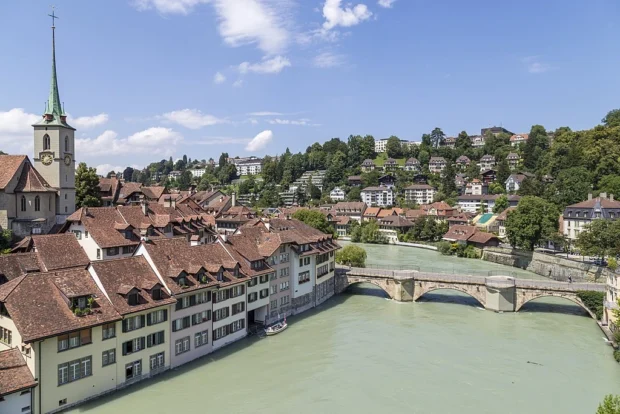
Bern might not be the first name travelers think of when picturing Switzerland, but this medieval city, perched calmly above the River Aare, invites you to slow down and wander. It’s a place where stone alleys echo with centuries-old gossip, where the scent of fresh bread and roasting chestnuts mingles with the bell’s song, and where upright fountains share space with playful market stalls. As someone who lived here, I discovered that Bern’s beauty isn’t just in its postcard-perfect rooflines it’s in the laughter at markets, shadows beneath arcades, and the rhythm of daily life that never hurries, never shouts, and never disappoints.
Table of Contents
Bern Old Town: A Living Museum of Medieval Heritage
The heart of Bern beats strongest in its Old Town, a UNESCO World Heritage site that covers a compact peninsula surrounded on three sides by the swirling, emerald Aare. Here, I found myself lost (happily, often on purpose) in a maze of cobblestone lanes, each stretching beneath six kilometers of arcades those covered walkways that shield you from summer sun and winter drizzle alike. These arcades are Bern’s arteries, sheltering not just luxury boutiques but quirky bookstores, cheese shops, and bakeries sending out clouds of yeasty warmth.

For insights on getting around and key landmarks, check out Wandering Through Bern Old Town’s Timeless Streets and Stories.
Every Tuesday and Saturday, the Old Town bubbles with market life. My favorite mornings began early, wandering between stalls at the Bundesplatz, sampling rounds of soft Emmental cheese, sweet plums in season, and the beloved Zopf bread its golden braids shining as if woven with sunlight. If you stand still and listen, you’ll catch the cadence of Bernese German: a gentle, musical dialect, always inviting, even to strangers.
I remember ducking into an old cellar (now a wine bar) when rain swept in, only to emerge later and spot children playing beside one of Bern’s many 16th-century fountains, each topped with a colorful, sometimes mischievous figure. These fountains are more than decoration; they are the city’s lifeblood, still offering fresh drinking water to anyone passing by a custom of sharing that runs deep here.
Zytglogge: The Clock Tower That Tells More Than Time
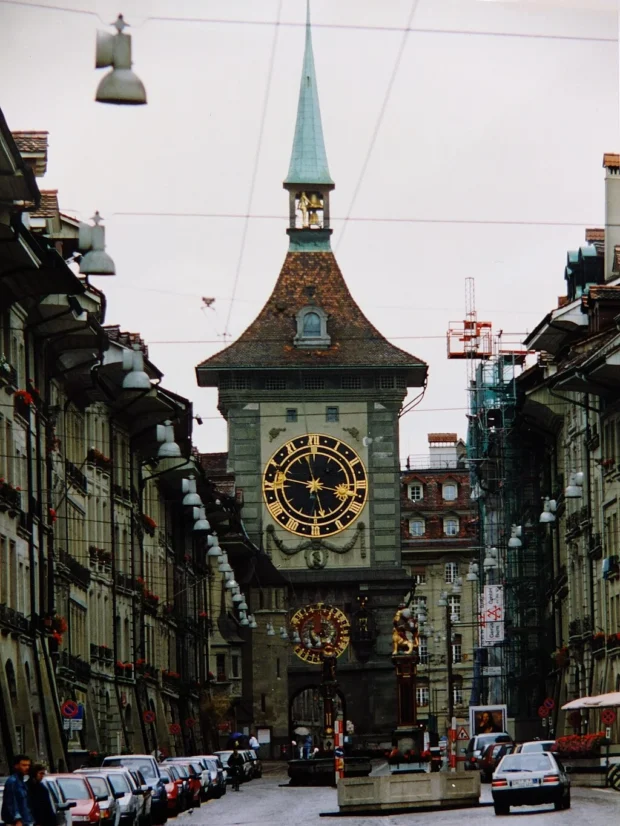
It’s almost impossible to ignore the Zytglogge, Bern’s medieval clock tower, standing guard at the heart of the city. At first, I thought it was simply a beautiful relic. But as I watched a crowd gather before the hour, locals and tourists craning their necks with shared anticipation, I realized it’s a stage for a mechanical drama that has played out since the 15th century.
As the clock strikes, small painted figures spring into action: a jester rings his bell, bears shuffle and nod, and a golden rooster crows. It’s whimsy layered atop history, for this tower has served as guard-post, prison, and city clock. Climbing its narrow, spiraling stairs, I felt the stone walls close in with stories of fire, siege, and the careful hands that wound these ancient gears. For anyone curious about Bernese timekeeping and tradition, a guided tour of Zytglogge opens these secrets.
Federal Palace: Where Swiss Decisions Are Made
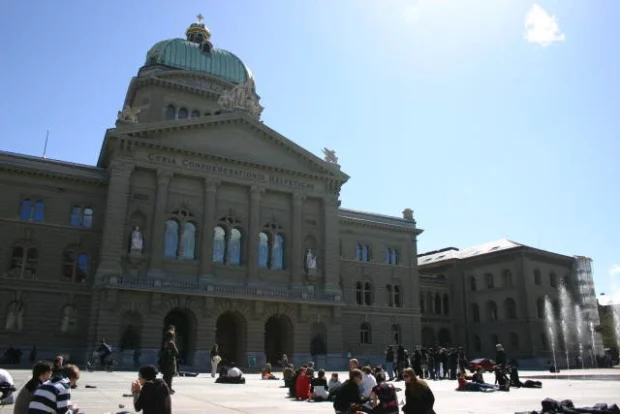
Just steps from the bustling markets is the Federal Palace, or Bundeshaus. Its green domes rise with stately calm above the city. From the outside, this is a building that quietly hints at power. Walk closer and you’ll hear the gentle plash of the playful square’s fountains children in summer darting between jets, politicians crossing the square with papers in hand.
I once lingered to watch a protest unfold, peaceful and dignified, as befits Swiss democracy. Bern’s Federal Palace isn’t closed off; guided tours let curious guests peer into chambers where confederation laws are debated. It’s a place that feels alive, not distant; a symbol of Switzerland’s famously direct democracy and, in its own way, a meeting point for the city’s many rhythms.
Bern’s Sights: From Bear Park to Rosengarten
If you follow the River Aare’s curve out of the Old Town, you’ll soon find Bear Park, where brown bears roam a leafy, open enclosure. As a newcomer, I was skeptical would it feel like a zoo? But the bears seemed at home, and children watched them with wonder as trams creaked past on their way to the next stop. Bears are Bern’s symbol, appearing on flags, manhole covers, even bakery cookies. The city’s name itself may come from the word for bear, or so the story goes.
Above Bear Park rises the Rosengarten, or Rose Garden, where more than 200 types of roses bloom between May and October. I spent many afternoons here, camera in hand, watching the sun set behind Bern’s tiled rooftops. From this vantage point, the city’s medieval grid unfurls at your feet a view worth every uphill step.
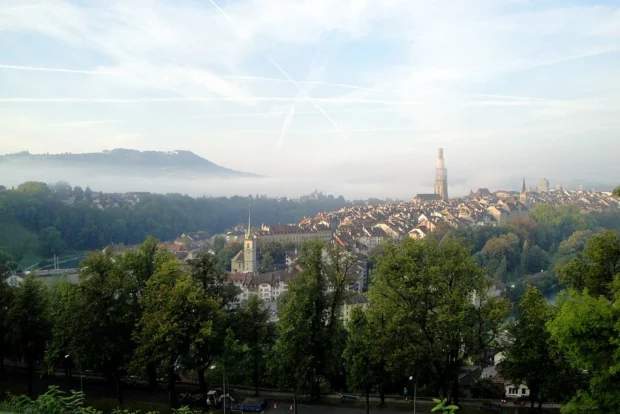
For those drawn to heights and stories, the Bern Cathedral (Münster) pulls you skyward. Its spire towers above all else, the highest in Switzerland. Climbing the narrow staircase, I was rewarded with panoramic views and a little dizziness. At the entrance, discover the Last Judgment carved above the door a parade of intricate figures that has watched over Bernese souls for centuries, both warning and welcome.
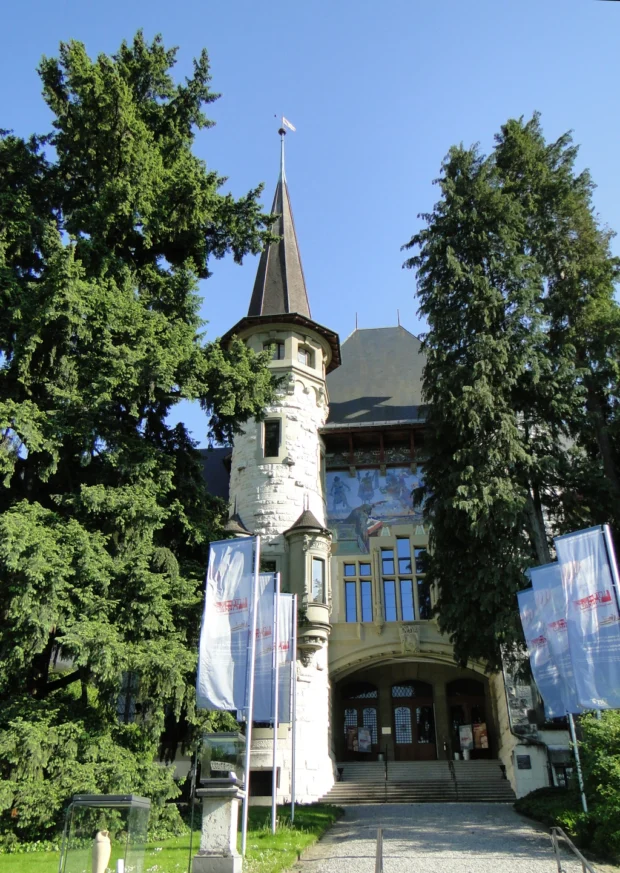
Not far from the river, the Einstein Museum offers a glimpse into the life of the world’s most famous physicist, who spent his “miracle year” in Bern. Wandering these rooms, you sense the energy of discovery, perhaps helped along by the nearby aroma of coffee from cafes on Kramgasse, where Einstein once lived and ruminated.
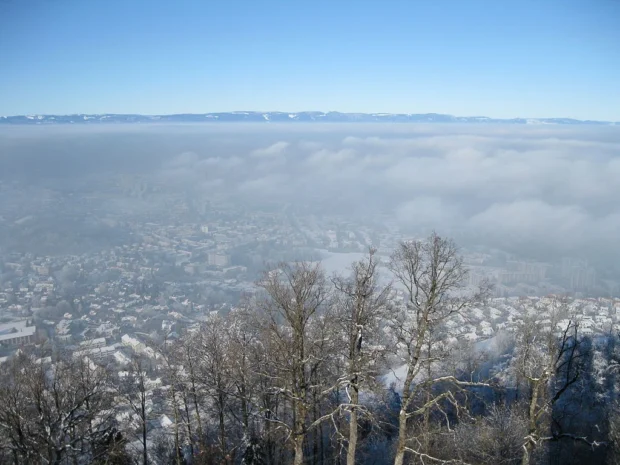
For a change of pace, I sometimes escaped to Gurten, Bern’s green hill. A funicular glides up from the city edge, ferrying families, hikers, and picnickers. At the top: forests, playgrounds, and a view that stretches to the Alps on a clear day. In winter, children sled down the slopes; in autumn, the forests burn gold. Gurten is Bern’s backyard, open to all.
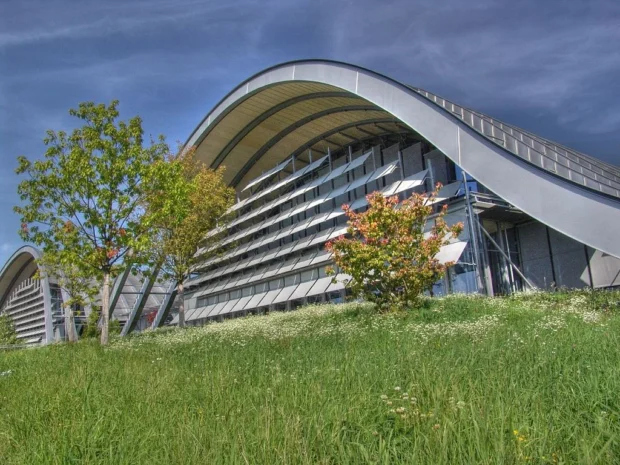
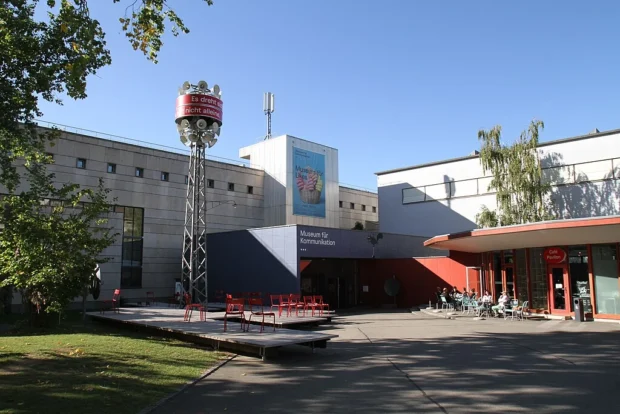
Art lovers should not miss the Zentrum Paul Klee, a museum of curving glass and steel, home to the greatest collection of Klee’s delicate, dreamlike paintings. It sits just outside the city, its architecture echoing the rolling Swiss countryside. Closer to the city center, the Museum of Communication surprises with hands-on exhibits that made me laugh, listen, and even send a postcard or two proving that Swiss efficiency can also be fun.
Markets, Street Life, and Culinary Pleasures
Bern’s streets pulse with life in ways both grand and humble. While the famous markets on Bundesplatz offer everything from wild mushrooms to local honey, my best finds came in smaller corners. Once, at a quiet side street near the Nydegg bridge, I stumbled upon a bakery where a grandmotherly woman pressed Nidelkuchen sweet cream tart into my hand, refusing payment until I tasted it.
Culinary exploration here is a daily delight. Bernese cuisine is a blend of Swiss German heartiness and subtle Alpine flair. In the old Matte district, close to the river, I joined neighbors for Berner Platte platters of cured meats, sausages, and tangy sauerkraut. On chilly evenings, fondue sets appeared on café tables, the smell of melting cheese luring even the most hurried passersby.
Seasonal treats are everywhere. In spring, asparagus and strawberries color the stalls; autumn brings roasted marroni (chestnuts) and tangled bundles of wild herbs. Every December, the city’s Christmas markets fill the air with gingerbread and the sound of carols. For those with a sweet tooth, Mandelbärli bear-shaped almond pastries are both snack and souvenir. Each district has its favorite bakery, but the joy is in sampling widely.
Curious about Bern’s drinks? Locals often gather in cellar bars, where candlelight flickers on stone walls. A glass of crisp Fendant (a Swiss white wine) or a mug of fresh apple juice pairs perfectly with a plate of cheese or a slice of rye bread. Coffee is serious business; cafes fill by mid-morning, their terraces holding steady through all seasons, even as the city’s famed Bise wind sweeps along the streets.
Transport in Bern: Easy, Reliable, and Scenic
Bern’s beauty lies not just in its sights, but in how easily you can reach them. From Bern Airport, local buses connect quickly to the city’s main railway station (Bahnhof Bern). More often, though, travelers arrive by train Bern sits at the crossroads of Switzerland, with fast, punctual connections from Zurich, Geneva, and beyond.
Within the city, public transport is a joy. Trams and buses run on time, gliding past medieval towers and leafy parks. If you stay overnight, your accommodation provides a Bern Ticket: free unlimited travel in zones covering almost all major sights. I rarely needed a car; walking and the occasional tram ride carried me everywhere I wanted to go, from city center to hillside gardens.
Cycling is popular too, with rental bikes easily found throughout the Old Town. I recall coasting along the riverbank path one sunny morning, swans gliding beside me, the city’s skyline rising gold and green in the distance. Bern rewards those who travel slowly.
Staying in Bern: Central, Cozy, and Atmospheric
Bern’s accommodations reflect the city’s calm spirit. In the Old Town, many places to stay are tucked above shops and cafes, their windows opening onto tiled roofs and bell towers. The buildings themselves are often centuries old think thick stone walls, creaking wooden stairs, and sunlit courtyards. I spent nights in rooms where window boxes overflowed with geraniums, and mornings woken gently by church bells rather than alarms.
If you prefer quieter surroundings, neighborhoods like Kirchenfeld or Breitenrain offer peaceful stays, leafy parks nearby and short tram rides into the city center. Wherever you sleep, Bern keeps you close to its markets, museums, and riverside walks. The true luxury, I found, was the ability to wander out your door and into the city’s living history.
Cultural Insights and Local Wisdom
Living in Bern, I learned that Swiss culture is both proud and warmly private. People value their space and their traditions, yet are always ready to help with directions or share a favorite bakery. One custom I admired was greeting shopkeepers and bus drivers with a polite “Grüessech” a small gesture that brings smiles, even from the most reserved Bernese.
It’s considered polite to be punctual in Switzerland trains, meetings, even coffee dates. And while the city’s pace feels unhurried, taking time to savor the view or linger at a café is always welcome. Just remember: don’t jaywalk, and always wait for the green light, as locals do.
Festivals in Bern reveal its communal heart. During Fasnacht (Carnival), masked musicians fill the streets, and children pelt each other with confetti. At the Onion Market in November, I joined crowds in admiring towers of braided onions some decorated with paper flowers, others shaped like animals while sampling onion tarts and mulled wine.
Quirky Facts and Endearing Oddities
Bern is a city of quirks that reward the curious. Did you know that the city keeps a herd of sheep to crop the grass on public hillsides? Or that the famous bear pit was once a moat, later a tourist stop, and now a modern animal park where bears fish and forage? I once spotted a postman delivering letters to an address painted on a cellar door the “house” was a wine vault, but in Bern, rules must be followed.
The city’s public benches are another delight. Each one is dedicated to a different citizen or cause, and if you sit long enough, you’ll hear fragments of every language from the lilting Bernese dialect to quick French, rolling Italian, and the clipped English of students from the nearby university.
I loved how Bernese people decorate their balconies with tiny flags and pots of basil, or how the city’s public swimming pools are not behind fences but along the river itself. In summer, office workers float downstream in the Aare’s clean current, gripping their waterproof bags, then dry off by sunning on grassy banks before heading calmly back to work.
Why Bern Captures the Heart
Reflecting on my time in Bern, I am struck by how the city blends grandeur with gentle routine. The Old Town’s medieval arches, the precise chime of the Zytglogge, the domes of the Federal Palace these are more than sights. They are living threads, woven through daily life. You taste them in a market plum, hear them in the slap of cards at a riverside café, see them in the gold of a late afternoon.
If you appreciate Bern’s medieval charm, the quiet beauty of Bruges offers a similar stroll through cobbled lanes and storied canals, inviting you to immerse in its gentle pace and rich history. Bruges awaits your visit.
What stays with me most is Bern’s invitation to linger. Whether you come for its history, its food, its festivals, or simply to watch the play of sun and shadow on ancient stones, this city rewards patience and curiosity. Bern is not a place to race through, but to savor. After all, as the locals say, “We have time.” And in Bern, you’ll want to take it.
Explorer of historic places and culinary traditions, combining landscape appreciation with food culture.
- Aare, Nydeggkirche & Untertorbrücke in Bern by JoachimKohler-HB on Wikimedia Commons – cc by-sa 4.0
- Bern Altstadt von Rosengarten 20211007 by Daniel Kraft on Wikimedia Commons – cc by-sa 3.0
- Bern Kramgasse Zytglogge-Turm 1992 by Christian Boss 1965 on Wikimedia Commons – cc by 4.0
- Bern federal palace by Simon Zenger – User: (WT-shared) Lingling at wts wikivoyage on Wikimedia Commons – cc by-sa 4.0
- Bern Altstadt DSC06159 by Krol:k on Wikimedia Commons – cc by-sa 3.0
- Bern Historisches Museum 05 by Nikolai Karaneschev on Wikimedia Commons – cc by 3.0
- 2009-01-11 View from Gurten near Berne in Winter 03 by Norbert Aepli, Switzerland (User:Noebu) on Wikimedia Commons – cc by 3.0
- Paul Klee Zentrum (243826575) by Martin Abegglen from Bern, Switzerland on Wikimedia Commons – cc by-sa 2.0
- Museums für Kommunikation Eingang IMG 9742 by Museum für Kommunikation, Bern on Wikimedia Commons – cc by-sa 4.0


.jpg)
