

Lisbon, Portugal’s radiant capital, is a city where sunlight dances on seven hills and the river winds past centuries-old façades. Colorful trams rattle up steep lanes, past tiled buildings decorated with blue and gold. Every step in Lisbon feels like a page from a living history book, from the echoes of Fado songs in narrow alleys to the aroma of grilled sardines drifting from hidden corners. Here, city life hums at the pace of a café conversation, with a thousand stories waiting in every square. If you are curious about what to see, taste, and feel in Lisbon, let me guide you through a city I once called home markets, grand monuments, and daily rhythms included.
Table of Contents
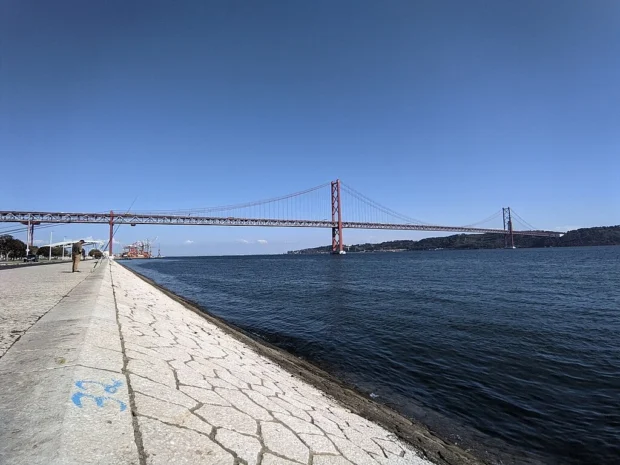
Wandering Alfama’s Winding Lanes and Everyday Markets
My first morning in Lisbon always starts in Alfama, the city’s oldest district, where cobblestone paths twist beneath laundry lines and geranium-filled windows. It’s easy to get a little lost delightfully so. Here, grandmothers greet neighbors at doorways, and street cats nap beside weathered fountains. On Tuesdays and Saturdays, Feira da Ladra market appears, as it has for centuries, with tables piled high with old books, tiles, and antique trinkets. I once found a hand-painted ceramic rooster, chipped but cheerful, and tucked it in my bag as a talisman for the journey.
Alfama has an intimacy you feel with your senses: the warm morning bread smell from family bakeries, the sound of Fado spilling from cafés at dusk, the touch of bright tiles azulejos cooled by sea air. Locals swap news in tiny groceries, and if you wander upwards, São Jorge Castle appears above the rooftops, always waiting with panoramic views.
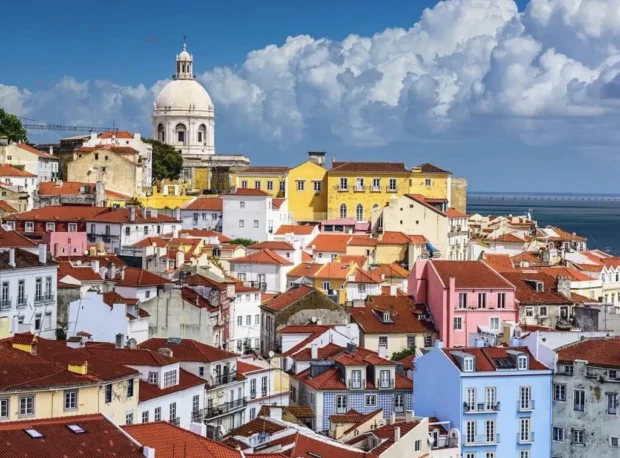
São Jorge Castle: Lisbon’s Crown Above the City
São Jorge Castle sits high above Lisbon, a sturdy reminder of the city’s medieval past. Built by the Moors, conquered by Christian kings, and battered by earthquakes, the castle has survived as a place of both protection and celebration. I remember walking under its stone arches, the city spread out below like a patchwork quilt of red roofs and white walls. Peacocks parade on the lawns, posing for photographs as if they own the ramparts.
From the battlements, you can trace the lines of the Tagus River, spot church towers, and watch ferries glide to the other side. The echoes of history sieges, royal parades, simple moments still seem to linger in the breeze. Sometimes I’d pause, sip a coffee from the small kiosk, and let the city’s heartbeat rise up to meet me.
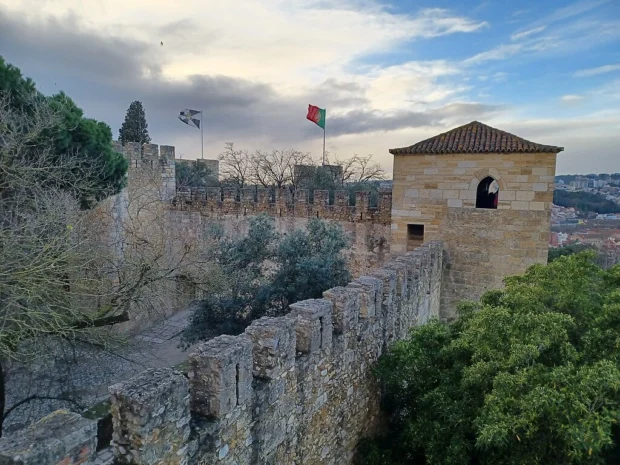
Belém: Towers, Monasteries, and Pastéis de Nata
To the west, the Belém district offers a slice of Portugal’s Age of Discovery. The walk here is pleasant; even the trams seem to slow down, inviting you to look more closely at the river and gardens. The first time I saw Belém Tower, its stone turrets rising above the water, I half-expected to glimpse a caravel sailing into the past. Built in the 16th century, the tower was both fortress and ceremonial gateway. Today, it’s a favorite place for photos, with sea breezes playing in your hair and the bridge’s red lines far behind.
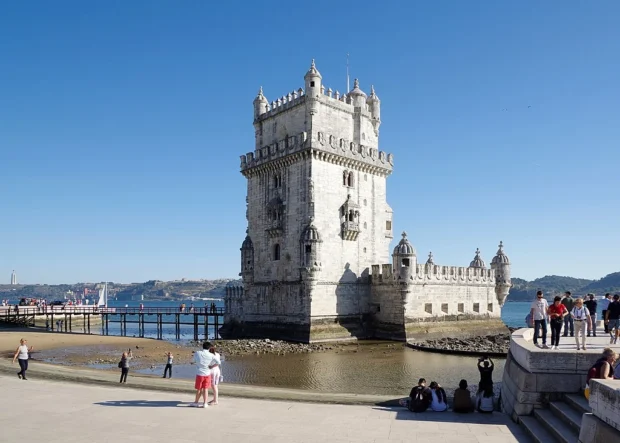
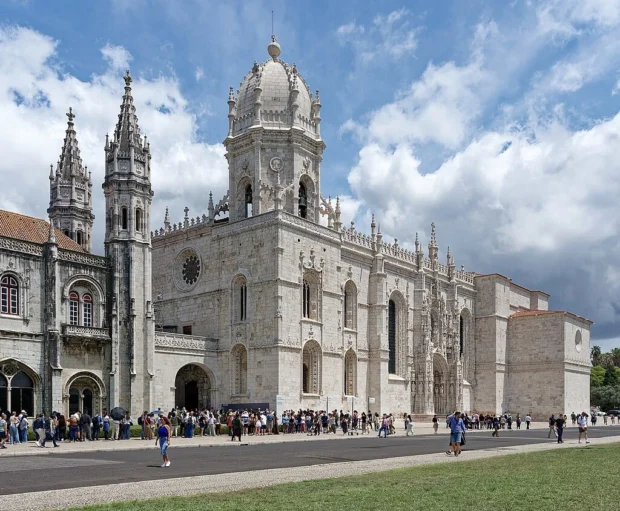
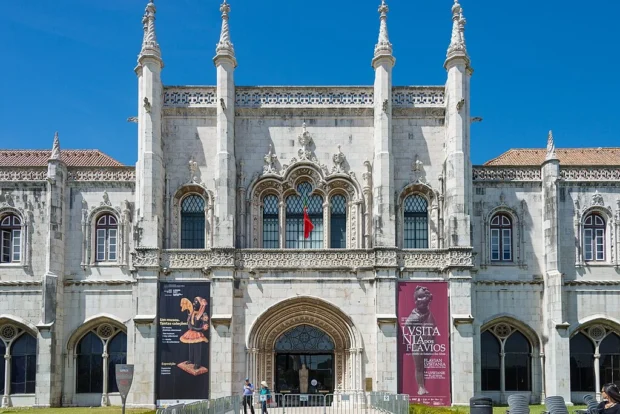
Nearby, the Jerónimos Monastery rises from the earth like a stone dream, its carved arches blending late Gothic with hints of Renaissance. The church’s ceiling soars almost impossibly high and sunlight spills through pillared cloisters where monks once meditated. I wandered here on a quiet afternoon, tracing the patterns in the stone and thinking of the explorers who prayed before setting sail. Just steps away, the sweet scent of custard tarts pastéis de nata led me to a crowded bakery. One bite of the flaky pastry, still warm from the oven, and I understood why locals line up each day.
From Praça do Comércio to Rossio Square: City Life Unfolds
Lisbon opens wide at Praça do Comércio, the grand riverside square where yellow arcades frame the sky. I liked to stand here in the afternoon, watching ferries and feeling the hum of city life beneath my feet. Once the gateway to merchants and kings, it’s now a favorite place for street performers, families, and travelers with maps tucked in their pockets.

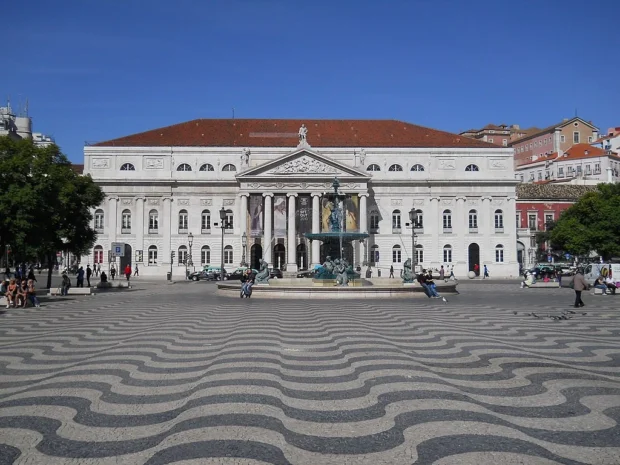
A short stroll north brings you to Rossio Square, where the mosaic pavement ripples in black and white waves. Locals sip coffee in historic cafés, while pigeons and poets share the benches. The square knows laughter and protest, winter rain and summer sun. I often paused by the fountains to sketch the scene, feeling part of the endless flow of stories.
Lisbon’s Trams and Elevators: Riding Through History
Getting around Lisbon is as much a part of its charm as any monument. The city’s yellow trams, some nearly a hundred years old, rattle up and down impossibly steep streets. I recommend Tram 28 for a quick tour of old Lisbon hold tight, as the curves are sharp and the views are splendid.
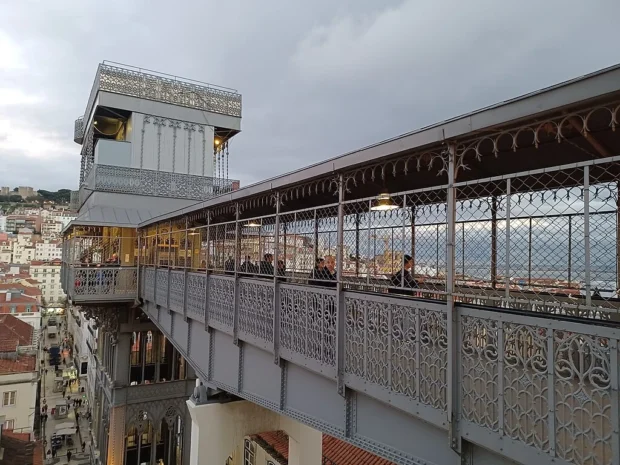
If you prefer a shortcut, the Santa Justa Lift offers a vertical journey from Baixa to Bairro Alto. Built by a student of Eiffel, its ironwork is both a feat of engineering and a whimsical piece of city art. At the top, you’ll find sweeping views and perhaps the faint sound of Fado music drifting across the rooftops.
Bairro Alto Nights and Culinary Surprises
Bairro Alto, by day, seems sleepy shaded alleys and quiet windows. By night, it wakes in a swirl of laughter, clinking glasses, and music that travels from bar to bar. Here, I tasted petiscos, small plates like octopus salad or spicy chouriço, meant to be shared among friends. In this neighborhood, boundaries dissolve: students, artists, and old-timers gather outside, debating football or poetry, always with a glass of vinho verde in hand.
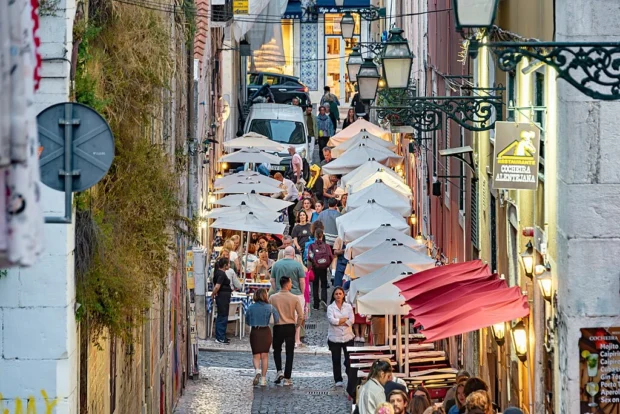
One evening, I joined a group of locals at a tiny tasca an old-style tavern where the menu changed with the catch of the day. Someone recited a poem about the sea, and the owner appeared with salted cod and potatoes. I learned to eat slowly, savoring each olive and crumb, and to let time pass gently as stories unfold.
Sea, Science, and Modern Lisbon
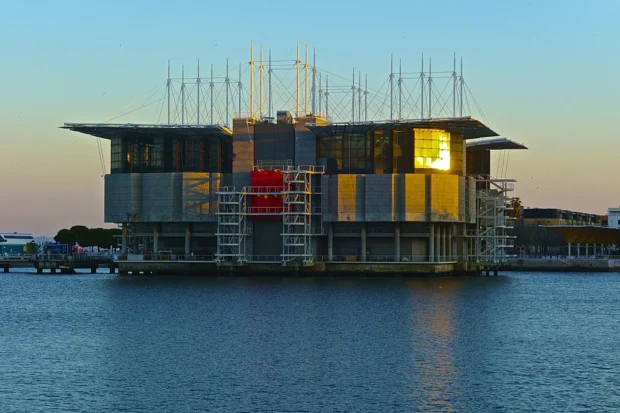
Lisbon’s love affair with the ocean is everywhere, but nowhere more so than at the Lisbon Oceanarium, a vast world beneath glass. Children press their noses to the tanks, eyes wide at the slow ballet of rays and moon jellyfish. I could have spent days watching the swirling schools of sardines a living reminder of the Atlantic’s gifts.
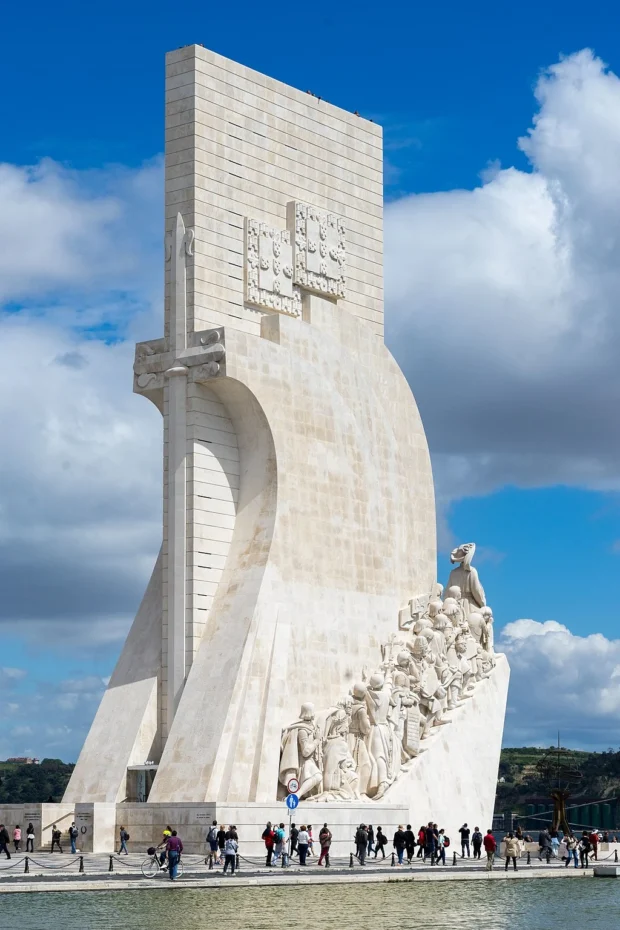
Newer landmarks shape the waterfront, too. The MAAT Museum of Art, Architecture and Technology curves like a wave along the riverbank, its white tiles reflecting the changing light. On my last visit, I watched local children play atop the building’s sloping roof while the city stretched out behind them. The Monument to the Discoveries stands nearby, its stone figures gazing ever outward, as if still searching for new worlds.
Culture, Customs, and Finding Your Own Lisbon
Lisbon is a city that invites participation, not just observation. You’ll find that greetings are warm but never rushed; a handshake or a simple “bom dia” is enough to make a new friend. If invited for coffee, accept the conversation matters more than the caffeine. Dress is casual, but locals take quiet pride in their appearance, especially on Sunday strolls along the river.
A local once taught me to never rush a meal in Lisbon. “We eat with time,” she said, and I soon understood. Lunches can last two hours; dinners stretch into midnight The city’s food specialties vary by district: in Belém, the famous custard tarts; in coastal spots, grilled sardines; in Mouraria, the spicy scent of African and Asian kitchens mingles with old Portuguese recipes. At the Time Out Market, dozens of stalls offer everything from octopus rice to chocolate mousse—a modern festival of flavors beneath the high iron ceiling.
For those who savor craft and tradition, the National Tile Museum is a hidden favorite. Here, you can trace Lisbon’s love of color through centuries of painted ceramics. I once joined an afternoon workshop, hands dusted with blue glaze, and chatted with artisans about the stories behind each tile. In neighborhoods like Graça, small craft workshops still thrive, with weavers and woodcarvers keeping old skills alive.
Customs in Lisbon favor gentleness and patience never snap your fingers for service, and always greet shopkeepers as you enter. Sundays bring families together for slow walks and sweet pastries, and during festivals, entire streets fill with music and banners. I learned that to truly know Lisbon, you must listen: to the silent courtyards, the laughter in the markets, the ancient bells ringing from distant churches.
Practical Tips and Where to Stay in Lisbon
Lisbon’s airport is just a short metro or bus ride from the city center a rare pleasure for a European capital. Public transport is reliable, with metros, buses, and funiculars crossing the main districts. I loved the feel of stepping off a train at Cais do Sodré, the scent of saltwater and pastry in the air.
For staying overnight, you’ll find options as diverse as Lisbon itself. In Alfama, quiet guesthouses offer views of the river and castle, ideal for early risers who love morning walks. Baixa is best for those who want to be close to shopping and major squares many rooms here have balconies overlooking Rossio or Praça do Comércio. Bairro Alto is lively at night, with boutique stays perfect for music lovers. For a quieter scene, try the leafy avenues of Estrela or the riverside calm of Belém.
I learned that Lisbon’s mood changes with each hill: in the morning, soft with mist and bird song; at noon, bright and bustling; by sunset, wrapped in golden light as the city glows. No matter where you stay, you’ll always be close to a bakery, a viewpoint, or a tram stop. Let your feet do some wandering you never know what you might find.
Final Thoughts: Lisbon’s Heart Beats in the Details
Lisbon is not a city to rush. What I remember most are not just the famous sights, but the small moments: a grandmother singing to herself in a tiled doorway, a fisherman selling fresh mackerel at dawn, the way afternoon sun splits across Rossio’s stones. It’s a place where old and new meet where a medieval castle shadows a modern museum, and a hand-painted tile tells a story older than the street itself.
If you arrive with open eyes and a little patience, Lisbon will reward you with its light, flavors, and gentle rhythms. The city’s charm is in its details: the sound of trams, the taste of cinnamon in a custard tart, the view from a castle wall at dusk. Walk slowly, listen closely, and let Lisbon tell you her secrets one beautiful day at a time.
For a contrast in European capitals, experience the calm and colorful streets of Copenhagen, full of royal castles and cozy canals.
Explorer of historic places and culinary traditions, combining landscape appreciation with food culture.
- Tram 28 Lisbon Portuguese by Ввласенко on Wikimedia Commons – cc by-sa 4.0
- 25 de Abril Bridge, Lisbon by Leeturtle on Wikimedia Commons – cc by-sa 4.0
- Alfama, september 2025 06 by Lidija Antonovic on Wikimedia Commons – cc by-sa 4.0
- Castelo de São Jorge, Lisboa 89 by Simon Burchell on Wikimedia Commons – cc by-sa 4.0
- Lisbon Torre de Belém BW 2018-10-03 16-38-01 by Berthold Werner on Wikimedia Commons – cc by-sa 4.0
- Jerónimos Monastery in Belém, Lisbon, 20250604 1340 9256 by Jakub Hałun on Wikimedia Commons – cc by 4.0
- Empty Praça do Comércio during the COVID-19 lockdown, Lisbon, Portugal julesvernex2 by Jules Verne Times Two on Wikimedia Commons – cc by-sa 4.0
- Elevador de Santa Justa, Lisboa 06 by Simon Burchell on Wikimedia Commons – cc by-sa 4.0
- Lisboa – Bairro Alto (53846519737) by Jorge Franganillo on Wikimedia Commons – cc by 2.0
- Lisbon Oceanarium (16505924243) by Pedro Ribeiro Simões from Lisboa, Portugal on Wikimedia Commons – cc by 2.0
- Lisbonne – Padrão dos Descobrimentos – Closeup by Jean-Christophe BENOIST on Wikimedia Commons – cc by 4.0
- Lisbon Portugal 006 The Rossio is the popular name of the Pedro IV Square (5107401523) by DAVID HOLT from London, England on Wikimedia Commons – cc by-sa 2.0
- Lisbon (53825761761) by xiquinhosilva on Wikimedia Commons – cc by 2.0


.jpg)
.jpg)

.jpg)
.jpg)