

Riga is not a secret for history lovers, but the city’s everyday rhythm, playful spirit, and surprising corners might still surprise you. When I arrived, I expected old buildings and quiet museums. Instead, I found a place where time moves differently: horse-headed rooftops peek above busy streets, spices fill the air of vast markets, and the Daugava River patiently watches it all. Walking here is like stepping into a friendly storybook with more laughter and layers than you’d expect. Riga welcomes everyone, inviting you to feel its pulse whether you stay a day or a week.
Table of Contents
Getting to Know Riga’s Heartbeat
Latvia’s capital sits boldly at the crossroads of Northern Europe. It’s easy to arrive in Riga: from the airport, bus 22 glides you straight to the city center in about 30 minutes. For those coming by train, the main railway station opens its doors right in the lively downtown. Public trams and buses are simple to use—tickets are cheap, sold at kiosks, and punch machines always stand ready at the front. But the best things often come on foot, when you wander the slender streets, cross ancient bridges and let Riga reveal its heart.
Wandering Old Town: Stories in Every Stone
Every city has an Old Town, but Riga’s is something else. Cobblestones twist below your feet as if tracing the stories of kings, merchants, and poets. Here, pastel houses lean in close and centuries-old alleyways tangle like the plot of an old folktale. At dawn, the air tastes of baking rye bread. By afternoon, accordion music tumbles from a street corner beneath the golden spire of St. Peter’s Church, one of Riga’s most beloved sights.

St. Peter’s Church keeps a watchful eye on the city. Its tower, so tall and slender, has stood for hundreds of years, burned and rebuilt after wars, yet always rising again. If you’re brave, climb to the viewing platform. The reward is a jumble of red roofs, green parks, and the Daugava curling like a ribbon. I met an old man up there who traced his grandfather’s story from roof to roof, reminding me that Old Town is not a museum it’s alive, and its residents remember.

You may find unexpected colors on building facades, or a tiny bronze cat perched over a doorway. There are legends here: some say those cats chased away bad luck; others claim they simply liked the view. What’s certain is that every stone whispers Riga’s story, and if you pause to listen, you’ll hear laughter behind shutters and feel centuries settle beneath your feet.
Trading Echoes at Riga Central Market
Riga Central Market is not just a place; it’s an event. Housed in giant former Zeppelin hangars from the 1920s, the market is one of Europe’s largest. Step inside and you’re surrounded by the thick smell of smoked fish, crisp apples, and honey. Sellers shout greetings in Latvian, Russian, and a handful of other languages. Their stalls burst with homemade cheese, wild mushrooms, vegetables, and mysterious pickles arranged in glass jars.
For a taste of lively market culture and seaside spirit similar to Riga’s vibrant markets, Marseille’s market streets and cafés offer a charming coastal atmosphere to enjoy.

You can taste bites of Latvia here: try a slice of rye bread (dark and earthy), saffron-colored cottage cheese, or smoked sprats from glass jars. If you’re brave, order a bowl of cold beet soup pink as springtime. I spent an hour watching a grandmother shop for black bread, her scarf tied just right, while children tugged at her arm for sweets. The market hums with real life. Bargaining is expected and part of the fun. Just remember to smile and say “paldies” thank you.
The House of the Blackheads: Riga’s Party Palace
In the middle of Old Town, the House of the Blackheads rises like a fairy-tale illustration. Its ornate facade, bristling with sculptures and golden details, once dazzled medieval traders. The Blackheads, a guild for unmarried foreign merchants, built this as their meeting place and party house. They threw legendary banquets—imagine feasts lit by thousands of candles, entertained by minstrels and joke-tellers.

Over centuries, the House was destroyed and rebuilt, each time a little grander. During the day, it draws artists with its bright colors and odd symbols (look for the golden weathercock on its roof). At night, it glows like a scene from a winter ball. Inside, you can walk through vaulted halls, peek at the restored cellars, and almost imagine the laughter and clinking glasses. Outside, travelers and locals gather to listen to street performances or share fresh pastries from nearby bakeries.
Art Nouveau District and Latvia’s Golden Age
Beyond Old Town, a short walk north, lies Riga’s Art Nouveau District. Here the streets burst with the joy of curves, flowers, and mythical faces. Alberta iela and Elizabetes iela are where architects let their imagination run wild in the early 1900s. Every building seems to dance windows shaped like eyes, cornices that swirl and leap, and lions guarding doors. A friendly local told me that more than a third of Riga’s center is Art Nouveau the highest percentage in the world.
If you love architecture, bring a camera and look up. It’s easy to miss sculpted peacocks, goddesses, and odd beasts. I traced a griffin up a blue wall and watched as a school group pointed out glass mosaics hidden above a bakery. The style’s playfulness is Riga’s good mood made solid, and each facade tells a different story. Even if you’re not an architecture expert, the district feels alive with color and optimism. Locals walk here just to feel refreshed.
Between Freedom and Memory: Riga’s Historical Soul
Standing proud in the center of Riga is the Freedom Monument. Tall and slim, the woman at its top holds three stars above her head, symbols of Latvia’s historical regions. This is the meeting place for celebrations and sometimes protests a place where love for the country is both joyful and solemn. I watched a wedding party gather there, with laughter and flowers. Later that day, I saw an old couple pause for a long, gentle moment, hands joined, eyes on the statue.

What surprised me was how easily Riga moves between joy and reflection. Just steps away, the Museum of the Occupation of Latvia brings you into the difficult stories of the twentieth century occupation, loss, and hope. Inside, the silence sometimes speaks louder than words. Locals bring their children here, teaching them to remember, not to forget. Riga does not hide its scars, but shows them alongside its celebrations, creating space for memory and growth.

One evening, after leaving the museum, I heard music drifting from the Latvian National Opera. In summer, the doors open for open-air concerts, and you might spot elegantly dressed Latvians sharing a laugh or a glass of champagne outside beneath old chestnut trees.
For a different look at ancient charm, see San Marino’s towers and lively life, where history forms daily beats on a hilltop.

Folklore and Fresh Air: Crossing the Daugava River
The Daugava River is Riga’s old friend a river of stories, traders, and quiet thoughts. Bridges arch over its width, but my favorite is the sturdy Triple Bridge. From there, Riga almost feels like two cities, tied together by rail, road, and footpaths. On weekends, families stroll here or set up fishing rods. In early morning, mist sometimes rises and the city blushes pink.
If you follow the river north, you’ll find the Latvian Ethnographic Open-Air Museum. This is not just any museum it’s a sprawling park filled with real village houses, windmills, and farm buildings. Everything was brought from across Latvia to show how country life used to be. You’ll hear folk music during festivals and can taste bread baked in old ovens, watched by friendly goats and chickens. A local woman told me that many Latvians, even those who live in apartments, dream of a little wooden house in the country this museum makes that dream feel close.
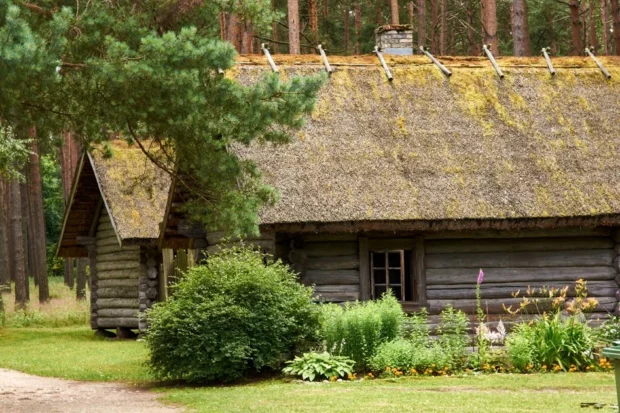
On the way back, stop in one of the riverfront parks. Riga breathes quietly in these green spaces: couples sharing a bench, children chasing pigeons, and young musicians strumming gently. The city’s rhythm slows, and you can almost hear the river telling its stories.
What and Where to Eat in Riga
Riga’s food is full of surprises. You’ll find flavors from Germany, Russia, Sweden, and the Baltic Sea, all mixed together in homey dishes. In the Central Market district, I once chatted with a vendor about grey peas with bacon a simple but favorite Latvian snack, usually eaten with a glass of kefir (fermented milk). If you’re feeling curious, try smoked eel or sprats, especially near the market or Old Town.
For something sweet, taste honey cakes or a “sklandrausis” a carrot and potato tart, famous from the countryside. Cafes in the Art Nouveau District often serve the best pastries and coffee. By the river, you can find open grills during summer, where shashlik (marinated meat skewers) sizzle beside chopped cucumber salads. I met a young chef who promised that no matter the season, there’s always warm soup waiting in Riga let your nose guide you.
Staying in Riga: Practical Choices
You won’t find towering hotel chains everywhere in Riga, and that’s the charm. Most visitors choose small guesthouses or comfortable apartments, especially in Old Town or around the Art Nouveau District, where sights are close and evenings are quiet. In spring and summer, cozy rooms fill fast, so consider booking ahead if you want to stay near the heart of things.
Those who like peaceful mornings might try the parkside neighborhoods near the river. Others, who crave nightlife or music, often choose to stay just a few steps from lively Old Town. Public transport runs late, and the city center is always well-lit and friendly. If you’re on a budget, shared hostels and family-run homes can be found around the Central Market and railway station expect home-cooked breakfasts and grandmotherly kindness.
Customs, Curiosities, and Everyday Life
Latvians are a mix of Baltic calm and northern humor. It’s polite to remove your shoes when entering homes sometimes even in guesthouses. Locals greet each other with a simple “Labdien” (good day) and value personal space, but always help lost travelers find their way. The city is proud of its clean streets and quiet beauty, so keep your voice down in public places.
Folk music is everywhere if you listen closely: young buskers sing old laments, and school children learn ancient dances. Traditional festivals, like midsummer’s Jāņi, fill the parks with singing, wildflower crowns, and bonfires. Even outside the festivals, you’ll spot hints of Latvia’s folklore in woven belts, pottery, and the smile of a woman selling berries at the market. The city, for all its history, is raw and playful full of warmth, sometimes hidden, but always shared if you ask.
Riga’s Living Tapestry: Daily Surprises
One afternoon, I followed a parade of young artists chalking wild scenes onto the cobbles. Another day, I slipped into a tiny record shop where old folk tunes played, and listened as a girl explained the stories behind each. On rainy days, soft lamplight spills from cafés where writers tap out new poems and chess players argue quietly, surrounded by the city’s old bricks.
Look for the tiny Riga Bourse’s clock, which sometimes runs backwards (the joke, locals say, is that time moves its own way in Riga). Or find the statue of Bremen Town Musicians, a gift from Germany, and rub the rooster’s nose for luck. Children will tell you the city keeps its secrets well, but if you follow the sound of laughter, you’ll never get truly lost.
Riga is a city where the past is never far, but where each day brings new color and kindness. No matter how you arrive, you join the living story and leave with your own page to add to the tale.
After soaking in Riga’s historic charm, a visit to Tivoli Gardens in Copenhagen offers a delightful blend of history and lively amusement nearby.
Eastern Europe travel specialist uncovering hidden gems from the Baltics to the Balkans.
- House of Blackheads and St. Peter's Church Tower, Riga, Latvia – Diliff by Diliff on Wikimedia Commons – cc by-sa 3.0
- Old Riga Vecrīga Town Hall by PIERRE ANDRE LECLERCQ on Wikimedia Commons – cc by-sa 4.0
- St. Peter's Church facade, Riga, Latvia – Diliff by Diliff on Wikimedia Commons – cc by-sa 3.0
- German zeppelin hangars, now Riga Central Market (23409045760) by Jorge Láscar from Melbourne, Australia on Wikimedia Commons – cc by 2.0
- House of Blackheads Riga Latvia by Ksenija Vinogradova on Wikimedia Commons – cc by-sa 4.0
- Freedom Monument (Brivibas Piemineklis) by PIERRE ANDRE LECLERCQ on Wikimedia Commons – cc by-sa 4.0
- Riga – The museum of occupation – Okupācijas muzejs – panoramio by giggel on Wikimedia Commons – cc by 3.0
- Latvian National Opera House – Riga by Haydn Blackey on Wikimedia Commons – cc by-sa 2.0
- Brīvdabas muzejs by Amuizni1 on Wikimedia Commons – cc by-sa 4.0


.jpg)

.JPG)


