

If you dream of a place rich in old legends, with the sound of waves blending into city life, Zadar is a coastal Croatian city waiting for your footsteps. The sun sets so colorfully here that Alfred Hitchcock once called them the world’s best. With its layered Roman, Venetian, and modern chapters, Zadar speaks in stone, squares, and even music made by the sea itself. Walking its streets, you quickly realise this is a city proud of both quiet tradition and innovation where every stroll gives new stories. Let yourself wander, meet warm locals with easy smiles, and taste crispy pastries in small bakeries. This is not just another city on a map it’s a place where time moves a bit differently, with history and laughter circling side by side.
Table of Contents
Stormy Centuries on Roman Stones
Zadar’s old heart is wrapped around stones that have seen more history than most textbooks can manage. The Roman Forum, stretching out in the city center, was built between the 1st century BC and 3rd century AD. Its low ruins look simple at first. But stand among them early in the morning, and echoes of old Roman voices seem to linger between the weathered columns. The priests and politicians who once strutted here gave Zadar its first taste of organization, architecture and probably a bit of drama, too.

One morning, sipping thick coffee nearby, a local retiree waved his walking stick toward a broken pillar and told me his childhood friend once played “gladiator” between the stones. Locals use this place to relax or watch children chase pigeons. It’s both playground and memory. Don’t miss the tiny signs with Latin names and carved stone faces. These hidden corners create a silent bridge to Zadar’s earliest days as a bustling port and busy trading hub.
The Sea Organ’s Song: Nature’s Own Symphony
If Zadar is made of stone and memory, it also moves on waves and music. Perhaps the city’s most unusual attraction is the Sea Organ. You find it on the edge of the Riva waterfront 22 white marble steps running down into the Adriatic. But listen closer: as the sea enters specially designed pipes under the steps, it plays haunting, ever-changing melodies. When I first sat here, tired from a long walk, a low, musical sigh rose from beneath me. A family nearby put down their ice creams to listen in delight. Wind and tide create the tune, so every visit sounds different.

This invention, by architect Nikola Bašić, has transformed the city’s relationship with the coast, inviting everyone to sit and listen locals laugh, couples whisper, travelers sit, surprised and peaceful. At sunset, the Sea Organ’s harmonies blend with the crash of waves and the click of cameras. You will find a stream of curious tourists whenever the sky glows orange. More than just art, it’s how Zadar lets nature join the orchestra of everyday life.
Sacred Stones: St. Donatus Church and the Cathedral
Across the Forum, the Church of St. Donatus stands out, round and strong, like an old storybook fortress. Built in the 9th century, this is one of the most important pre-Romanesque churches in Croatia. Its shape is unusual a fat drum of pale stone, stacked simply but powerfully. Step inside, and notice there are no flashy decorations. Instead, sunlight slips through small windows and falls on bare stone. If you’re lucky, sometimes musicians perform here, using the natural acoustics that make even a single note sound otherworldly. I once heard a local choir whose voices floated up to the simple dome, chilling the air.

The church sits partly on stones from the Roman Forum, so you literally walk both Roman and early-medieval ground at once. Zadar’s story is layered, never erased. This is not a place for fancy photos alone, but for listening to echoes, to centuries, and maybe even to your own heartbeat.
Behind St. Donatus, the city’s tallest bell tower marks the Zadar Cathedral officially St. Anastasia’s Cathedral. Its Romanesque face is serious and beautiful, full of carved faces and arches that seem to watch as you pass. Climb the tower for a small fee (and a bit of a leg workout), and you’ll see sea, islands, ancient rooftops, and the spreading blue of the Adriatic. The bells, too, have their own story: when the midnight bell rang, I saw an older woman pause on her way home and quietly cross herself, a tradition mixing old faith and every night’s peace.

Squares, Wells, and the Lively Tangle of Old Streets
Getting lost in Zadar is a pleasure its streets twist around ancient buildings, tiny plazas, and unexpected delights. One of my favorite places to pause was Five Wells Square (“Trg pet bunara”). Not just a name, but a true set of five stone wells standing side by side. These wells are old built in the 16th century to help the city survive long sieges by the Ottomans. Legends claim local girls, fetching water, whispered secrets and sang traditional Dalmatian tunes here.

The square is now a peaceful spot, shaded by trees, visited by children playing and old men chatting. During summer, small concerts sometimes fill the warm air with folk music. The square is close to city walls and the Captain’s Tower, a round stone fortress you can circle and imagine cannon smoke and shouted orders. This part of Zadar feels both perfectly Croatian and entirely its own.
Wander further through narrow lanes, where cats curl in doorways and laundry flaps between shuttered windows. Local shops feature lavender soaps, woven bags, and jars of wild honey. Pay attention to the small plaques on walls many hide marks from World War II, or show where Venetian authorities once controlled trade. Each square seems to have its own story, and if you ask a passing local, you might get a short history, or, just as likely, a joke and an invitation to coffee.
Modern Surprises: The Greeting to the Sun and Glass Museum
Near the Sea Organ, another surprising piece of modern Zadar art draws crowds nightly. The Greeting to the Sun (Pozdrav Suncu) looks like a circle of blue-tinted glass panels set into the pavement. But as night falls, it glows with colored lights powered by the day’s sunshine. When I stood there, children skipped across shifting patterns while teenagers posed for social media snaps.

This solar-powered installation turns every evening into a small festival. The light show isn’t aggressive; it’s gentle, playful, and you can walk right through it. It faces the islands, as if the city is waving to the setting sun. Crop up here at the “golden hour,” and the whole Riva is filled with laughter, music, and shimmering blues. You can find up-to-date info on festivals and cultural events happening right next to these sights.
For those with a passion for unique museums, don’t miss the Museum of Ancient Glass. Inside a handsome 19th-century building by the city walls, this museum offers something special: glass artifacts from Roman times, medieval glass, and live demonstrations of glassblowing the old-fashioned way. One morning, in a sunlit workshop, I watched a craftsman shape a vase out of molten glass, his breath steady and hands sure. The ancient perfume bottles and tiny bowls are delicate links to centuries of trade and skilled craft passed through generations.
Beaches, Parks, and Escapes Beyond the City Walls
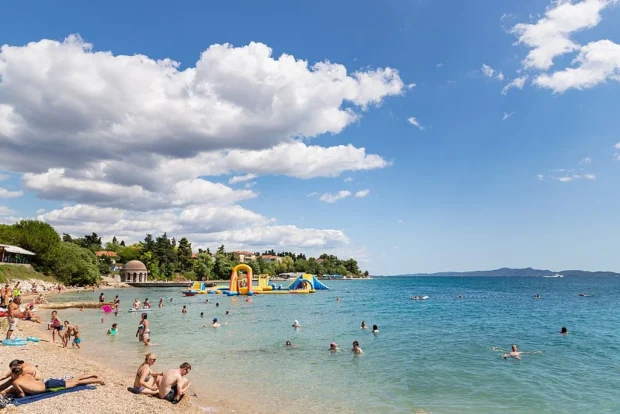
While Zadar is all stone streets and echoing bells, the city doesn’t let you forget it’s built for seaside living. Kolovare Beach is the city’s best-known stretch of coastline, just a short walk from the center. Locals fill it on summer afternoons, spreading towels on pebbles and chatting in the shade. The Adriatic here is clear and blue, a little cold at first, but perfect once you swim out with city walls behind you.
If you’re feeling adventurous, Zadar acts as a perfect base for exploring extraordinary national parks. Kornati National Park, a cluster of uninhabited islands south of the city, is famous for its raw beauty: cliffs, blue water, lonely chapels, and seabirds circling above. I joined a boat trip one morning and spent hours watching the light shift on dry, rocky hills and small fishermen’s homes. The sea was so calm, it looked like a mirror. It’s a true place for reflection many poets and writers have come here just to listen to the silence.
To the northeast Paklenica National Park rises with limestone peaks, ancient forests, and wild valleys. Hikers come for the deep gorges and caves. As a fan of folk traditions myself, I was moved by stories from local guides about past centuries when shepherds and herbalists called these mountains home. Sometimes, you’ll hear local men singing “klapa,” that powerful, harmonious Dalmatian folk style, which they believe echoes better among the rocks.
Life in Zadar: Customs, Markets, and Everyday Moments
More than anything, Zadar is about small daily rituals, shaped by centuries of coastal living. The city slows down for morning coffee locals sit for an hour, reading, chatting, and watching who passes by. If you join them, don’t rush. It’s considered polite to greet people with a nod and a gentle “Dobar dan” (Good day) instead of loud shouts. Zadar’s markets are energetic in the early hours, with fishermen unloading the night’s catch and farmers bringing fragrant figs, cherries, and bunches of wild asparagus.
Market sellers are proud but not pushy chatting, smiling, maybe offering you a taste of marinated olives or sheep’s cheese. When shopping, always look for homemade sweets called “fritule” tiny doughnuts rolled in sugar, sold warm especially in the City Market area. Friendly grandmothers will share their cooking secrets if you ask with an honest smile. Bargaining isn’t the rule here, but neither is stiff formality. People respect tradition, family, and a sense of humor. For a lively dose of local customs, time your visit for the Feast of St. Chrysogonus (Zadar’s protector), when processions, folk costumes, and music fill the city’s oldest streets.
In Zadar, dress with care but comfort. Sleeveless shirts are fine in most places. But inside churches, shoulders should be covered the older women in black shawls will thank you with a nod. Hospitality is simple but sincere. It is common to be offered a glass of homemade rakija (fruit brandy) after a meal, but you can politely refuse if you wish. Always say “thank you” in Croatian, “hvala” as it is warmly appreciated.
Where to Stay and Getting Around in Zadar
Old Town Zadar (“Poluotok”) is the perfect place to stay for most visitors. The options range from private rented rooms in homes that feel spun from memory, to modern, light-filled apartments with rooftop terraces. Some guesthouses are tucked inside restored medieval houses, complete with antique door knockers and stone stairs worn smooth by centuries of shoes. Stay in the center if you love late-night walks under the stars or the sound of bells marking each hour.
For a slower pace, look in the Borik or Diklo districts quiet, leafy, with good sea views and an honest taste of daily Zadar life. These neighborhoods are friendly, never far from a bakery, and you’ll often find families strolling in the evening. Prices are slightly lower outside the Old Town core, and you may find yourself chatting with residents about where to buy the freshest bread.
Arriving to Zadar is simple. The main train and bus stations are near the city center, less than a 20-minute walk, or use a city bus (tickets bought at kiosks). Zadar Airport is small and bright, with regular connections from many European cities. Catch the shuttle bus from the airport it drops you near the main bus terminal, an easy walk or quick local bus ride from Old Town. Avoid taxis, as public transport is very reliable, and the seaside promenade is made for walking.
Inside Zadar, most sights are within easy walking distance. Streets are mostly flat, with ancient paving stones just bring comfortable shoes. To visit Kornati or other islands, boats leave from the main harbor; tour agencies offer half-day or full-day trips, but it’s wise to book during high season. For Paklenica National Park, take a bus toward Starigrad, an hour away. Schedules are posted at the station and online.
Flavors of Dalmatia: What to Eat in Zadar
Zadar’s cuisine mixes mountain, sea, and island traditions. Along the Riva, restaurants serve fresh fish, octopus salad, and “brudet” (a slow-cooked seafood stew). Order grilled sardines in the Old Town and eat them with your fingers, as the locals do. In the Varoš district, I was once invited behind the scenes in a kitchen to watch “pašticada” being made a beef dish slow-cooked in red wine, raisins, and spices, served with homemade gnocchi. The chef swore her grandmother’s recipe was the only right way, and who was I to argue?
For a quick snack, try “soparnik” (a flatbread with Swiss chard and onion), or the famous Zadar cheese (“Paški sir”) actually made on nearby Pag Island, but sold in every market stall. Drizzle it with local honey and sip a glass of Malvazija wine (white and fruity), sitting where you can people-watch. Finish with “maraschino” this cherry liqueur is Zadar’s sweet signature, invented here in the 16th century and once sipped by Napoleon and the Russian Tsars.
Old Fortresses, Artisan Heritage, and the Rhythms of Zadar
Not all of Zadar’s treasures are obvious. The city’s fortifications, built by Venetians in the 16th century, still encircle much of the center. Climb the stone ramparts near Land Gate, and you walk where guards once scanned the horizon for pirates and invaders. Imagine storms blowing in across the islands, or merchants arriving with ships full of ceramics, silk, and olive oil. The city walls, now protected as a UNESCO site, are proof that Zadar was always a crossroads of faiths, trades, and empires.
Traditional crafts remain alive in Zadar. I met a cheerful potter shaping red clay near the market. She explained how her family once made amphorae and roof tiles for Roman villas along the coast. Today, Zadar’s artisans also make intricate lace, hand-dyed textiles, and simple wooden toys. In spring and autumn, the city welcomes small festivals where you’ll hear old songs and see locals wearing folk costumes decorated with coral and silver. At night, listen for soft music drifting from a konoba (tavern). The melodies are old lullabies and love ballads carried on sea winds.
Why Zadar Leaves a Mark on Your Soul
Some cities show off with big museums or famous towers. Zadar charms quietly, with layers of meaning and sea air that never quite leaves your skin. It’s both ancient and slightly rebellious, a mosaic of Roman stones, Venetian walls, and playful modern art. The Sea Organ and Greeting to the Sun prove that tradition and invention can live side by side. From the sacred stillness of St. Donatus, to the echoes of markets, to the lazy splash of a summer swim on Kolovare, Zadar offers real, living beauty never polished too smooth, but always sincere.
Walk here, watch the sky, ask a question of a local, taste the maraschino, and you’ll carry a bit of Zadar with you wherever you go. The city doesn’t shout; it smiles and waits for you to listen. Whether you come for legends, landscapes, or the rhythm of daily life, let yourself be caught in Zadar’s tide. The stories you find may be different than mine but every traveler leaves with one.
You can extend your journey by strolling through Bratislava’s charming Old Town and castle views, a city filled with quiet history and riverside beauty.
Eastern Europe travel specialist uncovering hidden gems from the Baltics to the Balkans.
- Church of Saint Donatus, Zadar – September 2017 by Martin Falbisoner on Wikimedia Commons – cc by-sa 4.0
- Roman forum zadar croatia by Palauenc05 on Wikimedia Commons – cc by-sa 4.0
- The Sea Organ on the Adriatic coast of Zadar, Croatia (48670418032) by dronepicr on Wikimedia Commons – cc by 2.0
- Church of St. Donatus in the Old Town of Zadar, Croatia (48670499212) by dronepicr on Wikimedia Commons – cc by 2.0
- Katedrala sv. Stošije, Zadar (Croatia) – ulaz by Silverije on Wikimedia Commons – cc by-sa 3.0
- Zadar – Trg Pet Bunara (48912739808) by Fred Romero from Paris, France on Wikimedia Commons – cc by 2.0
- Zadar Sunset by Michael Gwyther-Jones on Wikimedia Commons – cc by 2.0
- Bouncy castle in the sea at Kolovare beach in Zadar, Croatia (48670415427) by dronepicr on Wikimedia Commons – cc by 2.0


.jpg)
.jpg)
_-_ulaz.JPG)
.jpg)

.jpg)