

New York City remains one of the most recognized destinations worldwide. The city is full of famous landmarks, modern skyscrapers, and hidden curiosities. Most visitors search for the Statue of Liberty or Central Park, but the city offers so much more: from efficient public transport connections to surprising stories about its neighborhoods. As someone who spent months navigating Manhattan’s avenues and chatting with residents from all boroughs, I’m eager to share a smooth, practical, and story-filled guide for anyone no matter their English level hoping to experience New York’s best. If you’re wondering how to find your way, which sights matter, or how to uncover local moments, this guide is for you.
Table of Contents
Arriving in New York City: Transit, Maps, and First Steps
Most international travelers arrive at either John F. Kennedy (JFK) or Newark Liberty airports. Both offer direct train connections: the AirTrain from JFK links to the Long Island Rail Road at Jamaica Station, which brings you quickly to Penn Station in Midtown Manhattan. From Newark, the AirTrain connects with New Jersey Transit trains, also arriving at Penn Station. This central hub is a logical starting point for many trips it’s also near the Empire State Building, Madison Square Garden, and a tangle of subway lines. One tip: buy a MetroCard or consider the OMNY contactless payment system when you arrive. It works on all subways and city buses, allowing for quick, cash-free movement across the city. Metro stations feature clear maps, and there’s English signage everywhere. If you enjoy route planning, the MTA’s official map found at most stations will be your best friend.
Statue of Liberty: History and Access
No visit feels complete without seeing the Statue of Liberty, a symbol recognized even by people who have never set foot in the United States. Located on Liberty Island, the statue isn’t visible up close from Manhattan itself. Ferries run from Battery Park at the southern tip of Manhattan. Advance ticketing is highly recommended, especially for crown access, which is limited. On busy summer days, advanced booking is almost required. The ferry trip includes Ellis Island, once the arrival point for millions of immigrants. Allow at least four hours for the round trip and museum visits. Guides share stories about the statue’s construction and the way copper turned green over decades. I met a retired teacher from Queens on my ferry ride who pointed to the statue and said, “It’s smaller than you think, but its story is bigger than you imagine.” For tickets and detailed ferry schedules, check the official Statue of Liberty website.

Central Park: Green Corridor in the Urban Grid
Central Park stretches from 59th Street to 110th Street longer than many expect, and always full of contrasts. Early mornings are best for a quiet walk or jog, when most tourists sleep. Cyclists share the loop road with horse-drawn carriages, while squirrels dart between hidden benches. The park is free to enter and open year-round. Some highlights: rowboats at Loeb Boathouse, the literary statues near Conservatory Water, and the Ramble’s winding trails. On weekends, musicians play near Bethesda Terrace or along the Mall. Locals often recommend the northern sections for fewer crowds and wilder scenery. If you love maps, look for the old carriage roads marked on park displays these routes often appear in movies filmed here. Even in winter, Central Park’s bridges and skating rink pull in crowds, offering views of Midtown skyscrapers poking above the trees.
Explore Central Park’s heartbeat to enjoy calm walks and unique stories beyond city landmarks.

Empire State Building and Midtown Marvels
The Empire State Building remains a beacon in Manhattan’s skyline. Rising 102 stories, it once claimed the title of world’s tallest tower. The observation deck on the 86th floor gives sweeping views in all directions; on clear days, you can see beyond the city to New Jersey, Brooklyn, and even Connecticut. Arrive early or late to avoid long elevator lines. Tickets are sold for specific times, so precise scheduling helps. Not far from here lies Grand Central Terminal a cathedral of trains, marble, and whispering galleries. I once stood under its arched ceiling at rush hour, watching commuters read timetables with the same seriousness as chess players. The main hall’s clock is a popular meeting spot for locals; don’t miss the tiny clock booth, which hides a lost-and-found office beneath.


Times Square, Broadway, and the Theater Pulse
Times Square is famous for its neon lights and throngs of visitors. This crossroads of the world buzzes day and night. Broadway theaters fill the nearby streets, with queues forming for both hit musicals and classic dramas. For those who love route efficiency, take the 1, 2, 3, N, Q, R, or W subway lines each stops near 42nd Street. Many shows offer discounted “rush” tickets in person the same day; check box offices early in the morning. Once, a taxi driver told me the trick to surviving Times Square is to “walk with purpose and never stop in the middle.” It’s solid advice: keep moving and step to the side if you want to take photographs. At night, the lights reflect off the glassy buildings, making even rainy evenings feel electric. If you want to see a Broadway show, it’s wise to book in advance, especially for top-selling performances.
For a focused look at the energy and transit around Times Square, see Times Square Lights and Movement.


Museums: Old Masters and Modern Shocks
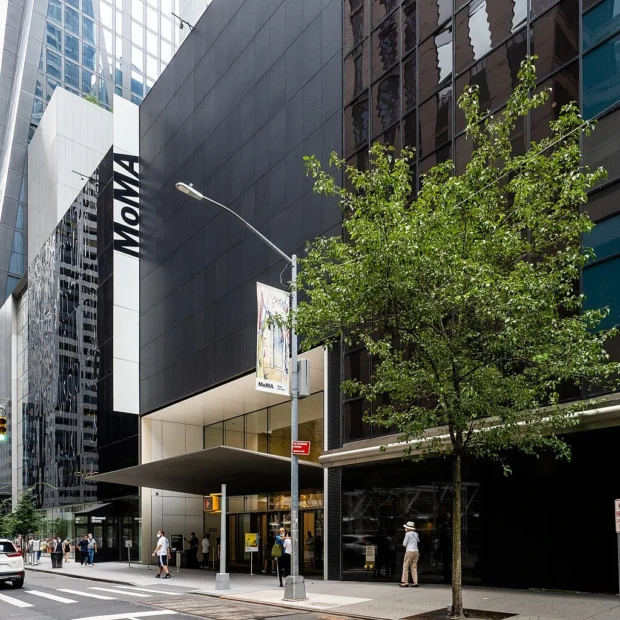
The Metropolitan Museum of Art (often called “the Met”) covers 5,000 years of history within its walls on Fifth Avenue’s edge. Famous paintings, ancient Egyptian sculptures, and entire period rooms fill its labyrinth of galleries. Admission is on a suggested-donation basis for residents, required for tourists. If you crave modern art, the Museum of Modern Art (MoMA) in Midtown features works by Picasso, van Gogh, and Warhol. I remember standing in front of Monet’s Water Lilies, surrounded by silent visitors from around the globe proof that some art needs no translation. Both museums offer free maps and audio guides, making it easy for non-English speakers to navigate. The Met especially is close to Central Park, so it’s easy to combine both in a single, efficient route.

Walking the Brooklyn Bridge and Urban Riverscapes
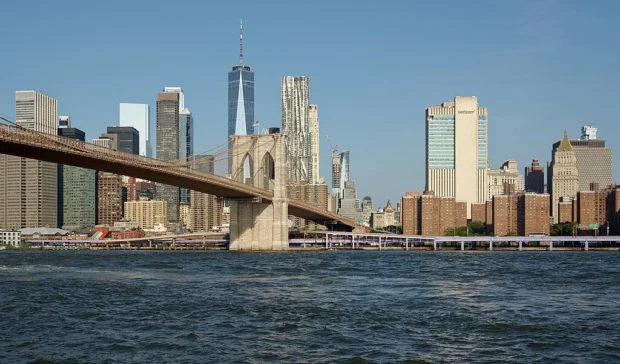
The Brooklyn Bridge is both an architectural icon and a practical walking route. It connects Lower Manhattan and Brooklyn Heights, with a pedestrian walkway above the car traffic. Early mornings or near sunset are ideal crowds thin, and the city’s skyline glows gold. On the Manhattan side, the entrance is near City Hall Park. Walking across takes about 30 minutes, with photo stops along the way. The bridge’s granite towers and steel cables were engineering marvels when completed in 1883; a fun fact I learned from a local guide: the bridge was once crossed by 21 elephants as a publicity stunt, to prove its strength! On the Brooklyn side, DUMBO (Down Under the Manhattan Bridge Overpass) offers cobblestone streets and riverside parks with unmatched skyline views.
Finding Your Route: High Line, Fifth Avenue, and More
Efficiency is easy in Manhattan, thanks to its grid pattern. Numbered streets run east-west, while avenues run north-south. Walking is often faster than trying to catch a crowded bus during rush hour. The High Line, a unique elevated park built on a former rail track, runs along the west side from Gansevoort Street to Hudson Yards. It’s level, wheelchair-friendly, and full of wildflowers, public art, and views o both the city and the Hudson River. Fifth Avenue, meanwhile, is the city’s main shopping corridor, lined with flagship stores and historic churches. The Chrysler Building, often mistaken for the Empire State Building by newcomers, is famed for its art deco crown—sadly, the interior is off-limits to casual visitors, but its façade is a photographer’s dream.


Other notable stops: Rockefeller Center’s ice rink (in winter) and Top of the Rock observatory (all year), where you can view the Empire State Building from above. The 9/11 Memorial & Museum provides a somber, powerful reflection on recent history; allow several hours for the museum, and book entry slots in advance. One World Observatory, atop the Freedom Tower, boasts the highest views in the city on a clear day, ferries move like toy boats in the harbor below.


Eating Well: District Flavors and Classic Bites
New York’s neighborhoods are known for their distinct food. In Chinatown, you’ll find steaming baskets of dumplings and fragrant noodles, while Little Italy’s Mulberry Street serves endless varieties of pasta. In Astoria, Queens, Greek tavernas fill the air with the scent of grilled fish and oregano. Pizza slices are everywhere thin, foldable, and best eaten standing at a busy street corner. Bagels are another city staple; locals often debate the best spot, but nearly every deli makes a solid version. For something sweet, try a black-and-white cookie from a Midtown bakery. Remember: most eateries accept card payments, but small bakeries or street carts may prefer cash.
Overnight Stays: Districts and Transport Connections
Choosing where to stay impacts your efficiency. Midtown is close to most major landmarks Times Square, Empire State Building, and many subway lines. The Upper West Side is quieter, steps from Central Park and the Museum of Natural History. Brooklyn neighborhoods like Williamsburg or Brooklyn Heights offer a more relaxed pace, easy access to the Brooklyn Bridge, and direct subway lines into Manhattan. If you’re planning early morning visits to the Statue of Liberty or Wall Street, the Financial District offers convenience. Booking in advance is wise; prices rise quickly during major holidays or big events. Many places offer free city maps and luggage storage, so you can maximize your last day even after checkout.
City Customs, Navigation, and Local Habits
New Yorkers move quickly on foot, by subway, everywhere. Stand on the right side of escalators, walk on the left. If you need to stop to check your map, step aside so others can pass. Asking for directions is normal; locals are direct but usually willing to help. Tipping is expected in restaurants (around 15–20%). Public toilets are rare, but large department stores and museums usually have clean facilities. Drinking water is safe from the tap fill up a bottle before heading out.

English is spoken everywhere, but the city’s diversity means you’ll hear dozens of languages on any subway ride. If you’re uncertain about a route or train, station agents and uniformed staff are present at most busy stations. A curious fact: the city’s subway system is over a century old, but its signage and maps are some of the clearest in the world arguably more logical than those in other major cities. The MetroCard or OMNY system works for both subways and buses. For cyclists, CitiBike docking stations are everywhere in Manhattan and parts of Brooklyn use the official app to check bike and dock availability in real time.
Efficient Itineraries and Route Suggestions
If time is short, focus your sightseeing by area. For example: begin your day at Grand Central Terminal (easily reached by subway), then walk to the Chrysler Building and head south to Bryant Park and the New York Public Library (both architectural and literary icons). From there, Times Square is a direct stroll west. For culture-packed days, combine the Met, the Guggenheim, and a walk through Central Park. If you love modern design, the High Line links Chelsea Market, the Whitney Museum, and Hudson Yards in a linear, pedestrian-friendly route. The Brooklyn Bridge and DUMBO can be paired with a ferry ride back to Manhattan city ferries accept the same tap cards as subways.
Night rides on the subway are generally safe in busy areas, but it’s best to avoid empty train cars late at night. I once missed the last train from Brooklyn and spent an hour people-watching at Atlantic Terminal a lively scene, even at midnight. Many lines run 24 hours, though maintenance closures are possible on weekends; check the MTA website for updates before heading out.
For those interested in transport history, seek out the Transit Museum in Brooklyn. It’s located in a decommissioned subway station and tells the story of the world’s largest rapid transit system. You can even explore vintage subway cars from every decade a favorite with both kids and grown-ups who love infrastructure.
Final Thoughts: Efficient, Enjoyable, and Memorable
New York City rewards careful planning but responds well to spontaneity. Its famous grid, extensive transport network, and concentration of landmarks make it ideal for efficient explorers. My advice: balance your itinerary between icons like the Empire State Building and quieter moments in Central Park or a hidden bakery on a side street. Learn to read the subway map, try a new food in each district, and don’t be afraid to ask for help. The city changes constantly, yet its energy and rhythms remain familiar to anyone who’s ever dreamed of standing on a busy Manhattan sidewalk and hearing the world pass by.
Whether you have one day or one week, New York’s sights, routes, and stories will stay with you long after you leave. Plan wisely, walk often, and let the city’s efficient pulse guide your journey.

- New York City (New York, USA), Empire State Building — 2012 — 6448 by Dietmar Rabich on Wikimedia Commons – cc by-sa 4.0
- Liberty Island photo Don Ramey Logan by Don Ramey Logan on Wikimedia Commons – cc by 4.0
- 2024-11-19-Central Park-0669 by Superbass on Wikimedia Commons – cc by-sa 4.0
- Grand Central Terminal, New York, United States (Unsplash) by Thomas Lefebvre imthebear on Wikimedia Commons – cc0
- Empire State Building NYC-20090519-RM-084516 by Ermell on Wikimedia Commons – cc by-sa 4.0
- Broadway, New York, United States (Unsplash) by Jason Briscoe jbriscoe on Wikimedia Commons – cc0
- Times Square April 2022 by Don Ramey Logan by Don Ramey Logan on Wikimedia Commons – cc by-sa 4.0
- Museum of Modern Art (MoMA) (51395759113) by ajay_suresh on Wikimedia Commons – cc by 2.0
- Metropolitan Museum of Art entrance NYC by Arad on Wikimedia Commons – cc by-sa 3.0
- Brooklyn Bridge, view from Brooklyn Bridge Park, New York City, 20231002 0851 1561 by Jakub Hałun on Wikimedia Commons – cc by 4.0
- Chrysler Building – Midtown – Manhattan – New York City – USA (25032684565) by Adam Jones from Kelowna, BC, Canada on Wikimedia Commons – cc by-sa 2.0
- High Line, New York City (2014) – 13 by Another Believer on Wikimedia Commons – cc by-sa 3.0
- Manhattan – Rockefeller Center – 20180821165238 by JJBers on Wikimedia Commons – cc by-sa 4.0
- One World Trade Center 1776 Ft Looking up by Donaldroszz on Wikimedia Commons – cc by-sa 4.0
,_Empire_State_Building_--_2012_--_6448.jpg)


.jpg)

.jpg)

_(51395759113).jpg)


.jpg)
_-_13.JPG)

