
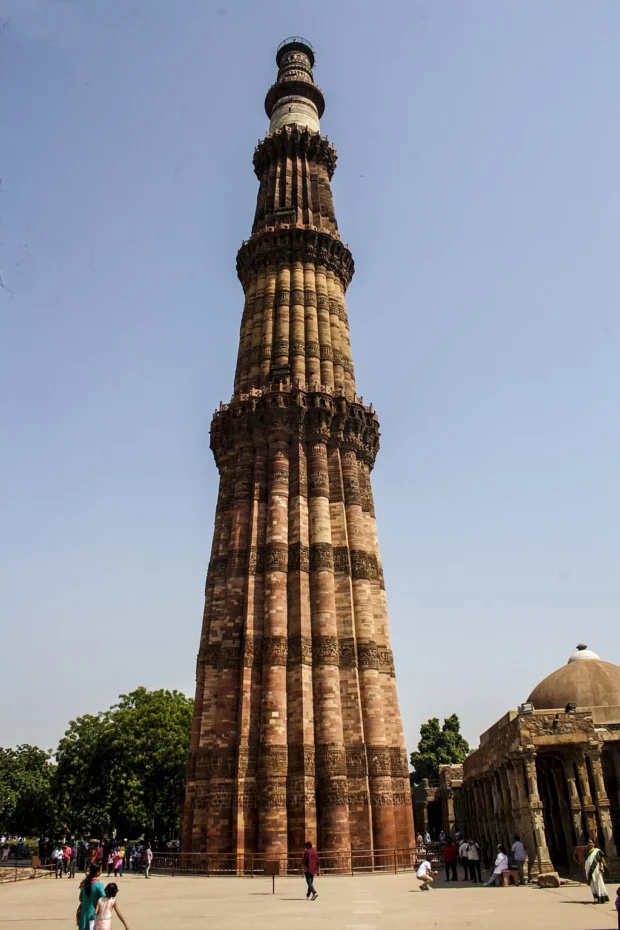
Delhi’s Qutub Minar stands tall, calling out to those who cherish historical grandeur and architectural finesse. As one navigates India’s bustling capital, this world heritage site offers a pause a testament to ancient craftsmanship and intricate design. Situated in Mehrauli, the Qutub Minar’s soaring height and detailed carvings make it a must-visit for anyone intrigued by the interplay of history, style, and human achievement. From architectural photography to understanding the evolution of Indo-Islamic design, the Qutub Minar invites a comprehensive exploration.
Table of Contents
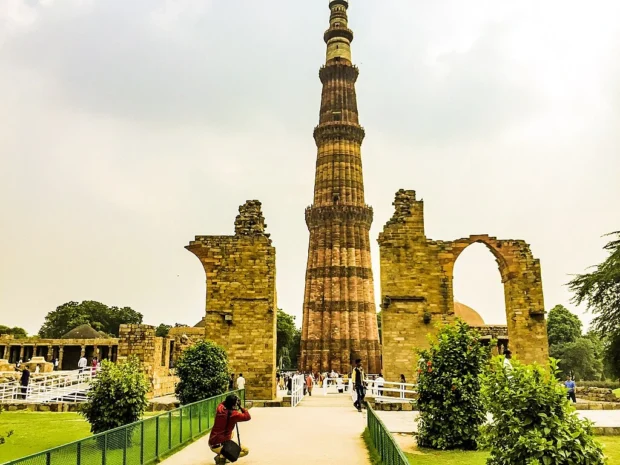
Getting to Qutub Minar from Delhi’s Heart
Location-wise, Qutub Minar is about 15 kilometers south of central Delhi, nestled close to the Mehrauli area. The site is well connected by various modes of transport:
- By Metro: The nearest metro station is Qutub Minar Metro Station on the Yellow Line. From here, a short auto-rickshaw or taxi ride brings you directly to the entrance.
- From Indira Gandhi International Airport: A direct taxi or app-based cab ride takes around 30 minutes, depending on traffic.
- By Bus: City buses headed towards Mehrauli can be boarded from different points in Delhi, though this option may be more time-consuming for first-time visitors.
For those who appreciate walking, the area near Qutub Minar provides quaint side streets to explore, revealing local life and smaller heritage spots.
Architectural Marvels and Historical Depth
The Qutub Minar was commissioned in 1193 by Qutb-ud-din Aibak, the first Sultan of Delhi, marking the start of Muslim rule in India after the defeat of the last Hindu kingdom. Rising to approximately 73 meters in height, this red sandstone and marble tower traces the evolution of Indo-Islamic architecture over centuries.

Each storey shows delicate craftsmanship:

- The first three floors are primarily red sandstone, featuring elaborate balconies with intricate Arabic calligraphy.
- The fourth and fifth floors include marble and sandstone combos, completed by Alauddin Khilji and Firoz Shah Tughlaq respectively.
Its tapering structure and the repeating geometric and floral motifs reflect Persian influences combined with Indian artistry. The minar also historically functioned as a victory tower and a minaret to call the faithful to prayer.
The Quirky Layered History
Interestingly, the tower has survived several natural calamities, including lightning strikes and earthquakes. Each time, it has been restored with precision, preserving its original design. A curious fact often missed is that the original interior wooden staircase was removed after an accident, so climbing inside is no longer allowed, maintaining visitor safety without compromising the exterior’s integrity.
Best Times and Tips for Visiting Qutub Minar
Timing can transform your visit, especially when capturing the minar’s intricate details. Here are some tips to enhance your experience:
- Best Season: October to March offers pleasant weather, ideal for walking and photography.
- Visit Early: Arrive early in the morning to enjoy soft natural light and avoid afternoon crowds.
- Day of the Week: Weekdays usually have fewer visitors compared to weekends and public holidays.
- Avoid Peak Heat: Summers (April to June) can be scorching; shade is minimal around the monument.
Local vendors near the entrance offer refreshments and souvenirs, adding a cultural flavor to your stay. Sampling street food in nearby Mehrauli, such as chaat or jalebi, enriches the visit with local tastes.
Understanding Tour and Reservation Needs
Visitors can explore Qutub Minar independently, but guided tours provide deeper insights into its layers of history and symbolism. Several tour operators offer packages that include audio guides or expert historians.
Entry tickets are affordable and can be purchased at the site. However, for groups or during peak seasons, booking in advance through the official monument website is advisable to avoid queues and ensure access.
The site is managed by the Archaeological Survey of India. More details about ticketing, opening hours, and preservation efforts can be found on the official page.
Around Qutub Minar: Where to Rest and Dine
Surrounding Qutub Minar, a range of accommodations fits various budgets, from cozy guesthouses to mid-range hotels. Staying close allows for multiple visits to catch the monument in different light conditions or to visit nearby attractions like the Iron Pillar or Alai Darwaza.

For meals, local eateries in Mehrauli serve authentic North Indian dishes. Try a traditional thali dinner or sip on sweet lassi while reflecting on the day’s visual feast.
Architectural Photographer’s Delight and Quiet Corners
For those passionate about architectural photography, Qutub Minar offers a rich canvas:
- Early morning captures reveal the play of light and shadow on the minar’s fluted columns.
- The surrounding ruins provide contrast with their rugged textures against the tower’s polished finesse.
- Close-ups of the calligraphy and floral motifs reward patience and a discerning eye.

The serenity at dawn or dusk also reveals the site’s soul a place where history whispers through stone and space. A hidden gem within the complex is the secluded garden area, perfect for contemplative moments and detailed observation of smaller architectural fragments.
Reflections on the Endurance of Craftsmanship
The Qutub Minar is much more than a monument; it’s a narrative carved in stone that bridges centuries of change. Its endurance showcases not only the resilience of materials but the lasting imprint of human creativity and craftsmanship. As you stand beneath its towering presence, take a moment to appreciate the hands that shaped each intricate detail, the visionaries who blended styles, and the conservators who keep its legacy alive today.
To deepen your appreciation of Delhi’s rich Mughal heritage, visit Humayun’s Tomb and its serene gardens, a tranquil complement to monumental history.
- Qutub Minar, Delhi 09 by Indrajit Das on Wikimedia Commons – cc by-sa 4.0
- A Potrait view of Qutub Minar by IM3847 on Wikimedia Commons – cc by-sa 4.0
- Alai Gate and Qutub Minar by Dennis G. Jarvis on Wikimedia Commons – cc by-sa 2.0
- Qutub Minar – Closeup by Andrew Moore from Johannesburg, South Africa on Wikimedia Commons – cc by-sa 2.0
- IRON PILLAR WITH QUTUB MINAR-NEW DELHI-02 by Chinmaykp25 on Wikimedia Commons – cc by-sa 4.0
- Lascar Qutab Minar (4499833318) by Jorge Láscar from Australia on Wikimedia Commons – cc by 2.0


.jpg)