

Bratislava is a city that stands quietly along the banks of the Danube, ready to surprise anyone who comes with an open mind and a sense of wonder. This city is not as crowded as Vienna or Budapest, but Bratislava’s old streets and hilltop castles are full of stories. Here, on the border between Slovakia, Austria, and Hungary, river breezes blend with voices in many languages. For lovers of castles, Balkan culture, vibrant squares, and quirky details, Bratislava offers an easygoing charm mixed with historic treasures.
Table of Contents
In recent years, more travelers have been searching for Bratislava’s best things to see and do. The city rewards slow wandering, and the best memories are often born from unexpected moments like chatting with a friendly local in a café, stumbling over a folk music performance, or tasting poppy seed pastries in a centuries-old square. Let’s walk together through Bratislava’s postcard-perfect Old Town, climb to fortress walls, and let the city’s unique rhythm reveal itself.
Start With the Silhouette of Bratislava Castle
The first thing most people notice when arriving in Bratislava is the mighty Bratislava Castle. Rising above the Danube, its bright white walls and four angular towers look like something out of a fairy tale. I climbed the hill early on a sunny morning, passing chestnut trees and old stone steps. The view from the courtyard took my breath away: the blue Danube curling past modern bridges, red rooftops of the Old Town below, and beyond rolling hills and even the edge of neighboring Austria.
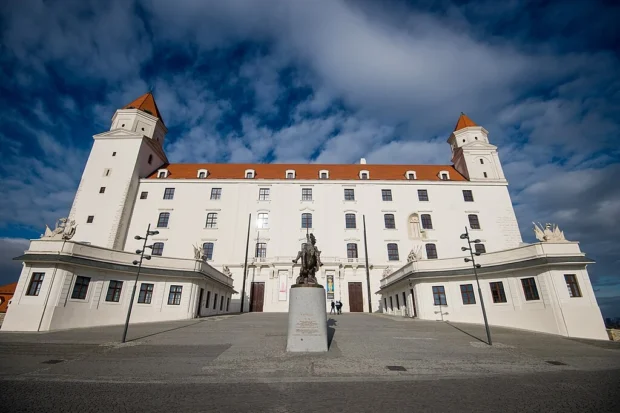
Inside, the castle is part museum and part palace. Elegant halls display treasures from the Slovak National Museum folk costumes, ancient maps, and royal objects. One guard explained with a wink that even Napoleon’s troops once camped here, leaving the castle’s gate marked by a cannonball. The gardens, rebuilt from Baroque plans, are free to stroll and perfect for taking photos. An older man watering the roses wished me “Pekný deň” have a nice day. Here, you feel the layers of history everywhere.
Wandering Bratislava’s Old Town Streets
For me, Bratislava’s Old Town (Staré Mesto) is where the spirit of the city shines brightest. Cobbled lanes run between pastel-colored houses, and tiny courtyards hide between 18th-century facades. Each alley offers something new: a statue of a peeping soldier, an artist’s tiny handmade puppet shop, or a group of students playing the harmonica. At Hviezdoslav Square, named for a famous poet, locals relax at open-air cafes under chestnut trees, soaking up the sun or watching street musicians.

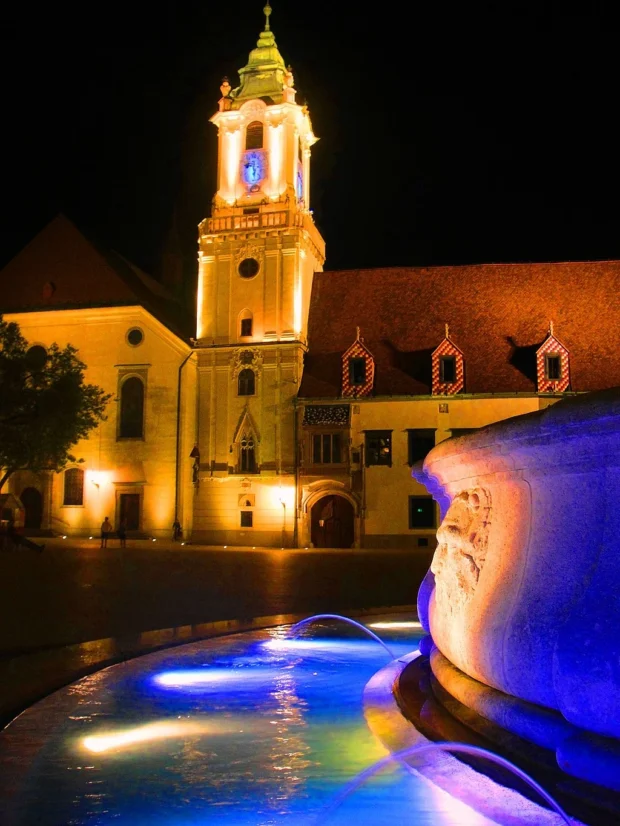
The entrance to the medieval core is Michael’s Gate. This white tower, once part of the old city wall, now feels friendly rather than defensive. For a few euros you can climb to the gallery at the top the view is worth the steps, revealing a jigsaw of red roofs, church spires, and Bratislava’s lively street life. I met a young guide here who told me: “Bratislava is not noisy, Bratislava is calm.” He was right; even in the busy squares, there’s a gentle atmosphere.

St. Martin’s Cathedral and Echoes of Crowns
Not far from the Old Town’s edge stands St. Martin’s Cathedral, Bratislava’s most important church. Its tall Gothic tower rises beside the noisy highway, a strange contrast between sacred and modern. This cathedral once crowned the kings and queens of Hungary, and if you look up, you’ll see a giant gold royal crown on top of the spire a proud reminder. Inside, cool stone and quiet light fill the nave. I paused by the simple altar where the city’s greatest ceremonies took place. Sometimes, you hear singing in Slovak or organ music echoing below the ancient arches.

I met a volunteer here who whispered, “Vitajte v Bratislave” welcome to Bratislava before showing me a small side chapel where candles flickered. The people are proud of their church and their city’s royal past, but they wear it lightly, smiling at visitors and answering questions with patience.
Finding Surprises On Every Square
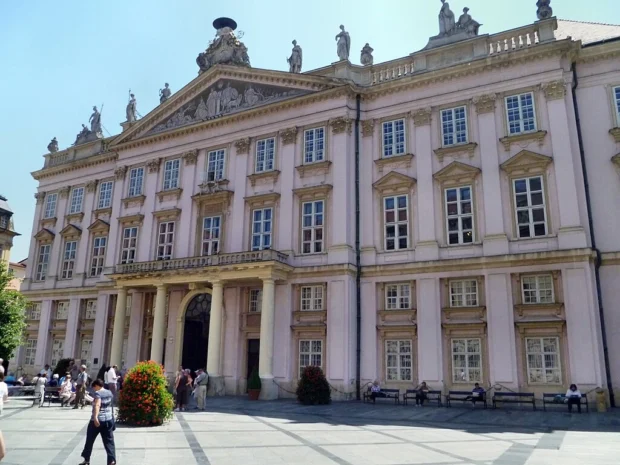
Much of Bratislava’s daily life unfolds in its open squares. In the heart of the Old Town is Primate’s Palace, painted in a delicate pink color and fronted by elegant ironwork. This neoclassical palace houses mysterious mirror halls where peace treaties were once signed. The courtyard is a cool refuge in the heat often empty except for a few city workers smoking and chatting quietly.
Just a walk away, you’ll find the “Blue Church,” officially called the Church of St. Elizabeth. It looks almost like a cake pale blue, with white mosaics and round doors. On Sunday mornings, local families slip in and out for Mass as bells ring over the rooftops. Tourists sometimes peek through the doors, surprised by the modern, playful style. If you explore the streets nearby, you notice more Art Nouveau buildings, swirls and flowers carved above the windows.

In summer, farmers from around the region come to open-air markets on the squares, selling wild honey, spicy sausages, and bright flowers. I bought a loaf of dark rye bread and tried “bryndzové halušky” potato dumplings with sheep cheese and fried bacon. The young woman who served it laughed as I struggled to pronounce “ďakujem” thank you. Eating this dish, with its rich and satisfying flavor, felt like sharing a secret with the city’s heart.
Bratislava’s Quirky Side: From Sculptures to UFO Views
Bratislava has a playful side that never takes itself too seriously. Throughout the Old Town, look for strange bronze statues: a “man at work” popping out of a sewer, Napoleon leaning over a bench, and a gentleman tipping his hat in greeting. These figures are part joke, part local spirit perfect for a photo, always making people smile. Ask a local and they’ll tell you the best story for each one.
For a taste of the future, cross the river on the UFO Bridge, officially called Most SNP. This concrete span is topped by the round UFO Observation Deck, which looks like a spaceship landed on two legs. From here, I watched the Danube move toward Hungary, ships gliding under and Bratislava’s old and new neighborhoods stretching away. On a clear day, you can see to Austria and even the snowy peaks of the Little Carpathians. The elevator ride alone is an adventure locals joke about pressing the “up” button like an astronaut.

Remembering History at Slavín and Beyond
Some of the most powerful places in Bratislava are quiet. The Slavín War Memorial, high above the city, is a solemn monument with sweeping views. It honors Soviet soldiers who died liberating Bratislava in 1945. Locals bring flowers here on national holidays or just come to walk among the stone columns. The atmosphere is respectful but not heavy you’ll see couples picnicking or children playing on the grass. A woman I met shared her grandfather’s story, and added, “Nikdy nezabudneme” we never forget.

Take a tram or bus to reach this ridge. The public transport system is simple and reliable: buy a ticket from yellow machines at most stops, validate when you enter, and keep it handy if a controller asks. From the train station to the city center is a quick ride on line 93 or 1, and the main bus station (Autobusová stanica) links to all neighborhoods. Locals rarely use taxis, and the city layout makes walking enjoyable especially from the river to the castle or through leafy parks.
Devin Castle: Ruins Where Rivers Meet
One of the most unforgettable places is Devin Castle, a bit outside the city but easy to reach by boat or bus. It stands where the Morava and Danube rivers join, and has guarded these waters for centuries. The ruins are dramatic crumbling stone walls perched on a rocky outcrop, with sweeping views of the forests and fields below. Legends say princesses once leapt from the Maiden Tower rather than accept unwanted marriages. While wandering the site, I met an older couple who told me about festivals where folk musicians still play traditional Slovak songs under the castle walls.

If you come in spring or autumn, wildflowers cover the meadows and the riverbanks are alive with fishermen and cyclists. My best advice: bring a picnic and a camera, and allow time to sit quietly, feeling the wind and imagining ancient life along the border. Devin keeps the memory of battles and legends but also the peaceful rhythm of rural Slovakia.
Where to Stay and What to Eat in Bratislava
For accommodation, Bratislava has a range of places to sleep from cozy guesthouses in the Old Town to friendly apartments in the outer neighborhoods. I liked staying on the east side of the Old Town, where it’s quieter at night, but just minutes by foot from the city’s lively main squares. Some pensions are run by local families and often have folk art in the decor, hand-painted furniture, and books about local history on the shelves.
The city is a haven for traditional Slovak food, especially in the cafés and restaurants around the Old Town and the district of Petržalka (across the river). Classic dishes include “kapustnica” (sour cabbage soup with sausage) and “lokše” (potato pancakes with poppy seeds or duck). Bratislava rolls sweet pastries filled with walnuts or poppy seeds are a favorite snack. On a chilly afternoon, I sat in a bakery on Obchodná Street watching students chat over steaming cups of “káva” (coffee), the air thick with cinnamon and baked dough.
For a modern twist, don’t miss the open-air food markets in Trnavské mýto, where young chefs serve street food from everywhere: juicy burgers, vegan goulash, and strong local beer. Bratislava’s craft beer scene is growing fast, with several small breweries offering tasting flights and pub meals. Most places accept cards but it’s polite to greet with a smile and maybe a quiet “Dobrý deň”—hello—especially in smaller shops.
Bratislava’s Rhythm: Customs, Folk Life, and Festivals
Everywhere you go, Bratislava’s personality is shaped by centuries of crossroads culture. The old and the new live side by side folk musicians might play in front of a 19th-century bank, and university students gather on medieval squares to recite poetry or play chess. Traditional festivals light up the calendar, especially in the spring and around St. Martin’s Day in November, when locals celebrate with roasted goose and parades.
Slovak etiquette is simple but meaningful. People are formal at first always shake hands and use polite greetings, especially with older folks. It’s not common to speak loudly in public or interrupt, but once you’re invited for a drink or meal, the warmth flows easily. If you’re lucky enough to be invited to a home, it’s polite to take off your shoes at the door. When I asked a shopkeeper about folk traditions, she explained that Slovaks love to sing together during weddings or holidays, often bringing out accordions and violins even today.
Bratislava is a city for wandering, talking, and noticing small details. The city is proud of its history, but always looks forward welcoming newcomers to taste, learn, and share. As one friendly tram conductor said as I struggled with my coins, “Všetko bude dobré” everything will be good. That is the feeling that stays with you long after you leave Bratislava’s castle walls and tree-shaded streets.
Final Thoughts: Why Bratislava Stays With You
What makes Bratislava truly special is not only the feeling of walking through history, but also the sense that the city is still growing and shaping itself. In the evening, as the lights come on along the Danube promenade and the castle glows above the town, you realize that Bratislava is confident in its quiet way. It’s a place where castles and street art, old markets and modern cafes, all have their place.
Whether you’re searching for historic towns, folk music, castles and fortifications, or simply the beauty of riverside life, Bratislava offers days of exploration and evenings of simple pleasures. The reward is not just the famous sights, but the small moments a local’s advice, a street musician’s melody, the flavor of sheep cheese on your tongue that make every trip unforgettable. And when you leave, you might find yourself, as I did, already planning your next stroll beneath the castle towers, whispering “Dovidenia, Bratislava” goodbye, Bratislava until we meet again.
Eastern Europe travel specialist uncovering hidden gems from the Baltics to the Balkans.
- Bratislava Panorama R01 by Marc Ryckaert (MJJR) on Wikimedia Commons – cc by 3.0
- Bratislava Castle, Slovakia (6) by European Commission on Wikimedia Commons – cc by 4.0
- Bratislava – Hviezdoslavovo námestie – View ENE II by Txllxt TxllxT on Wikimedia Commons – cc by-sa 4.0
- Bratislava-Old Town, Slovakia – panoramio (8) by Qaalvin on Wikimedia Commons – cc by 3.0
- Bratislava – Michalská brána (1) by Fred Romero from Paris, France on Wikimedia Commons – cc by 2.0
- Bratislava – St. Martins Cathedral 02 by J_Makk on Wikimedia Commons – cc by-sa 2.0
- Bratislava 071 by JoJan on Wikimedia Commons – cc by 3.0
- Blue Church, Bratislava 01 by Thomas Ledl on Wikimedia Commons – cc by-sa 4.0
- Donauradweg near Most SNP in Bratislava by JIP on Wikimedia Commons – cc by-sa 4.0
- Slavin memorial, Bratislava by John Menard from Phoenix, USA on Wikimedia Commons – cc by-sa 2.0
- Devín Castle, 20220428 1023 5746 by Jakub Hałun on Wikimedia Commons – cc by-sa 4.0

.jpg)

.jpg)
.jpg)


