
Helsinki, the capital of Finland, welcomes visitors with a blend of modern Nordic design and fascinating history. This compact city by the Baltic Sea is easy to navigate, famous for its clean streets, efficient public transport, and friendly yet reserved locals. Whether you have a day or more, the central districts offer streamlined access to landmarks, green spaces, and Finnish cuisine. For global readers seeking reliable Helsinki travel information, this guide covers essential attractions, technical advice on moving around, and cultural customs for an orderly and memorable city break.
Table of Contents
Getting Around Helsinki Efficiently
Arriving at Helsinki-Vantaa Airport, most travelers find the I and P commuter trains the fastest link to the city center. The journey to Helsinki Central Railway Station takes just 30 minutes, with trains every 10 to 20 minutes. Single, day, or multi-day tickets can be bought from machines on the platform these work across buses, trams, metro, ferries, and trains within the city zone. The city’s HSL app is highly recommended for ticket purchases and real-time route planning.
Helsinki is built for walking and cycling. Step outside the main rail station and find intuitive blue signs with walking distances. For longer trips, hop on a tram; lines are color-coded, stop announcements are clear, and schedules run by the minute. Cycling routes cover the central district and islands, with rental bikes everywhere from spring to autumn. Harbor ferries to Suomenlinna fortress leave from Market Square, fully accessible for wheelchair users and strollers.
Suomenlinna: Sea Fortress on the UNESCO List
Among Helsinki’s sights, Suomenlinna stands out as a living fortress and UNESCO World Heritage Site. Hop on the Suomenlinna ferry from Market Square tickets are included in the HSL city pass. The crossing takes 15 minutes, passing sightlines to the city’s harbor and breaking through sea ice in winter. The fortifications sprawl across several islands: centuries-old stone walls, tunnels, museums, and grassy courtyards once guarded the Russian Empire’s western frontier.

Wandering the cobblestone paths, I met a retired naval engineer who pointed out the dry dock still in use and explained that the Swedish, Russian, and Finnish military each left their own architectural mark. Visiting in early summer, the tree-lined embankments fill with picnickers, while in autumn the island’s air feels brisk and clear. There’s a small residential village here, a library, and a school, making Suomenlinna a genuine community, not simply a monument.
Take a short ferry ride to Suomenlinna, a historic sea fortress offering nature, history, and local culture near the city center.
Helsinki Cathedral: Icon of Senate Square
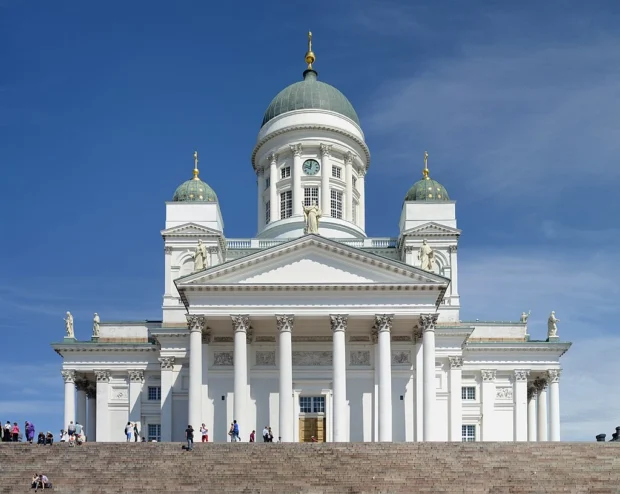
No Helsinki visit feels complete without pausing at Senate Square, the city’s neoclassical heart. The Helsinki Cathedral rises above the plaza its white columns and green dome are visible from land and sea. Designed by Carl Ludvig Engel in the 1800s, the church’s simplicity represents Finnish Lutheran values: clear lines, minimal decor, a sense of calm order. I wandered inside during a quiet afternoon and found the light filtering through tall windows, giving the interior a peaceful, almost mathematical symmetry.

Senate Square itself is a favorite meeting point. Here, public events, open-air concerts, and a famous Christmas market take place. Steps from the cathedral, I found students clustering around the University of Helsinki’s main building, and street musicians playing classics under historic statues. The grand facades and wide open space say much about Helsinki’s role as a crossroads of Northern Europe built for orderly gatherings and civic life.
Temppeliaukio Church: The Rock Church’s Modern Statement
Further west, in the Töölö district, visitors are often surprised by the Temppeliaukio Church also called the Rock Church. This modern marvel is hewn directly into granite bedrock, with natural stone walls and a copper dome that lets in sunlight through a circular skylight. The acoustic quality draws musicians and concertgoers, making this not just a place of worship but a respected venue for classical music.

On my visit, an architecture student explained the technical aspects: the exposed rock absorbs sound, the roof’s radial beams are designed for efficiency, and the minimal ornamentation fits Finnish design values. Even outside on the street, the low profile of the building blends into the rocky hill, revealing itself only to those who search for it. The church provides step-free access, accommodating visitors with mobility needs.
Market Square, Esplanadi Park, and Seaside Scenes
Returning to the city center, Market Square (Kauppatori) forms a lively waterfront hub where ferries dock and open-air stalls sell everything from fresh berries to reindeer sausage. Early in the day, I sampled rye bread and gravlax salt-cured salmon from a stall run by local vendors. The word “kiitos” (thank you) goes a long way for friendly service, while “hei” or “moi” are the standard casual greetings.

Across from Market Square, Esplanadi Park is a well-manicured green promenade, lined with linden trees, outdoor cafes, and historic pavilions. Office workers eat lunch here in summer; by late June, daylight lasts nearly all night. A short stroll east brings you to the Uspenski Cathedral, a red-brick Orthodox church crowned with golden domes. This church reflects eastern influences Finnish history, after all, was shaped by both Swedish and Russian empires.


Art, Museums, and Finnish Heritage
Helsinki respects both tradition and innovation, a point made clear in its museums. The National Museum of Finland, housed in a castle-like building just north of the city center, presents Finnish history from prehistoric to modern times. I paused over the exhibition on the Winter War learning how geography, ice, and resilience shaped Finnish identity. Down the street, the Ateneum Art Museum is famous for its national romantic paintings, while the Kiasma Museum of Contemporary Art catches the eye with its curved, glassy façade and bold installations. Both museums offer multilingual displays and accessible routes.


To understand Finnish wooden architecture, I took tram 4 to the Seurasaari Open-Air Museum, located on a leafy island northwest of the center. Here, original farmhouses, manors, and granaries from all corners of Finland have been reconstructed. Guides in historical dress demonstrate crafts, and signposts explain construction techniques from the 18th and 19th centuries. Watch for the native red squirrels a favorite local sight, known as “orava.”

Where to Stay: Helsinki’s Neighborhoods
Central Helsinki’s hotels and guesthouses are efficient, tidy, and often feature Finnish sauna facilities. The Kamppi and Kluuvi districts are best for quick rail or tram access, with plenty of cafés and quiet streets. Travelers preferring a local experience may rent small apartments in the Kallio or Töölö neighborhoods both have strong public transport, nearby parks, and grocery stores. Kallio has become a favorite for music venues and casual restaurants; Töölö, in contrast, is quieter and closer to the shoreline. Many properties offer step-free entry and elevators, reflecting Helsinki’s commitment to accessibility.
Food Specialties and Culinary Traditions
Finnish food reflects the country’s forests, lakes, and long winters. In Market Square and Hakaniemi Market Hall, common specialties include salmon soup, mushroom pies, and “karjalanpiirakka” a rye pastry filled with rice porridge, best enjoyed with egg butter. Many locals recommend pea soup with ham on Thursdays, a long-standing tradition found even in modern eateries. In the Punavuori district, contemporary bistros serve arctic char, wild mushroom risotto, and “mustikkapiirakka” bilberry pie for dessert. Coffee culture is strong: Finland has one of the highest per-capita coffee consumptions in the world, and cafés are everywhere.
A popular street food, especially in late-night hours, is “makkara” grilled sausage, often served with mustard at festival kiosks. When eating in public, Finns are polite but quick. Lines stay orderly; “anteeksi” (“excuse me”) is useful when moving through crowds. Alcohol is mostly sold in licensed stores; bars and terrace cafés open late, especially during the long, bright summer evenings.
Customs, Etiquette, and Everyday Helsinki Life
The Finnish way of life values silence, personal space, and punctuality. Small talk is minimal, but help is always available if you ask. During my stay, I learned that locals typically greet with a simple “hei,” and a firm handshake is common in formal settings. Shoes are sometimes removed indoors, especially in homes and smaller guesthouses, so clean socks are advisable.
Finns separate trash carefully, and public spaces are kept clean littering is frowned upon. Sauna culture is central: if invited, it is polite to accept, though swimwear may be required in mixed company. Always ask before taking photographs of people, especially in markets or private yards. Respect for rules and queues is part of daily life, making the city feel both safe and well-organized.
Tips for Seamless City Logistics
Helsinki’s urban design makes wayfinding simple: maps are posted at tram stops, digital boards show the next arrival times, and the HSL app integrates bike, ferry, metro, and bus routes. Multi-modal day tickets allow unlimited transfers perfect for travelers moving from the airport to the city, across islands, and back again. For budget travelers, Helsinki Card offers discounted access to major museums and unlimited public transport.
After enjoying Helsinki’s seamless travel links, you might appreciate the historic atmosphere at Red Square in Moscow, another city where rich heritage meets vibrant daily life.
During winter, the city clears sidewalks and tram lines early; in summer, cycling is safe on dedicated lanes. Harbor connections link to Tallinn and Stockholm, with overnight ferries departing from West Harbour. If traveling further by train, the modern Central Railway Station anchors the city’s heritage lines look for the four granite giants holding lanterns at the entrance, an Art Deco highlight.
For those interested in cycling corridors, Helsinki’s Baana is a former freight rail cut now transformed into a sunken bike and pedestrian path, linking the western port area to the city center. This smart use of infrastructure shows how the city reuses its history for modern needs, making efficient travel not just possible but enjoyable.
Reflections and Practical Notes
What made Helsinki memorable for me was not just its famous churches or stone fortresses, but the smooth rhythms of city life: a ferry gliding past green islands at dawn, the hum of trams at dusk, a quiet park bench under tall pines. Everyday details from the precise metro schedules to the simple “kiitos” shared with a baker create a sense of order and welcome.
In this city, history and future blend: the Swedish, Russian, and Finnish influences build a unique identity. The city’s infrastructure, clean design, and respect for rules make every step easier for travelers. Whether sitting in the shadow of Helsinki Cathedral, sampling soup at Market Square, or admiring the sunset over Suomenlinna’s ramparts, the city leaves a lasting impression rooted in quiet efficiency and openness to all.
Before you leave, try one last local phrase: “nähdään” means “see you later.” In Helsinki, it always seems there is a reason to return.
To complement your Helsinki visit, explore Riga’s charming streets and rich culture for a fresh Baltic perspective Riga’s Spirit.
- Helsinki July 2013-27a by Alvesgaspar on Wikimedia Commons – cc by-sa 3.0
- Picnic in Suomenlinna. Helsinki, Finland by Ввласенко on Wikimedia Commons – cc by-sa 3.0
- Catedral Luterana de Helsinki, Finlandia, 2012-08-14, DD 01 by Diego Delso on Wikimedia Commons – cc by-sa 3.0
- Interior of Temppeliaukio Church 2019 by Link on Wikimedia Commons – cc by 2.5
- Helsinki Market Square September 2014 by Ypsilon from Finland on Wikimedia Commons – cc0
- 14-08-13-helsinki-RalfR-N3S 1244a-006 by Ralf Roletschek on Wikimedia Commons – gfdl 1.2
- Estatua de Johan Ludvig Runeberg, Esplanadi, Helsinki, Finlandia, 2012-08-14, DD 01 by Diego Delso on Wikimedia Commons – cc by-sa 3.0
- Kiasma – Museum of Modern Art – panoramio by Aulo Aasmaa on Wikimedia Commons – cc by 3.0
- Ateneum in April by JIP on Wikimedia Commons – cc by-sa 4.0
- National Museum of Finland – panoramio by Ainar Riigov on Wikimedia Commons – cc by 3.0
- Cloth and Food Stores at Seurasaari by Pöllö on Wikimedia Commons – cc by 3.0


