

Welcome to Kigali, Rwanda a city where green hills unfurl beneath an endless sky, where street markets hum with life and neighbors always seem to know each other’s names. Kigali is not just the political and economic heart of Rwanda; it’s a city built on stories, memory, and hope. In the cool mornings, I watched the city’s mist roll over hills, and by night, the sounds of laughter floated from side streets. There’s much more to Kigali than meets the eye modern cafes stand beside lively markets, and art studios pulse with creativity, only a short ride from places of deep remembrance. This blog post invites you to see Kigali’s best sights, historic places, and unique flavors, all shared in simple English for every reader around the world.
Table of Contents
First Impressions of Kigali City
Landing at Kigali International Airport, the first thing I noticed was the order clean streets, well-tended gardens, and a pace that felt gentle yet efficient. The drive from the airport into the city center is quick, sometimes less than 20 minutes, and public buses run regularly. Motorbike taxis, called “moto,” zip everywhere; their drivers wear bright vests and almost always have a spare helmet for you. Unlike many bustling African cities, Kigali feels calm, almost meditative, but never dull. There’s rhythm here: children playing ball near roadside mango sellers; women balancing baskets on their heads, weaving through traffic with grace.
You’ll sense the pride Kigalians take in their city in the way people sweep their own doorsteps, or how flowers bloom at every turn. It’s common to greet strangers, even if you’re just passing by. “Muraho!” means hello in Kinyarwanda, and a smile is always part of the greeting. It’s a city that feels safe, even welcoming to a visitor walking alone in the evening. Still, remember to ask before taking photos of people, and dress modestly for temples or mosques.
Kigali Genocide Memorial: Memory and Reflection
No visit to Kigali is complete without spending time at the Kigali Genocide Memorial. This carefully kept site holds the memory of one of the twentieth century’s darkest chapters the 1994 genocide against the Tutsi. Over 250,000 victims rest in mass graves beneath beautiful gardens. The museum’s exhibits are honest and deeply moving, combining photos, video, and personal stories. I watched visitors move quietly between rooms, each face changed by what they saw and heard.
At first, I hesitated to visit, unsure if I could manage such sadness. But the memorial is more than a place of grief; it’s a place of learning, and, quietly, hope. School groups visit often. Guides some of whom lived through the genocide explain what happened and how Rwanda has rebuilt itself. The Children’s Room brought me to tears: small shoes, toys, names, stories. Yet, outside, the gardens overflow with color and birdsong. It’s a living reminder that memory and growth can exist together. If you go, set aside at least two hours for your visit, and consider joining a guided tour to better understand the history.

Inema Arts Center: Creativity and Community
After the weight of remembrance, I found fresh energy at Inema Arts Center. Tucked behind a simple gate, this space buzzes with artistic life painters at work, music spilling from open doors, and sculptors shaping recycled metal into wild forms. The center was started by two brothers who wanted to use art to heal and unite people after the genocide. Today, it’s a launch pad for young Rwandan artists to show their work to the world.
When I visited, a group of children was learning traditional dance in the courtyard, their laughter echoing between vibrant murals. On the walls inside: huge canvases in bright colors portraits, city scenes, even abstract shapes inspired by Rwanda’s hills. I chatted with a painter named Aimable, who told me, “Art is our way to remember, but also to dream.” The center offers free exhibitions, regular dance or music shows, and even workshops if you want to try painting or drumming. Don’t be shy visitors are welcome to join in, and the artists love to share their stories.
Markets and Hilltop Views: The Heart of Kigali Life
To understand daily life in Kigali, I spent a morning at Kimironko Market. This sprawling market is a true local experience: rows of fruit tiny bananas, sweet pineapple, passionfruit beside mounds of beans, sacks of rice, and handmade baskets. Friendly sellers greet you with “Amakuru?” (How are you?). I tried small tastings of roasted maize and spicy peanut snacks. The textile stalls are a riot of color kitenge fabrics in swirling patterns. If you’re looking for a souvenir, tailors can sew a shirt or dress for you in a few hours.

A tip: bargaining is normal at the market, but it’s done with a smile and plenty of good humor. I felt no pressure to buy; sometimes, a conversation was all that was wanted. The market sits at the foot of Kimironko Hill, and if you climb a little way up, you’ll be rewarded with a panorama of Kigali’s patchwork neighborhoods red roofs, gardens, winding paths and on clear days, a view as far as Mount Kigali, the highest point in the city.
From the top of Mount Kigali, the city falls away in folded green waves. Locals come here at sunset to share grilled brochettes (skewered meat) and watch light fade to gold. If you visit on a Sunday, you might catch drummers and dancers performing traditional Rwandan music. For me, hearing that drumbeat echo across the ridge was a highlight the sound of Rwanda’s ancient storytelling heritage, alive and strong.

Celebrating Craft and Community in Nyamirambo
No district in Kigali pulses with as much energy as Nyamirambo. Known for its diverse community, rich Muslim heritage, and lively streets, Nyamirambo is where you hear calls to prayer blending with gospel choirs and the hum of busy tea shops. I joined a walking tour run by the Nyamirambo Women’s Center, a non-profit that supports local women through sewing, literacy classes, and business training.
Our guide, Amina, led us down narrow alleys where children played football using plastic bottles. She explained the meanings behind the colorful murals on community walls and took us into a small weaving workshop where women sat cross-legged, chatting as their fingers moved fast around strands of grass. The center also runs a shop selling beautiful handmade baskets, bags, and aprons buying here means your money supports families directly.
We ended the tour with a home-cooked meal sticky rice, beans, tender goat stew, and a spicy tomato sauce, all eaten together from one big plate. Amina told me, “Sharing food is sharing life.” In Nyamirambo, hospitality is not just tradition, but an everyday act of kindness.
Kigali’s Mosques and Churches: Places of Faith
Just around the corner from the women’s center rises the Nyamirambo Mosque, its tall minaret a neighborhood landmark. Five times a day, the call to prayer rings out, and the streets briefly quiet. I noticed worshippers washing before entering, a sign of respect and ritual purity. Non-Muslim visitors are welcome to admire the mosque’s architecture from outside, but remember to dress modestly and keep your voice low nearby. The area is also home to lively churches, especially on Sundays, when gospel music drifts from open doors and well-dressed families fill the streets with laughter.
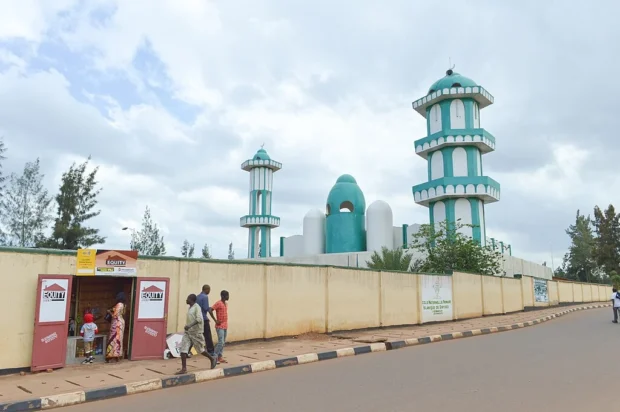
Such religious coexistence is part of Kigali’s story. In most neighborhoods, you’ll see Muslims, Catholics, and Protestants living side by side. It’s common for friends to invite each other to join religious celebrations, whether it’s Eid, Christmas, or a church wedding. Community events often blend music, dance, and food reminding me how faith here is not only about belief, but about coming together.
Handmade Treasures: Caplaki Craft Village
If you’re looking for Rwandan souvenirs made with skill and care, head to Caplaki Craft Village. This open-air market is a maze of wooden stalls, each overflowing with woven baskets, beaded jewelry, wooden masks, and lively paintings. I watched a man carve a gorilla from a block of shiny black wood. “Each one is different no two faces are the same,” he told me, holding up a half-finished carving. It’s a lesson in patience and pride.
Prices are marked, but bargaining is still welcome, and sellers are happy to explain how each item is made. Caplaki is not only a place to shop, but to see the power of cultural preservation crafts passed down through families, with new styles mixing old techniques. Ask about the meaning of the designs: many baskets tell stories of harvest, love, or community. I left with a small bowl, its shape echoing Rwanda’s rolling hills.
Unexpected Sights and Urban Legends
Kigali’s city center is home to more than museums and markets. The Campaign Against Genocide Museum sits inside Rwanda’s parliament building, telling the story of how peace was rebuilt after war. Its exhibits include photos, maps, and even the battleground bunker used by the Rwandan Patriotic Front. Not far off lies the Presidential Palace Museum once the home of Rwanda’s former president, and now a peek into both political history and oddities, including the wreckage of the plane whose crash sparked the genocide.

I heard from an old man outside the museum about an urban legend: some say the house’s halls echo at night with the laughter of children lost long ago. True or not, it’s a reminder that Kigali’s past and present are always in conversation. Ask locals for stories many are natural storytellers, happy to share tales over a cup of strong Rwandan coffee.
Kigali’s Food Culture: Flavors and Districts
Food in Kigali is colorful and hearty, shaped by tradition and fresh local ingredients In Nyamirambo, I sampled nyama choma—grilled meat, often goat or beef, served with hot sauce and fried plantain. In the city center, small restaurants serve isombe (cassava leaves cooked with peanuts) and ugali, a soft maize porridge perfect for scooping up stews. On weekends, families gather for brochettes in gardens or by roadside grills, the air smoky and full of laughter.
Don’t miss the fruit: Kigali’s markets overflow with mango, avocado, sweet bananas, and juicy papayas. Street vendors sell mandazi, fluffy fried bread that tastes best with milky tea. If you’re thirsty, try urwagwa, a traditional banana beer sometimes served at celebrations. And for coffee lovers, Kigali has cozy cafes where beans are roasted on site the city is famous for its high-quality Arabica coffee. Sip slowly, watch the city move, and let someone tell you a story.
Staying in Kigali: Neighborhoods and Vibes
Kigali offers a variety of places to stay, from simple guesthouses to comfortable boutique lodges. The city center is convenient for museums and business, while the Kiyovu and Kimihurura neighborhoods are quieter, leafy, and close to good restaurants. Nyamirambo is lively and great for those wanting to be near markets and community events. Some hillside guesthouses offer stunning views over the city’s valleys and are especially peaceful at night.
Wherever you stay, you’ll find Rwandan hospitality is genuine. It’s common for staff to greet you each morning, ask about your plans, and offer tips. Many accommodations can arrange airport transfers and suggest walking tours or day trips. Public buses connect the city well; I found them safe, though sometimes crowded in the morning rush hour. Walking is easy in most districts, though Kigali’s hills make for good exercise.
Everyday Customs and Community Life
Kigali is a place where tradition and modernity mix in small daily rituals. Each last Saturday of the month is “Umuganda” a national day of community service when everyone, young and old, works together to clean up public spaces or repair roads. Don’t be surprised if shops open later on this day, or if a stranger invites you to join in. It’s a day that reminds locals of the power of unity and shared purpose.
Social gatherings often revolve around food, music, and storytelling. People greet each other with a handshake, often touching the left hand to the right elbow as a sign of respect. It’s polite to remove your hat indoors and, when entering someone’s home, to accept at least a small drink or snack. Rude gestures and loud arguments are frowned upon in public. In conversation, people speak softly and listen closely. The culture is built on mutual respect, patience, and gentle humor.
Final Thoughts: Kigali’s Living Story
As my time in Kigali passed, I came to see the city as a living lesson in resilience and creativity. It’s a place where pain coexists with hope, where the past is not hidden, but faced and where the future is being shaped by artists, teachers, cooks, and ordinary people. Whether you find yourself watching sunset from Mount Kigali, sharing a meal in Nyamirambo, or listening to drummers in a market square, you will feel the city’s spirit: open, welcoming, and always moving forward.
Kigali is more than its museums or famous views. It’s in the sound of children playing, the taste of sweet mango, the rhythm of dancers’ feet. It’s a city that invites you to look closer, ask questions, and share in its everyday beauty a place where, for a little while, a visitor can feel at home.
Traveler exploring cultural intersections, sharing reflections on similarities and differences between traditions, lifestyles, and food.
- Rwanda-kigali-cleanest-city by Niysam on Wikimedia Commons – cc by-sa 4.0
- RW Kigali (67) (17073007580) by Diego Tirira from Quito, Ecuador on Wikimedia Commons – cc by-sa 2.0
- השוק המרכזי קימירונקו בקיגאלי בירת רואנדה (5) by Hanay on Wikimedia Commons – cc by-sa 3.0
- מראה כללי של קיגאלי בירת רואנדה 09 by Hanay on Wikimedia Commons – cc by-sa 3.0
- Inyubako yuwahoze ari perezida by Muhirehussein12 on Wikimedia Commons – cc by-sa 4.0

_(17073007580).jpg)
.jpg)

