

Palermo, Sicily’s capital, greets you with a landscape layered in history, color, and contrasts where Norman splendor meets street markets alive with noise and scents, and domes rise above tangled alleys. This city, woven from a thousand stories, rewards curious eyes and wandering feet. Visiting Palermo is not just about seeing famous monuments like the Palermo Cathedral or Teatro Massimo, but also about absorbing the city’s mood: lively, mysterious, textured with centuries of architectural transitions. Whether you’re passionate about stonework, passionate about food, or looking for a Mediterranean getaway, Palermo’s blend of Norman, Baroque, and Arab influences stands like no other city. Here’s how I traced its iconic sites, chatted with locals, and discovered a city where every plaza and palazzo holds a secret.
Table of Contents
Palermo Cathedral: A Living Chronicle in Stone
Start your Palermo visit with the Palermo Cathedral a marvel where every façade tells a different story. The building’s exterior stirs the imagination: pointed Norman arches anchor the east, Arabesque patterns wrap the apse, and neoclassical columns mark the later additions. I arrived one morning just as the city’s bells called people to work. Sunlight caught the intricate carvings and the contrast between ancient crenellations and the smooth dome added drama. The cathedral is more than a church it’s a document of Palermo’s past rulers and their skills in stone. Inside, the tombs of Sicilian kings rest quietly, while a treasury holds golden relics and fine embroidery. Don’t miss the rooftop walkway; climbing it gives you a sweeping view over tiled roofs and out to the mountains beyond, one of the city’s best photo moments.

Teatro Massimo: Opera, Architecture, and Local Pride
The Teatro Massimo demands attention as you approach the broad piazza. Its neoclassical portico and lion-flanked staircase evoke ancient temples, yet the playful details like the bronze doors or the sculpted masks root it firmly in 19th-century Italian optimism. Locals gather here before evening performances, smoking and chatting beneath the portico. I joined a guided tour (offered daily in English and Italian), which led into the plush red-and-gold auditorium. The ceiling, painted with mythological scenes, rises above balconies filled with memories of Verdi and Toscanini. Even if you don’t see an opera, the architecture is a feast a synthesis of Roman grandeur and Sicilian flair. If you’re lucky to attend a show, the acoustics are so fine you almost hear the city’s heartbeat in each note.

Norman Palace and Palazzo dei Normanni: Layers of Power
Palermo’s Norman Palace, or Palazzo dei Normanni, stands on the city’s highest mound, dominating the skyline much like the rulers who built it. Once the seat of Sicilian kings, today it houses the Sicilian Parliament a rare example where medieval halls encounter modern politics. I remember my guide pointing out how the walls shift from Byzantine mosaics to Renaissance frescoes in a few steps. The highlight is the Palatine Chapel, an intimate jewel box lined with golden mosaics that shimmer by candlelight. The craftsmanship here stuns: each mosaic tile was hand-set by artisans nearly a thousand years ago. It’s easy to linger, tracing the blend of Norman, Arab, and Byzantine motifs. Don’t skip the royal apartments each room, with its painted ceilings and antique furniture, feels like a living museum of Sicilian taste.

Quattro Canti: The Crossroads of Palermo
If Palermo has a heart, it beats at Quattro Canti, a Baroque crossroads where four curved façades face one another at the intersection of the city’s main streets. Stand in the center and look up: each corner is carved with statues, fountains, and coats of arms, telling the story of the city’s quarters the Kalsa, Albergaria, Seralcadio, and Castellammare. I watched wedding parties pause for photographs as buses and Vespas whirled around. In the morning, sunlight brushes the honey-colored stone, while at dusk, the shadows invite you to imagine masked balls and carriage rides from centuries past. Quattro Canti is both stage and backdrop, and a must for architectural photographers.
Markets, Myths, and the Streets of Palermo
Few places reveal Palermo’s soul like its markets. Ballarò Market, the oldest and busiest, bursts into life before sunrise. Stalls overflow with oranges, prickly pears, and swordfish, while vendors shout in dialect. Here, I tasted arancina (fried rice balls) and spicy panelle (chickpea fritters) so fresh the oil still bubbled. In the Capo district, narrow lanes lead to the Church of San Cataldo, tiny but striking with its trio of red domes a perfect example of Arab-Norman architecture. This church’s geometry is so pure and restrained that its beauty lies in balance, not ornament.


A few streets away, Piazza Pretoria stuns with its monumental fountain crowded by marble nymphs, gods, and monsters locals once called it the “Square of Shame” for its naked statues. Here, kids splash water on summer afternoons while tour groups debate which statue is the most mischievous. The nearby Church of La Martorana dazzles with golden mosaics, while the Ballarò Market’s rhythm draws you back toward color and chaos.

Catacombs and Fortresses: Palermo’s Quieter Side
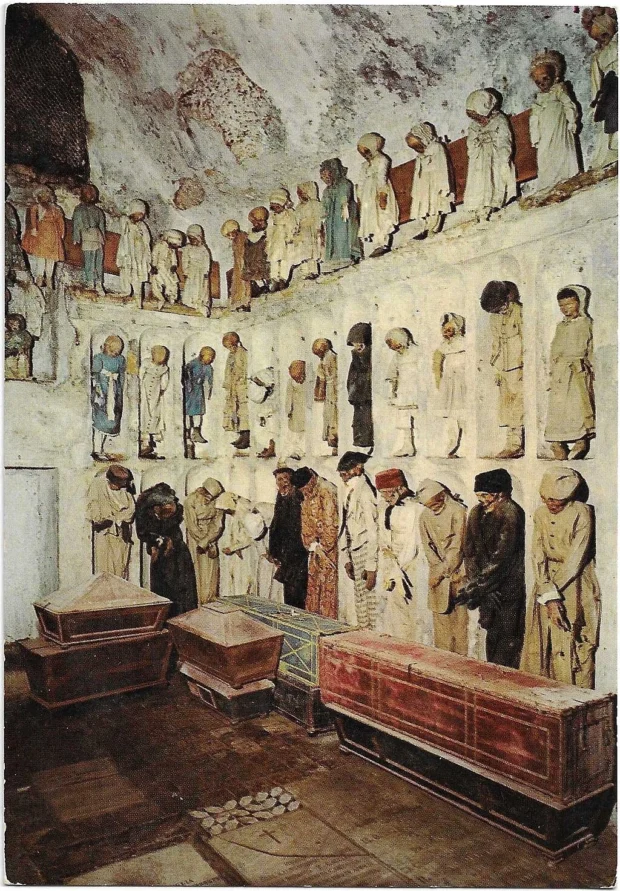
Beneath the city, the Catacombe dei Cappuccini offer a different lesson in stone and time. Down these cool corridors, thousands of perfectly preserved bodies lie in open niches, dressed in faded finery. Some faces seem ready to speak. I met a local attendant who explained how the monks developed a unique drying and embalming technique mixing science and ritual to honor the dead. It is a strange, powerful place, and not for everyone, but if you appreciate history, it is unforgettable.
West of the center stands Zisa Castle, a fortress built for leisure by Norman kings, with arabesque courtyards and trickling fountains meant to echo Moorish palaces. I spent a quiet hour here, studying how sunlight plays on the limestone walls, casting shifting patterns that change with every step. The Zisa is less crowded than other sights, which makes it a favorite for those who love architectural photography or simply want a moment to reflect.

Gardens and Coastal Walks in Palermo
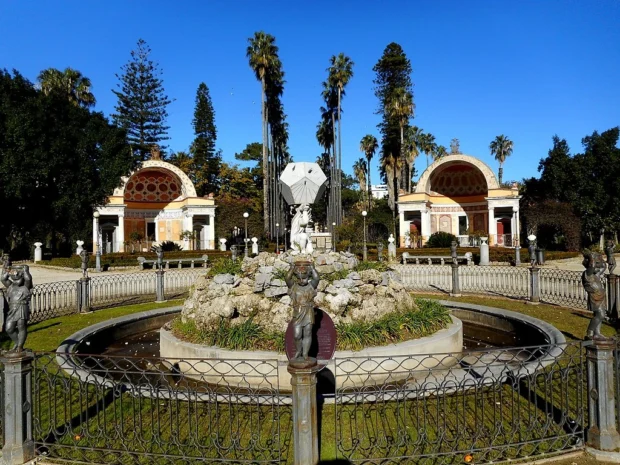
When city life feels hot or crowded, Palermo’s green spaces offer calm. I wandered into Villa Giulia, a neoclassical park filled with statues, citrus trees, and winding paths ideal for a slow stroll or shaded picnic. Next door, the Orto Botanico di Palermo is a living museum of Mediterranean and exotic plants. I watched artists sketching cycads and bamboo groves, while children chased lizards along the sun-dappled walls. Both gardens are reminders that Palermo’s rulers valued botany as well as stonework, and collectors brought seeds from every corner of their empires.
On warm evenings, locals gather at Foro Italico, a broad seaside promenade lined with benches and palms. I joined a group of teenagers skipping stones while grandmothers played cards. The breeze carried laughter and the cry of seabirds. Beyond the promenade, fishing boats bob in the harbor the city’s historic gateway to the Mediterranean. From here, you can watch the sunset turn the sky pink and gold above the domes and towers, a perfect ending to an urban day.
If intrigued by architectural wonders and lively urban scenes, consider evening walks along The Bund in Shanghai for a stunning riverside experience blending history and modernity.

The Cathedral at Monreale and Urban Customs
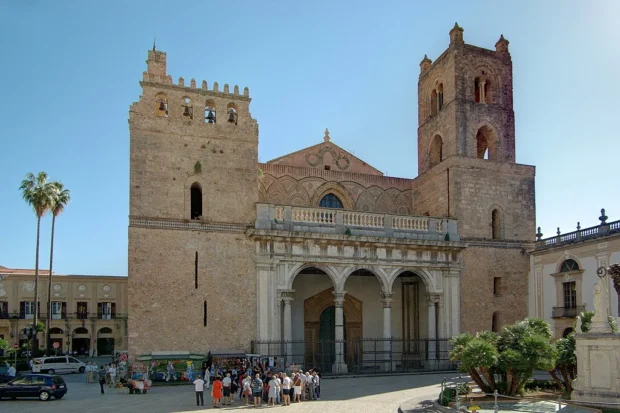
No visit to Palermo is finished without venturing to Monreale Cathedral perched above the city. The bus ride up the hill is bumpy but rewarding; from the square, Palermo spreads out below like a map. Inside the cathedral, golden mosaics cover every surface biblical stories in dazzling glass, all created by teams of Byzantine and Sicilian craftsmen. The cloisters next to the church are quieter, where stone columns twist into fanciful shapes and the sound of water echoes softly. It’s easy to see why this place has inspired both pilgrims and artists for centuries.
Palermo’s rhythms can seem chaotic, but locals are friendly once you share a smile. Respect for elders runs deep greet older people with a polite “buongiorno.” In churches and markets, modest dress is appreciated; keep shoulders covered and avoid loud conversation. Sicilians value time at the table: when invited to eat, slow down and enjoy the flavors. I learned to never rush a meal each course is a celebration of family and land.
Where to Stay and How to Get Around Palermo
Palermo’s historic center, with its dense web of alleys and palazzos, makes an atmospheric place to stay. Look for accommodation in neighborhoods like Kalsa (arts and gardens), Capo (market energy), or Monte di Pietà (classical palaces). Many old mansions have been converted into charming guesthouses, some with original tiled floors or views of domes and towers. For a quieter experience, opt for a room near the Villa Giulia gardens or up in Monreale, where morning bells echo across hills.
Getting to Palermo is straightforward. The main airport, Falcone-Borsellino, is about 35 kilometers west of the city. The Trinacria Express train connects the airport to Palermo Centrale station in about 50 minutes; trains run twice an hour and are the most practical link. From Palermo Centrale, city buses and regional trains fan out in all directions. Walking is the best way to explore the old center. Streets are narrow and traffic is unpredictable, but architectural surprises wait around every corner. For longer trips, the city’s tram and bus networks are reliable, if sometimes slow during rush hour.
Street Food, Districts, and Sicilian Flavors
Palermo’s culinary world is tied to its districts. In Ballarò, I watched butchers slice fresh spleen for pane con la milza (not for the faint-hearted), while in the Capo market, bakers sell golden cassata cakes dusted with candied fruit. Vucciria, though smaller than in the past, still hums after dark bars set up tables in the street, serving grilled octopus and citrus-laced salads. In Kalsa near the waterfront, café tables spill out beneath palm trees and serve granita so cold it numbs your teeth. No matter where you eat, order a cannoli crisp shell, sweet ricotta, and a dusting of pistachio and linger as locals do, watching the city go by.
Unexpected Details and Enduring Myths
What makes Palermo unforgettable is often small: the shadow of an orange tree on a crumbling wall, a tiled arch at a front door, or the singing of street vendors. In Quattro Canti, I met a retired stonemason who pointed out the city’s “talking statues” hidden faces and animals carved by artisans who left their mark centuries ago. According to legend, the Fountain of Piazza Pretoria once ran with wine for royal festivals, and in the Capuchin Catacombs, the perfectly preserved Rosalia Lombardo is said to blink her eyes each year on her birthday. Such stories float in the air along with the scent of jasmine.

Palermo’s past is visible in its architecture, but its future is shaped by the people who live and work in these stones every day. From the ornate arches of the Norman Palace to the lively Ballarò market, the city invites you to look closer, linger longer, and see how centuries of craft, conquest, and creativity still shape daily life. If you come with open eyes and a good pair of walking shoes Palermo will reward you with stories, flavors, and views you cannot forget.
For those enchanted by Palermo’s rich history, the nearby Mount Etna and Catania present a spectacular natural and cultural contrast worth visiting next at Sicily’s Fiery Marvel.
- Palermo Cathedral BW 2025-04-29 11-14-42 by Berthold Werner on Wikimedia Commons – cc by-sa 4.0
- Cathedral of Palermo on the Italian island of Sicily (49491355827) by Ralf Steinberger from Milan, Berlin + Munich, Italy + Germany on Wikimedia Commons – cc by 2.0
- Palermo, Teatro Massimo – panoramio by Carlo Pelagalli on Wikimedia Commons – cc by-sa 3.0
- Palermo Palazzo dei Normanni (40733447644) by Jorge Franganillo from Barcelona, Spain on Wikimedia Commons – cc by 2.0
- Chiesa di San Cataldo (27775003939) by Andrea Schaffer from Sydney, Australia on Wikimedia Commons – cc by 2.0
- Mercato di Ballarò – panoramio by ildirettore on Wikimedia Commons – cc by 3.0
- Fontana di Piazza Pretoria Vista dai tetti di S. Caterina by Marcello Troisi on Wikimedia Commons – cc by-sa 4.0
- La Zisa (Palermo)-msu-1093 by Matthias Süßen on Wikimedia Commons – cc by-sa 4.0
- Villa Giulia piazzale centrale by Stendhal55 on Wikimedia Commons – cc by-sa 4.0
- Foro Italico 10 by Dedda71 on Wikimedia Commons – cc by 3.0
- Monreale Cathedral exterior BW 2012-10-09 10-23-10 by Berthold Werner on Wikimedia Commons – cc by-sa 3.0
- Palermo – Quattro canti – 3 by Benjamin Smith on Wikimedia Commons – cc by-sa 4.0

.jpg)

.jpg)
.jpg)


-msu-1093.jpg)


