

Rhodes is an island where each corner brings surprises ancient limestone walls brushed by Mediterranean light, blue sea that seems to sing, lanes echoing with voices of generations. This place, shaped by knights and traders, art and legend, welcomes every curious traveler. If you land here expecting only beaches, you will quickly find something far deeper. Between stone fortresses and sea breeze, Rhodes mixes myth, food, and sunlight into an experience for all the senses. Let me share what I found, step by fragrant step, across Rhodes’ most iconic sights and some quieter treasures.
Table of Contents
Medieval City of Rhodes: Walls That Whisper
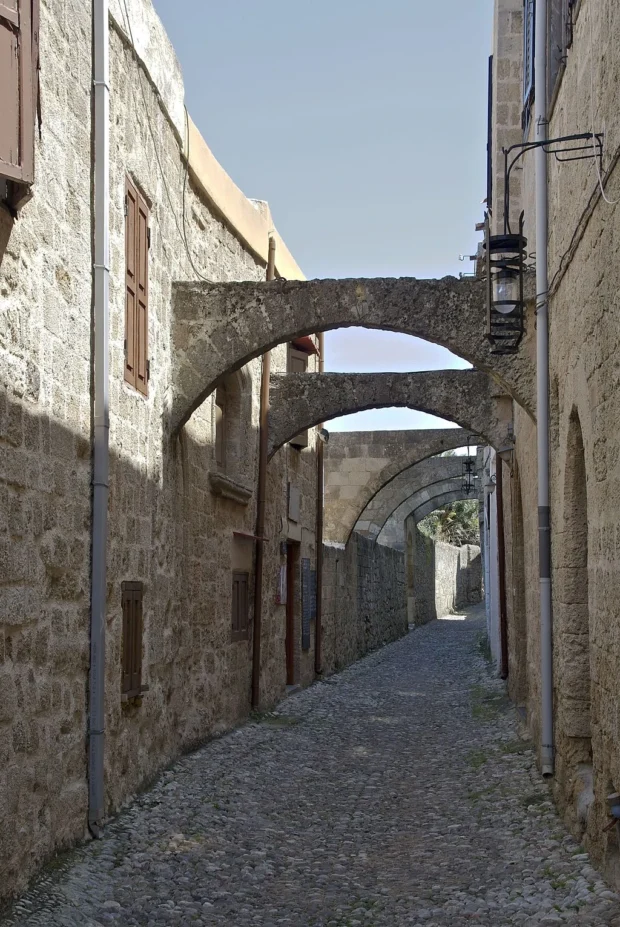
Few places draw you in as powerfully as the Medieval City of Rhodes. This UNESCO World Heritage Site is more than old stones it is a living quarter, with families in old houses, smells of grilling octopus drifting from courtyards, cats weaving through narrow streets. The city’s thick walls are almost five kilometers long, built by the Knights of Saint John in the 14th century. I walked through one of eleven ancient gates and felt, for a heartbeat, that time paused. Cobbled lanes wind beneath turrets; colorful laundry flutters above old wooden doors.
At first, the streets seem like a maze, but each turn reveals another layer: a hidden arch, a carved family crest, tiny workshops making mosaic icons or fresh baklava. The air smells sometimes of sea, sometimes of spices. Locals say every stone remembers. If you look, you might spot old cannonballs wedged in the city walls, left from past sieges a reminder that Rhodes has defended itself through centuries of storms and invasions.
Palace of the Grand Master: Fortress of Grandeur
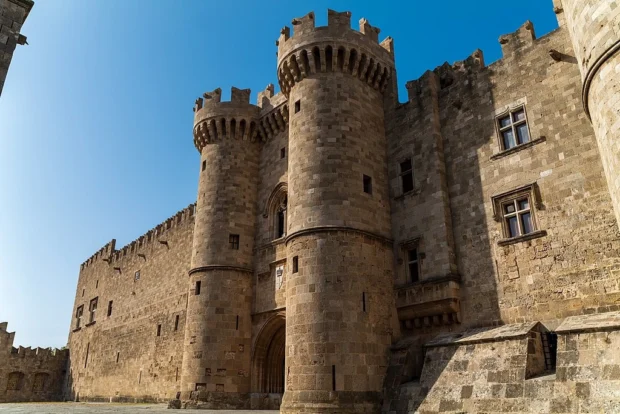
In the heart of the old city rises the Palace of the Grand Master, a masterpiece of medieval architecture. It is not only massive, but grand in every sense thick towers, colossal gates, and a courtyard lined with palm trees. Originally built by the Knights of Saint John, this was the seat of the island’s rulers. The palace saw war, earthquake, and occupation, yet still stands as a symbol of Rhodes’ endurance.
Inside, the rooms have mosaic floors so detailed I heard myself gasp a floor depicting the ancient god Helios, another covered in geometric waves. Arched doorways open into echoing halls, where sunlight drifts through slit windows. I visited in midday, when the inner chambers were cool and silent, perfect for imagining the voices of knights planning the next feast. Exhibits on the upper floors show coins, ceramics, and armor, each piece a little window to centuries past. For hours, I lost my sense of modern time.
To plan your own visit or see opening hours, I recommend checking the official Palace website, which offers helpful visitor information in English and Greek.
Lindos Acropolis: Ancient Sanctuary Above the Sea
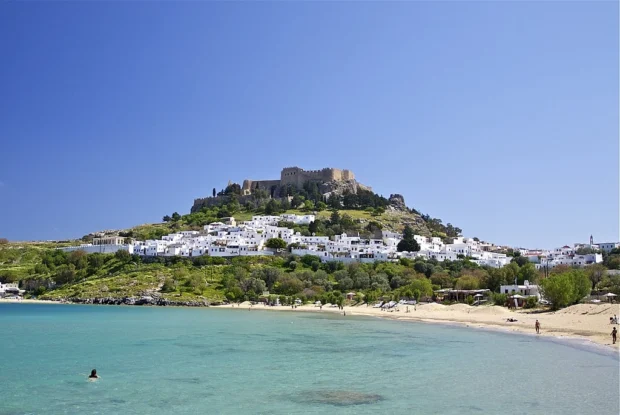
Leaving the city’s stone shadows, I made my way south to Lindos, a village beneath the Acropolis that looks as if it was painted white for eternity. Goats wander the back alleys, while the smell of wild thyme drifts from the hillside. The climb to the Lindos Acropolis is steep narrow steps, sometimes shared with donkeys carrying baskets. Sun beats down, but blue sea sparkles below and each step brings new perspective.
On top, the ruins are striking: columns of the Temple of Athena Lindia, built centuries before Christ, frame views over turquoise bays and rocky cliffs. It is easy to see why ancient Greeks believed the gods favored this place. I stood by one broken column and watched swallows dance on the wind, the only sound the distant crash of waves. The Acropolis is more than an archaeological site; it feels spiritual, as if stories linger in every stone block. Early morning or late afternoon offers the softest light and the fewest crowds locals say the sunrise from here can make you believe in legends.
Museum, Knights, and Mandraki: Islands of Curiosity
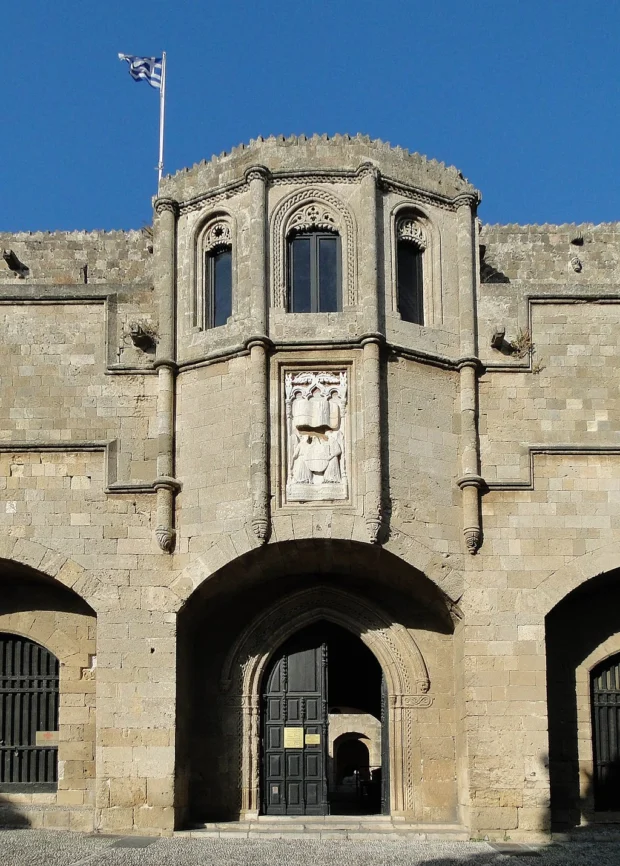
Back in Rhodes Town, if you want to dive into the layers of the island’s story, the Archaeological Museum of Rhodes is a must. Housed in the former hospital of the Knights, its cool stone halls shelter statues, jewelry, and pottery found across the island, some from as far back as the Neolithic age. I lingered by delicate glass perfume bottles that once held the island’s famous rosewater. A local historian told me that “Rhodes is an island for travelers, not just tourists if you look, you’ll find thousands of years in a single room.”
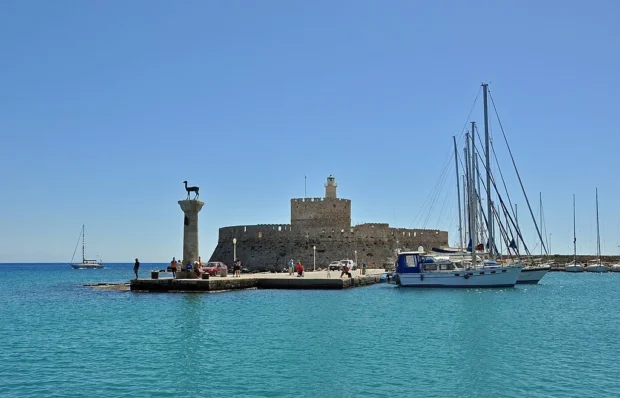
Just outside the city walls lies Mandraki Harbor once the entrance to ancient Rhodes, marked by the famous Colossus, one of the Seven Wonders of the Ancient World. Today, statues of a stag and a doe stand on slim columns where that lost wonder once welcomed sailors. Early morning, Mandraki fills with the calls of fishermen and the scent of fresh bread. Small boats and colorful yachts pull at their ropes. On Sundays, stalls sell sponges, olives, and hand-painted ceramics. From here, you can join a boat trip each one promising a secret cove or dolphin sighting around the coastline.
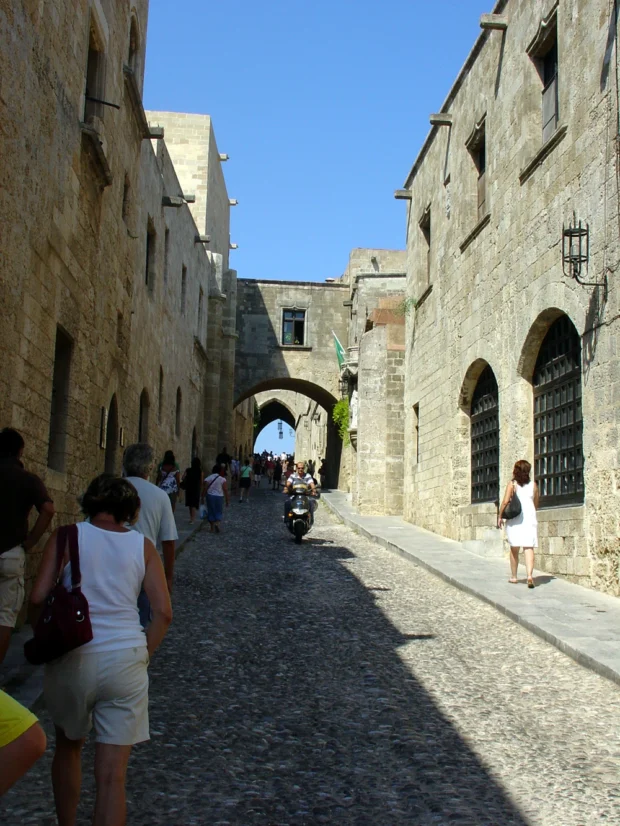
Following the lines of the old city, I wandered along the Street of the Knights. This ancient thoroughfare is striking: seven stone inns, each representing a different “language” or nation of the Knights of Saint John. Coats of arms are carved above heavy doors; lamps hang like moons in the shade. I passed a group of students sketching to them, these stones are not only history, but inspiration. Visitors often miss: the tiny lion fountain near the bottom, once used to bathe horses before grand knightly parades.
Myths Among Ancient Kamiros and Butterfly Valley
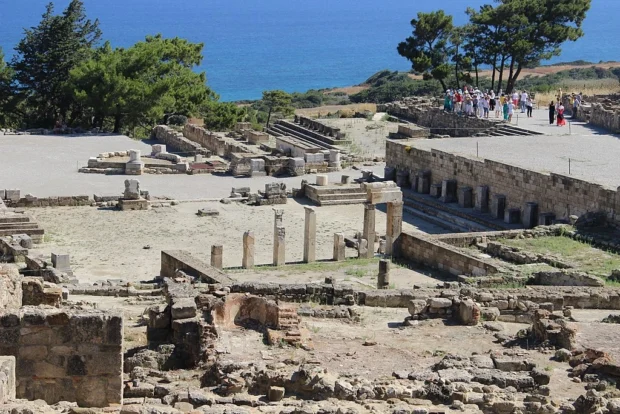
Curiosity led me out to the west coast, to Ancient Kamiros. Less visited, Kamiros is sometimes called “The Pompeii of Greece” a whole Hellenistic city revealed by the sun. Steps and streets survive, crumbling walls show the outline of homes and a central agora where olive sellers shouted their prices. Wildflowers now grow between the stones, and cicadas sing where philosophers once argued. I sipped cold water under an olive tree, listening quietly: old men from nearby villages say that Kamiros is haunted by the hopes of those who once lived there. If you love places where imagination runs wild, this site is perfect.
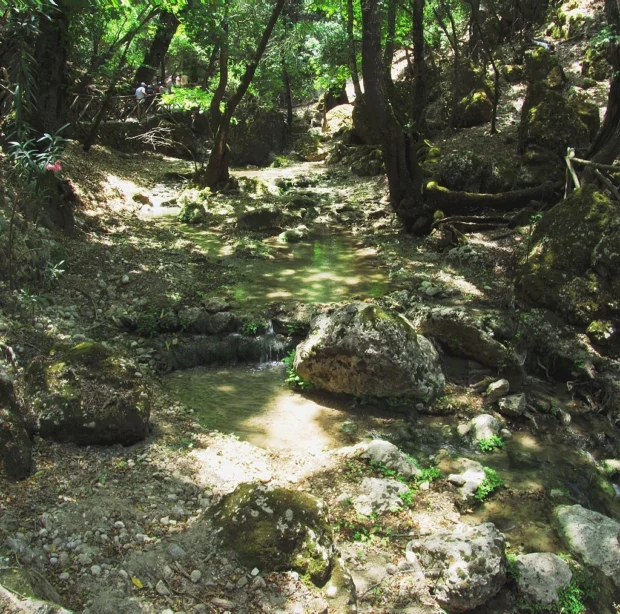
Nature surprises, too. On a hot July afternoon, I found myself inside the lush, shaded Butterfly Valley (Petaloudes). Every year, thousands of Jersey tiger moths fill the trees wings like little mosaics, fluttering in dappled light. The air here is sweet with pine resin and running water. Parents wander with children, looking up in wonder. Local legend says the butterflies are the souls of those who left the island in hard times, but always return. The trail is gentle, marked with wooden signs, cool even in the hottest summer. Midway, an old monastery sits quietly; the monks sometimes sell honey and thyme tea to warm visitors on cooler days.
Golden Beaches, Lively Villages, Mountain Calm
Rhodes, of course, is famous across Europe for its beaches. My personal favorite was Tsambika Beach, a long curve of golden sand framed by fragrant pine trees and crowned by the tiny, white Tsambika Monastery high above. Locals swear the sand is softest here and, legend has it, the monastery brings luck to anyone hoping for children. The water is shallow, with colors shifting from pale green to the deepest azure. Rent a sun bed, or, as I did, wander the shoreline with a cup of watermelon juice. Cafés nearby serve souvlaki and feta salads straight from village gardens. If you stay until late afternoon, shadow and sunlight play like dancers on the waves.
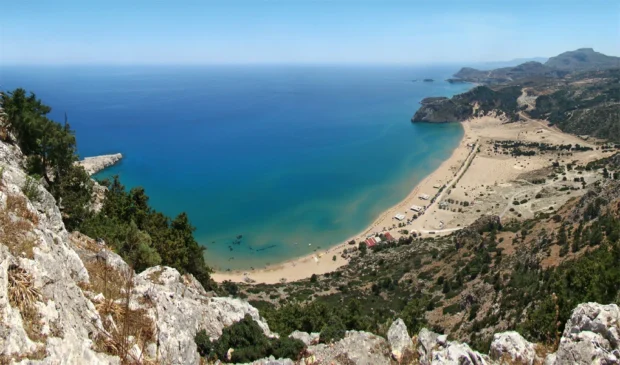
Inland, the hills of Rhodes hide villages where time slows down. I visited an old woman weaving linen in her shadowy kitchen in Archangelos, her hands moving as quick as the wind. She poured sweet homemade sumada (almond cordial) as a welcome, smiling beneath a row of drying herbs. Saturday evenings, locals gather in squares for open-air concerts or spontaneous bouts of dancing. The spirit of xenia Greek hospitality runs deep here: refusing an invite for coffee, I learned, is seen as very rude, so always say yes to one cup!
Pine Forests and Sacred Sites Above the Island
The higher ground of Rhodes brings a different beauty. Filerimos Monastery sits atop a pine-fringed hill, once the ancient acropolis of Ialysos. The road climbs through olive groves, then opens to a view across the Aegean. As I entered the monastery’s quiet courtyard, the silence felt absolute: only the humming of bees and distant church bells. Inside, frescoes glow softly, icons shine with gold leaf, and the faint smell of incense lingers in the air.
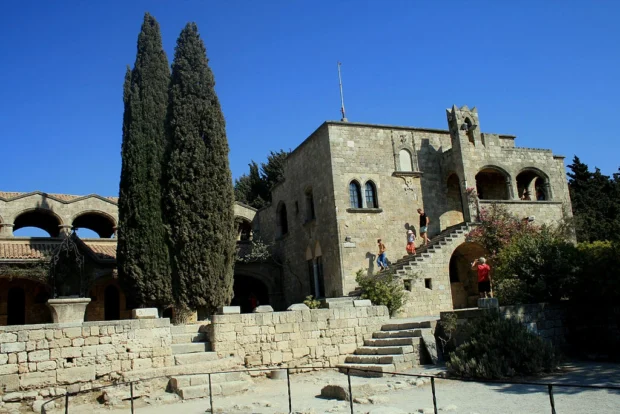
A long processional path leads from the monastery to a giant cross, towering above the valley. Here, the breeze is cool even in summer. Old men play tavli, a backgammon game, on the benches. From the viewpoint there, it is possible to see Turkey’s coast on clear days a reminder that Rhodes has always been a meeting place between worlds.
Food Traditions and Evening Strolls
Food in Rhodes is an embrace of sun and earth. Along Socratous Street in the old city, stalls overflow with dried figs, spicy loukoumades (small honey donuts), and pickled vegetables. In the New Market district, I sampled pitaroudia, a chickpea fritter that is crisp on the outside and melting inside; most locals say only grandmothers make it truly right. The seafood octopus grilled in olive oil, calamari, sea bass is freshest near the harbors. Tzatziki always comes with a smile and a handful of olives on the side.
One evening, lounging in the medieval quarter, I ordered melekouni a chewy bar of sesame and honey, flavored with orange zest from a bakery said to be older than any modern shop. Two old friends nearby argued whether the real recipe should include nuts. In Rhodes, everyone becomes a food philosopher after dark.
At dusk, traditions come alive. As the sun slides into the sea, families stroll along the waterfront, greeting neighbors and strangers alike, sharing news and small treats. It is common, I learned, to join in these slow evening walks locals call it volta. Here, I was invited to sip ouzo and talk about the island’s history with a group of fishermen, whose families have sailed these waters for centuries.
Getting Around and Where to Rest
Rhodes’ airport lies less than thirty minutes from the old city, and there are regular buses serving both the historic heart and new districts. The main bus station is easy to spot outside the city walls. From there, routes reach all corners of the island, including Lindos, Faliraki, and mountainous villages. Coaches are modern and, in summer, air-conditioned a small mercy under the Mediterranean sun. Trains do not run here.
For those arriving by ship, ferries dock at the commercial port near Mandraki Harbor, where you can walk straight into the medieval quarter by foot. Many streets are pedestrian-only, perfect for wandering. Renting a bicycle is a good idea for quiet early mornings along the coastline.
As for where to stay, options are endless: centuries-old houses inside the city walls with cool stone courtyards, modern apartments with sea views, or cozy pension rooms in whitewashed villages like Lindos or Afandou. If you listen closely at night, you might hear both the sea’s sigh and the distant sound of a lyra the island’s traditional string instrument echoing from a taverna somewhere nearby.
Local Life, Small Customs, and Warm Details
Rhodes remains a place where community is strong and tradition mingles with holiday mood. Do greet people with a soft “Yasas!”—a simple hello that opens most doors. Dress politely in monasteries and churches and know that a gentle refusal is rare here: people offer food and drink with genuine hospitality. Never photograph inside churches without permission.
Many village festivals are tied to the island’s agricultural year: harvest celebrations often include roast lamb, homemade cheeses, and barrels of sweet wine from local vineyards. I joined a summer evening feast near Embonas, where children performed folk dances while elders sang epic poems about ancient heroes.
Artisan workshops flourish in every quarter: blacksmiths crafting copper lanterns, lace-makers working from shaded porches, potters shaping bold blue-and-white ceramics. Rhodian embroidery famous for its intricate patterns can be found draping balconies or laid out in market stalls, each piece a small story waiting to be brought home.
A Place of Light, Layered Stories, and Slow Moments
Leaving Rhodes after days of wandering its squares, climbing its sun-drenched hills, and tasting its farm-grown olives, I carried away more than souvenirs. I left with memories of conversations, sea air at my back, and a sense that time in Rhodes twines together past and present in every gesture.
After exploring Rhodes, visitors fascinated by ancient grandeur can admire the Parthenon’s stunning architecture and Athens’ vibrant culture in our detailed guide on the Parthenon in Athens.
From the Medieval City’s shadowed walls to the golden reaches of Tsambika Beach, from the ruined columns atop Lindos to the quiet pine forests of Filerimos, this island glows with warmth, spirit, and an open invitation. Whether you seek the thrill of history or the peace of a mountain sunset, Rhodes will leave you richer in stories, laughter, and light.
After exploring Rhodes, you might find roaming the colorful streets of Old Havana a vibrant way to witness another city alive with history and music.
Explorer of historic places and culinary traditions, combining landscape appreciation with food culture.
- Gate of the Virgin (Rhodes) 1 by Ввласенко on Wikimedia Commons – cc by-sa 3.0
- Old street Rhodes by Jebulon on Wikimedia Commons – cc0
- Palace of the Grand Master of the Knights of Rhodes (50804198133) by Sanshiro KUBOTA from London, UK on Wikimedia Commons – cc by 2.0
- Lindos 1 by Jebulon on Wikimedia Commons – cc0
- Archaeological Museum of Rhodes (exterior) 02 by Bernard Gagnon on Wikimedia Commons – cc by-sa 4.0
- Rhodos Agios Nikolaos Fortress R05 by Marc Ryckaert (MJJR) on Wikimedia Commons – cc by 3.0
- Агора. Ancient Kamiros. Rodos. Greece. Июнь 2014 – panoramio by Vadim Indeikin on Wikimedia Commons – cc by-sa 3.0
- Petaloudes – stream retreat – panoramio by INDALOMANIA on Wikimedia Commons – cc by-sa 3.0
- Rhodes Tsambika3 tango7174 by Tango7174 on Wikimedia Commons – cc by-sa 4.0
- Filerimos 3 by Karelj on Wikimedia Commons – cc by-sa 3.0
_1.jpg)

.jpg)

_02.jpg)


