
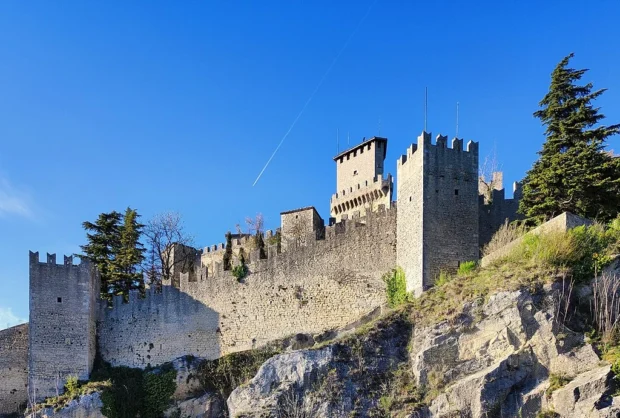
San Marino, often called the world’s oldest republic, sits high above the Italian countryside, wrapped in ancient stone walls and stories as windy as the mountain roads. While many might see San Marino as just a patch of medieval towers floating above the hills, those who walk its narrow lanes and lively markets know it is much more. As someone who spent months living here shopping with local grandmothers, tasting puffy piadina flatbread fresh from hotplates, and watching evening shadows stretch over sun-baked piazzas I can say: this hilltop republic surprises you every day. Here’s what makes San Marino more than a map dot wedged inside Italy.
Table of Contents
How to Reach the Heart of San Marino
Arriving in San Marino feels like climbing into the sky. The closest train station is in Rimini, Italy. From there, regular buses wind up the mountain through traffic circles and by cypress trees, ending near the city’s gates. The air, even in high summer, can turn from bright and sharp to misty in minutes, wrapping you in a soft cloud as the fortress towers break through above.
Walking is the best way to see San Marino these ancient streets aren’t built for modern cars. Paths loop up and around the three peaks of Monte Titano, past shops carved out of old stone. Getting lost here is half the fun: you might accidentally duck into a quiet garden or find an old woman selling homegrown figs on a side stairway. Comfortable shoes are essential; charming cobblestones can test your ankles.
San Marino’s Classic Sights: Where History Sits Still
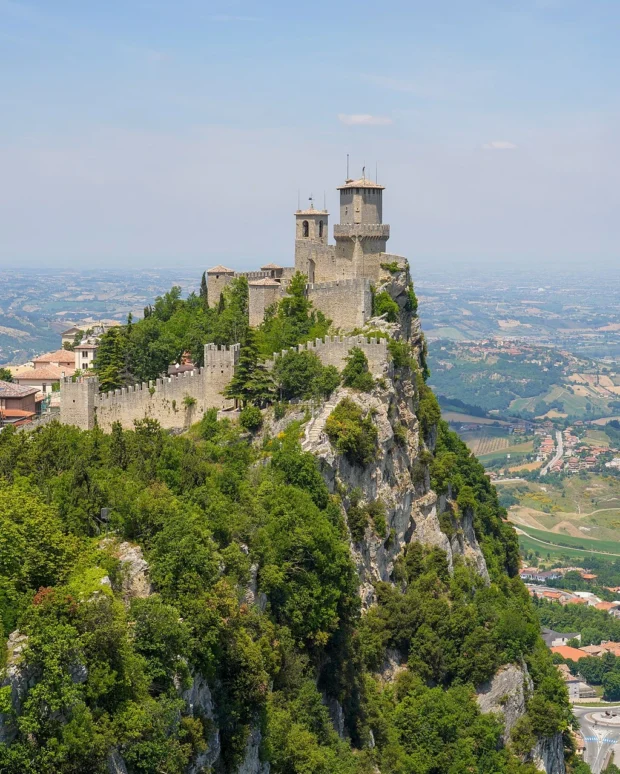
Let’s start with Guaita Tower, the oldest of San Marino’s three iconic fortresses. Locals call it the “First Tower,” and for centuries, it stood guard against anyone with ambitions for this tiny republic. Living here, I often passed by early in the morning, seeing mist curling under the stone ramparts, crows hopping from turret to wall. Walk the ramparts and you’ll taste the sweep of history distant bells, hidden steps, cool shadows. Legend claims prisoners once carved secret messages into the walls here, though the guards’ ghost stories change with every retelling.
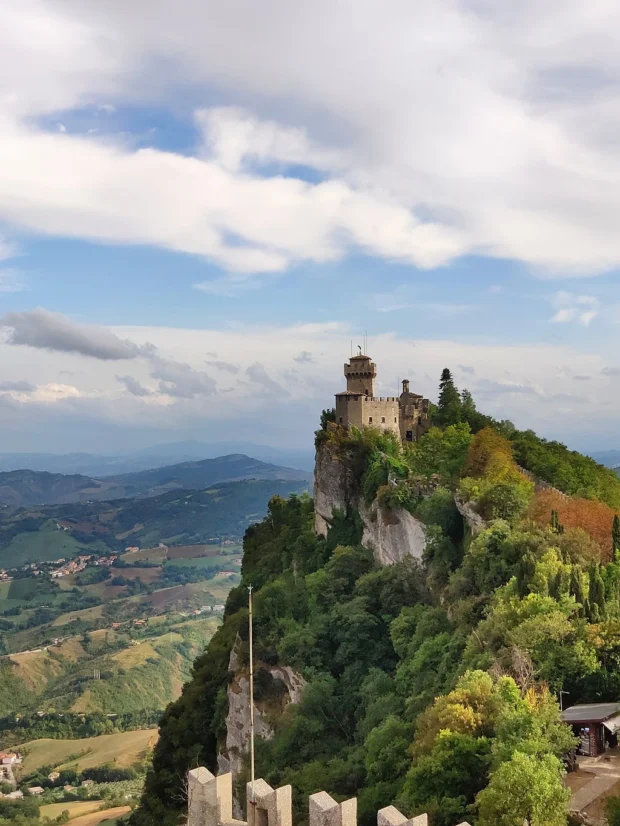
Follow the curving path up to Cesta Tower (the “Second Tower”), perched on the highest peak. This tower now houses a museum of ancient weapons, but even if swords and armor aren’t your passion, the view from its summit is worth the climb. Sometimes, on clear days, the blue of the Adriatic Sea flashes in the east, and little villages twinkle on distant hillsides. On festival days, local musicians perform folk songs down below, their tunes curling up through the cypress trees and into the stone courtyards.
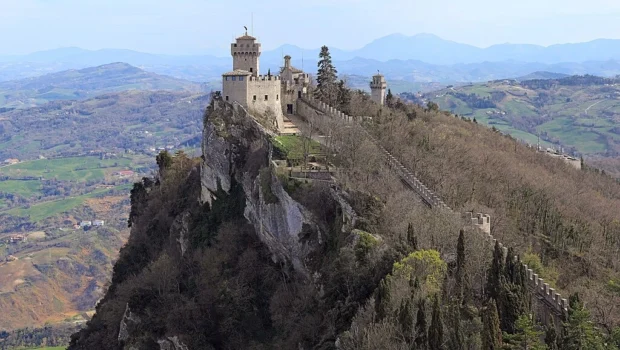
If you’re feeling adventurous, press on to the often-overlooked Third Tower (Montale). Smaller, quieter, and closed to visitors inside, Montale is a favorite of mine for its peace. The pathway is less busy, and, on autumn mornings, I caught sight of hawks soaring above the silent pines. There’s a sense of untouched mystery here locals say the tower’s old dungeon once held important political prisoners, a fact rarely sung in guidebooks.
Piazza della Libertà and Palazzo Pubblico: The Beating Heart
At the center of San Marino’s daily life lies the Piazza della Libertà, the open square where everybody seems to cross paths. In the early hours, shopkeepers sweep the stone, and noisy sparrows dart between the old benches. Market mornings bring flowers, mountain cheese, and a whirl of gossip. Every hour, curious onlookers gather to watch the changing of the guard in front of Palazzo Pubblico, San Marino’s official town hall.
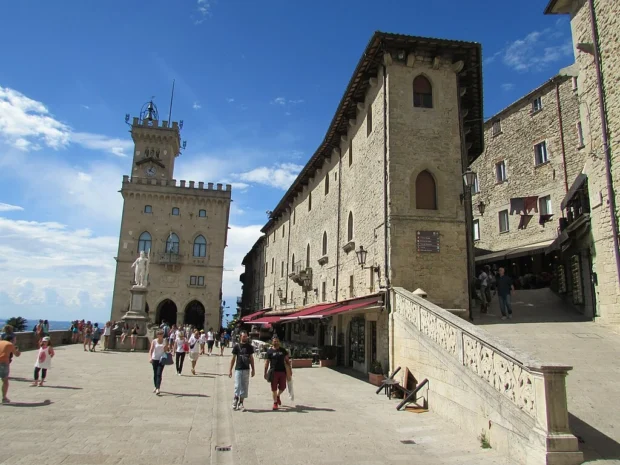
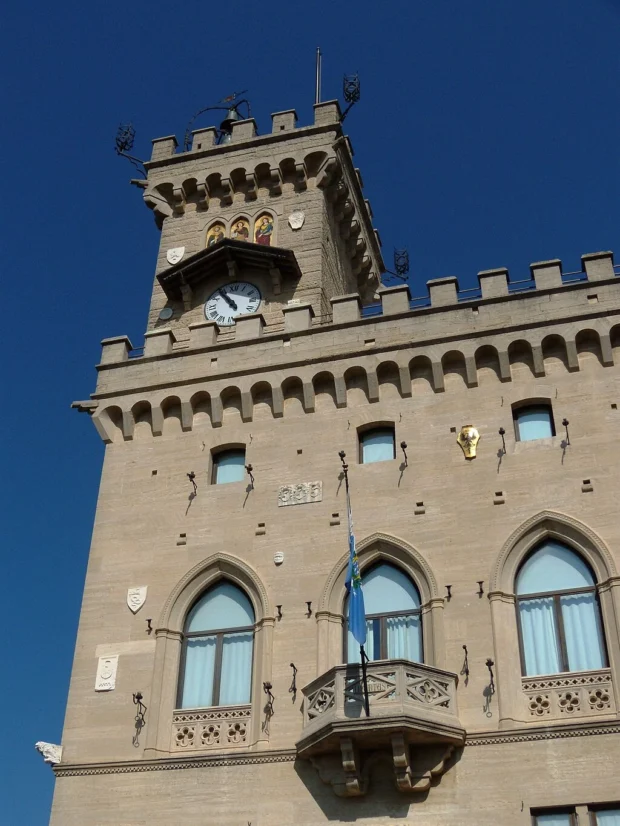
Palazzo Pubblico itself is a stately Gothic building, trimmed with crenellations and carved coats of arms. Inside, flags hang above polished wooden benches, and sunlight drifts through tall windows. As a local friend once whispered while we watched a council vote: “Here, old laws still matter. It’s serious, but after lunch, most government officials go for coffee together anyway.” It’s a reminder that San Marino, for all its history, has the human scale of a village.
Streets Alive: Markets, Cafés, and Musical Corners
San Marino’s old town is alive with sound and color. Tiny markets pop up in corners, especially in summer and autumn. One morning, wandering through Piazza Garibaldi, I stumbled upon a band of old men playing accordion and tambourine folk music that made everyone tap their feet, even the tourists. The cheese seller across the street called out jokes, while a young woman sliced soft crescia bread and handed out samples. “Try this with honey,” she said, which I did, and promptly bought two more pieces.

Along Via Donna Felicissima and the connecting lanes, souvenir shops sell everything from swords to painted ceramics. If you listen above the chatter of visitors, you’ll often hear local Sammarinese dialect a cheerful, quick-tumbling language you’ll never find in a phrasebook. Here, I found that a smile and a few words of Italian are always appreciated. People in San Marino can seem reserved at first, but after a few visits to the same bakery, you might find yourself invited behind the counter for a taste of fresh pastries as the owner tells you about her cousin’s wedding.
Basilica di San Marino and Heritage Museums
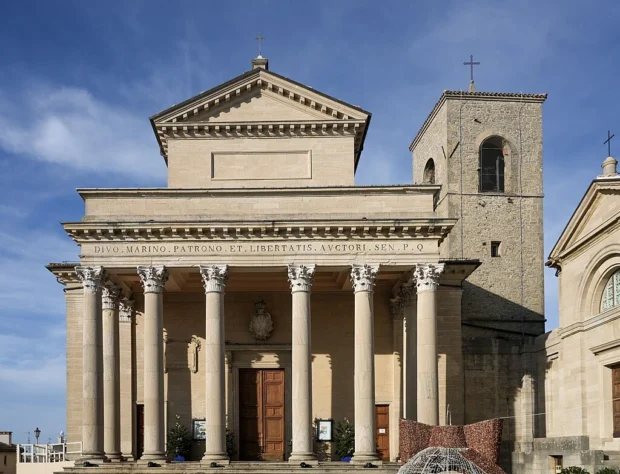
The Basilica di San Marino, with its graceful white neoclassical columns, stands just a few steps above the busiest streets but somehow feels quiet and calm inside. Light shimmers across painted frescos and the gentle hush is only broken by the occasional creak of wood benches. This is where many Sammarinese people come for important ceremonies weddings, holidays, funerals. I once watched a local choir rehearse here, their voices rising in soft harmony that echoed long after they left.
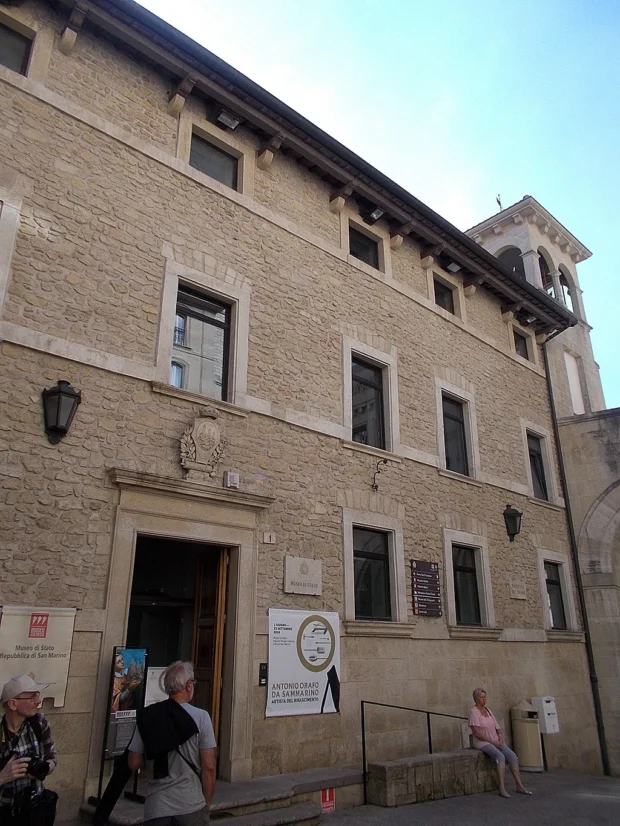
For curious visitors, the Museo di Stato (State Museum) is essential. It is tucked inside a noble palace and holds medieval parchments, ancient coins, and some odd personal trinkets from citizens long ago a rusty key, a love letter, a carved olive-wood flute. More fun is the Museo delle Curiosità, where you’ll find exhibitions of odd inventions and mysterious artifacts. (Ask about the “spring walking shoes”; the guide, Lucia, has a story she loves to tell about a failed inventor who wore them through town and tumbled right into the fish market.)
If you’re like me and enjoy quiet afternoons among beautiful things, the Museo San Francesco shows religious art and icons inside a 14th-century cloister garden. Sometimes you’ll meet school children drawing pictures under the arches, or, if you’re lucky, catch a traveling folk group practicing beneath the fig trees.
Where to Sleep: Hilltop Nights, Starry Skies
Staying overnight in San Marino means waking to church bells and bird song, not car horns. Most guesthouses are simple and family-run, offering crisp sheets, mountain views, and sometimes an open-air terrace for breakfast. In spring, pollen drifts through open windows; in autumn, swirling fog makes the night seem dreamlike.
For the best sunrise moments, choose a bed near the city center. It’s safe and peaceful, and once the day-trippers have caught their last bus to Rimini, the town transforms. Streets clear. Lanterns glow yellow on stone walls. I remember late evenings sipping a local walnut liqueur at a quiet bar, as old men played cards and discussed politics the same topics, my neighbor joked, they have debated for three hundred years.
Eating in San Marino: Earth, Sun, Cheese
San Marino’s food shares much with Emilia-Romagna and the Marche regions of Italy, but with a country-pride twist. Piadina soft, warm flatbread makes the daily snack, often filled with squacquerone cheese and wild herbs. In the Borgo Maggiore district, the weekly market is stacked with wheels of fossa cheese, honey jars, and seasonal fruits that taste like sunshine and rain. I learned here that lunch is sacred; shops shut, families eat together, and strangers may be invited in for soup or espresso if you look hungry enough.
Save room for nidi di rondine (swallow’s nest pasta), which is made with ham, cheese, and tomatoes, then rolled and baked until golden. Older locals sip up mbriagone a sweet dessert wine especially when festival fireworks light up the sky. If you happen to be in Parco Titano, the green park beneath the castle walls, look for food stalls serving sausage rolls and tart Montanara cake made with wild berries. A picnic here, tracing the shadow of the fortress above, is a real treat.
Customs, Festivals, and Everyday Joys
Life in San Marino is built on old values, but locals are practical and friendly once barriers are broken. Respecting your elders is a must, as is dressing modestly in churches. Don’t ask people about their wealth pride in independence is high, but showing off is frowned upon.
Throughout the year, the republic celebrates with music and costumes. The Feast of San Marino, every September, turns the streets into a parade of medieval flags, trumpets, and dances. On certain winter Sundays, you might hear handbell choirs drifting from the church, or see a wedding party trailed by musicians and laughing relatives.
San Marino’s independence is more than a slogan it’s a lived habit. People here vote in the world’s smallest parliament, still use their own postage stamps, and gather at the same market corners week after week. Locals have a calm pride, born from centuries of surviving on their mountain farming, forging, keeping traditions alive while the big countries down below have changed their borders and rulers countless times.
Hidden Corners: Slow Hours and Serendipity
Not every beautiful spot in San Marino is on a map. One slow afternoon, I detoured down a side lane and found a crumbling arch covered in ivy, with a tiny stone bench waiting for someone to sit. Near the old city gates, there’s a quiet viewpoint where flocks of swifts dive through the sunset. In the evening, the city hums softly; you might hear a neighbor playing a flute or smell tomato sauce drifting from an open kitchen window.
Those enchanted by stone fortresses may enjoy exploring the lively heritage and colorful streets in Cartagena’s Walled City Cartagena’s Walled City.
If you love craft and tradition, visit the glassblowers’ workshop below the fortress walls children press their noses to the windows and marvel as fire turns sand into shining vases. In spring, wild herbs fill the empty gardens beside the convent, and old women pick mint and thyme for soup. Each season carries its own charm: spring blossom, summer music, autumn fog, and in winter, a fleeting frost turning all cobbles silver.
Leaving San Marino: A Memory Etched in Stone and Sky
San Marino is a place of strong stone, but also soft hearts where tradition and change walk side by side. As I prepared to leave after my months in the republic, the city rang with festival bells and the market stalls were full of late summer figs. I took one last walk along the fortress walls. Below, the hills stretched green and golden; above, the ancient towers seemed to promise they’d be waiting, unchanged, for years to come. Most visitors pass through San Marino in a day, but if you linger, you’ll find rhythms and smiles that last far longer.
After enjoying San Marino’s ancient charm, a visit to Tallinn Old Town reveals another medieval city, rich with history and inviting streets.
There’s no single best moment in San Marino. Instead there are thousands of small ones—slices of crescia bread eaten on a windy step, a wink from a market seller, the echo of a centuries-old folk song as dusk settles on Monte Titano. The world may be big, but sometimes the smallest countries leave the deepest stories in your heart.
Eastern Europe travel specialist uncovering hidden gems from the Baltics to the Balkans.
- San Marino Guaita by Terragio67 on Wikimedia Commons – cc by-sa 4.0
- Fortress of Guaita – First Tower (San Marino) by Commonists on Wikimedia Commons – cc by-sa 4.0
- La Cesta, San Marino by Mannivu on Wikimedia Commons – cc by-sa 4.0
- Torri, Cesta e Montale – San Marino – GT 02 v3 – 2024-03-25 by Terragio67 on Wikimedia Commons – cc by-sa 4.0
- Piazza della Liberta din San Marino2 by Cezar Suceveanu on Wikimedia Commons – cc by-sa 4.0
- Palazzo Pubblico – San Marino (4) by Adam91 on Wikimedia Commons – cc by 3.0
- Museo della Curiosita din San Marino by Cezar Suceveanu on Wikimedia Commons – cc by-sa 4.0
- Cathedral San Marino – Exterior by Newbio623 on Wikimedia Commons – cc by-sa 4.0
- RSM-San Marino109 by Szeder László on Wikimedia Commons – cc by-sa 4.0

.jpg)


.JPG)


