
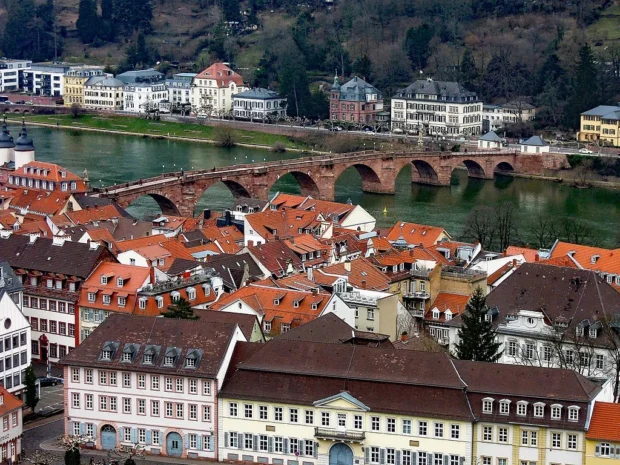
Heidelberg pulses with a special energy, drawing visitors with its mixture of old-world beauty and contemporary spirit. At first glance, the city seems shaped almost entirely by its famous castle and river views. But after my long weeks exploring side streets, tasting local treats, and speaking with students, I realized Heidelberg’s charm is stitched from many threads. Let me guide you past tourist clichés, into both grandeur and eccentric corners, always with easy English and a storyteller’s eye for detail.
Table of Contents
Heidelberg Old Town: Where History Breathes
Walking through Heidelberg Old Town, you find yourself surrounded by elegant Baroque facades, narrow lanes, and the steady buzz of daily life. The Hauptstraße, or Main Street, is both a shopping avenue and a living museum. Here, outdoor cafés spill onto cobblestones, and the air is filled with the sweet aroma of fresh bread and roasted coffee. Side alleys reveal small bookshops, local crafts, and cheerful bakeries that have stood for generations.

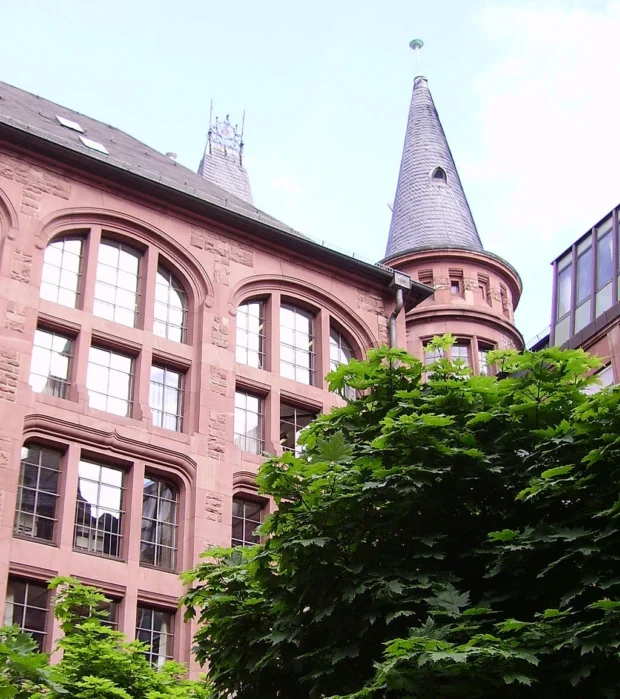
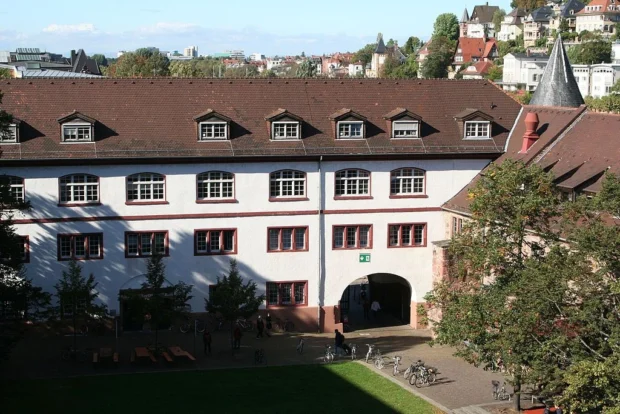
One afternoon, as the bell from the Church of the Holy Spirit rang out—its echo bouncing off centuries-old stone—I watched students hurry by, arms full of books, some heading toward the impressive University of Heidelberg buildings. This university, one of the oldest in Europe, lends the city its youthful character. Heidelberg’s students have invented more than just academic traditions; ask locals about the notorious Student Jail (“Studentenkarzer”), where mischievous scholars were once sent for small crimes. The walls are covered in creative graffiti, much of it older than some countries.

Heidelberg Castle: Stone, Stories, and Panoramas
A city visit would be incomplete without lingering at Heidelberg Castle, perched dramatically above the Neckar River. Its red sandstone walls shift color with the light sometimes deep orange, sometimes soft pink at sunset. To reach the castle, I often took the steep footpath known as the “Schlossweg,” though visitors can also use the Bergbahn funicular. The walk is not easy, but it rewards you with shifting views across red-tiled roofs and green hills.

The castle itself is a patchwork of grand halls, ruined towers, and mysterious corners. The gardens, designed in Renaissance style, were once the pride of the Palatinate court. Inside waits the legendary Heidelberg Tun a wooden wine barrel so huge that a small orchestra could fit inside. Locals love to share the tale of Perkeo, the castle’s witty jester and guardian of the cask, who was said to have only ever drunk wine, never water. The official website contains upcoming event info and useful visitor details: Heidelberg Castle official site.
On clear days, the view from the castle terraces stretches over the river to the Old Bridge and further, giving a sense of why artists and poets have always flocked here. Bring your camera; the afternoon light is gentle, and every angle feels like a ready-made postcard.
Crossing the Old Bridge: A City’s Living Symbol
The Old Bridge officially known as the Karl Theodor Bridge is a masterpiece of 18th-century engineering with pink stone arches mirrored in the Neckar River below. Every city has a symbol, and in Heidelberg, it is this elegant bridge, watched over by a pair of stone monkeys that have become unofficial mascots. They say if you rub the monkey’s mirror, you’ll return to Heidelberg one day; couples sometimes touch the nearby bronze mice for good luck.
For those captivated by iconic river crossings, the Chain Bridge Budapest beautifully complements Heidelberg’s bridges with its historic charm and urban grace.
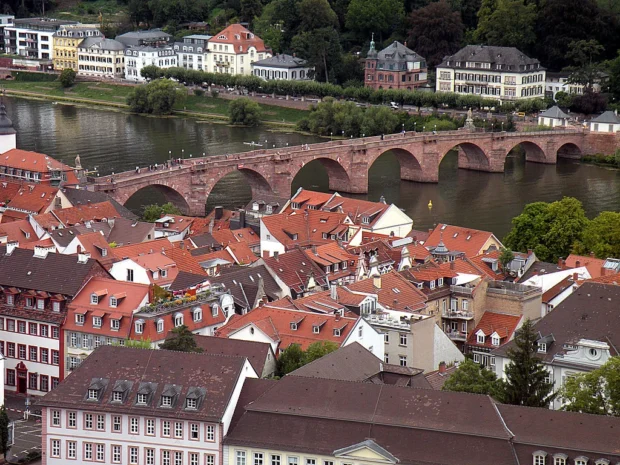

Crossing the bridge at dusk, I often saw street musicians playing soft jazz under gas lanterns, mixing old world elegance with the rhythm of the present. From here, views span to the castle above and the lush slopes of the Heiligenberg (Holy Mountain) beyond. Once, I paused to watch a painter capture the river’s changing colors while children tossed bread to swans beside their parents.
Walking the Philosophenweg: Views and Legends
If you want to see Heidelberg’s skyline the way generations of thinkers and poets did, follow the Philosophenweg (Philosopher’s Walk). This sunlit path on the northern bank of the Neckar is where professors and romantics once strolled to spark ideas. Climbing up from the Old Bridge, you wind through terraced vineyards, fragrant gardens, and stands of chestnut trees. Birds sing in the branches, and in springtime, the path is bright with cherry blossoms.
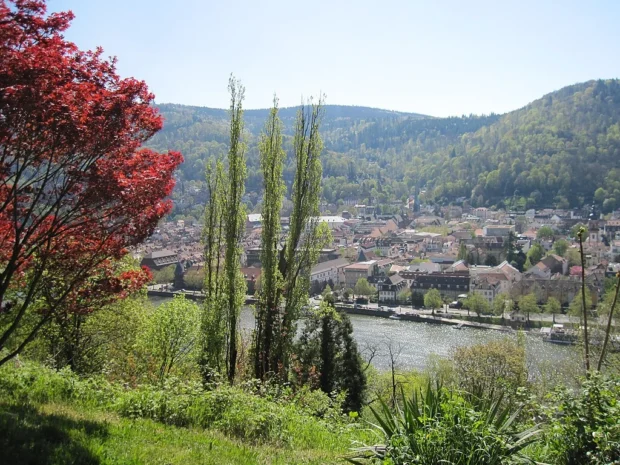
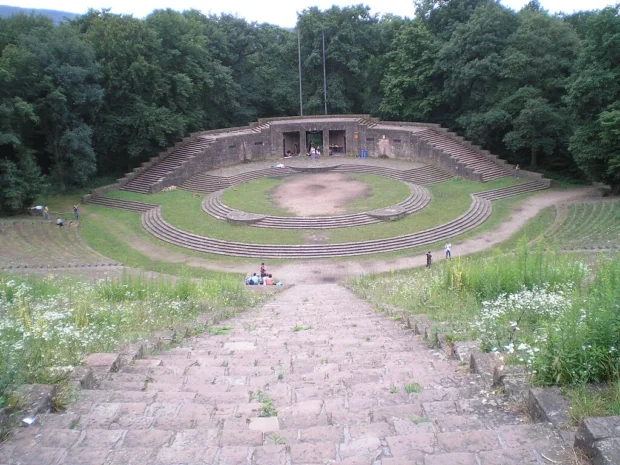
The Philosophenweg rewards every step with panoramas. Below, the Old Town unfolds like a puzzle steeples, towers, and the neat grid of red roofs. Locals told me Goethe himself admired the inspiring views. Along the way, a hidden staircase leads up to the Thingstätte, a mysterious open-air amphitheater built during the 1930s. These days, it hosts summer concerts and, occasionally, the echoing laughter of students baking sausages over open fires.
Cafés, Street Markets, and Urban Heritage
Heidelberg is a city for café people. Mornings, you’ll find locals reading newspapers in small patisseries, sipping strong coffee with a slice of Apfelkuchen (apple cake) or a warm “Dampfnudel,” a pillowy yeast dumpling. My favorite spot was not far from the Marstall, a former royal stable now pulsing with student life and cozy restaurants. Here, the aroma of spiced sausages and fresh pretzels wafts from street stalls, especially during the Friday market.
Try “Maultaschen” Swabian stuffed pasta, sometimes called German ravioli served hot at stalls in the Weststadt neighborhood. In the Marktplatz square, the weekly market pops with bright flowers, local cheeses, and the chatter of grandmothers debating the best deal for white asparagus. Every now and then, you’ll spot a university professor buying bread rolls, a small reminder that this is a city where scholars and bakers share the same rhythm.
When I needed a quiet hour, I would visit the Kurpfälzisches Museum, nestled in an old Baroque palace. Inside, displays range from Roman coins to quirky 19th-century paintings, always showing how the Neckar valley shaped Heidelberg’s culture and design.

Green Spaces and River Life
On warm afternoons, the Neckarwiese a long meadow beside the river fills with students, cyclists, and families picnicking on checkered blankets. I once joined a game of Frisbee with international students whose laughter mixed with the chirp of passing bike bells. From here, you can see rowers slicing through the water, while on the opposite bank, walkers amble along the Philosophenweg.

For a city break, the Heidelberg Zoo is surprisingly peaceful. Local families meet at the elephant enclosure, and in spring, the air is filled with the cries of young goats and the sweet scent of blooming lilacs. The zoo’s shaded paths are ideal for slow walks, especially if you travel with children or simply want a slower pace after a morning of sightseeing.

Up the Königstuhl and Around Heiligenberg
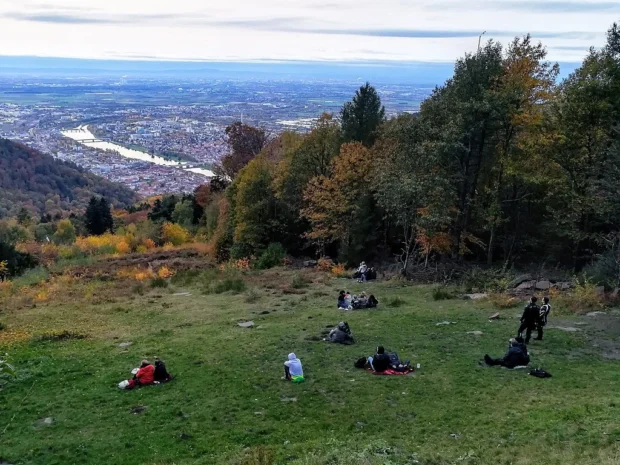
Heidelberg’s hills are always close, and I loved taking the Bergbahn funicular train all the way to the top of Königstuhl Hill. The air is cooler up here, and the city shrinks to a patchwork below. Hikers follow forest paths to reach quiet viewpoints or the quirky Königstuhl “Märchenparadies,” a fairy-tale themed park for kids. If clouds roll in, the mist weaves between pine trunks and makes the whole forest feel enchanted.
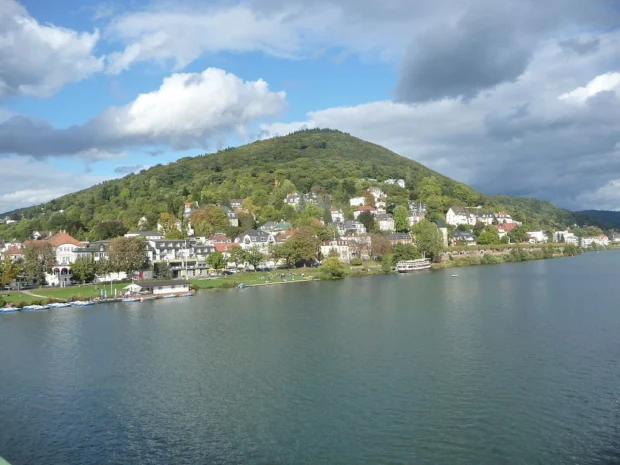
Across the river, the slopes of Heiligenberg are rich with layers of history. Roman ruins, ancient Celtic ramparts, and the Thingstätte amphitheater hint at times when this was a place of worship and gathering. On weekends, I would meet Heidelbergers walking their dogs, pausing in the silence to look down on the city below, sometimes sharing a simple “Guten Tag” or local gossip.
Getting Around and Where to Stay
Arriving in Heidelberg is simple: trains arrive from Frankfurt or Stuttgart at the main station, which is slightly outside the Old Town but well connected by trams and buses. For the best first impression, I recommend leaving the station and taking tram line 5 toward Bismarckplatz. In ten minutes, you’ll find yourself at the entrance to the busy pedestrian zone. Trams are reliable, clean, and often more efficient than driving. Tickets are easy to buy at machines in German or English, and day passes save money if you plan to explore across districts.
For accommodation, consider staying close to the Altstadt (Old Town) or across the river in Neuenheim, where leafy streets offer quieter evenings and easy access to the Philosophenweg. I found rooms in the Weststadt area, closer to the train station, more affordable and filled with local bakeries. Wherever you choose, you’ll find that Heidelberg is easy to navigate on foot or by public transit, and most sights connect smoothly.
Customs, Do’s and Don’ts, and Local Etiquette
Heidelbergers are proud of their university and river, but they are also discreet and prefer polite conversation. When entering a shop or bakery, it’s customary to greet with a simple “Guten Tag.” In cafés, don’t expect the waiter to bring the bill unasked; instead, say “Zahlen bitte” when you are ready to pay. Tipping is a gesture round up the bill or leave an extra euro or two.
Locals value their city’s heritage. On weekends, you may see small festivals in the squares, such as wine tastings or open-air concerts. Join in, but respect quiet hours, especially late at night. On my first visit, I made the mistake of speaking loudly on a tram; a gentle smile and a quick apology helped smooth things over.
Final Impressions: Past and Present Intertwined
Each corner of Heidelberg tells a different story Roman stones beneath the streets, Renaissance arches mirrored in the river, and the quickstep of modern life all around. Some days I lingered in café windows, watching the rain dance on cobblestones while students hurried by under bright umbrellas. Other evenings, the Old Town glowed with golden light, and the laughter of friends spilled out from wine taverns.
If you listen closely, you will hear the city’s gentle conversation between past and present. Heidelberg is a place to slow down, to taste and observe, to slip into the easy rhythm of riverside walks and shared cakes. Whether you are searching for grand castles or the quiet comfort of a warm bakery, this city meets you with open arms and an easy, timeless welcome.
Want to enjoy royal gardens and stunning Mughal architecture after Heidelberg? Humayun’s Tomb in Delhi offers a peaceful historic escape.
Lover of cities, local cafés, and historic streets, exploring urban life with attention to architecture and culinary delights.
- Heidelberg, Baden-Württemberg, Germany – Stadtansichten im Winter 06 by Horst J. Meuter on Wikimedia Commons – cc by-sa 4.0
- Heidelberg Altstadt Luftbild by Schlurcher on Wikimedia Commons – cc by 4.0
- Heidelberg – Church of the Holy Spirit, Heidelberg – 20240606152811 by Gillfoto on Wikimedia Commons – cc by-sa 4.0
- Heidelberg-Schloß by Pumuckel42 (Reinhard Wolf) at de:Wikipedia on Wikimedia Commons – cc by-sa 3.0
- Heidelberg. Karl-Theodor bridge by Vitold Muratov on Wikimedia Commons – cc by-sa 3.0
- A001, Heidelberg, Germany, the Old Bridge from the Castle, 1990 by Brian W. Schaller on Wikimedia Commons – fal
- Heidelberg Philosophenweg Blick ins Neckartal by Maya Uhde on Wikimedia Commons – cc by-sa 4.0
- Heiligenberg-Thingstätte by Carlos Delgado on Wikimedia Commons – cc by-sa 3.0
- Blick vom Neuen Kollegiengebäude Heidelberg 034 by Einsamer Schütze on Wikimedia Commons – cc by-sa 4.0
- Heidelberg – Palais Morass by Stateofthings on Wikimedia Commons – cc by-sa 3.0
- Heidelberg Tiergarten Haupteingang by 4028mdk09 on Wikimedia Commons – cc by-sa 3.0
- View from Königstuhl (Heidelberg), high hill in the Odenwald Mountains 02 by Nemracc on Wikimedia Commons – cc by-sa 4.0
- Heiligenberg-und-Neckar by Immanuel Giel on Wikimedia Commons – cc by-sa 3.0


,_high_hill_in_the_Odenwald_Mountains_02.jpg)
