

Munich’s Marienplatz stands proudly at the city’s core, a historic square pulsating with community spirit, architectural splendor, and vibrant urban life. Nestled in Germany’s Bavaria region, this bustling plaza welcomes visitors keen to absorb centuries of culture, witness timeless traditions, and indulge in local culinary delights. From the memorable Glockenspiel calls to the colorful markets and nearby cafés, Marienplatz offers an immersive gateway into Munich’s urban soul. Whether arriving by train, tram, or plane, navigating here is straightforward, inviting wanderers to linger and uncover each layer of this storied space.
Table of Contents
For a vibrant change of pace, consider wandering through Santiago’s spirited streets and city sights to experience lively plazas and cultural neighborhoods beyond Europe.
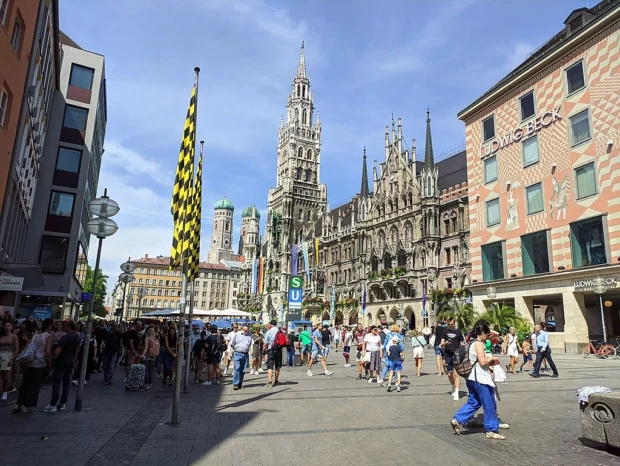
Finding Your Way to Marienplatz
Even if Munich is unfamiliar territory, reaching Marienplatz is a seamless experience thanks to its central location. The square is directly served by the Marienplatz station, which is a major hub for the U-Bahn (U3 and U6) and S-Bahn (S1 to S8) networks. From Munich Central Station, a quick 3-minute ride on any S-Bahn line towards Marienplatz places you right at the city’s heart. If arriving at Munich Airport, the S8 train offers a scenic, 40-minute journey straight to Marienplatz without transfers.
For those who enjoy a gentle stroll, Marienplatz lies just about a 10-minute walk from the Viktualienmarkt, Munich’s famous market and foodie destination. Trams and buses also crisscross near the square, ensuring multiple transport options for all travelers.
Nearby Places to Stay
While the square itself bustles with activity, quiet pockets of accommodation can be found in adjacent neighborhoods such as Altstadt-Lehel and Maxvorstadt. These areas blend old-world charm and modern comforts, offering easy access to Marienplatz without the hour-round noise, perfect for retreating after a day of exploration. Small guesthouses and boutique inns often capture the local ambiance better than large hotels, enhancing the sense of place.
Marienplatz’s Living History and Urban Significance
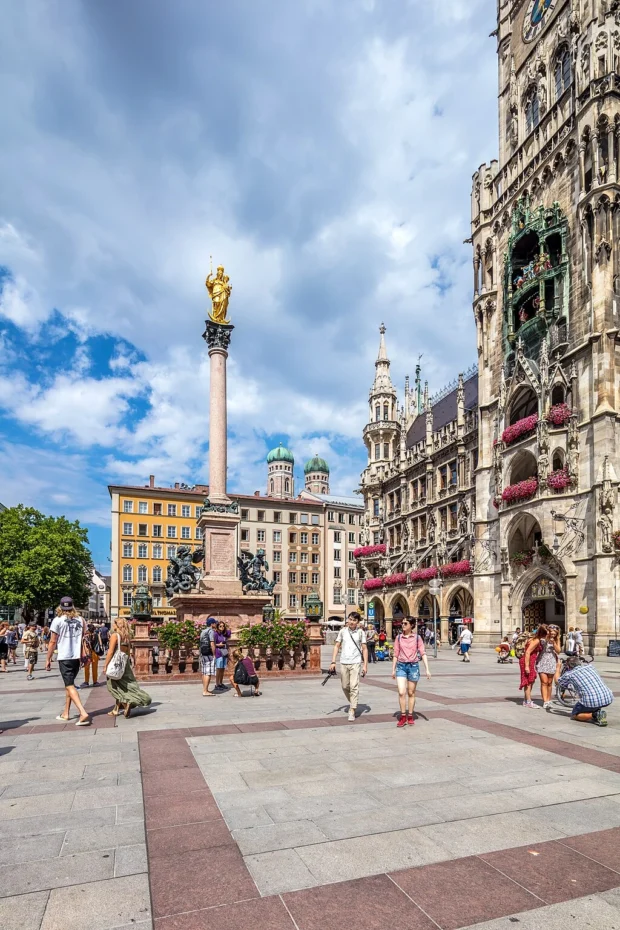
Marienplatz dates back to the 12th century, originally serving as a marketplace and key trading point for Munich’s pioneers. Named after the Mariensäule a Marian column erected in 1638 as thanks for the end of Swedish occupation during the Thirty Years’ War the square is both a testament to Munich’s resilience and its spiritual roots. The imposing Gothic Neues Rathaus (New Town Hall) defines the northern edge with its exquisite facade and 85-meter tower, providing a narrative of political and civic pride embodied in stone and bronze.

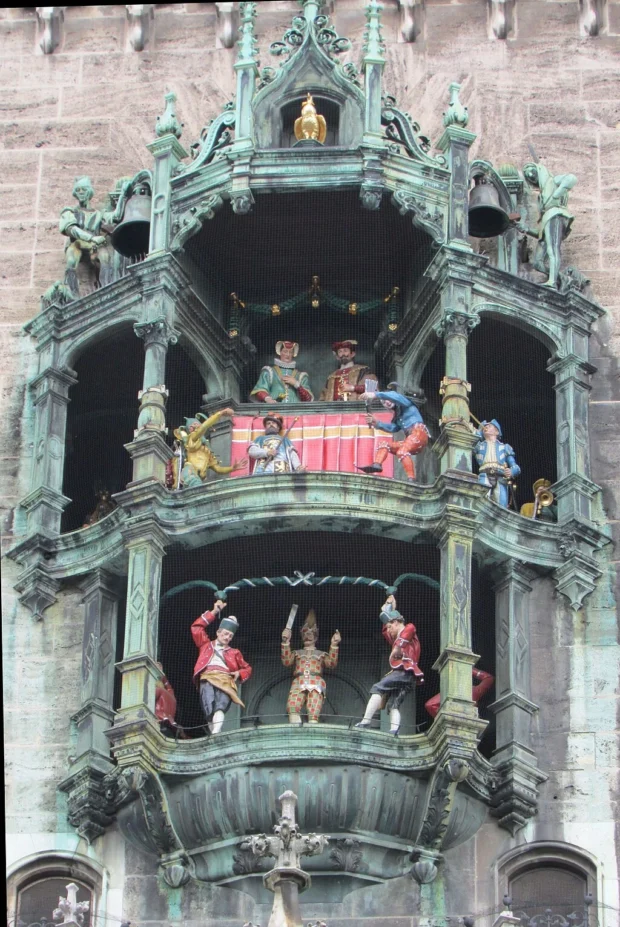
Each hour, the Glockenspiel in the Neues Rathaus tower charms visitors with its mechanical figures reenacting stories from Munich’s past, including the 16th-century wedding of Duke Wilhelm V and the Schäfflertanz (Coopers’ Dance), a tradition born in times of plague. The square remains a social hub, hosting Christmas markets, festivals like Fasching carnival, and even political gatherings, making it a symbolic heart where Munich’s past and present converge.
When to Visit and Insider Advice
To embrace Marienplatz at its best, timing matters. Early mornings on weekdays offer a rare hush before the crowds assemble, an ideal moment to savor the quiet architecture and gentle light kissing the buildings. Late mornings through afternoons bring a lively atmosphere filled with locals and tourists mingling at street cafés, market stalls, and open-air events.
Winter transforms Marienplatz into a festive wonderland with its enchanting Christmas market’s warm lights and scent of roasted almonds. Summer invites open-air concerts and occasional cultural festivals, providing rich sensory layers of sound, smell, and color. Just keep in mind that weekends, especially during the holiday season or major events, can be bustling, so plan accordingly if you prefer calm over crowds.
For a wider glimpse into Munich’s urban charm, read about its lively neighborhoods, parks, and hidden stories in Let Munich Captivate You.

Culinary Corners and Nearby Flavors
Adjacent to Marienplatz lies Viktualienmarkt, a marketplace dating back centuries, offering fresh Bavarian produce, artisanal cheeses, and crafted sausages. Sampling Weißwurst with sweet mustard here is a gastronomic rite. For coffee enthusiasts, many age-old cafés surround the square, some with a history of literary patrons and spirited discussions ideal for resting while soaking the ambiance.
Dining options range from traditional Bavarian taverns serving hearty dishes alongside local Weissbier, to contemporary bistros blending international flavors with Bavarian roots. Venturing down narrow alleys reveals small jewel-like restaurants where old recipes meet modern cuisine amid warmly lit wood interiors.
Architectural and Cultural Walks Around Marienplatz
Take time to discover more than just the famous Neues Rathaus. Across the square is the Altes Rathaus (Old Town Hall), a relic of medieval times that now hosts a quirky toy museum. The Marienplatz also links you to other architectural and historical gems, walking north to the Residenz — the sprawling former royal palace — or east towards Max-Joseph-Platz
Strolling through the intertwining streets, every corner tells a story from baroque church facades to modern art installations subtly integrated into the urban fabric. Architecture buffs will appreciate the blend of styles, reflecting Munich’s growth and changing influences across centuries.
For a contrasting yet equally enchanting European walk, consider Charles Bridge in Prague, where history and river views blend beautifully. Charles Bridge: A Riverside Storybook offers a glimpse into Prague’s timeless urban charm.
Tour Booking and Entrance Information
Marienplatz itself is an open public square without entrance fees, making it accessible at any time. However, climbing the Neues Rathaus tower for panoramic views or joining guided tours inside the Residenz requires tickets. Seasonal guided walks focusing on the Bavarian capital’s architectural history, local legends, or culinary heritage are widely offered by several local companies. Booking in advance is recommended, especially during peak tourist seasons, to secure your spot.
For official information and ticket options, consider visiting the Munich city’s official tourism website, which provides comprehensive details and booking links. You can access it by clicking Munich Official Tourism.
Curious Facts and Gentle Myths of Marienplatz
While everyone notices the Glockenspiel’s famous figures, few may know it was silent during World War II, only to be meticulously restored decades later, symbolizing Munich’s revival. A lesser-known tale relates to the Marian column’s golden statue of the Virgin Mary, which was once thought to protect the city from lightning and bad weather a belief that tied faith and folklore tightly to the square’s identity.
Another charming anecdote involves the Schäfflertanz, performed every seven years without interruption since the 16th century, a dance that originally sought to uplift spirits in plague times, now a joyful spectacle reminding locals of their collective endurance.
Lover of cities, local cafés, and historic streets, exploring urban life with attention to architecture and culinary delights.
- Marienplatz, Munich, Germany by Marcia Stubbeman on Wikimedia Commons – cc by-sa 4.0
- Marienplatz, August 2022 by aveaoz on Wikimedia Commons – cc by-sa 4.0
- 2019-08-03 New Town Hall, Munich, Germany 13 by Maksym Kozlenko on Wikimedia Commons – cc by-sa 4.0
- Glockenspiel 19-05-20 417 by Chris Light on Wikimedia Commons – cc by-sa 4.0
- GraphyArchy – Wikipedia 00071 by GraphyArchy on Wikimedia Commons – cc by-sa 4.0


