

Florence, Italy, is a city woven with wonders, but no single sight commands attention like Ponte Vecchio. This ancient bridge spans the Arno River, beckoning visitors to traverse its medieval stone and peer into a world where architecture, commerce, and history entwine. Ponte Vecchio stands not merely as a crossing but as a living artifact of Renaissance craft and mercantile endurance. Join me as I walk you through this enchanting structure’s story, practical ways to visit, and some hidden facets many travelers often overlook.
Table of Contents
To appreciate Florence fully, visit the page on Florence’s Essential Sights and Stories for insights into the city’s most famous landmarks beyond the bridge.

A Bridge That Bears the Weight of Centuries
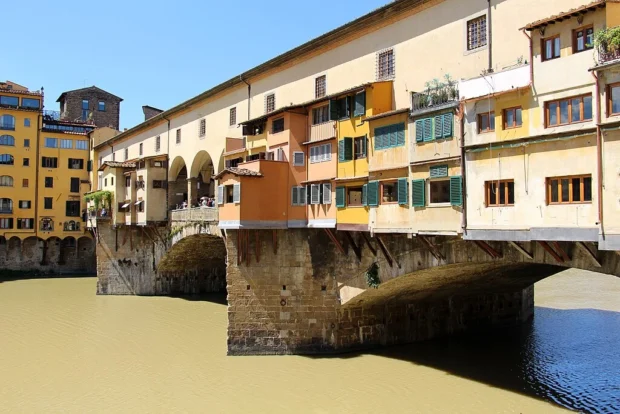
Ponte Vecchio dates back to 1345, built to replace earlier wooden bridges that were vulnerable to floods. Its robust arches, crafted from pietra serena, a grey sandstone characteristic of Tuscan architecture, support not only foot traffic but a line of storied shops. These shops originally belonged to butchers and fishmongers, whose pungent businesses were replaced in the 16th century with jewelers an elegant transformation initiated by the Medici family to beautify the cityscape and reduce unpleasant odors.

The bridge is crowned by the Vasari Corridor, an elevated passageway commissioned in 1565 by Duke Cosimo I de’ Medici. This secret corridor allowed the Medici family to move safely and privately between their residence at Palazzo Pitti and the government offices at Palazzo Vecchio, crossing over the river with an unmatched architectural flourish. The corridor itself reflects Renaissance innovation and urban planning, creating a harmonious linkage that speaks volumes about power and protection in historical Florence
How to Arrive at Ponte Vecchio Gracefully
From Florence’s central railway station, Santa Maria Novella, the bridge is a pleasant 15-minute walk. Wander through the winding cobbled streets of the historic quarter, and soon the gleaming gold and silver shops will come into view. Alternatively, local bus routes connect major points of the city to stops near the bridge. For travelers arriving by airplane at Florence Peretola Airport, a taxi or shuttle to downtown will swiftly deliver you to the heart of the city within 20 minutes, positioning you perfectly to explore the Ponte Vecchio.
Near the Ponte Vecchio, the Florence Cathedral invites admiration with its majestic dome and rich history, offering a complementary insight into the city’s Renaissance grandeur. Discover the Florence Cathedral to deepen your appreciation of Florence’s architectural marvels.
If you prefer the charm of a river perspective, consider a boat trip along the Arno that showcases the bridge’s profile against the Florentine skyline. Every viewpoint adds a layer to understanding its structural grace and urban integration.
When the Bridge Breathes Its Best
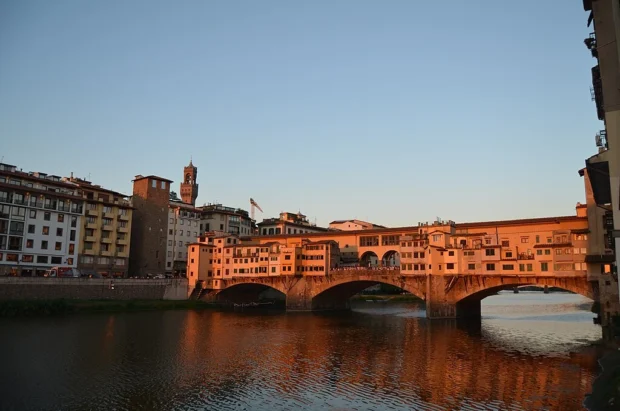
To enjoy Ponte Vecchio with minimal crowds and soft natural light, the optimal time is early morning during weekdays, especially in late spring or early autumn. Florence’s main tourist seasons can swell the areas around the bridge, so timing your visit just after sunrise offers a quiet, contemplative experience. Evening walks also bring a different magic as the bridge and its shops glow under gentle illumination, reflecting off the Arno’s surface.
Midday on weekends can be densely packed, making it hard to appreciate the details of the intricate wrought iron shop signs, the shimmer of handcrafted jewels, or the artistic stubbornness of the aged structure. A tip from an urban enthusiast: Try lingering near the small outdoor corners where artisans sometimes display their works these are precious moments seldom captured in guidebooks.
Exploring Without Constraints No Closed Doors Here
Unlike many museums or palaces in Florence, Ponte Vecchio itself is a public space without an entrance fee. Strolling across does not require a ticket or a guided tour reservation. However, if you wish to delve deeper into the shops’ heritage or meet local jewelers, guided tours may enrich your visit. Certain private collections inside the bridge’s historic shops occasionally open to visitors by appointment, offering rare glimpses of traditional craftsmanship.
For those seeking to connect with the Vasari Corridor, access is limited and controlled. Since it is an architectural jewel often closed to general visitors, booking a specialized tour through authorized channels is necessary. These tours provide insights into Renaissance urban design and Medici political strategy that few experience firsthand.
Around the Bridge: Living the Florentine Vibe
- Accommodation: Boutique guesthouses and charming B&Bs cluster within a ten-minute walk, allowing you immersion in Florence’s historical ambiance without sacrificing proximity to modern comforts.
- Local Cuisine: Venture to nearby trattorias for traditional Florentine fare think ribollita, pappa al pomodoro, or a hearty bistecca alla Fiorentina. The banks of the Arno near the bridge offer quaint cafés perfect for a midday espresso or evening aperitivo, where you can watch the sunset wash the riverbank in gold hues.
- Transport Tips: Walking is the quintessential Florence experience, but for longer journeys, taxis and tramway lines efficiently cover the city’s layout. Bicycle rentals offer an active alternative with scenic urban routes around the river.
After admiring Florence’s charm, take time to feel Riga’s lively streets and historic spirit, a different European rhythm to enjoy.
Secrets Behind the Stone and Shopfronts
Not all tales of Ponte Vecchio are told from official plaques. In its medieval days, the bridge hosted execution spots and functioned as a guarded checkpoint within the city’s defenses. The narrow, crowded shops lean close together, with wooden shutters that once served as barricades during sieges.
Artists often share that the bridge’s irregular rhythm the way windows, roofs, and eaves stagger reflects centuries of hand-built adjustments rather than planned symmetry. This human touch is a hallmark of urban morphology in Renaissance Florence. Every stone, every arch reveals the layer of history shaped by master masons, artisans, and urban planners.
If you catch a local artisan polishing gems or hear the soft chime of a craftsman at work behind the golden storefronts, pause to absorb this living heritage it’s a direct line to the industrial craftsmanship that has evolved here for over 600 years.
Official Portal for the Ponte Vecchio and Florence
For current updates, events, and official visitor information, the Comune di Firenze website offers authoritative content in Italian. For non-Italian speakers, using browser translation features is helpful to navigate the detailed pages about the city’s monuments including Ponte Vecchio. Visit the site Comune di Firenze to stay informed on access conditions and special tours.
- Ponte Vecchio, Florence, Italy, 2023 by Julian Lupyan on Wikimedia Commons – cc0
- Ponte Vecchio (2023) by xiquinhosilva on Wikimedia Commons – cc by 2.0
- Ponte Vecchio – 54151349270 by xiquinhosilva on Wikimedia Commons – cc by 2.0
- Firenze – Ponte Vecchio (41954710204) by Fred Romero from Paris, France on Wikimedia Commons – cc by 2.0
- Ponte Vecchio During Sunset by Malena Cora on Wikimedia Commons – cc by-sa 4.0

.jpg)

.jpg)
