

Prague, the “City of a Hundred Spires,” is an open-air gallery wrapped around a cobbled core. This city breathes history and art. The Charles Bridge, Prague Castle, and the Old Town Square pull many curious travelers, but Prague’s real spirit lingers between quiet courtyards and in a small bakery’s steam. I wandered the city with simple words, a camera in hand, and an undying appetite for stories hoping to offer not just directions, but glimpses behind the familiar postcards.
Table of Contents
Arriving in Prague City Center
Most visitors land at Václav Havel Airport, which sits about 17 kilometers from downtown. Local buses (no. 119 to Nádraží Veleslavín metro, or no. 100 to Zličín) link the airport quickly with metro lines. If you’re entering via the main Prague train station, Hlavní nádraží, you’re already in the heart of the city. Both airport and train station are connected by efficient, frequent public transportation a good way to meet locals right from the start. Private car is not necessary unless you carry very heavy luggage.
Wandering the Charles Bridge at Dawn
The Charles Bridge is both introduction and invitation. Built in the 14th century, it is Prague’s most famous walkway, stretching across the Vltava River. Early morning there is a silent painting: statues covered in mist, the Babel of tourists not yet begun, only the slow steps of a pianist who, according to a local shopkeeper, never misses a sunrise. Each statue tells a story from saints to kings though the statue of Saint John of Nepomuk is the most touched, its brass sheen from worn-down hands hoping for luck.
Strolling along Charles Bridge unveils stories and charms that complement Prague’s enchanting old town experience.

Whoever can, should cross the Charles Bridge twice: once in the soft glow of morning (you may meet a fisherman or a newly married couple posing for wedding photos), and later when street musicians fill the air with jazz or folk. Locals say the bridge was built not just from sandstone, but egg yolks mixed in mortar no scientist will confirm it, but every Prague guide knows the legend.
You can learn more about events and history at the Charles Bridge official city information page.
Finding Life in the Old Town Square
The Old Town Square is where Prague’s heart beats loudest. On any day, you’ll hear at least five languages and five kinds of shoes clicking against 700-year-old stones. In December, wooden booths pop up for holiday markets; in July, you may walk through an open-air concert. At the center, the tall spire of the Old Town Hall towers over café tables and friends sharing Trdelník, a sweet rolled pastry dusted with cinnamon and sugar.
Wenceslas Square is a vibrant part of Prague’s life and history worth visiting after enjoying the Old Town’s charm, with detailed stories waiting for you there in this guide to Wenceslas Square.

The real show happens every hour: crowds gather at the base of the medieval Astronomical Clock. Its golden dials move, skeleton ringing a bell, saints passing by the two tiny windows. Some tourists seem unsure what they’re meant to see, but when the clock chimes, the crowd shares a silent smile. I learned from a local historian that this clock, built in 1410, is the world’s third oldest astronomical clock that still works.

If you linger, watch painters setting up their easels, sketching children or the face of the baroque Church of Our Lady before Týn its twin towers, often compared to fairy-tale castles, are never exactly the same height.
Prague Castle’s Layers of Time
Walk uphill from Charles Bridge, and soon you will enter the grounds of Prague Castle one of the world’s largest ancient castles. But be prepared: the best route up is Nerudova Street, where doors are marked with odd house signs instead of numbers; a golden shoe or a red lamb. Some are relics from before house numbers existed one of many small, quirky Prague details.
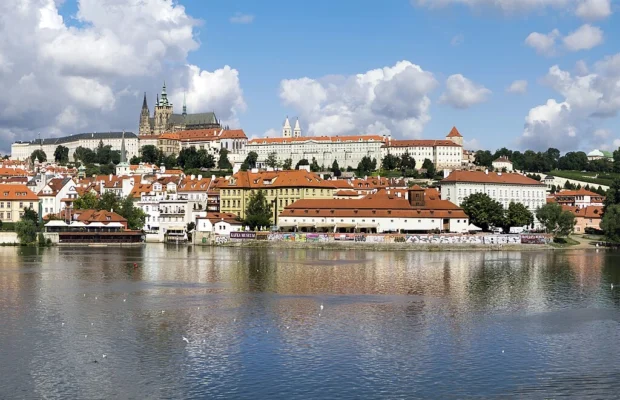
At the castle gates, guards stand at silent attention, sometimes blinking as schoolchildren wave or pull funny faces. Inside, check the schedule for the changing of the guard locals find the ceremony a little stiff, but visitors love to watch soldiers stomp in perfect unity.
Inside, the stained glass of St. Vitus Cathedral casts rainbow light over the ancient stone. Its towers are a crown over Prague. Climb up the 287 twisting steps if your legs are steady; the city below swims in the shape of orange rooftops and toy-like trams.
For a deeper look at Prague’s layered history and royal grandeur, the detailed Prague Castle guide offers rich stories and tips.

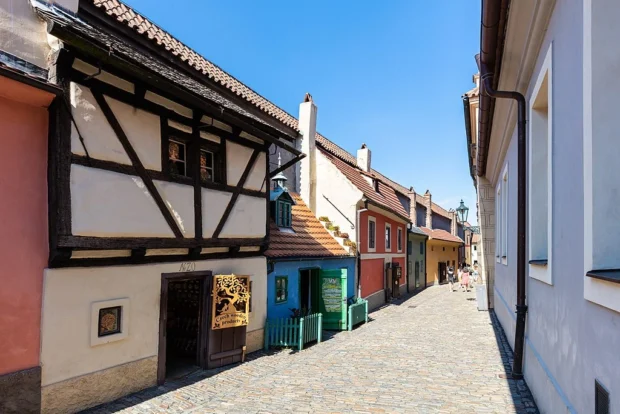
Don’t skip Golden Lane a storybook alley where castle workers and goldsmiths once lived. The blue-painted house at number 22 was home to writer Franz Kafka for a short period.
Secrets and Senses in the Jewish Quarter
Step northeast from Old Town Square into Josefov, the historic Jewish Quarter. Here, synagogues hide behind pastel facades; the Old New Synagogue, Europe’s oldest active synagogue, buzzes with layered history. Some say the mythical Golem still lies in the attic, waiting for Prague to need its protection.

The Old Jewish Cemetery is shadowy and calm, a maze of tilted tombstones stacked for space. The stones lean against each other, so close you feel the centuries in their quiet company. Josefov is a place for gentle voices and slow feet locals will tell you not to rush, out of respect for those who rest here.
Where to Stay in Prague’s Patchwork Neighbourhoods
Old Town (Staré Město) puts you at the foot of most main sites, perfect for short visits and late-evening city walks. Malá Strana (Lesser Town) is loved for baroque houses, quiet lanes, and castle views. For more budget-friendly stays, Vinohrady offers elegant residential buildings, lively cafés, and easy access to tram lines.
Zizkov, colorful and a bit gritty, is known for its local bars and street art. If you like green spaces and peace, look for accommodation near Petrin Hill or Letná Park here, you’ll hear more birds than honking cars. Almost every Prague neighborhood is safe and walkable, though at night, stick to well-lit areas as in any big city.
Prague’s Food: Beyond Goulash and Beer
Letná, a district with mighty park views, is the place to taste traditional open sandwiches called “chlebíčky”. For smoky sausages and garlicy fried cheese (“smažený sýr”), try stands at Wenceslas Square street food is most lively here after sunset. Locals line up for hearty potato soup in Žižkov, but also for fresh Vietnamese pho; Prague has one of Europe’s oldest Vietnamese communities, and their food stands are a quiet delight.
Many Czech favorites are slow-cooked and heavy: roast pork with dumplings, beef in creamy sauce (“svíčková”), and rich carrot stews. Almost everyone drinks beer with meals even at breakfast. When I sipped black currant soda instead, a man sitting near me at Municipal House’s Art Nouveau café gave a friendly grin “We like to say our beer is cheaper than water, but all drinks are good with friends.”
Unexpected Corners and Quiet Surprises
If museums call you, the National Museum near Wenceslas Square has a grand, domed façade. Sometimes children will race up its stairs pretending to be soldiers from Prague’s revolutionary past. Inside is a collection of treasures: fossils, ancient coins, Bohemian glass. A guide explained that the museum’s basement once sheltered rare books from wartime flames.

Petrin Hill rises green and calm above the city, dotted with apple trees and a miniature Eiffel Tower. On sunny days, locals picnic here, students practicing guitar, couples sharing bread under pink blossoms. Climb the lookout tower for a bird’s-eye view, or lose yourself in the mirror maze, laughing at your twisted reflection.

John Lennon Wall, in Malá Strana, is a living, breathing postcard covered in new graffiti each week. What started as a simple portrait of Lennon in the 1980s turned into a moving symbol of hope and rebellion. Sometimes you’ll find a street poet there, writing verses for coins. The paint keeps changing, like the city’s own diary.

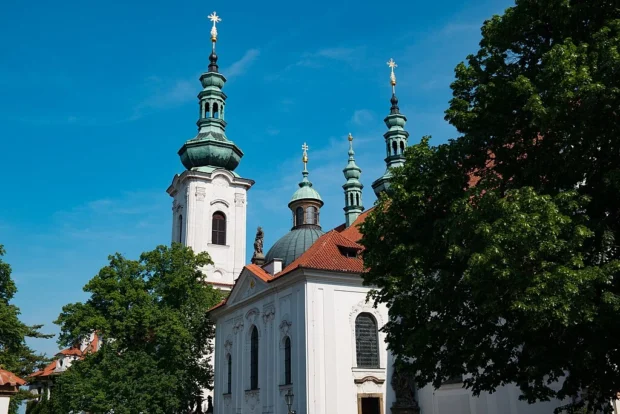
For a taste of spirituality and silence, the Strahov Monastery stands above the city’s rooftops. Its library holds books with covers older than the United States. The monks brew a dark ale; some say the recipe hasn’t changed for 600 years. I met a librarian who showed me his favorite map, drawn by a monk who never left Prague but plotted the world by sailor’s tales.
Architectural curiosity leads many to the Dancing House sometimes called “Fred and Ginger” a building that bends and twists above the Vltava River. Locals once argued over its style, but now accept it as a partner in Prague’s skyline waltz. Nearby, Municipal House shimmers with golden mosaics, home to a busy concert hall and a grand café where Revolution was once plotted over coffee.


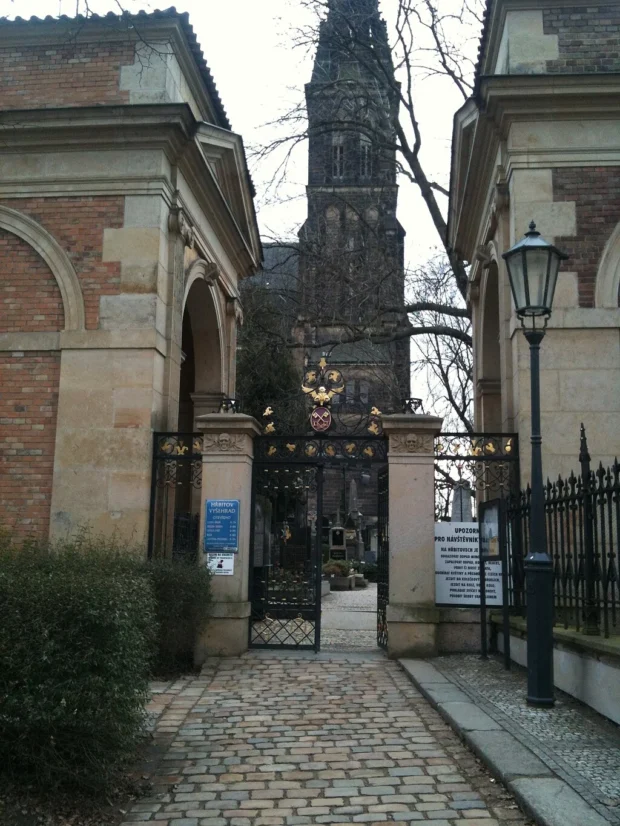
Vyšehrad, the second castle on the hill, looks quieter than Prague Castle but locals swear its myths are older. According to one legend, the princess Libuše who predicted Prague’s greatness lived here. At Vyšehrad’s cemetery, Czech composers, poets, and artists rest. Birdsong is almost the only sound, and the view from its walls stretches out to the city’s farthest edges.
Getting Around Prague: Simple and Honest
Prague’s trams run like clockwork, gliding through fog or snow with bell sounds that echo from past centuries. To ride, buy tickets at yellow machines in metro stations or newsstands. Validate your ticket before entering the carriage by punching it in the small orange box. Tickets work on all trams, buses, and the metro within the city center.
If you get lost, locals often reply in simple English or German, or use gestures. Most are patient and happy to help even older Prague citizens, who may tell you an extra story before you move on. Walking is easy, but wear shoes with grip: some sidewalks are polished smooth by millions of feet and feel like ice in wet weather.
Never worry about missing a sight because of transport; main attractions are close together, and strolls between them offer their own surprises. I once turned a corner and found an elderly couple selling hand-painted eggs, a delicate family trade passed down since before the Velvet Revolution.
Three Customs to Remember
Czechs speak quietly in public museums, churches, and parks are not for loud laughter. It is polite to greet shopkeepers with a simple “Dobrý den” (Good day), and to say “thank you” (děkuji) when you leave. Do not expect barefoot or very casual dress in restaurants; most Czechs like to look neat.
If you clink beer glasses with friends, always look each person in the eye; locals say not doing so brings seven years of bad luck. And never pour someone’s last drop of beer without asking it’s a small thing, but considered rude.
Prague, City of Layers and Small Joys
Each day in Prague uncovers another layer. I watched as a boy splashed pigeons from the edge of the Old Town Fountain while his mother sipped coffee and pointed out a distant tower. I heard old men in Letná telling stories of the Prague Spring, their hands stained with engine grease as they repaired a bicycle older than me. Even in corners not marked on any tourist map, life thrums with quiet pride.
For a change of pace, San Marino’s blend of ancient towers and lively everyday life offers a unique contrast to Prague’s historic streets.
When you stand on Charles Bridge at dusk and see the city’s lights reflect in the Vltava, listen. For every famous sight or grand building, Prague offers a thousand gentle moments that do not shout for attention they wait for you to pause, watch, and remember.
Photographer and writer capturing life through people’s stories and candid street moments.
- North view of Charles Bridge from Mánesův most, Prague 20160808 1 by DXR on Wikimedia Commons – cc by-sa 4.0
- Prag, Karlsbrücke — 2019 — 6549 by Dietmar Rabich on Wikimedia Commons – cc by-sa 4.0
- Jan Hus Statue and Tyn Church, Old Town Square, Prague – 8190 by Jorge Royan on Wikimedia Commons – cc by-sa 3.0
- Czech-2013-Prague-Astronomical clock face by Godot13 on Wikimedia Commons – cc by-sa 4.0
- Prague Castle from Alsovo nabrezi by Mgimelfarb on Wikimedia Commons – cc by-sa 4.0
- Catedral de San Vito, Praga, República Checa, 2022-07-02, DD 203 by Diego Delso on Wikimedia Commons – cc by-sa 4.0
- Callejón del oro, Praga, República Checa, 2022-07-02, DD 139 by Diego Delso on Wikimedia Commons – cc by-sa 4.0
- Old Jewish Cemetery, Prague, Czech Republic (73114894) by Emmanuel DYAN from Paris, France on Wikimedia Commons – cc by 2.0
- National Museum Prague, flags by Martin2035 on Wikimedia Commons – cc by 3.0
- Petřín, křížová cesta, zastavení 08 by ŠJů (cs:ŠJů) on Wikimedia Commons – cc by-sa 3.0
- John Lennon Wall, Malá Strana, PragueJohn Lennon Wall, Malá Strana, Prague (49461300777) by Andrew Milligan sumo on Wikimedia Commons – cc by 2.0
- Strahov Monastery 5-2017 by Nan Palmero from San Antonio, TX, USA on Wikimedia Commons – cc by 2.0
- Czech-03725 – Municipal House & Powder Tower (33018787175) by Dennis G. Jarvis on Wikimedia Commons – cc by-sa 2.0
- Dancing House, Prague (5651359716) by Pedro Szekely from Los Angeles, USA on Wikimedia Commons – cc by-sa 2.0
- Prague 2, Czech Republic – panoramio (3) by Eva Rešová on Wikimedia Commons – cc by 3.0


.jpg)


.jpg)

.jpg)
.jpg)
.jpg)