
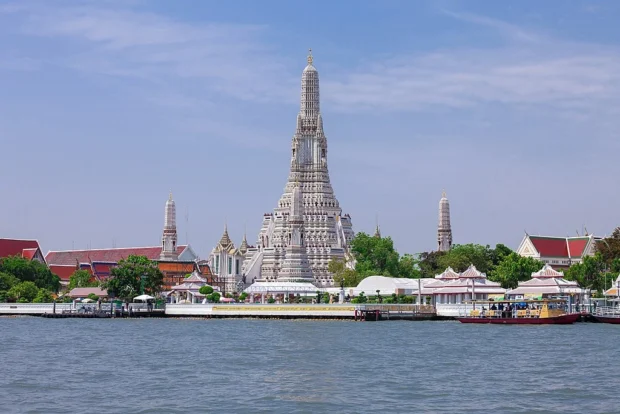
In the bustling heart of Bangkok, along the majestic Chao Phraya River, Wat Arun stands as a radiant beacon of Thai culture and spirituality. Known commonly as the Temple of Dawn, this striking riverside landmark invites visitors to witness the delicate interplay of light and craftsmanship that defines Bangkok’s rich heritage. Whether you are intrigued by ancient architecture, fascinated by Far East temples, or simply seeking a moment of tranquility amid lively street markets and fragrant local cuisine, Wat Arun offers a compelling glimpse into Thailand’s sacred traditions and artistic finesse.
Table of Contents
Arrival by River: A Scenic Route to Wat Arun
Navigating Bangkok’s vibrant streets towards Wat Arun can be as much an experience as the temple itself. The temple’s riverside location means many visitors arrive by boat, an authentic way to savor the city’s pulse and historical connection to the Chao Phraya River. From the city center, you can reach the pier near Wat Arun by taking a river taxi or a tourist boat from Sathorn Pier (Central Pier).
For those coming from Suvarnabhumi Airport, the easiest method is to take the Airport Rail Link to Phaya Thai Station, then transfer to the BTS Skytrain (Silom Line) to Saphan Taksin Station. From there, hop on a river ferry heading west across the river to Wat Arun’s pier. This ferry ride, short yet picturesque, offers splendid views of Bangkok’s skyline and bustling river traffic.

Visitors traveling by train can use Hua Lamphong Station and continue via taxi or public transit to the riverfront piers. Another charming option is to explore the nearby area on foot or by tuk-tuk after disembarking the ferry, allowing time to soak in the local street food aromas and colorful market stalls that line the riverbanks.
Craftsmanship and Symbolism: Wat Arun’s Architectural Poise
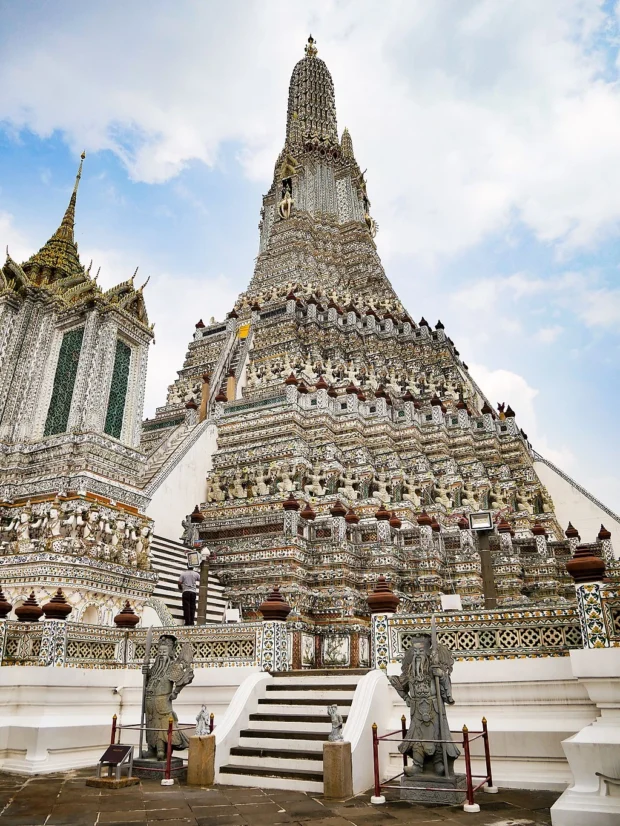
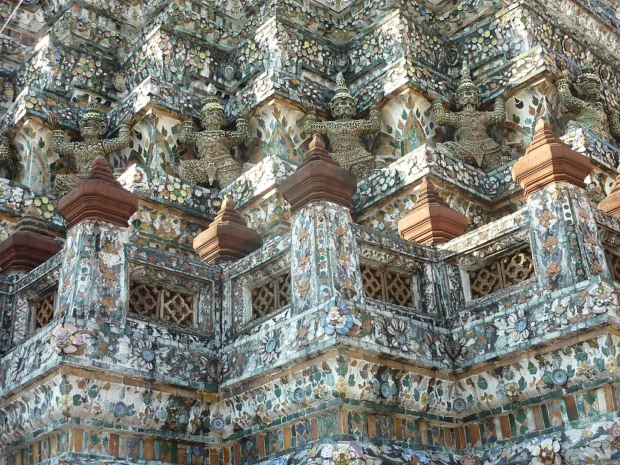
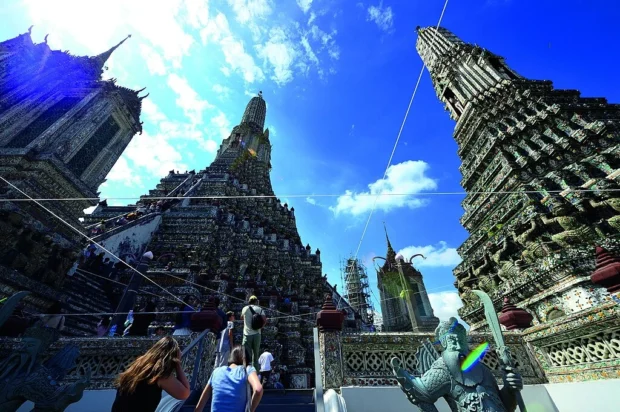
Wat Arun is renowned for its central prang, a towering Khmer-style spire decorated with thousands of pieces of colorful porcelain. These tiny fragments, once discarded ceramics collected from trading ships, were meticulously arranged to create intricate floral patterns that shimmer in the sunlight. The prang rises approximately 80 meters, dominating the temple complex with elegant grace.
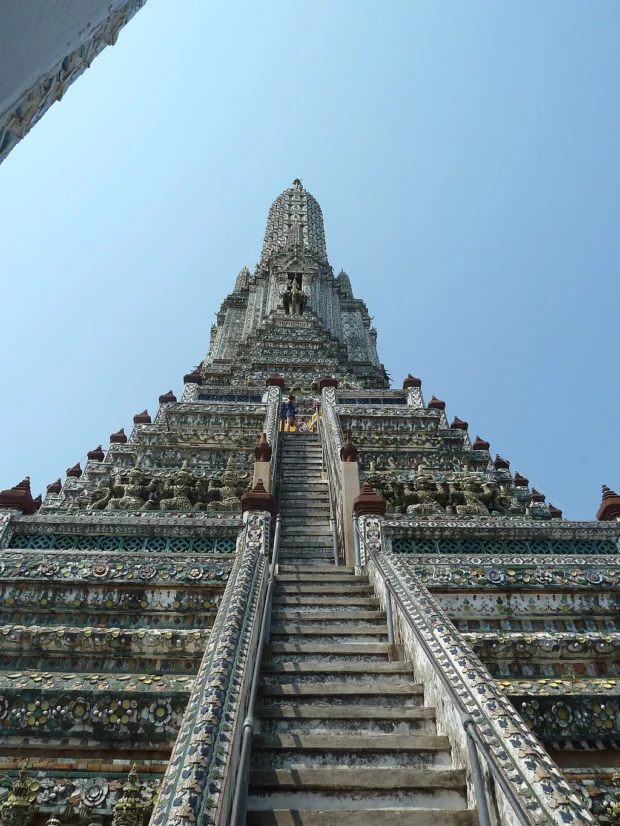
This architectural marvel embodies symbolic narratives; the central spire represents Mount Meru, the home of the gods in Hindu-Buddhist cosmology. Surrounding smaller prangs symbolize the four directions, creating a cosmic map that reminds visitors of the universe’s harmony and balance. Climbing the steep stairways of the main prang offers panoramic views of the river and sprawling Bangkok cityscape, a rewarding perspective blending natural beauty with human artistry.
History and Spiritual Importance of Wat Arun
Constructed initially in the 17th century and later expanded during the reign of King Rama II, Wat Arun reflects Bangkok’s transition from a traditional capital to a cosmopolitan hub. Its name, ‘Temple of Dawn,’ captures the spiritual hope brought by the morning sun, a motif celebrated each day by devotees and visitors alike. The temple played a significant role during the Thonburi period when King Taksin established his capital nearby, making it an essential site of royal and religious significance.
Timings and Best Moments to Visit
To avoid crowds and witness the temple’s ethereal glow, early morning visits are highly recommended. Sunrise at Wat Arun is a serene spectacle, with soft light illuminating the colorful porcelain mosaics, creating an almost otherworldly ambiance. The temple opens from 8:00 AM until 6:00 PM daily, allowing ample time for exploration.
Weekdays tend to be quieter, especially Tuesday through Thursday, providing a peaceful atmosphere rare in the city’s tourist hotspots. Avoiding weekends and public holidays can enhance your experience, enabling reflective moments without the bustle. For photographers and contemplative souls, late afternoon lighting also offers a gentle warmth on the temple’s façade before sunset.
Entry Details and Reservations
Entry to Wat Arun requires a modest fee, which contributes to the temple’s maintenance and preservation. Visitors should prepare to pay upon arrival; there are no advanced booking requirements or tour reservations necessary for general entry. However, guided tours focusing on the temple’s history and symbolism can be arranged through local operators if you seek a deeper understanding of its cultural context.
Respectful attire is expected inside the temple grounds. Shoulders and knees must be covered, reflecting Thai customs and the sacred nature of the site. Comfortable shoes are advisable since the ascent of the central prang involves steep and narrow steps.
Nearby Places to Stay and Taste Local Flavors
Those wishing to stay near Wat Arun will find plenty of accommodation options ranging from boutique guesthouses to riverside hotels. Staying close to the river offers not just easy access to the temple but also a front-row seat to scenic night views where the temple lights shimmer across the water.
After admiring Wat Arun’s serene beauty, you might appreciate how the nearby Grand Palace showcases Bangkok’s royal heritage and intricate artistry.
The surrounding areas brim with delightful Thai street food. Aromas of grilled satay, spicy som tam (papaya salad), and freshly brewed Thai iced tea pervade the air, inviting a pause for a flavorful snack. Nearby markets and casual eateries serve up traditional dishes alongside vibrant fruits and aromatic herbs, reflecting the city’s culinary heritage as beautifully as its temples reflect its spiritual heart.
After marveling at Wat Arun’s beauty, you might appreciate a stroll through vibrant Bangkok, where bustling markets and peaceful river scenes create a unique city experience, as shared in Bangkok Senses Await You.
Little-Known Stories and Cultural Highlights of Wat Arun
Many visitors miss the charming myths woven into Wat Arun’s design. For instance, the porcelain mosaics include fragments shaped like seashells and lotus blossoms, evoking water and purity themes crucial to Buddhist teachings. The steepness of the spire’s stairs symbolizes the challenging path to enlightenment, a physical metaphor encouraging mindfulness and care with each step.
Wat Arun is also a center for some of Bangkok’s oldest festivals, including the Royal Barge Procession, where elaborately decorated boats glide along the Chao Phraya River opposite the temple, marking auspicious occasions with ritualistic splendor and communal celebration.
Official Website for More Information
For further details, current opening hours, and special events, you can refer to the official site of the Bangkok Metropolitan Administration, which includes a dedicated section on Wat Arun.
Nearby, Wat Phra Kaew showcases Bangkok’s royal heritage with stunning artistry complementing Wat Arun’s spiritual charm. Discover its sacred beauty here.
A Chinese tour guide with deep knowledge of the Far East, its traditions, and culinary secrets.
- Phra Prang Wat Arun during day byThis Photo was taken by Supanut Arunoprayote.Feel free to use any of my images, but please mention me as the author and may send me a message. (สามารถใช้ภาพได้อิสระ แต่กรุณาใส่เครดิตผู้ถ่ายและอาจส่งข้อความบอกกล่าวด้วย)Please do not upload an updated image here without consultation with the Author. The author would like to make corrections only at his own source. This ensures that the changes are preserved.Please if you think that any changes should be required, please inform the author.Otherwise you can upload a new image with a new name. Please use one of the templates derivative or extract. on Wikimedia Commons – cc by 4.0
- (2022) วัดอรุณราชวรารามราชวรมหาวิหาร เขตบางกอกใหญ่ กรุงเทพมหานคร Wat Arun (18) by กสิณธร ราชโอรส on Wikimedia Commons – cc by-sa 4.0
- Bangkok, Wat Arun 1998 02 by LBM1948 on Wikimedia Commons – cc by-sa 4.0
- Bangkok Wat Arun P1130135 by Deror Avi on Wikimedia Commons – cc by-sa 3.0
- 020 Yakkhas and Decoration Work (9171347967) by Photo Dharma from Sadao, Thailand on Wikimedia Commons – cc by 2.0
- Bangkok Wat Arun Ratchawararam 3 by Mr.Peerapong Prasutr on Wikimedia Commons – cc by-sa 4.0

_%E0%B8%A7%E0%B8%B1%E0%B8%94%E0%B8%AD%E0%B8%A3%E0%B8%B8%E0%B8%93%E0%B8%A3%E0%B8%B2%E0%B8%8A%E0%B8%A7%E0%B8%A3%E0%B8%B2%E0%B8%A3%E0%B8%B2%E0%B8%A1%E0%B8%A3%E0%B8%B2%E0%B8%8A%E0%B8%A7%E0%B8%A3%E0%B8%A1%E0%B8%AB%E0%B8%B2%E0%B8%A7%E0%B8%B4%E0%B8%AB%E0%B8%B2%E0%B8%A3_%E0%B9%80%E0%B8%82%E0%B8%95%E0%B8%9A%E0%B8%B2%E0%B8%87%E0%B8%81%E0%B8%AD%E0%B8%81%E0%B9%83%E0%B8%AB%E0%B8%8D%E0%B9%88_%E0%B8%81%E0%B8%A3%E0%B8%B8%E0%B8%87%E0%B9%80%E0%B8%97%E0%B8%9E%E0%B8%A1%E0%B8%AB%E0%B8%B2%E0%B8%99%E0%B8%84%E0%B8%A3_Wat_Arun_(18).jpg)


.jpg)
