
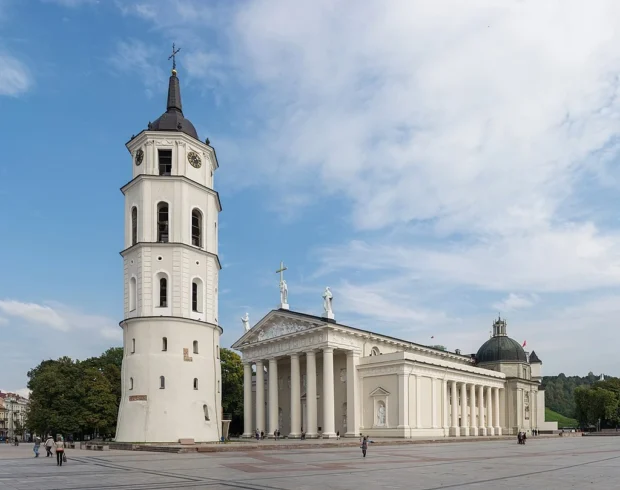
Vilnius, Lithuania’s capital, is not one of those places that shouts for attention. It draws you in quietly, step by step, stone by stone. Sitting at the crossroads of old trade routes, Vilnius invites travelers to pause and explore a city where Gothic spires, Baroque churches, and tree-shaded streets mix with quirky cafés and modern murals. Whether you are fascinated by medieval architecture, amazing culinary heritage, or just looking for somewhere unexpected, Vilnius offers a gentle yet rich introduction to Eastern European culture. Every street corner seems to tell stories from resilient chapters of history to today’s creative rebellion.
Table of Contents
Walking into Vilnius Old Town feels like opening a book whose pages have been handled for centuries. The smooth cobblestones and colored facades carry whispers of merchants, priests, poets, and dreamers who have made their mark here. With winding alleys, cozy courtyards, and unexpected art installations, this city is ready for you to find your own favorite corner. Let’s wander together.

Vilnius Old Town: Where Stories Begin
The heart of Vilnius is its Old Town a UNESCO World Heritage site and, for a city dweller like myself, an endless source of discovery. Unlike the straight lines you find in some modern cities, Vilnius Old Town is a patchwork of narrow streets and open squares. Walking here, you’ll soon realize the city’s layers. It’s not just about how old the buildings are (some go back six centuries) but how lively the present is. Musicians play near small fountains, locals sip coffee in Baroque courtyards, and children chase pigeons in broad plazas.
For those enchanted by medieval cities, a visit to Venice’s St. Mark’s Basilica complements Vilnius well with its rich history and stunning architecture.
One of my favorite things to do is watch the sky change color above the tiled rooftops. Early morning, when the bakeries open and the first buses rattle their way down the main street, the Old Town is almost silent. By midday, you might find yourself pressed up against the walls of Vilnius Cathedral, listening to the hourly chime, or stopped in your tracks by a window filled with amber jewelry a reminder that trade has always fueled this place.
Gediminas’ Tower: From Legends to City Views
You can’t really ignore Gediminas’ Tower, standing on its green hill, catching the eye from almost anywhere in Old Town. According to one local story, Grand Duke Gediminas dreamed of an iron wolf howling at this hill, a sign to found his capital here. Climbing up isn’t difficult there’s even a funicular if you want to save your legs but taking the winding path is part of the charm. It’s a short climb, but each step takes you through layers of Vilnius’ history.

At the top, the city opens up beneath you: red roofs, church spires, and a patchwork of parks. On windy days, the tower seems to sway just a little, or maybe that’s your imagination. The museum inside is small but gives a nice introduction to Vilnius’ beginnings and the battles that shaped it. It’s a good place to start if medieval castles and fortifications catch your interest. Locals sometimes bring sandwiches here and watch summer storms roll in from afar.
Vilnius Cathedral: Heartbeat of the Capital
Vilnius Cathedral, shining white against the blue sky, marks the center of civic life. Its neoclassical columns feel at home in Rome, but step closer and you’ll notice the strange mix of pagan and Christian motifs an echo of Lithuania’s late conversion to Christianity. The square outside is a favorite meeting place. I once joined a choir performance under the cathedral’s bell tower and the echoes seemed to roll off the polished stone.

Inside, the cathedral is spacious, cool, and often filled with the scent of beeswax from hundreds of candles. If you look up, you’ll see painted vaults and a quiet mix of old marble and newer restorations. There’s always something happening here: a wedding, a group of students sketching columns, or just people resting their feet. The crypts below the cathedral give an even older feeling to the place it’s a tip from a guide who said, “If you listen carefully, you might hear history breathe.”
Uzupis District: Small Republic with a Big Heart
Cross the Vilnele River, and suddenly you’re in Uzbekistan. Or so it might seem! Actually, this is the Uzupis District, famous for declaring itself a “republic” with its own president, flag, and constitution (which you can read, translated on a wall). Uzupis was once run-down and overlooked. Now, it’s the creative heart of Vilnius, full of artists’ studios, wild sculptures, and tiny bakeries.

I met a painter working in a crumbling courtyard, who told me, “Here in Uzupis, everyone finds their place.” Cafés and galleries open onto quiet lanes lined with blossoming apple trees. Look out for the Angel of Uzupis, a sculpted protector, rising above the main square. Around every turn you might bump into a poetry reading or a small fair selling ceramics and textiles both cherished crafts in Lithuania’s heritage.
Gates, Towers, and Crosses: Vilnius Icons
Vilnius is a city of thresholds. The Gate of Dawn, one of the last city gates, holds a shrine that draws pilgrims from far away. Early in the morning, you may see people stopping to whisper prayers beneath the famous icon of the Virgin Mary, believed to bring protection. Women leave embroidered cloth as offerings a tradition you won’t see in many other European capitals.

Another icon looms above the river: Three Crosses, a monument with a complicated past. Built, destroyed, and rebuilt, the crosses honor monks said to be martyred here centuries ago. The walk up the hill is steep, but the reward is a panoramic view over Vilnius. It’s a local tradition to come here at sunset, sharing stories with friends or just watching the city lights flicker on.

From St. Anne’s Church to Presidential Palace
If you love Gothic architecture, St. Anne’s Church will stop you in your tracks. Legend says that Napoleon himself wanted to carry the church back to Paris in his palm. Look closely: the bricks are twisted and layered, almost like lace, and the church glows red-gold at sunset. Next to it, the Bernardine Church and Garden offer a cool, peaceful place to rest. I once heard a flute player practicing beside the roses.

The Presidential Palace, a few streets away, is a lesson in Lithuanian modern history and politics. The changing of the guard here is quiet and respectful, nothing flashy. The square becomes lively before state occasions, and sometimes the president even walks through the gardens. As a curious explorer, I always enjoy watching locals greet each other warmly in the surrounding streets; it’s a reminder that official grandeur here still feels approachable.

Layers of Memory: Museums and Stories
Vilnius loves its museums, and some of them are deeply moving. The Museum of Occupations and Freedom Fights is both sobering and important. Housed in a former KGB building, this place tells the story of 20th-century Lithuania—occupation, resistance, and hope. Old prison cells and photographs make for a serious visit, but I found it necessary for understanding the city’s spirit of survival.

If you, like me, are drawn to stories told through objects, the National Museum of Lithuania is worth a slow walk. Exhibits jump from royal armor to peasant textiles to enormous painted sleighs. You sense how Vilnius was shaped by both noble courts and kitchen gardens. Not far away, the Palace of the Grand Dukes of Lithuania shows off royal life: grand halls, ancient coins, battered shields, and royal costumes. For me, the highlight was a room devoted to lost musical instruments, their odd shapes hinting at long-forgotten celebrations.

City Life: Markets, Food, and Easy Wandering
Vilnius’ love for markets goes back centuries, from the days of the Hanseatic League to Soviet times. The main market halls are often noisy, filled with the scent of fresh rye bread, smoked sausage, and wild mushrooms from surrounding forests. I once chatted with an old woman about cepelinai, the famous Lithuanian potato dumplings she claimed her grandmother made the best in town. In the Old Town and nearby districts, you’ll spot open-air stalls selling honey, cheese curds, or knotted bread rings. It’s easy to try something new, even if you’re shy with a new language.
For eating, Vilnius is proud of its potato dishes, beetroot soups, and deep-fried rye bread (‘kepta duona’). In Uzupis and around the railway station, the food scene is creative. You’ll find cafés serving both traditional dishes and modern twists look out for poppy-seed pastries or mushroom pancakes. In summer, outdoor terraces fill quickly with locals sharing cold ‘šaltibarščiai’ (bright pink beet soup) and stories. I always ask what the waiter recommends it’s how I stumbled onto a smoky pork stew that tasted like autumn in a bowl.
If market halls are your thing, mornings are best. Local grandmothers sell hand-embroidered linens and wool socks, often sitting beside their baskets with quiet pride. Ask about their weaving or knitting textiles are a cherished tradition here, and you might get a demonstration if you’re lucky.
Ways To See Vilnius: Getting Around the City
Reaching Vilnius is straightforward. From Vilnius Airport, the train is the quickest and most budget-friendly way into the city center. Trains run often, and the station is only seven minutes from the terminal. From the station, it’s a ten-minute walk to Vilnius Old Town. If you arrive by bus or train from another city, the main stations stand side by side, making it simple to transfer.
Around the city, getting lost is part of the fun. Vilnius is compact, so most major sights are close: you can walk from the Cathedral to Uzupis in under 20 minutes, and glimpses of the TV Tower pop up from unexpected angles. Public transport is reliable if your feet get tired buses and trolleybuses run everywhere, especially helpful if you want to reach the green hills north of the city. I like to ride the bus over the river, past wooden houses and tiny shops selling birch juice in spring.
Local Customs, Culture, and Surprises
Lithuanians value politeness greetings matter, even a simple “labas” (hello) can open doors. People are direct but not unfriendly; don’t be surprised if locals skip small talk but offer genuine advice. Shoes off is a sign of respect in many homes. And, if you’re invited for dinner, try everything offered refusing can sometimes be seen as impolite. Toasts are important at the table, and drinking is done with purpose and ceremony.
Religion has a strong presence here, but it’s worn gently. Churches fill on Sundays, but they are also open to curious visitors. You might find a folk choir rehearsing in a side chapel or people lighting candles for loved ones. I’ve learned not to photograph during services it’s considered respectful to wait.
Vilnius rewards those who pause and look closely. Some of the best moments come from small encounters watching an old man feed pigeons in Bernardine Garden, or spotting a piece of Soviet-era street art hidden behind a new mural. And every time I think I’ve seen it all, Vilnius throws a new detail my way: a hidden courtyard festooned with paper lanterns, a secret bakery serving poppyseed rolls, or a textile shop where the patterns seem to echo ancient Baltic stories.
Final Thoughts: Vilnius, Between Yesterday and Tomorrow
Leaving Vilnius is never easy. The city is both old and young its walls have seen invaders and poets, its markets filled with old songs and new recipes. The best part of Vilnius is how comfortable it feels to explore at your own pace. Whether you’re passionate about railway heritage, market halls, medieval fortifications, or just walking and watching, Vilnius invites you to slow down and pay attention. There’s beauty in its layers the kind that stays with you long after your shoes have dusted off the last bit of cobblestone grit.
After soaking in Vilnius, consider wandering Brussels for a blend of historic charm and lively city life.
Eastern Europe travel specialist uncovering hidden gems from the Baltics to the Balkans.
- Vilnius Cathedral Exterior 2, Vilnius, Lithuania – Diliff by Diliff on Wikimedia Commons – cc by-sa 3.0
- View of the Vilnius Old Town from the Observation Tower of the Palace of the Grand Dukes of Lithuania (2) by Pofka on Wikimedia Commons – cc by-sa 4.0
- Gediminas Tower (05.09.2022).02 by Nenea hartia on Wikimedia Commons – cc by-sa 4.0
- Vilnius – Cathedral 01 by Lestat (Jan Mehlich) on Wikimedia Commons – cc by-sa 3.0
- 'The Angel of Užupis' Vilnius (5993391627) by FaceMePLS from The Hague, The Netherlands on Wikimedia Commons – cc by 2.0
- Gate of Dawn Exterior, Vilnius, Lithuania – Diliff by Diliff on Wikimedia Commons – cc by-sa 3.0
- The three crosses from Gediminas 01 by Averater on Wikimedia Commons – cc by-sa 3.0
- Les églises St-Anne et St-François des Bernardins (Vilnius) (7670908128) by Jean-Pierre Dalbéra from Paris, France on Wikimedia Commons – cc by 2.0
- Lithuania Vilnius Presidential Palace 3 by Wojsyl on Wikimedia Commons – cc by-sa 3.0
- Museum of Genocide Victims, Vilnius, April 2015 (16) by Ardfern on Wikimedia Commons – cc by-sa 3.0
- Vilnius.Lietuvos nacionalinis muziejus by Algirdas on Wikimedia Commons – cc by-sa 3.0

.jpg)
.02.jpg)

.jpg)


_(7670908128).jpg)

.JPG)
