
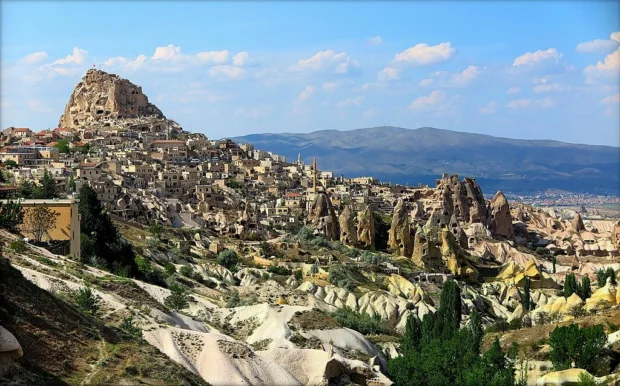
The region of Cappadocia in the heart of Turkey is a landscape made from stories, both ancient and strange. Most maps will only show a simple area in Central Anatolia, but what you see on the ground feels almost otherworldly. The rock forms look like nature’s own sculptures, villages seem to grow from the earth itself, and residents have found ways to live with the land instead of changing it. Even if you have only seen a photo of hot air balloons rising above dreamy valleys, nothing prepares you for the silence under those fairy chimneys or the mysteries deep beneath the surface. This guide brings together historic sites, rural villages, and little moments that make Cappadocia unforgettable told through the eyes of someone searching for stories behind the stones and flavors behind each meal.
Table of Contents
Arriving in Cappadocia: First Impressions and Transport Tips
Most travelers land at either Kayseri Erkilet Airport or Nevşehir Kapadokya Airport, both around an hour’s journey from the main towns. If you want to save money and see the countryside, ask about the local shuttle buses running from the airports to places like Göreme and Ürgüp. The journey itself gives you an idea of the shifting landscape suddenly the hills become taller, dotted with strange stone cones and small orchards. Buses, called “dolmuş,” connect villages and towns, making it easy to avoid private cars. Letting the bus wind through tiny settlements feels far richer anyway; you even hear the music of Turkish radio and sometimes share fresh fruit with other passengers.
Göreme National Park and Its Living Rock History
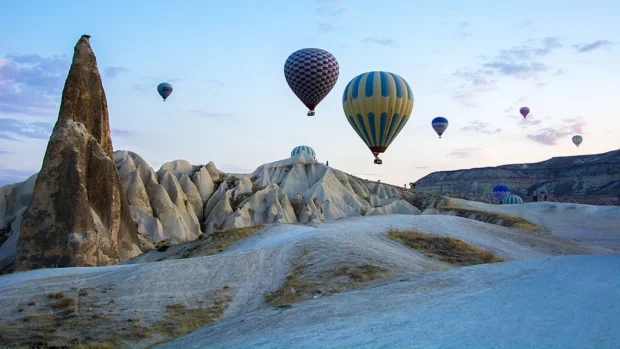
If Cappadocia has a heart, it beats somewhere within Göreme National Park. Walking inside the park is as much about admiring natural geography as it is about history. The soft tufa rock light, almost like packed sand makes towers and ridges, but also allowed early Christians to carve out entire villages inside the cliffs. Painted cave churches, some nearly 1,000 years old, give a view into daily prayers and worries of another era. The walls are decorated with saints and scenes, chipped and faded but still bright in hidden corners.
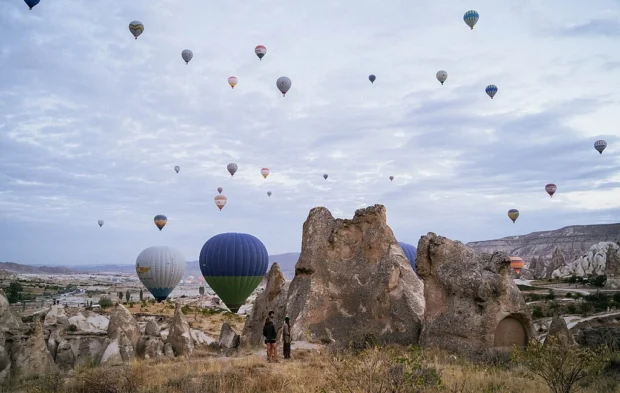
For a focused look at the remarkable landscape and history, visit our page on Göreme National Park, the heart of Cappadocia’s ancient carved dwellings and surreal rock formations.
One chilly morning, a guide showed me a chapel cut straight from golden stone. I lingered over a small cross, scratched beside an arch, not part of the main fresco maybe a secret mark from a monk feeling lonely. The silence inside is deep, broken only by the soft echo of footsteps. Even now, people in Göreme sometimes gather for small festivals or candlelit evenings, keeping an old rhythm alive. Outside the museums, the town has little tea houses and craft studios. If you look closely, you’ll notice doorways with horseshoes or blue beads meant to protect against bad luck.
Underground Cities: Layers of Refuge and Ingenious Engineering
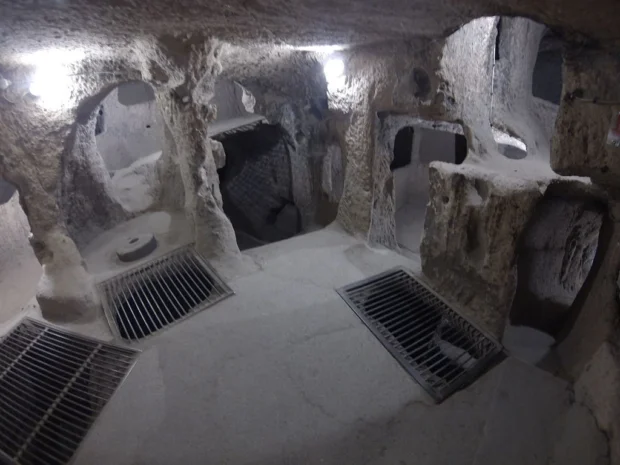
Few places in Cappadocia spark real amazement like its underground cities. While there are several hidden beneath the earth, Derinkuyu is perhaps the most astonishing. Down a steep set of worn steps, you enter a maze of narrow passages and cool chambers. Derinkuyu could protect thousands of people during invasions, with its own wells, kitchens, even a school and a church. It feels like a living puzzle. I was surprised by small details: stone doors shaped like wheels that could be rolled to block tunnels, clever air shafts, and tiny cubbyholes for families to store bread or cheese.
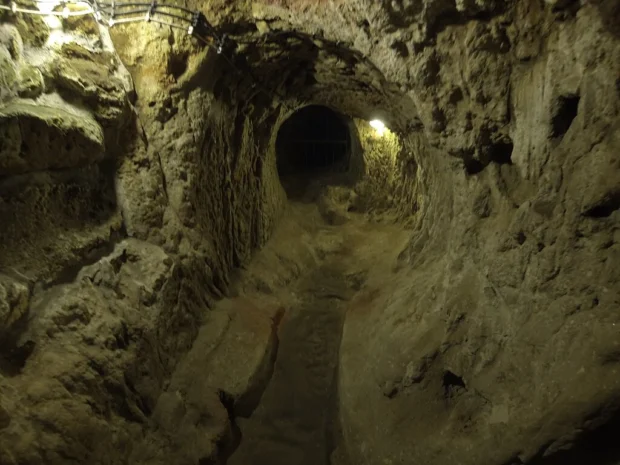
Locals like to mention that some families used these shelters only a few generations ago, during periods of unrest. The caves are cold and damp, and your footsteps sound louder the deeper you go. Shadows flicker on walls that look like they have been scratched by centuries of busy hands. If you are interested in archaeology, you might want to compare Derinkuyu to Kaymakli Underground City, where even more tunnels spread out like branches of a tree underground. Each city has its own quirks Kaymakli for its honeycomb chambers, and Derinkuyu for its giddy depth.
Uchisar Castle: A Fortress with a View
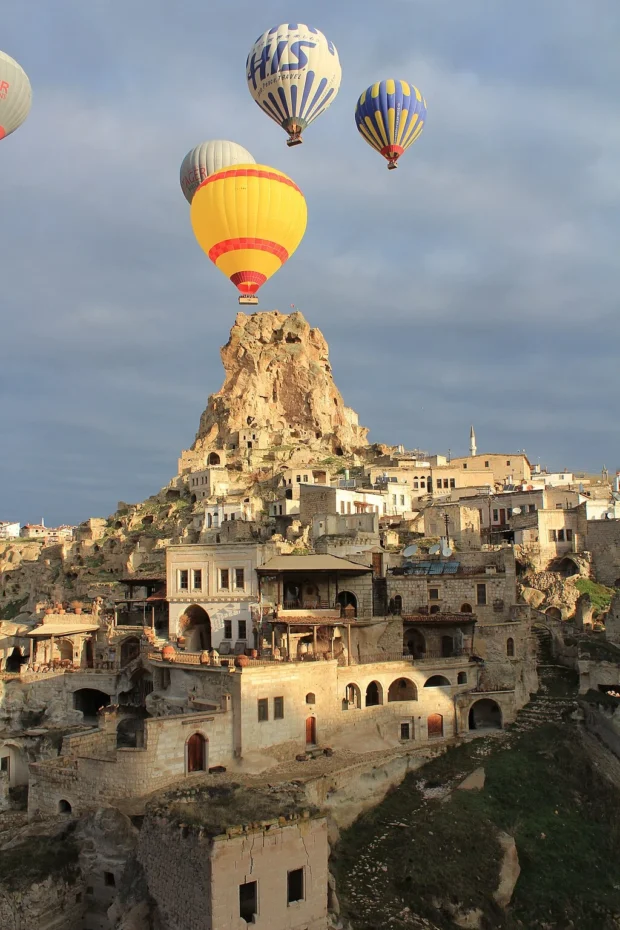
High above the valleys stands Uchisar Castle, formed from a giant rock spire. From a distance, it looks like a piece of cheese with dozens of holes each actually a room carved out over centuries. Climb its worn steps, duck under low arches, and you will find yourself at one of the highest points in Cappadocia. The wind up here feels older, and the view stretches for kilometers in every direction. On clear days, Mount Erciyes appears in blue haze on the horizon, watching over everything.
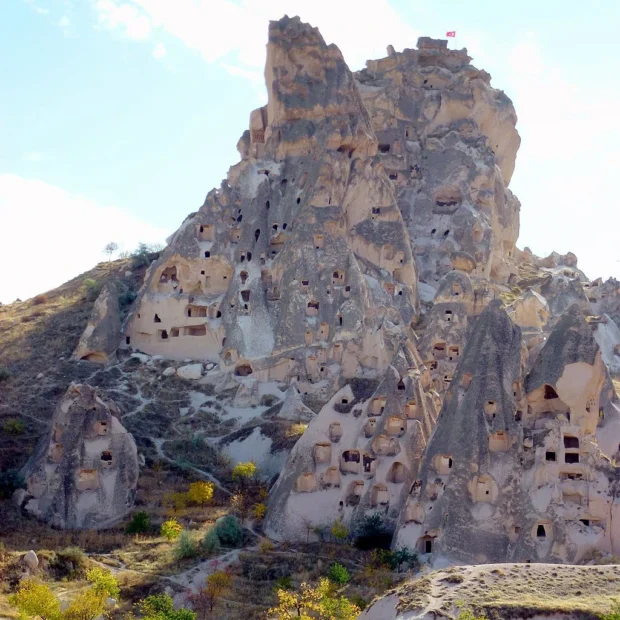
People have lived inside Uchisar’s rock for as long as anyone can remember, using the caves for protection during attacks and storing food in the cool chambers. Some alleys are so small, even children must turn sideways to squeeze through. On the outer walls, you spot cluster of pigeon houses a local tradition. The birds are not just for company; their droppings were once collected and sold as fertilizer, a small reminder of how every part of life in Cappadocia is tied to the land.
Fairy Chimneys, Monks’ Valleys, and Otherworldly Stones
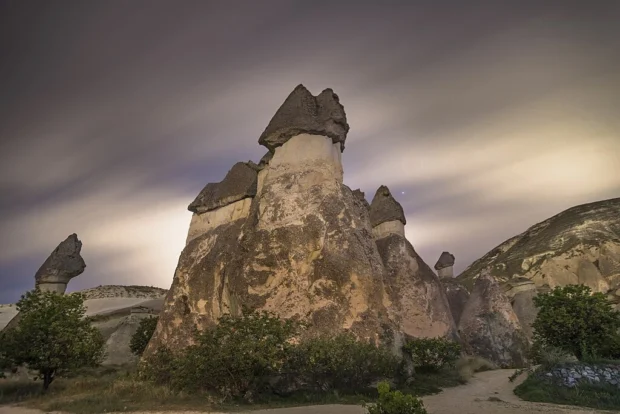
You cannot talk about Cappadocia without mentioning its fairy chimneys stone pillars that balance strange caps on their heads, like characters from a forgotten play. Pasabag, or the Monks Valley, is famous for chimneys with three heads. Here, wandering among mushroom-shaped rocks, I saw hermit cells and tiny chapels cut into the stone, sometimes barely big enough for a single bed. Legend says early monks came for peace, believing the unique forms would help them focus during prayer, away from curious eyes.
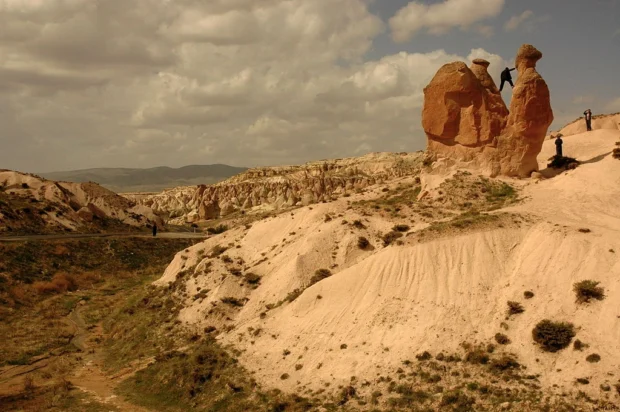
Devrent Valley, often called Imagination Valley, has no churches but an endless show of animal shapes camels, dolphins, even a giant stone penguin if you use a little imagination. The valley is quieter and less crowded. Once, I met an old shepherd watching his goats, who smiled and pointed out a dragon’s head in the rocks. Stories here are as much part of the tour as the landscape itself.
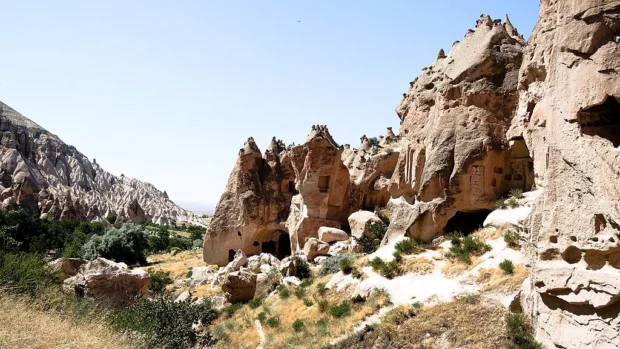
Close by, Zelve Open Air Museum hides more cave dwellings and ancient churches, but it is also a lesson in resilience: residents lived here until the 1950s, when erosion made homes unsafe. Today, wildflowers mix with old orchards where apricots and mulberries still grow.
Ihlara Valley and the Art of Living with Nature
Traveling south, following the Melendiz River, you arrive at Ihlara Valley a lush gorge cut deep into volcanic rock. The valley stretches for kilometers, sheltering scores of rock-cut churches along its slopes. The walk down into the valley, with birds calling from poplars and willows, is a world away from the dry uplands above. I was half-hoping to spot wild tortoises, as locals whispered they sometimes see them in spring.
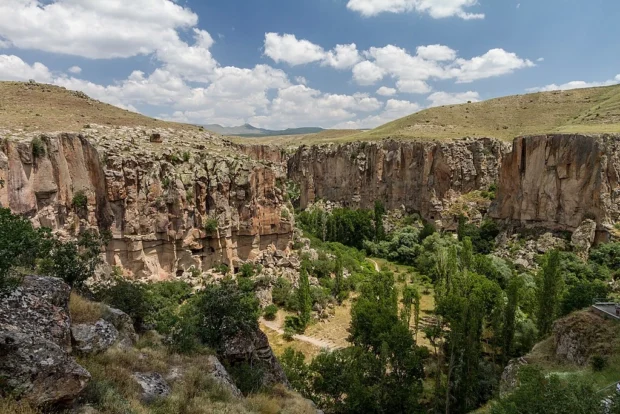
Inside the valley, I found a church painted with simple crosses and fish. A herder passing with his donkey explained that families would picnic by the water, escaping the summer heat. The painted walls part faded, part bright remind you that faith and daily life were not separate here but twined together. Outside, farmers tend small gardens and you hear the distant chime of sheep bells. It feels honest, as if the valley has always been a place for work and quiet thinking.
Villages, Towns, and the Craft of the Everyday
To understand Cappadocia, don’t skip its smaller towns. Avanos, with its cool breeze from the Kızılırmak River, is famous for red pottery shaped from the clay banks of the river. Craft workshops here have been run by the same families for generations. Walking down a narrow street, I was invited inside a studio, where a potter’s hands moved slow and sure over spinning clay. Look for the old styles delicate blue glazes and hand-painted tulips, symbols that go back to Ottoman times.
Markets in Avanos and Ortahisar sell everything from dried figs to perfumed soaps. Sometimes you stumble onto a “kilim” weaver at work, making bright carpets with geometric patterns each symbol tells its own story, if you ask. Ortahisar itself is dominated by a fortress-like castle, not unlike Uchisar but rougher, almost wild. Its stone steps are uneven and there’s a sense that time moves slower here. I watched old men sip tea on the edge of the square, discussing the morning’s weather as if it was the most important news of the month.
Daily Life, Village Customs, and Tastes of Anatolia
Meals in Cappadocia are a lesson in local history. Clay pottery kebabs (“testi kebab”) are cooked and sealed in a pot, then cracked open at the table, usually in restaurants of Avanos. Bread, here, is baked in stone ovens and tastes smoky and thick. Each village has its own spin on “gözleme” (a thin stuffed flatbread) the cheese in Göreme, the spicy potato in Ortahisar. Evenings bring out bowls of “mercimek çorbası” (lentil soup) and small dishes of roasted eggplant.
I found that sharing food is important in Cappadocia. When I mentioned I liked a local honey, a shopkeeper in Ürgüp insisted I taste his homemade molasses as well. It’s polite to greet elders with a gentle nod or even a handshake. Removing shoes before entering a home or even some hotels is normal there is usually a rack waiting at the door. People treasure these customs, yet guests are always welcomed without fuss. Don’t worry if you cannot speak much Turkish; a smile and a “merhaba” often open more doors than you expect.
Traditional life still shapes the calendar. In spring, the air fills with the smell of apricot blossoms; in autumn, villagers hang long ropes of red peppers to dry. In Avanos, you might see a wedding procession, with drums and singing echoing between stone houses. Ceremonies are loud but joyful, and guests sometimes dozens share sweets and stories in the village square late into the night.
Where to Stay, Heritage Homes, and Quiet Retreats
Accommodation in Cappadocia is almost as memorable as the landscape. Instead of modern hotels, many visitors choose to stay in old cave houses or restored “konak” mansions. Thick stone walls keep rooms cool in the summer, and arched ceilings add a feeling of old-world comfort. Most places offer home-cooked breakfasts think olives, honey, tomatoes, and warm bread from a shared ceramic plate.
Some guesthouses are run by local families, and the best advice comes over a cup of tea: which valley is quietest at dusk, or where to buy the freshest apricots. It is worth asking about rooms carved right into the rock if you want to feel truly part of the place. Don’t expect luxury everywhere charm here often comes with a small window, a handmade quilt, or a view over pigeon-filled cliffs.
Many small hotels are located close to bus stops and central squares, making them a good choice if you want to walk into the valleys early or return late after sunset. Ask about walking trails and protected sites many hosts keep maps and can point you to less-visited churches or viewpoints.
Art, Restoration, and Living Traditions
One of Cappadocia’s quiet surprises is the way old and new meet. Many cave churches and old houses have been carefully restored, using the same volcanic stone and even the old tools. In Avanos and Göreme, you sometimes see artists copying old mosaics or painting new icons, blending old faith with present skills. I met a restorer who explained that they still use natural pigments, crushed from stone or flowers found in the valleys.
Markets sell both antiques and new ceramics, and it is easy to spend a morning following a trail of shops and studios. The best souvenirs are often small and useful an olive-wood spoon, a handwoven scarf, a carved stone bird. In larger towns like Ürgüp, you might stumble onto a film set; the region’s villages are favorites for Turkish movies that want an authentic backdrop.
A special sight: the “Selamlık” ceremonies in some villages, when neighbors exchange visits and news after Friday prayers. These moments are not for tourists, but if invited, it is a gesture of trust sit, drink tea, and listen more than you talk. The language of hospitality here is ancient, and it shapes life as much as the valleys or towers of stone.
Cappadocia’s Living Heritage and Everyday Oddities
I leave you with one last image pigeons rising in clouds from valley cliffs, their wings glinting in the morning sun. Watch for the hand-carved pigeon houses on the rock faces: small niches made centuries ago, painted sometimes with red clay designs. Pigeon droppings once fertilized fields, and the eggs mixed into the plaster of frescoed churches. Even the smallest details connect nature, survival, and art.
If you wander through Pasabag at dusk, you may hear the eerie sound of wind rushing between chimneys, almost as if the stones themselves are telling old stories. Each valley, each farm and ruined church, holds memories just below the surface. The true beauty of Cappadocia is not only in grand castles or deep caves but also in the small patterns bread baking, carpets drying in the sun, a neighbor waving from a rooftop garden.
Whether you spend a day or a week, the valleys of Cappadocia will remind you that history and daily life are always entwined, sometimes hidden just beneath your feet, waiting for you to notice the next small, surprising detail.
For travelers intrigued by natural wonders blended with history, the journey to Mount Etna and Catania reveals Sicily’s spectacular volcanic landscape and rich local life.
Explorer of historical towns, ancient ruins, and traditional markets, combining modern travel with interest in heritage.
- Cappadocia (16175104814) by Rolf Dietrich Brecher from Germany on Wikimedia Commons – cc by 2.0
- Göreme National Park and hot air ballons by Andrada Boldis on Wikimedia Commons – cc by-sa 4.0
- Derinkuyu Underground City 9778 Nevit by Nevit Dilmen (talk) on Wikimedia Commons – cc by-sa 3.0
- Kaymakli underground city 8870 Nevit by Nevit Dilmen (talk) on Wikimedia Commons – cc by-sa 3.0
- Cappadocia, Uchisar, Nevşehir – panoramio (8) by Николай Максимович on Wikimedia Commons – cc by 3.0
- Monks Valley by Theugursevinc on Wikimedia Commons – cc by-sa 4.0
- Stone snail rock formation in Devrent Valley, Cappadocia – Turkey by Ekke from Durham, United Kingdom on Wikimedia Commons – cc by 2.0
- The Other Open Air Museum by Charlton on Wikimedia Commons – cc by 3.0
- Ihlara valley canyon by Benh LIEU SONG on Wikimedia Commons – cc by-sa 2.0
- CAPPADOCIA Göreme National Park and the Rock Sites. World Heritage List. Turkey. Hot Air Ballooning Cappadocia by Feridun F. Alkaya on Wikimedia Commons – cc0
- Cappadocia balloon trip, Ortahisar Castle (11894327104) by Arian Zwegers from Brussels, Belgium on Wikimedia Commons – cc by 2.0
.jpg)


.jpg)


.jpeg)


.jpg)