

Brussels, a city woven from grand squares, gilded facades, and chocolate-scented air, quietly astonishes visitors with its contrasts. Here, I found myself wandering from medieval lanes into art deco dreamscapes, drawn by the energy of markets, the rhythm of café terraces, and the warmth that flows from every bakery window. With each step, I discovered a city whose beauty is not only in its famous monuments like the Grand Place, Atomium, and Manneken Pis but also in moments of laughter with locals and the thrill of finding hidden gardens and comic murals. Welcome to a city that invites you to slow down and savor every detail.
Table of Contents
Grand Place: The Heart of Brussels
I first arrived at the Grand Place just as the morning light was rising behind its ornate rooftops. This UNESCO World Heritage Site is Brussels’ living room, surrounded by opulent 17th-century guildhalls and the striking Town Hall. It is not only the architectural showpiece of the city but a gathering place where history feels alive. Flower vendors set up their stalls, the smell of fresh waffles fills the air, and locals gather for their daily routines. Every two years in August, the square transforms with a breathtaking carpet of flowers. No matter the season, the cobblestones here echo with centuries of stories.
If you appreciate Brussels’ iconic sights, the Grand Place showcases stunning architecture and vibrant city life worth a closer look here.
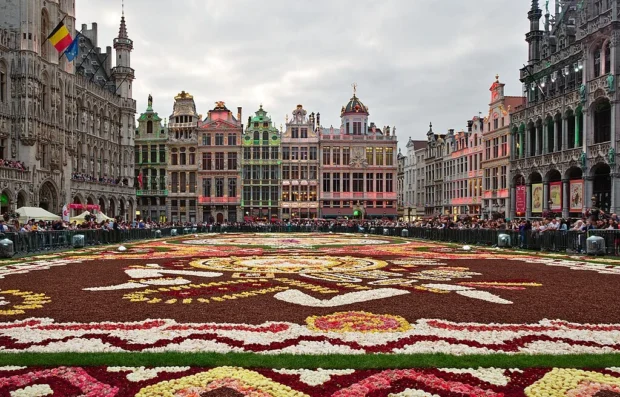
If you want to see the Grand Place at its most peaceful, come early when delivery bikes circle quietly and the only sounds are footsteps on stone. Stand still for a moment, and you may hear your own voice blending with a dozen languages swirling around you. This square is also magical at night, illuminated by golden light, making every facade glow.
Manneken Pis: The City’s Cheeky Mascot
Not far from the Grand Place, tucked at a busy crossroads, I encountered Manneken Pis. This tiny bronze statue a boy delightedly relieving himself into a fountain has become a symbol for Brussels’ humor and irreverence. He is barely sixty centimeters tall, yet draws crowds who often chuckle or shake their heads in disbelief. Locals love to dress him up for festivals; I once arrived to find him in full firefighter costume, honoring the city’s emergency workers.
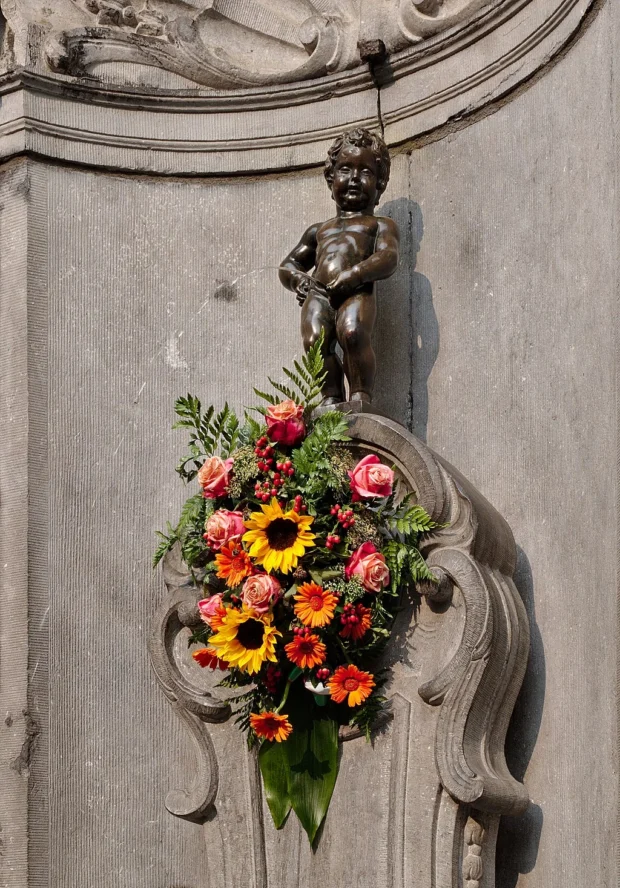
What many people miss is that Manneken Pis has “siblings.” Jeanneke Pis, a little girl statue, is hidden down a nearby alley; Zinneke Pis, a bronze dog, can be found just a short walk away proof of the playful spirit that lives in the city’s public art. If you want to avoid the crowds, visit in the early morning, when the only company is the sweet smell of the nearby waffle stands.
Atomium: Brussels’ Space-Age Icon
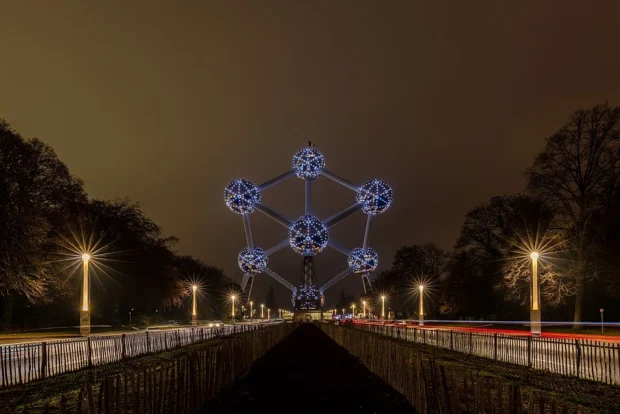
The Atomium rises out of Parc d’Osseghem, a short metro ride from the city center, and looks as if it landed from a science fiction film. Built in 1958 for the World’s Fair, it is designed as a giant iron crystal magnified 165 billion times. The nine spheres are connected by tubes, and some hold exhibitions on art, design, and science. The panoramic view from the top sphere offers a striking perspective: the city’s rooftops, parks, and distant fields stretch beneath you. Children run down the futuristic staircases, and adults gaze out, lost in thought. For more information on current exhibitions or to plan your visit, feel free to check its website.
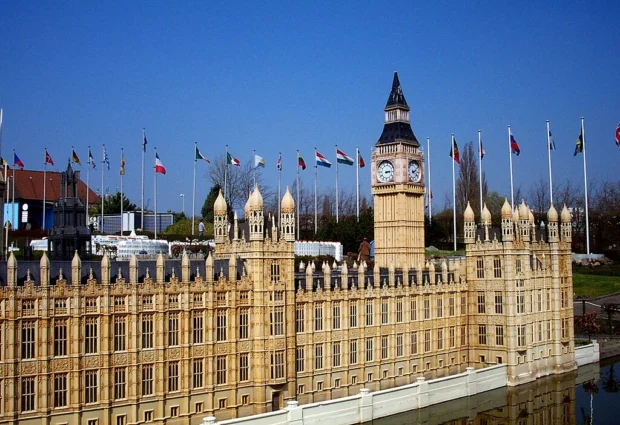
Next to Atomium is Mini-Europe, a delightful miniature park where I found replicas of Europe’s most famous monuments so detailed that you feel like a giant touring the continent in an afternoon. Both sites are easily reached by metro (Heysel station), and nearby you can spot locals jogging or picnicking in the green spaces.
Royal Palace and Mont des Arts: Layers of Urban Heritage
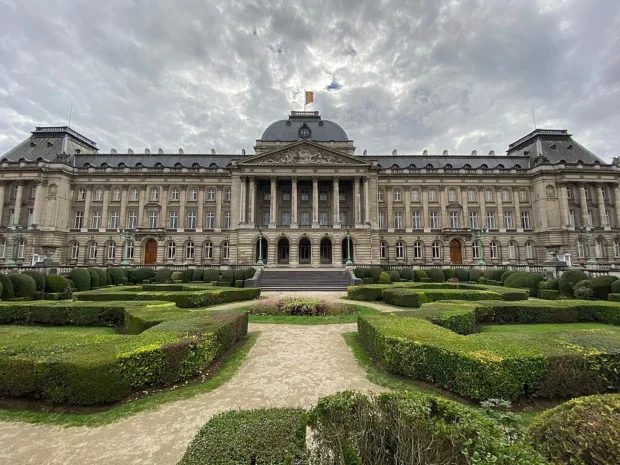
Wandering along tree-lined boulevards, I soon arrived at the elegant Royal Palace of Brussels. The palace, open to the public in summer, stands as the official residence of the King and a symbol of Belgian unity. I stood beneath the neoclassical columns, imagining the ceremonies and state visits that have shaped the nation’s history. Next to the palace, the Parc de Bruxelles offers quiet paths and benches shaded by ancient trees a favorite escape for students, daydreamers, and picnicking families.
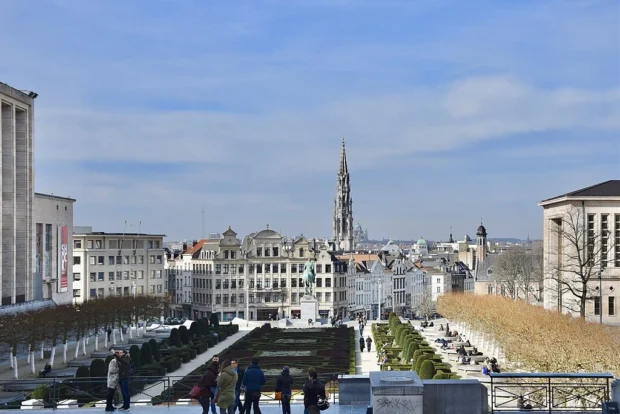
Just beyond is the Mont des Arts, a hilltop garden that reveals one of the best panoramas in Brussels. From here, the undulating rooftops, spires, and church towers lead your eye to the distant Atomium. Musicians often perform on the steps, and I joined a crowd listening to a violinist as the sun set, painting the skyline gold. Art lovers will find the area rich with museums, including the Magritte Museum, where the surrealist’s famous bowler-hatted figures and floating apples are on display.
Cathedrals, Sablon, and the City’s Spiritual Heart
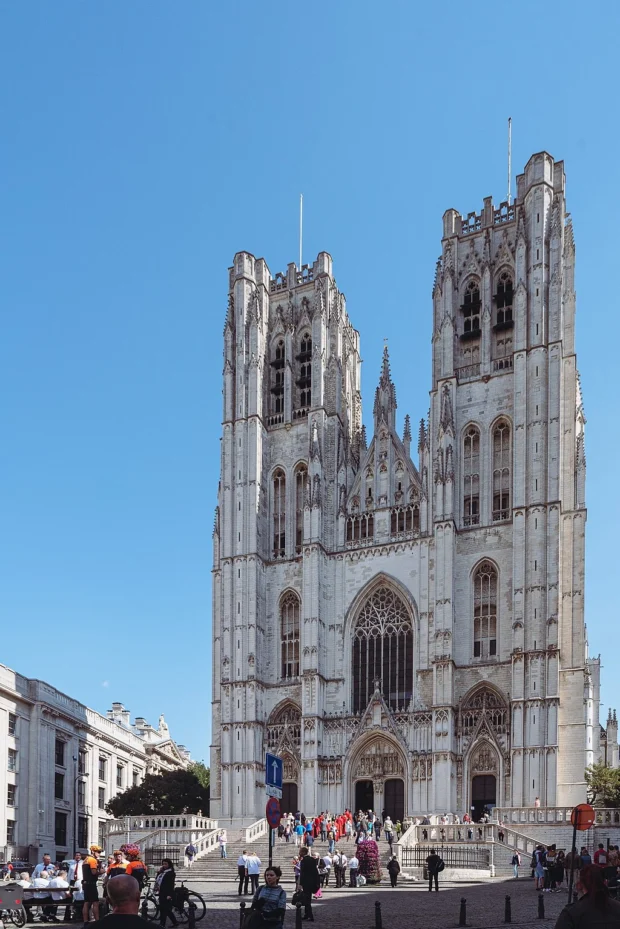
Brussels is a city of many faiths, but none as central as the Saint Michael and Saint Gudula Cathedral. This Gothic masterpiece, with twin towers and soaring stained glass, stands as both a place of worship and a witness to Belgian history. Inside, the afternoon light filters through old windows, painting the stone columns in colors that seem almost otherworldly. I sat quietly, watching local parishioners lighting candles and sharing moments of reflection.
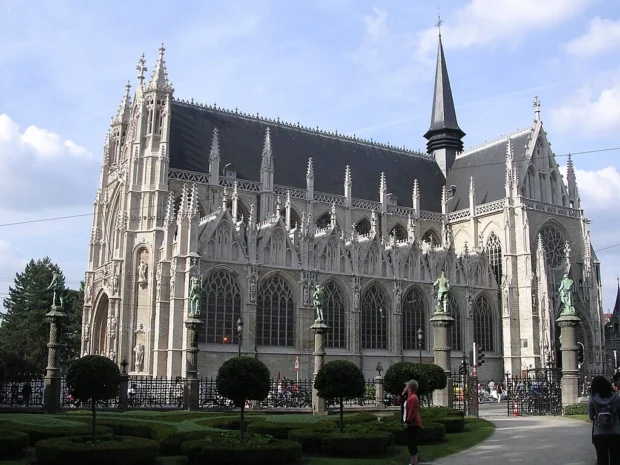
A short walk away, the Church of Our Blessed Lady of the Sablon brings another kind of beauty. Its lace-like stonework and peaceful interior create a sense of calm, while outside, the nearby Sablon district bustles with antique shops, artisan chocolatiers, and patisseries. On weekends, the square fills with a lively antiques market. I found myself drawn from stall to stall, discovering vintage comic books, art nouveau jewelry, and the occasional odd curiosity an old map, a brass compass each item with its own silent history.
Markets, Comics, and Urban Legends
The soul of Brussels lives as much in its traditions as in its monuments. At the Parc du Cinquantenaire, an immense green space crowned by triumphal arches, I watched families cycling, couples strolling, and old men playing chess beneath the trees. On Sundays, the park buzzes with life: food stalls offer everything from crispy frites (fries) to fresh stroopwafels, and laughter floats on the air.
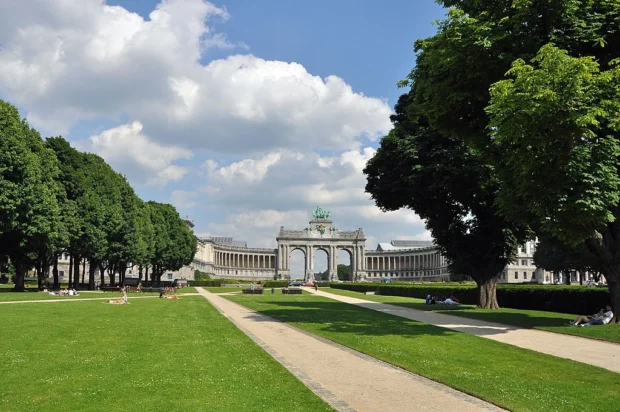
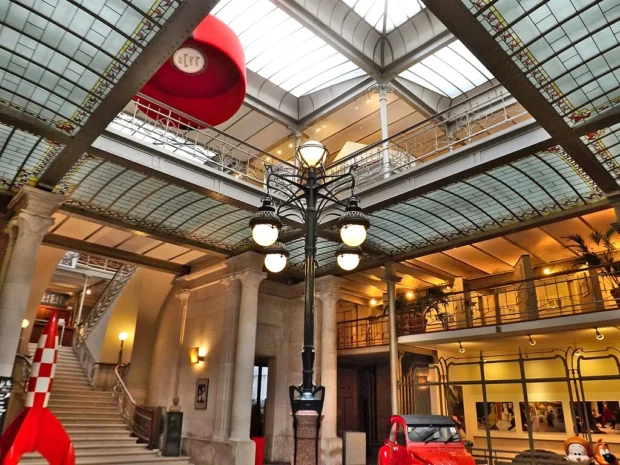
Just beyond the park’s monumental gates, Autoworld attracts those who love vintage cars. Rows of classic vehicles from every era gleam beneath elegant ironwork, telling the story of Belgium’s automotive heritage. A few tram stops away, I found the Belgian Comic Strip Center. Brussels takes its comic tradition seriously Tintin, Lucky Luke, and the Smurfs all call the city home. The Center is inside an art nouveau masterpiece by Victor Horta, filled with original drawings, models, and interactive exhibits. Even if you’re not a lifelong comic reader, the building itself is a marvel, and the nearby streets are dotted with enormous murals featuring beloved characters.
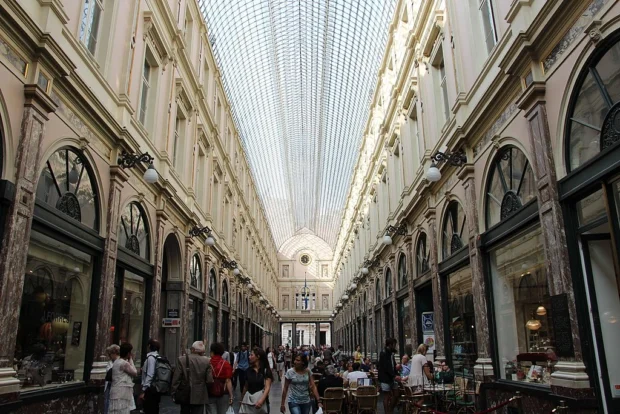
Galeries Royales Saint-Hubert is another essential stop. This 19th-century glass-roofed arcade glimmers with chocolate shops, artisan boutiques, and tiny theaters. I often slipped inside on rainy afternoons to warm up with a coffee and watch the world go by. The galleries are a photographer’s delight, the play of light and shadow making for endless snapshots.
Brussels’ Culinary Heritage and Social Hubs
If you wish to understand Brussels, you must taste it. The city’s culinary scene is both classic and inventive, grounded in tradition but never afraid to reinvent itself. In the Marolles district, I started my day with a flaky croissant and strong coffee in an old neighborhood café. The conversation here flows easily, between market vendors, students, and the occasional artist sketching at a corner table.
Belgium is famed for its chocolate, and nowhere is this truer than in Brussels. In Sablon and around Grand Place, I sampled pralines from family-run chocolatiers each one a tiny masterpiece. The waffles here are crisp outside, fluffy inside, and best enjoyed plain or with a light dusting of sugar, though locals will debate endlessly about toppings. Frites are a point of pride: always double-fried for crunch, and served with an array of sauces from spicy andalouse to classic mayonnaise. Try them at a street stand, paired with a gentle local beer, and you’ve found a true Brussels ritual.
Urban markets are the city’s heart. The Marolles flea market at Place du Jeu de Balle is legendary every morning, the square fills with stalls selling everything from antique clocks to vintage records and army jackets. I spent hours here haggling gently, picking up stories as much as objects. The market itself is more than commerce; it’s a social hub, where everyone from grandmothers to young families comes to share a laugh or a memory.
For a different medieval city vibe, explore the charming streets and living history of Tallinn Old Town, known for its walls and heritage museums.
Culture, Customs, and Getting Around Brussels
Brussels is a city of gentle manners, where “Bonjour” opens every encounter and a smile is often returned. People appreciate politeness; even short conversations at a bakery or museum window are punctuated by “s’il vous plaît” and “merci.” Locals respect personal space, but are happy to recommend their favorite cafés or parks if you show interest. One custom that surprised me: in some cafés, you pay after your coffee, not before, so don’t rush up to the counter right away.
Navigating Brussels is easy thanks to its efficient public transport. The airport connects to the city center by train; within twenty minutes, you can step from the arrivals hall into the heart of the city at Brussels Central station. Metro, trams, and buses crisscross the neighborhoods, and reusable travel cards save both money and time. The city center is best explored on foot, as many streets are reserved for pedestrians, and this is where you’ll find the postcard-perfect views, hidden shops, and unexpected public art.
For accommodation, Brussels offers everything from grand old townhouses to modern apartments in lively districts like Ixelles, Saint-Gilles, or the European Quarter. Each district has its own flavor: Ixelles is known for its lakeside walks and art galleries; Saint-Gilles charms with art nouveau houses and vibrant street life. I always choose a place near a tram stop for quick citywide access, but even the furthest corners are never more than half an hour from the center.
Final Thoughts: Taking Brussels With You
Brussels rewards patient eyes and an open mind. On my last evening, as I wandered back to Grand Place beneath strings of lanterns, I realized how the city’s layers had unfolded for me: palace gardens and comic murals, centuries-old cathedrals and futuristic spheres, the rich aroma of chocolate, and the kindness of strangers. There are big moments here the grandeur of Atomium, the laughter at Manneken Pis but also hundreds of small, private wonders: a sunbeam in a quiet chapel, an old man’s story in a market, the perfect bite of a warm waffle.
Bruges’ Market Square offers a charming follow-up to Brussels, perfect for those who appreciate historic city centers and vibrant local markets. Visit the Bruges Market Square to continue your journey through Belgium’s urban heritage.
Above all, Brussels is a city that invites you to slow down, to linger in its cafés, to let yourself be surprised. Whether you come for the world-famous sights or wander off to quieter corners, you’ll find a place with stories waiting on every corner. And as the bells of Saint Michael and Saint Gudula ring out over ancient rooftops, you may just find yourself already planning a return.
Saint Petersburg’s rich history and waterways offer a unique perspective for urban explorers curious about a city beyond palaces and museums, discover Saint Petersburg.
Lover of cities, local cafés, and historic streets, exploring urban life with attention to architecture and culinary delights.
- Atomium, Brüssel 2 by Horst J. Meuter on Wikimedia Commons – cc by-sa 4.0
- 2018 flower carpet at Grand Place, Brussels (DSCF6849) by Trougnouf (Benoit Brummer) on Wikimedia Commons – cc by 4.0
- Manneken-Pis decorated with flowers (DSCF6364) by Trougnouf (Benoit Brummer) on Wikimedia Commons – cc by 4.0
- Atomium, Bruselas, Bélgica, 2021-12-15, DD 145-147 HDR by Diego Delso on Wikimedia Commons – cc by-sa 4.0
- Brussels 2005-04 – Atomium (4887783470) by CGPGrey on Wikimedia Commons – cc by 2.0
- BEL Brussels, Palais Royale de Bruxelles 003 by -wuppertaler on Wikimedia Commons – cc by 4.0
- Brussels view from Mont des Arts, Brussels, Belgium (Ank Kumar) 01 by Ank Kumar on Wikimedia Commons – cc by-sa 4.0
- 20180907 Cathedral of St. Michael and St. Gudula Brussels 01 by Flocci Nivis on Wikimedia Commons – cc by 4.0
- BRUXELLES Eglise Notre-Dame du Sablon (7) by Promeneuse7 on Wikimedia Commons – cc by-sa 3.0
- Brussels Cinquantenaire R07 by Marc Ryckaert on Wikimedia Commons – cc by 3.0
- Hall d'entrée du centre belge de la bande dessinée by LCDMC on Wikimedia Commons – cc by-sa 4.0
- Bruxelles – Les Galeries Royales Saint-Hubert by Fred Romero from Paris, France on Wikimedia Commons – cc by 2.0

.jpg)
.jpg)

.jpg)

_01.jpg)

.jpg)


