
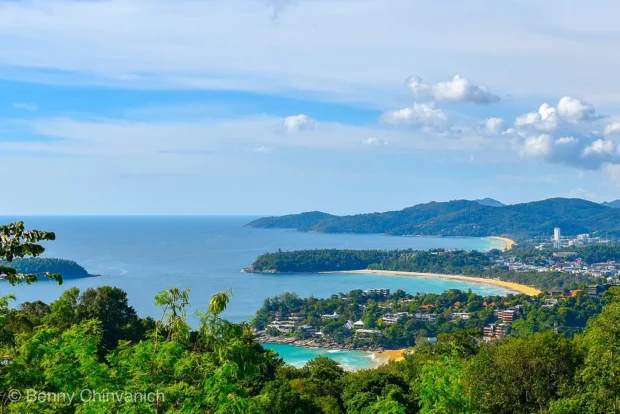
Phuket Island, Phuket, Thailand. Just the name carries a music of waves, tuk-tuk horns, and spicy scents winding through humid air. When I first stepped off my bus into the lively core of this island, I wondered: Is it possible for one place to be so much at once? There’s luxury and rough charm, calm beaches and wild nightlife, ancient temples and new towers. Phuket isn’t just a destination it’s a collection of stories, each written in a different language, color, or dish. If you’re thinking about finding your next adventure (or just a quiet sandy spot to sip coconut water), let me share how Phuket Island wrapped me in its rhythm, challenged my taste buds, and gently, sometimes loudly, changed my world.
Table of Contents
Arriving in Phuket: A Burst of Senses
Most visitors land at Phuket International Airport, which sits about 30 kilometers north of Phuket Town. There’s no train hugging the coast (a bit of a heartbreak for train fans like me), but you can hop on shared minivans or reliable local buses. My favorite way? The cheerful, blue-and-white local bus for just a few baht. It’s slow, but the ride weaves you through towns, rubber plantations, and small shrines, with glimpses of the Andaman Sea glinting between banana trees.
Arriving in Phuket Town is an adventure for the senses. The air is thick with the smell of grilled satay, fried chicken, and, if you wander past the old market, the sharp slap of durian. There’s always someone laughing, a scooter swerving, or a cat napping on a painted curb. Each street corner feels like a mini-theater.
Old Phuket Town: Where History Paints the Walls
Old Phuket Town is the island’s heart, and I lost days just drifting through its lanes. The Sino-Portuguese shophouses are painted in pinks and greens, their windows carved with stories. The Sunday Walking Street Market (locals call it Lard Yai) comes alive with lanterns, street food, and little stages where schoolchildren dance or a local grandpa croons old Thai pop.

Step inside a tiny café for a glass of kopi (local coffee) and kaya toast, and you’ll meet shopkeepers with family stories older than the street itself. One told me about tin miners from China, another about Portuguese pirates. If you’re a craft lover, peek into the little textile and batik shops. Even if you don’t buy, you’ll get a smile, maybe a story.
Patong Beach: The Wild and the Unexpected
Patong Beach is famous, maybe even infamous. It’s noisy, busy, and full of sunseekers from every corner of the world. I’ll admit I was braced for crowds, but Patong’s energy is contagious. The sand is soft, the water warm, and the longtail boats bob on the horizon. Sunsets here are a spectacle; everyone gathers, phones up, but the golden hour feels magical nonetheless.

After dark, Bangla Road roars to life. Neon lights flicker, music thumps, and street performers juggle fire or belt out pop tunes. I saw everything from dancing robots to a magician with a chicken. For those who enjoy people-watching, a cold drink on a side terrace is a front-row seat to the island’s wildest parade.

Phang Nga Bay: Limestone Wonder
Just northeast of Phuket Island, Phang Nga Bay is straight from a postcard. Imagine green water dotted with giant limestone karsts, their sides streaked with moss and mystery. I joined a local boat trip early in the morning; the water was glassy, and the boatman pointed out rocks shaped like sleeping elephants and ancient faces. James Bond Island is the superstar here, but honestly, the caves, hidden lagoons, and quiet fishing villages are where the magic hides.

Lunch in a floating village was simple fresh fish, stir-fried greens, a smile from a grandma with tattooed hands. If you can, take a sea kayak into the narrow caves. The silence inside, the cool air, and the drip of ancient water made me feel like I had slipped into another world.
Big Buddha: A Hilltop Guardian
Standing 45 meters tall, Phuket’s Big Buddha sits calmly on Nakkerd Hill, watching the island’s chaos and peace. The drive up winds through tiny villages and rubber trees. At the top, white marble shines under the sun, and the view well, it’s breathtaking. You can see all the way from Chalong Bay to Kata Beach and far beyond.

Locals and travelers leave gold-leaf offerings and write prayers on tiny tiles. The air is full of bells, birds, and the soft chant of monks. Once, a monk handed me a beaded bracelet for luck. I still wear it, and every time, I remember the sound of wind and kindness up there.
Island Hopping: Phi Phi and Similan Islands
If you have saltwater in your veins, Phuket is a launchpad to some of Thailand’s most stunning islands. The Phi Phi Islands are a swirl of turquoise bays, jungle peaks, and cliffs dropping straight into the sea. I joined a boat from Rassada Pier before sunrise. On Maya Bay, I found powdery sand and water so clear you could count each fish.

For an extension of Phuket’s coastal magic, read about Phuket and Phi Phi Islands’ stunning beaches and vibrant island life here.
For divers and snorkelers, the Similan Islands further north are legendary. The reefs explode with color parrotfish, turtles, and sometimes even whale sharks. Boats leave early from Tab Lamu Pier (a long ride but totally worth it). The islands are protected, so visitor numbers are limited, and you really do feel like you’re visiting a secret.
Hidden Corners and Coastal Trails
If crowds aren’t your thing, Phuket still has plenty of quiet corners. My favorite walk was the coastal trail from Kata Beach toward Promthep Cape. The path winds above rocky coves and tiny fishing huts, with lazy cats sunbathing and old fishermen mending nets. Sunset at Promthep Cape is famous for a reason the sky glows pink and orange, and the wind smells of the open sea.

There are also small towns inland, green with rubber and pineapple farms. If you get the chance, rent a bicycle or join a motorbike sidecar tour. I ended up in a tiny village where an old woman showed me how to fold lotus petals for temple offerings. It was quiet, and the only sound was the click of her careful hands.

Cuisine: From Street to Sea
Phuket’s food is a wild ride. In Old Phuket Town, the morning markets are loud with sellers calling out for fresh fish, sticky rice, and sweet mangoes. I ate my way through bowls of khao man gai (chicken and rice), crispy roti, and, one memorable afternoon, spicy moo hong (braised pork belly) in a family-run eatery. If you see kanom jeen (cold rice noodles with curry), stop! The coconut-rich sauce and pickled veggies are a wake-up call for the tongue.
Down in Rawai or Chalong, fisherman haul in the morning’s catch. Seafood stalls fry up prawns, crabs, and grilled squid. I sat once with a group of local teachers, tearing into blue crabs with our hands and dipping everything in fiery chili-lime sauce. Best meal of my trip, and I still think about it.
Staying on Phuket: From Guesthouses to Bungalows
Phuket has everything from luxury resorts to tiny guesthouses where geckos share the walls. I spent nights in a breezy room above a family grocery in Old Town, where breakfast was always a strong coffee and a smile. On the beaches, simple bamboo bungalows put you steps from the sand, with hammocks swaying in the sea breeze.
If you’re on a budget, look for rooms a little away from Patong or Kata Beach. The further you get from the main roads, the more likely you’ll find peace and the price drops. Many guesthouses can help with boat trips, scooter rentals, and local tips, which is often better than anything online.
Cultural Insights and Customs
Thailand is called the Land of Smiles for good reason. People are polite, curious, and patient though the traffic sometimes tests everyone. When you visit temples like Wat Chalong, dress modestly (shoulders and knees covered), and take off your shoes. It’s respectful to wai (a gentle bow with hands pressed together) when greeting elders or monks, though nobody will mind if you forget they’ll just smile and show you how.
I was once invited to a local festival in a small village. We danced under lanterns, ate sticky desserts, and watched kids chase each other between food stalls. There’s a gentle rhythm to Phuket life; it’s never in a hurry, no matter how busy the streets seem.
If you’re invited into a home, it’s polite to bring a small gift fruit, sweets, or something from your own country. And never touch anyone’s head, not even a child’s, as it’s considered the most sacred part of the body.
Getting Around the Island: What Works Best
Public transport in Phuket is simple but colorful. Blue songthaews (shared trucks) rumble between towns and beaches, cheap and full of stories once, my driver stopped to buy mangos and handed me one just because I looked hungry. Renting a scooter is common, but be careful; the roads twist and the traffic can surprise you. For longer distances, longtail boats are both transport and sightseeing especially for those hidden coves or islands just offshore.
If you’re dreaming of rail journeys, you’ll have to save that for another part of Thailand, but Phuket’s bus and boat routes make up for it with their character. I even tried a cycle rickshaw for a short trip in Old Town slow, but you see every smiling face and every shop window.
Souvenirs, Markets, and the Unexpected
Phuket’s markets are worlds of their own. At the Naka Weekend Market near Phuket Town, you’ll find everything from fake designer bags to hand-carved coconut bowls. I met an old artist painting sea turtles on driftwood. There are lacquerware shops, hand-dyed batik clothes, and, if you’re brave, stalls selling fried insects (crunchy, not as scary as you think).
Look for local crafts like tin jewelry or woven baskets. I always ask sellers about their family or craft it’s the start of a conversation and sometimes, a friendship. The night markets are where I felt closest to the island’s heartbeat: laughter, bargaining, the smell of incense and grilled corn, and kids darting around tables.
Why I Keep Returning to Phuket
Phuket Island is more than its famous beaches or postcard sunsets. It’s the laughter in a market, the taste of too-spicy curry, the quiet smile from a monk, the gentle chaos of Bangla Road, and the silent stillness of Phang Nga Bay at sunrise. It’s the feeling of being a little lost, and then suddenly found, by a kind word or a shared meal.
For a quieter, historic experience in Thailand, read about Chiang Mai’s soothing temples and markets in Find Peace and Inspiration in Chiang Mai’s Historic Heart.
I’ve walked these streets, eaten on shaky plastic stools, and watched the sun slide into the Andaman Sea more times than I can count. Every visit brings something new a hidden alley, a festival, a friend. If you travel with open eyes and an open heart, Phuket will show you more than you expected. Sometimes, it’s the small things the taste of coconut ice cream, the wind in a songthaew, the kindness of strangers that stay with you long after you leave.
So, whether you come for the beaches or the food, the temples or the wild nights, give yourself time to wander. Let Phuket surprise you, as it did me, with its contradictions, its beauty, and its unbreakable, joyful spirit.

Backpacker exploring budget-friendly destinations while volunteering around the world.
- Phuket Aerial by Bennypc on Wikimedia Commons – cc by-sa 4.0
- Phuket Town Thailand-Phuket-Municipality-Police-Station-01 by CEphoto, Uwe Aranas on Wikimedia Commons – cc by-sa 4.0
- Patong Phuket 2014 february – panoramio by Roma Neus on Wikimedia Commons – cc by 3.0
- Isla Tapu, Phuket, Tailandia, 2013-08-20, DD 36 by Diego Delso on Wikimedia Commons – cc by-sa 3.0
- BIG BHUDDA by HutheMeow on Wikimedia Commons – cc by-sa 4.0
- Phi Phi Island Thailand – panoramio (11) by Michelle Maria on Wikimedia Commons – cc by 3.0
- Phuket shore by by Andrew Lih on Wikimedia Commons – cc by-sa 2.0
- Laem Phromthep in Phuket (5733634424) by edwin.11 on Wikimedia Commons – cc by 2.0


.jpg)

.jpg)