

Zanzibar draws curious travelers from every continent, not just for its beaches but for its stories, spices, and living heritage. This Indian Ocean island, just off Tanzania’s coast, is famous for its melting-pot culture, cinnamon-scented air, and a rhythm that’s both lively and peaceful. For anyone searching “Zanzibar Tanzania” on Google or dreaming of a destination with history and natural marvels in equal measure, this island offers far more than meets the eye.
Table of Contents
I arrived at Abeid Amani Karume International Airport clutching an old guidebook, but soon realized Zanzibar resists being stuffed into pages. Its magic is found in morning markets, whispered tales, and the way sunlight hits coral walls. Getting from the airport to the city is simple shared dala-dala minibuses, a few modern buses, and private shuttles depart regularly. These rides are an introduction to the island’s everyday life, with passengers swapping stories or gossip, windows wide open to the spice-laden air. Taxis are available but I found the local transport far more atmospheric and, honestly, it started the journey off right.
Stone Town’s Labyrinths and Living History
Stone Town is Zanzibar’s heart a tangle of narrow streets, sandalwood-scented alleys, and carved wooden doors that hint at centuries of trade and migration. The doors here aren’t just for decoration; their brass studs once protected against elephants (long gone from the island) and showcase influences from India, Oman, and Africa. I wandered with half a map and more curiosity, passing locals dressed in kanga fabrics and skullcaps, women balancing bundles on their heads, and children darting between shops selling kisu knife sets and hand-woven baskets.

What strikes most visitors is the way Stone Town breathes with life. Yes, you’ll see harried tourists with cameras, but you’ll also hear Swahili conversation—sometimes with Arabic or Portuguese words mixed in. The old slave market, now a moving memorial site, reminds you of the island’s troubled past. Meanwhile, the Forodhani Gardens along the seafront come alive at sunset, when chefs fry up octopus skewers, samosas, and dizzying varieties of sugarcane juice. I chatted with Ahmed, a food vendor who remembers his father serving the very first ‘Zanzibar pizza’—a misnomer for a flatbread packed with egg, cheese, and spicy fillings—decades ago. Every night here feels like a small party, as locals and travelers meet over smoky grills and chilly sea breezes.

Stone Town is also a place of ritual and religious life. On Fridays, you’ll hear the call to prayer from centuries-old mosques; on Sunday mornings, church bells ring in harmony. It pays to dress respectfully shoulders and knees covered especially near houses of worship. Never point at someone with your finger, and always greet with a friendly “Jambo” or “Shikamoo.” Zanzibar’s manners matter as much as its monuments.
For those enchanted by island cultures, the vibrant life in Thessalonika offers a contrasting Mediterranean charm well worth discovering Thessalonika’s cultural guide.
Nungwi Beach and Life at the Island’s Edge
Zanzibar is practically surrounded by beaches, but few are as evocative as Nungwi, up in the island’s north. The journey by bus or shared van is an hour or so from Stone Town bumpy in places, but the scenery shifts from spice farms to palm-studded lanes. Nungwi’s sand is shockingly white, the kind that squeaks underfoot, and the water is impossibly blue. I arrived just as a fleet of dhows, wooden sailboats built by hand using tools passed down through generations, slid across the horizon. Boatbuilders here are artisans as much as sailors; many say the techniques came from Oman more than a thousand years ago.

Unlike some beaches where resorts crowd the shore, Nungwi still pulses with local life. Fishermen haul in their catch with laughter and teasing. A group of boys played soccer with a home-sewn ball, while travelers stretched out under makuti (palm-thatch) umbrellas. The seafood here is freshest in the north grilled lobster and calamari with a squeeze of lime, simple and perfect. Evenings see bonfires and the sound of taarab, a local music style blending Arabic and African melodies, drifting from beach bars. I heard stories of sea spirits, or “majini,” that are said to dance in the surf at midnight.
If time allows, try to catch the turtle sanctuary run by locals who rescue and release hatchlings. These conservation efforts are low-tech but heartfelt, and you can see how community involvement shapes Nungwi’s future as much as its past.
Prison Island, Spice Farms, and Zanzibar’s Living Traditions
Zanzibar’s story is woven with threads of exile and bounty. Prison Island, also known as Changuu, lies just off Stone Town. Its past is complicated it was once a detention center, later a quarantine site, now famous for a resident population of giant tortoises, some older than the island’s oldest living inhabitants. You can book a boat in Stone Town and glide over turquoise waters, perhaps sharing a bench with a local schoolchild off for an educational field trip. The beach here is lovely, but it’s those tortoises huge, slow, and endlessly patient that capture the imagination.

Further inland, the Spice Farms reveal why Zanzibar is sometimes called the “Spice Island.” Tours are easily arranged just ask anyone in Stone Town’s market, and you’ll find a lift to shambas alive with scent and song. Walking through clove trees, cinnamon bark, and nutmeg bushes, I listened to Hassan, a farm guide whose grandfather remembered German colonial times. Guides here break leaves to show hidden fragrances, and reveal tricks like how to use lemongrass stalks to keep away mosquitoes. Children often jump in with songs or performances, a tradition meant to bring luck to the farm and joy to visitors.

Zanzibar’s traditions extend beyond the fields. On many evenings, the island hosts ngoma drum circles or ritual dance performances. I attended one near Kendwa Beach, where men and women in colorful kangas danced as the sun set, their steps echoing a history older than the oldest buildings in Stone Town.
Jozani Forest: Red Colobus Monkeys and Whispered Myths
South of Stone Town, the Jozani Forest is Zanzibar’s last native forest, sheltering rare red colobus monkeys and a tangle of mangrove roots. Every visitor wants to see these monkeys, with their fluffy tails and curious faces, but guides are proudest of the forest’s role in local legend. Some elders believe spirits, or “shetani,” live among the twisted roots, protecting the land from harm.

Walking with my guide, Fatma who grew up in a nearby village she pointed out medicinal plants and told of how her grandmother used roots to ease fevers or bring luck before weddings. Jozani’s canopy hums with life: birds with metallic calls, butterflies flickering through shafts of sunlight, and giant coconut crabs rustling in the undergrowth. The air is thick, humid, and slightly sweet. It’s a quieter side of Zanzibar, away from the beach crowds, a place where every path seems to offer a secret if you listen closely enough.
Conservation is serious here. Fatma explained that parts of the forest are closed to visitors at certain times, to protect both the trees and their animal residents. I liked the respect shown for nature, a reminder that conservation is as much a custom here as the morning greeting.
Mnemba Atoll, Kendwa, and the Island’s Underwater World
If there is a paradise for snorkelers and divers in Zanzibar, it is at Mnemba Atoll, a ring-shaped coral reef a short boat ride from the northeastern coast. The water here is so clear that even on cloudy days you can see schools of parrotfish, bright as kanga cloth, darting among the corals. The atoll is strictly protected, and boats must follow rules to avoid damaging this fragile environment. I joined a dive with a local crew who, in between pointing out moray eels and tiny seahorses, shared stories of old pirate shipwrecks believed lost somewhere off Mnemba’s shores.
On land, Kendwa Beach is not far away a wide stretch of powder-soft sand, popular for its gentle tides. People gather for full moon parties and community soccer games, but there are also quiet times when the beach is nearly empty. I stayed in a guesthouse run by a family who made sweet spiced coffee and were always ready to swap tales about storms and weddings. Their youngest son, Kassim, insisted I try boiled cassava with chili simple, tasty, and very Zanzibar.
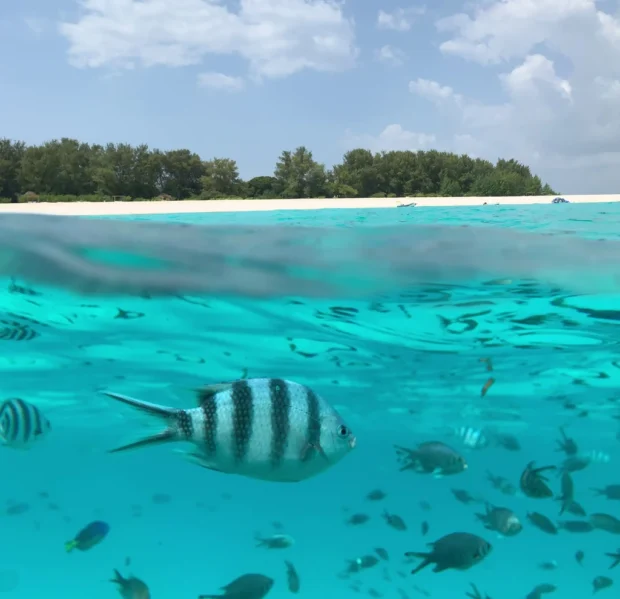
East Coast Beaches, The Rock Restaurant, and Daily Life
The east coast of Zanzibar has a different mood. Places like Paje and Jambiani are less polished, more laid-back. Here, you see fishing dhows lined up along the tide, and women harvesting seaweed in the shallows both scenes unchanged for generations. The beaches stretch for miles, and bright green seaweed baskets dot the sand. I woke one morning to the sound of a rooster and the slow, rhythmic sweep of a fisherman dragging his net.

One of Zanzibar’s most photographed restaurants sits just offshore near Pingwe Beach: The Rock Restaurant, perched on a rock in the ocean, accessible by foot at low tide and by boat when the tides rise. The view is unbeatable, the seafood is as fresh as sea air, and bookings are essential. If you want to stare out at the horizon and think about nothing (or everything), this is the place. The restaurant’s official website offers menus and reservation info, which I found useful for planning ahead.

Getting around the east is easy by dala-dala or bicycle. The rhythm is slower; locals greet you with curiosity. I joined a family for a lunch of pilau, a fragrant rice cooked with cloves and cardamom, and learned about the practice of decorating doors with flowers during Ramadan a way to welcome both neighbors and wandering spirits.
Where to Stay and Zanzibar’s Warm Hospitality
Zanzibar has rooms for every taste and budget from simple guesthouses run by families in Stone Town, to private bungalows on the beach. I recommend staying in local-run places, because you’ll hear the real stories: how the monsoon winds carry traders from India, why the doors are painted blue in rainy season, or how weddings are celebrated with songs echoing through the night. Even if you choose a more modern hotel, staff are quick to share advice on local etiquette or the best corner for street food. Book ahead in high season; during festivals, rooms fill up fast.
If you’re new to the island, ask for a room with a mosquito net and a fan. Electricity is stable in most places, but the sound of the evening call to prayer, the crowing of a rooster, or the distant beat of drums is part of the island soundtrack. You may wake to the scent of cardamom or groundnut stew, depending on your host.
What to Eat and Savor on the Island
Zanzibar’s food tells stories sometimes spicy, sometimes sweet. Not far from Forodhani Gardens, try the “Zanzibar pizza.” Sample urojo, a tangy soup packed with potatoes, boiled eggs, and crispy bhajias a favorite in Darajani Market. Street sellers push carts of fresh sugarcane juice and cassava chips dusted with chili. Along the beaches, fishermen grill fish or octopus, served with coconut bread or rice.
In the evening, I found myself in a family-run café, learning how pilau rice is prepared for weddings: always with cloves and always by the eldest woman in the family. During Ramadan, streets fill with the scent of maandazi (fried dough) and spicy sambusas. Food here isn’t just for eating it marks time, celebrates the end of a fast, or a cricket match won at sunset.
Zanzibar’s Customs, Craft, and Community Life
On Zanzibar, the community is strong. People gather for weddings, funerals, or simple evening chats. Respect, or “heshima,” is highly valued always greet elders first. Visitors should avoid public displays of affection, and ask before taking photos, especially in more traditional villages. Shoes are left outside many homes and some shops a sign of both cleanliness and humility.
Storytelling is an important island tradition. I once met Mama Asha, a basket weaver in Paje, who believed her craft kept her ancestors’ stories alive each pattern was a message, a memory, a wish for her children’s future. Zanzibar’s artisans still work with techniques passed down for generations, whether building a dhow, carving a door, or brewing coffee over an open fire.
The island’s festivals are some of the most memorable. From Sauti za Busara music festival in Stone Town to local ngoma drum circles, each is a chance to see the island’s creative spirit. If you hear a crowd singing, follow music here is as much about community as about rhythm.
Why Zanzibar Remains Unforgettable
On my last evening, I watched the sun dip behind Stone Town’s rooftops, turning the sea gold. Zanzibar is an island of contradictions busy yet calm, ancient yet young at heart. Its stories float on the breeze, passed from mothers to daughters, sailors to boatbuilders, spice farmers to travelers who once arrived and never left. Whether you’re walking through Stone Town’s shadowed lanes, watching monkeys leap in the Jozani Forest, or tasting coconut-laced rice on a sandy beach, Zanzibar always finds a way to surprise.
If you come with an open mind and a willingness to slow your steps, Zanzibar will reward you not just with sights, but with memories shaped by salt air, laughter, and kindness that lingers long after the last call to prayer.
For a shift from island shores to lively city rhythms, the living stories of Riga, Latvia’s capital offer a vibrant urban journey full of culture and charm.
Anthropologist and traveler admiring local customs, festivals and traditional arts.
- Zanzibar east coast pristine beach by Bakersville on Wikimedia Commons – cc by-sa 4.0
- Hotel Mizingani Seafront, Stone Town, Zanzíbar, Tanzania, 2024-05-31, DD 23 by Diego Delso on Wikimedia Commons – cc by-sa 4.0
- Nungwi (2010-011-1318-T) by Moongateclimber on Wikimedia Commons – cc by 3.0
- Restaurant in Chunguu Island, Mjini DC by Mangapwani on Wikimedia Commons – cc by-sa 4.0
- Fresh nutmeg in Zanzibar (Tanzania) by User:Babacrash on Wikimedia Commons – cc by-sa 4.0
- ZanzibarRedColobus01 by Idobi on Wikimedia Commons – cc by-sa 3.0
- Mnemba Island – Zanzibar – Flickr – Jorge Lascar by Jorge Láscar from Melbourne, Australia on Wikimedia Commons – cc by-sa 2.0
- Zanzibar, Tanzania – panoramio (2) by The Erica Chang on Wikimedia Commons – cc by 3.0
- The Rock Restaurant, Zanzibar (53801362304) by Rod Waddington on Wikimedia Commons – cc by-sa 2.0


.jpg)

.JPG)


.jpg)
.jpg)